Author Archives: Tighearnan

‘Nipper’ Geelan and the ‘Yankee’ invasion

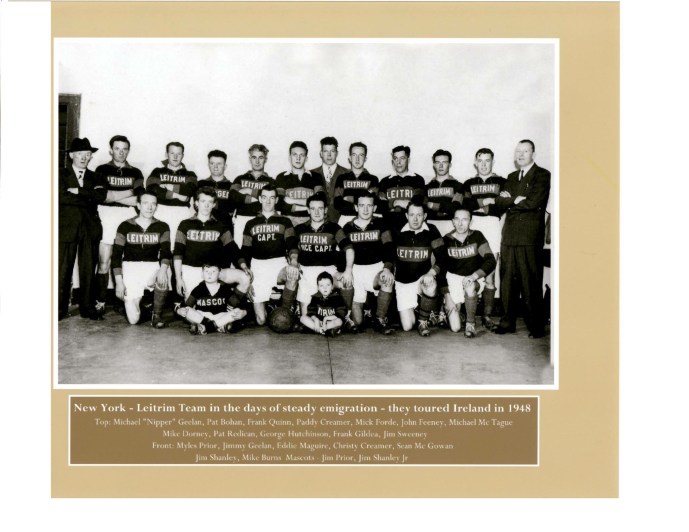
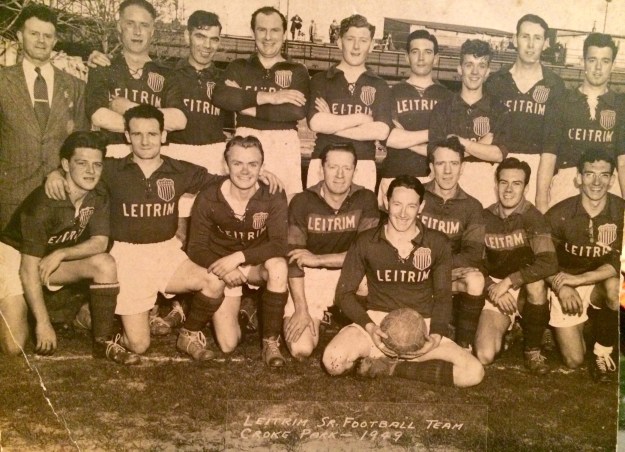
01c42ca9c458cf9c228d6e8222633a676511f84816On Sunday the 8th of August 1948 it was standing room only at St. Manachans Park, Mohill, County Leitrim. The grounds were by now the premier football ground in the County since their opening in 1939. They hosted many inter-county games and County Finals but this day saw an unusual pairing. It was a game that captured the imagination of all Leitrim Gaels, home and abroad.  The crowd was estimated at in excess of 8,000. The reason, the visit of the Leitrim Club from New York, led by their mercurial Manager and Mohill native, Michael ‘Nipper’ Geelan.

Geelan had been a star player with his native Mohill and lined out for the County at Junior and Senior level whilst still in his teens. His nickname apparently arose when a Galway mentor enquired from a local who was the ‘Nipper’ playing havoc in the full forward line. Geelan was born in Laheenamona in 1901 where his father, a native of Cashel in Bornacoola had settled. Whilst the Nipper is probably better known for his on field exploits he was also a member of Fianna Eireann and later of  ‘A’ Company, 3rd Battalion, Leitrim Brigade of the Old IRA. He debuted for Mohill at the age of 15 and played for Leitrim from 1921. He was a regular until in the spring of 1926 he decided to emigrate to New York. He teamed up with many Leitrim emigrants and helped get the club competing for the New York Championship then dominated by the famous Tipperary Club. One of the great GAA organisers at the time was another Mohill native, John McGuinness of Tulrusk/Drumhanny. McGuinness was formerly Leitrim County Board Chairman who was elected to the same position in New York in 1932, a rare achievement. Had Nipper Geelan not emigrated when he did it is certain that he would have been part of the Connacht Championship winning team of 1927.

In 1932 the Leitrim Club won the New York Championship with a talented team that included Eddie Maguire, uncle of Packy McGarty. Commentators thought that this was a team that would go on and dominate the club scene in the Big Apple. Sadly the effects of the Great Depression and tighter immigration laws saw the club began to flounder. Starved of fresh blood off the boat the club folded.  It was not until after the end of the Second World War that a group of Leitrim exiles got together and started to put in action a plan to reform the club. The GAA was beginning a revival and the next few years were a golden period in North America. In 1947 the All-Ireland was played in the Polo Grounds, the only time it was every played outside of these shore.

‘Nipper’ Geelan also coached a successful minor team called Incarnation. At the time the underage structure in New York saw many teams associated with their local church. Incarnation was a team attached to the Church of the Incarnation on 175th St which drew its players from the Irish communities of Inwood and Washington Heights. The star of this minor team and future star with Leitrim and New York was a young Jimmy Geelan, the Nippers own Nipper so to speak. 1947 saw the Leitrim play for the first time in fourteen years. The Nipper even managed to get some game time at 46 years of age when he lined out against Down alongside his son Jimmy, the match report said that “the younger Geelan is certainly following in his after his father’s footsteps and in a few short years will be competent enough to compete with the best in the division.”

The Leitrim Club were also active off the field; the Irish Echo reported that a Dance would be held in Croke Park Pavilion (Gaelic Park) on the 2nd August 1947, where the musical entertainment was provided by “May Rowley of West 161st St, a recent arrival from Mohill, Leitrim, an accomplished pianist and soprano as well as being very easy on the eyes”. 

It is not known when the trip back to Ireland was first planned but the plan was widely known by December 1947 when the Club held its annual dinner dance in the Dauphin Hotel. All through winter and spring the fundraising continued. Geelan was in bullish form ahead of the Tour, telling one reporter ‘We’ll lick any team in the old sod’.

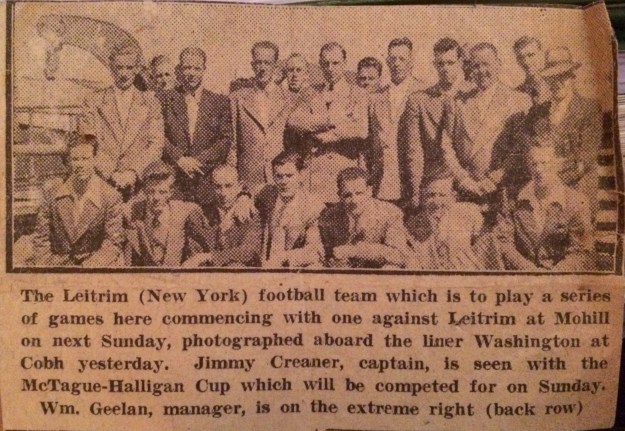
The Leitrim team sailed for Ireland in July 1948 aboard the SS Washington and docked at Cobh on the 1st August where they were met by Secretary of the County Board, Michael Reynolds NT and other officials. After settling into their lodgings in the County Hotel, Carrick-on-Shannon the team headed to Manorhamilton where they drew 2-5 each with a North Leitrim selection. Sean McGowan from Cloonturk scored 2-1 for the visitors in an exciting game. The team also paid a visit to Kiltyclogher where a crowd of 1,000 people saw Geelan lay a wreath at the Sean MacDiarmada memorial.
016b07a8d2d669651d25f838c4b6d5694990d19417_00001

The following night the County Board met to finalise arrangements for the big game in Mohill. The following stewards were requested to report at Mohill Park at 1.00pm ‘L. Moran, Robert Moran, Billy McGowan, J. Flynn, J. Gordon, James Canning , Charles Kilkenny, Charles Keegan, Sean Reynolds and Patrick McCrann’ and from Gortltlettragh ‘P. Reynolds, C. Reynolds, J. Milton, J. Booth and P. Gannon;  Bornacoola – T. Aherne, Michael McGowan, H. O’Brien, P. Greene, Bert Faughnan and J. Notley; Shannon Gaels – McNally, McGuinness, Newton and two from Carrick-on-Shannon; Aughavas – Carroll and Reynolds’.

Meanwhile Geelan took time out to write a telegram to John ‘Lefty’ Devine the GAA correspondent with the ‘Irish Advocate’ in New York. It read-

County Hotel
Carrick-on-Shannon
Co. Leitrim                                                                                          August 4th 1948

 Dear Lefty,

 A short line to let you know we are having a wonderful time here. Also to apologise for not getting a wire to you in time for Croke (Gaelic) Park. Communications are not the best in Leitrim. Of course you have already heard we tied our first game against a good selction from North Leitrim.

 On behalf of the team I again want to thank you and also please convey again my thanks to John (Kerry) O’Donnell for the inspiring support he gave us. Its men like O’Donnell that make it easier for us all to keep the Gaelic games alive. I did not forget the ball for Jacky. I may not be able to get the shoes as they seem to be very scarce in Ireland. I am enclosing a few cuttings and will forward more as time goes on. Incidentally the score was 2 gl. 5 pt to 2 gl. 5 pt, McGowan 2 gl. 1 pt, Brennan 4 pt. Regards to Mrs. Devine.

Sincerely yours,

 “Nipper” Geelan

Manager of the touring Leitrim Club.

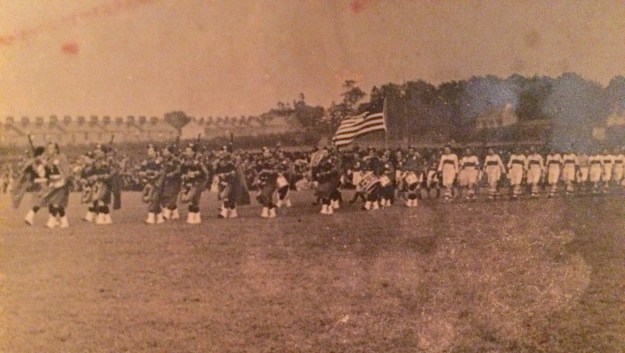
A few days later the scene was set for a grand homecoming for Nipper in his home town where his exiles would face the full Leitrim team. The town was buzzing from early in the day. Two fife and drum bands led the teams out to a wall of applause and excitement. Dan O’Rourke, the President of the GAA was even in attendance. The game was refereed by Peter O’Rourke, Tully (Carrigallen) who was also the Chairman of the Leitrim County Board. Canon Masterson threw the ball in and a rip-roaring game ensued. Jimmy Geelan, still a minor was amongst the scorers. Leo McAlinden was the star of the home team. The final score was a draw, 2-3 each and everyone thought it a fair result. It can be well imagined that the celebrations went on well into the night around the town.

The tour continued the following week and entered its most controversial phase. The team was scheduled to play Armagh in Davitt Park, Lurgan on the 15th August. The team cars proceeded to Lurgan on the Saturday night festooned with Tricolours and Stars and Stripes. Some of the cars and players were attacked and attempts made to grab the ‘Free State’ flags but the game proceeded before a crowd of 4,000. The exiles lost 1-6 to 0-5 but gave a good account of themselves against an Armagh team who were preparing for the All-Ireland Junior final. In press reports mention was made of the American’s ‘forceful’ and ‘unorthodox tackling style’. On the way back to Leitrim the team played an exhibition game in Garrison against a Fermanagh select. Thus the touring party achieved one of Geelan’s aims by playing in the ‘occupied part of the country’.
01fa9488393ee9be1acdbaa3e5aeef0b410de7190a

Armagh v Leitrim New York Team at Lurgan

Geelan wasn’t prepared to let the roughing up of his team of US Citizens in Lurgan go and wrote to the American Consulate in Belfast. He received a polite and courteous reply which reminded him that –

‘the United States government does not wish its nationals to take part in political affairs or events in foreign countries. When American Citizens acquire allegiance to the United States it is intended that they shall give up all allegiance to any other country. Failure to do so certainly impairs the right of this individuals to claim the protection of the United States Government while abroad’.

In other words one cannot claim the benefits or protections of US Citizenship when attacked whilst flying the flag of another nation. Geelans reaction is not recorded but can be surmised.

The final game of the tour was against the Dublin club St. Caillins, recently formed in the Capital and made up primarily of Leitrim players. The game was played in Fenagh but the result is unknown. There then followed a reception and dinner held at the Vocational School in Mohill (then ‘the Castle’ former residence of the Crofton family). Peter O’Rourke, Chairman of the County Board proposed a toast to the exiles saying that ‘they gave a very fine display’ and he hoped that their visit would be ‘an encouragement to the younger generation of Leitrim to go ahead and win an All-Ireland’.

The Exiles were then presented with miniature shields sponsored by the Connacht Council, silver medals from the County Board and cigarette cases from the Armagh County Board. Nipper Geelan presented the County Board with a special gold cup, the McTague-Galligan Cup which was played for in the drawn game earlier. The Cup was subsequently presented to the winner of the Leitrim Senior Championship until the onset of the current Fenagh Cup. Finally a farewell dance for the travelling party was held in the ballroom at Fenaghville.

The tour was undoubtedly a success on the field. The Leitrim Club were subsequently unlucky to lose two New York Finals in 1948 and ’49. The ‘Irish Advocate’ concluded ‘perhaps the greatest feat in the history of the local Leitrim Combination was made when they decided to sponsor a tour to Ireland, where they made a meritable showing against men of experience and full training. They were happy to record the fact that seven native born American boys were included in their line-up of players which gives them the right to say that Leitrim was the first to ever send back to the old sod the lads who learned the fine points of the game on the sidewalks of New York’.

However the tour did leave considerable debt and ultimately nearly sank the club. By the end of 1950 the club had lost over 22 players and had to rebuild again. One of the casualties was ‘Nipper’ Geelan himself who was uncompromising in defending the Tour against detractors. The Nipper left and was soon involved in coaching teams such as Kildare and Tyrone. The Leitrim club did recover though and one of its proudest days came when they won the 1958 New York Championship. One of the stars of the team was the now veteran Jimmy Geelan. The younger Geelan had already represented the New York Senior team that won the National League in 1950, defeating Cavan. “Nipper” Geelan had plenty more good days in football. He trained the New York Senior Teams from 1955 to 1963 in what was a hugely successful period for the exiles. He even trained a New York team that played In Wembley. In 1968 he was honoured by the New York Association for a lifetime of service. He passed away suddenly in December 1974.

Whatever about the financial success of the 1948 Tour it had a hugely positive effect on people throughout Leitrim. Emigration had tended to be one way traffic but this team in their bright suits and New York tans must have seemed a little exotic in a place where war rationing was still the norm. The highlight of the tour was undoubtedly the game in Mohill and its record attendance. It must surely have been one of the proudest moments of Michael ‘Nipper’ Geelan’s career.
0165992e6f3bbb33d75c672ba2a25be435202ce669_00001


When Good Friday fell on Easter Monday

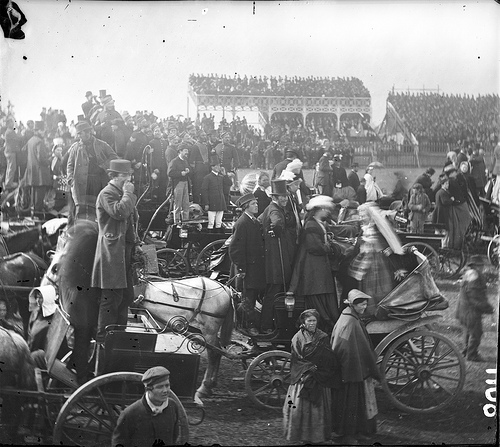
It is a question that is sure to get all trivia lovers animated; ‘When did Good Friday fall on Easter Monday?’ The answer, or one of the many answers, is of course that ‘Good Friday’ was a horse and his fall was at one of the many daunting ditches at the Irish Grand National. The famous race which celebrates its 156th anniversary this year is ran annually on Easter Monday at the Fairyhouse Racecourse in County Meath.

horseRacingSilhouette1_large

The proximity of the racecourse to the City of Dublin and its fall on the public holiday meant it has always been a popular race with the citizens of the Capital.  This was of course no different a century ago when thousands of people abandoned the City for the lush rolling green fields of Meath and the highlight of the Irish racing calendar.

The meeting was a break for the working classes and the higher echelons of Anglo-Irish society alike. In attendance would have been many British Army Officers and Tommies either form the Dublin or the Curragh garrisons or on furlough from the War. In fact for those on such leave the pageantry and gaiety of Fairyhouse must have been a welcome relief and escape from the horrors of modern trench warfare.

The Racecourse was also a mere twenty miles from the some of the finest Georgian squares and also the worst tenements in Europe. Fairyhouse was the ‘Dubs day out’ and the roads leading to the course would have been clogged with every mode of transport available motor car, omnibus, tram, bicycle, trap, carriage and sidecar not discounting those who would have made it there on foot.

Fairyhouse-Ratoath

No one present that day could have predicted that events unfolding back in the City would change the course of history for their country and define the relationship between these neighbouring Islands for the next century and beyond.

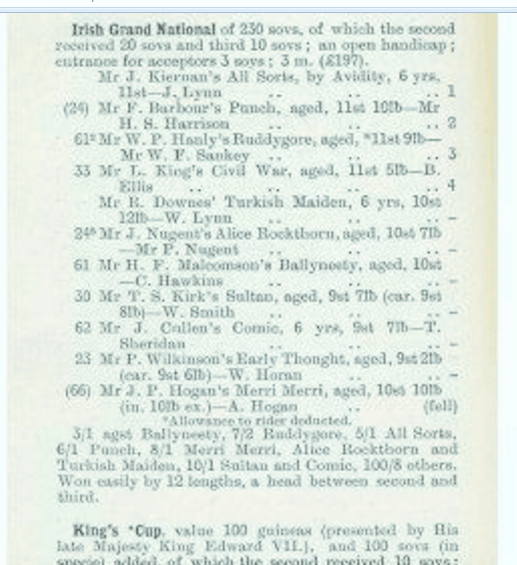
One man with more pressing things on his mind was a young jockey from Edgeworthstown, Co. Longford called Jackie Lynn. That day Jackie would be riding ‘All Sorts’ a horse owned by James Kiernan of Dysart Co. Westmeath and trained by Richard ‘Dick’ Cleary of Bishopstown House, Mullingar, Co. Westmeath. The betting had the midland horse at 5/1.

The Irish Field in its 22nd April edition carried a preview of the Grand National;

“The Irish Grand National should provide a most interesting race, for, even in the absence ‘Templedowney’ the competitors will be up the usual standard. The field may include two previous winners in ‘Civil War’ and ‘Punch’ but in the interval, the latter of these, who generally runs well on this course, has maintained his form the better”

The favourites for the race were ‘Ballyneety’ and  ‘Ruddygore’ but the preview did mention that “the better of the pair trained by Mr. R G Cleary, ‘All Sorts’ and ‘Turkish Maiden’, both of whom appear nicely handicapped, must have a big chance”. Because of the Rebellion the ‘Irish Field’ did not publish for several weeks but in its May 13th edition it does give an account of the race saying that the favourites floundered and the race was “reduced to a duel between ‘Punch’ and ‘All Sorts’ as they entered the straight. Over the last fence the favourite flattered, but when called upon ‘All Sorts’ quickly shook him off and in the end scored easily enough”.

The winner was described as follows:

“’All Sorts’ is not very much the matter in make or shape, but Mr. R G Cleary had him very workmanlike and well, and it is evident the improvement son of ‘Avidity’ was making last back end has been maintained (*he had won in Limerick in November 1915)

Whatever about his appearance ‘All Sorts’ had clearly ran the race of his life an cantered home winning by several lengths. Incidentally the 1914 winner with the apocryphal name ‘Civil War’ came in third.

By the time the meeting was coming to a close, word was spreading from the City that there were something serious afoot, graduating to confirmation that ‘Sinn Feiners’ had commandeered a number of prominent buildings and gunshots were heard. The atmosphere must have been tense and rife with rumour.

The military personnel present commandeered all available modes of transport and hurried back to their posts unsure of what was going on. The rest of the race goers, equally confused, had to make their way home on foot. Soon the railways were closed, a military measure to prevent more ‘rebels’ making their way to the city. The majority of racegoers were stranded in the Meath countryside and began to slowly drift away on foot.

The winner ‘All Sorts’ and his stable mate ‘Turkish Maiden’ who also ran in the main race, had to be walked home over 100km to the Bishopstown Stud.

Cleary was an interesting character. He had been a well-known jockey in his younger days and became a famous trainer and breeder in his own right. Shaun Spada and Serent Murphy who both won the Aintree Grand National came from the Bishopstown Stud. In 1895 he had bought Bishopstown House and developed it into a successful stud. His granddaughter Connie Cleary who will be attending at Fairyhouse tomorrow said her grandfather would later incur the wrath of the IRA, who attempted to assassinate him on two occasions. A story is also told that two armed men also made an attempt to shoot the national winning horse also. When asked where the horse was a quick thinking groom pointed the men to an old stallion and the men shot him instead.

Cleary would run for the National Party in the General Election in 1927 for the National League, a short lived party founded by Willie Redmond in 1926. The party supported the Anglo-Irish Treaty, and advocated a close relationship with the UK and a conservative fiscal policy. There was a bit of the old Irish Party about the short lived group who nevertheless won 8 seats in the June 1927 election.

Richard Cleary was not successful however in Longford-Westmeath but it does illustrate his Anglophile leanings and explain why he might clash with the local IRA members. Richard Cleary died on the 1st February 1937 and is buried in Walshetown Cemetery. He was 67 and left 10 children surviving.

http://www.census.nationalarchives.ie/pages/1911/Westmeath/Killare/Ballinaspick_or_Bishopstown/883544/

We shouldn’t forget the jockey, Jackie Lynn. He was born in Edgeworthstown in 1876 and sadly died of cancer in 1938 at the age of 52.

The family had its share of tragedy over the years and sets out starkly the dangers in horse racing particularly National Hunt. Jackie Lynn’s son Mickey was killed in a fall at Sandown Park on the 5th April 1955. He was a great horseman and predicted to be a champion jockey. Micky Lynn worked at Weyhill for Gerald Balding’s stable.

 “He had the perfect build for a jump jockey, he was intelligent and brave, and a brilliant all-round horseman who especially enjoyed riding all the difficult horses that no one else wanted to ride” (jockepedia)

It appears that in order to make the weight some jockeys forego the standard skull cap as their weight was included in the overall weight. Instead jockeys used headgear that looked like a skull-cap but might only have been made of cardboard or similar and offered no protection.

“In such headgear, Micky, then 23, took a dreadful fall at Sandown on April 5, 1955 in The Spring Handicap Chase. He landed headfirst, fracturing his skull. He never regained consciousness and died from his injuries two days later. A brilliant young talent and the life of a wonderful Christian young man had been snuffed out in an instant. The boy who would undoubtedly have become champion jockey was gone forever”

https://sites.google.com/site/jockeypedia/lynn-micky

Incidentally the Gerald Balding referred to above was the Grandfather of the Sport Presenter Clare Balding. Young Lynn was in good company at the Balding stables as he roomed with one Dick Francis, later to be the famous novelist.

Sadly another member of the family, Willy Lynn was also killed at Gowran Park in Kilkenny. Willys son also John Lynn was killed in a fall at Southwell on the 8th December, 1945.

John Lynn junior emigrated to the UK and promised his mother he would never become a jockey.  He went on to captain the London Gaelic Football team when they won a Junior All-Ireland title in 1956

Tomorrow the Ward Union Hunt will re-enact that famous 1916 Irish Grand National after this year’s race. John Lynn and Connie Cleary will both be present at the famous old racecourse where there Grandparents proudest day occurred 100 years ago, on the same day a certain Padraig Pearse cleared his throat and began to read the Proclamation from the steps of the GPO. Let us hope they won’t have to walk home this time.

2016-03-27


Leitrim 1916 

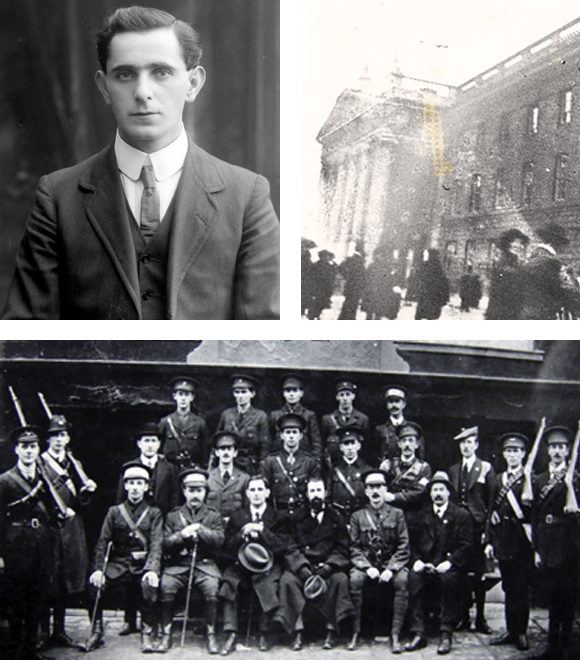
  Every County has a connection with Easter 1916 but Leitrim can be rightly proud of its connections with Sean MacDiarmada and Thomas Clarke – two of the seven signatories of the Proclamation of Independence. 

Before his execution, Mac Diarmada wrote: “I feel happiness the like of which I have never experienced. I die that the Irish nation might live!”

He was executed by firing squad at Kilmainham on May 12. 

Sean McDermott Street in Dublin is named in his honour as is Mac Diarmada rail station in Sligo, and Páirc Seán Mac Diarmada, the GAA ground in Carrick-on-Shannon. 

Sean MacDermott tower in Ballymun, which was demolished in 2005, was also named after him.

http://www.rte.ie/player/ie/show/every-county-has-a-story-30003910/10541256/

Incidentally, the Lord Mayor of Dublin at the time of the Easter Riskng was also a North Leitrim man, James Gallagher. 

Spencer Harbour 


 Interesting video history of Spencer Harbour, Drumkeeran highlighting transport links between Lough Allen and Limerick.

Credit – ‘Best of Memories’ Facebook 

Photo credit – aiveencooper.wordpress.com

Avenging Larry Fay

Manhattan Bar at night

15th January 1934

The biting wind was keeping the streets quiet and just a few hardy souls were about. Walking across 23rd street Michael Brennan must have looked calmness personified with his brisk, deliberate gait. The military step honed on the barrack squares of Renmore and Aldershot made him look purposeful and assured. Inside though he was a ball of nerves, his heart racing so much that he thought it might leap right out of his chest. A voice in his head telling him he can turn back but he knows he will see this through. Just another job, another pay packet another chance to try and get ahead in this country.

He pauses at the corner of 3rd Avenue and 40th and lights a cigarette. As he places the matchbox back in his pocket, he feels the biting cold, as his hand brushes hard snub nose of his revolver. It reinforces his resolve to do just one more job. At the end of the day this was simply a business transaction, but it was one that would help Mary and their little girl. Maybe he might leave this godforsaken country and go home. The letters from home keep him informed of the goings on; land is cheaper now and since the election many of his former comrades seemed to be starting to get on their feet at last. The Commandant had even left for Dublin and gotten a job as a Tax Inspector, his past as a mail train and bank robber hadn’t mitigated against that.

The Mitchells were also doing fine. Sean was now a Sergeant in the Civic Guards and Eddie would soon be ordained. If only Mary and him could catch a break, he thought. Maybe he had been too rash to leave, maybe he should have stuck it out a bit longer but he had enough by then. It wasn’t so much that he hated his homeland, perhaps he had loved it too much. What it was all for? Instead of having English masters the poor now had the Princes of the Church and a bowler hat elite. He thought of Eddie Mitchell again.  They had lain together for two nights in a soggy ditch hiding from the tans. Eddie of the soft laugh and the firm handshake. He would make a great Priest?

It was time; he throws his cigarette butt into the gutter and briskly crosses the street. He is calm and breathes steady. Eight years in this country and here he was a gun man once again, only his time at least he was being paid. It is just a business transaction, one more job and this would be the last.

……………………………………….

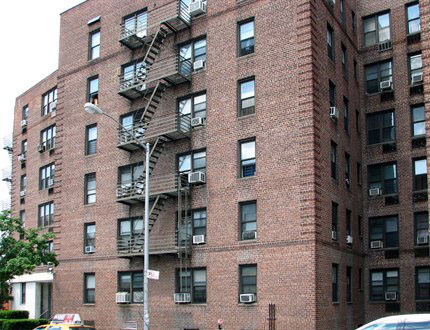
apartmentSix days later and the powerful knock woke Mary Brennan with a fright. It took her a few seconds to come to. She had fallen into a deep nap; ‘Coming, just a minute, who is it?’ as she opened the apartment door she was met a wall of Police Uniform pegged on a strapping man standing over six feet.

Hi Mary, is Mike home?

-No he’s not, no, but he’s due any time now, is everything okay?

– Everything is fine Mary, nothing to worry about it’s just a small matter I was to meet him about

– Well why don’t you come in Pat, he can’t be long, you know the way it is on the railroad Pat. I have some fresh currant cake, come on in and you can tell me how Annie is doing?

Officer Pat Leyden sloped inside, all the while his eyes circling, surveying the neat yet spartan little apartment. He may as well wait here as out in the cold patrol car. Mary had turned her back on him. He made her nervous. She began unwrapping the cake on the work top. Her shaking fingers fidgeted at the brown paper covering.

– Annie is doing well, we have just had another baby Mary, a little boy.

Mary froze for a second.Leyden realised the effect of his words and the cause of her response.

-I know you had some bad luck last year. I heard through Fr Casey. Annie has been meaning to call by. At least God has spared your little Maggie.

Mary did not respond, but gathered herself, slicing the cake into thick crumbling, slabs. She could feel his eyes upon her like prey senses the hunter. She was right, Leyden thought she looked well. She still had that lovely, delicate porcelain complexion and a fine figure. It can’t be easy for her living with Brennan he thought, and him in and out of work, on and off the bottle, stubborn bastard that he is. She was always too good for him.

Leyden remembered the first time he saw Mary, it was at the Embassy Ballroom in Sunnyside. Brennan may have been a big dog back at home. That was where farmer’s sons like him looked down their noses at townie corner boys like Leyden. In this new world the tables could be reversed very quickly. Leyden knew that in this city there was a different game to played with very different rules. Men like Brennan thought they could change the world but they were only dreamers.  He now had Brennan where he wanted him and he was going to put him to good use.

-Is it hard to get into the Department these days Pat? I mean is there anything you could do for Mike? Please don’t tell him I asked, you know how he is, he’s proud but we could do with something regular.

Mary placed the cake on the table and a small dish with a tiny piece of butter. She began pouring Leyden a coffee into a handless cup. Her eyes barely left the floor the whole time.

-I’ll see what I can do Mary. He is not twenty-one anymore and they prefer to have them at that age, I just got lucky.

Their chat was interrupted when the door opened and suddenly there stood Brennan. He was surprised to see Leyden and his expression turned dour. He looked at Leyden and then at Mary before putting a brown package down on the dresser. Mary knew it was from Lombardis Butchers down the street, where Luca often saved some of their off cuts for them.

– What are you doing here Pat? I told you I’d meet you downstairs. 

Leyden stood up, half a slice of cake still in his hand, crumbs on his tunic.

– Well you were late Mike and I just called up to give my regards to Mary here.

Brennan opened the door and gestured towards the landing – ‘Let’s go’

He knew now that Mary would be asking questions, awkward questions. He didn’t want her to know that he had any dependence on sewer rats like Leyden. Pat Leyden had never been any good. Brennan had watched him growing up and was surprised to see him sign up in the summer of ’15, how once when home on furlough he had stolen a barrel of porter from Malcolmson’s yard. It was a nonsensical crime but Leyden got a month in Sligo Jail and it prevented him leaving with the 6th Battalion for France. Leyden had the survival instinct of a rat and he had avoided the big push and the wrath of the Bavarian machine Gunners. Brennan remembered talking to some of the boys at home. They said that Leyden had woken up all the men on Little Water Street to share the barrel of porter with. It only confirmed to him that Leyden had pulled a stunt. Now the rat was in his wake as they descended the six flights of steps and walked out onto Decatur Avenue.

– Why did you come to my home Leyden? I told you not to, I told you Mary wasn’t to know.

 – I didn’t tell her anything’ I was freezing my socks off out here in the patrol car and you were late. You were supposed to be here at seven. I thought I might have missed you that’s all. C’mon you can tell her I just wanted to ask you a few questions about that brawl in ‘The Blackthorn’. You’ll think up something. It’s not the first time you’ve told her a white lie.

It was done before he knew it. His two clenched fists rested snugly underneath Leyden’s chin, the stiff uniform collar tightly twisted in his fingers.

-Leyden, I’m warning you, don’t ever underestimate me. You might think you are a big boy over here with friends in high places, but if anybody ever comes near my family, I don’t care who it is, I’ll snuff them out.

-Jesus Christ man, you’re a fuckin crazy son of a bitch. I’m here to help you Michael’ Leyden was now shaking uncontrollably. ‘C’mon we go way back, the men of the west stand together for one another. 

– Did you stand with us in Ypres or at Ballymacowen Leyden? Where were you then Leyden when you were needed?

For a few seconds Brennan thought about apologising but he couldn’t bring himself to. He despised Leyden, he despised his type. The type of men that professed their love of Ireland in drinking songs and yet couldn’t live there, the run with the hare, run with hound man, the type that scavenged on the bones of a carcass but would never kill themselves, yet here he was again, he Mike Brennan, even the width of the Atlantic couldn’t quench the sense of Deja Vú, he was killing again to keep even more ungrateful Irishmen in privileged positions, positions they neither earned nor deserved, leeches, leeches all.

The Patrol Car took off across town, crossing the Bridge into the man-made canyons of Manhattan. Twenty minutes later they came to stop outside an impressive apartment building near Columbus Circle. Leyden hopped out and spoke to the doorman whilst pointing back at Brennan still seated in the back of the patrol car. Leyden then opened the door;

– Lemmy will look after you from here and you can make your own way home Mike. We’ll forget about earlier. I’m sorry I shouldn’t have gone near your apartment. I just wasn’t thinking’.

-This way sir’ and the door man ushered Brennan into the building before handing him over to another staff member, a young lad in a bell-hop uniform and ill-fitting cap, who chaperoned him up to the 8th floor and there he was ushered into an impressive oak-panelled suite. ‘Miss Slowey will see you in a few minutes Sir’. Brennan sat down on a chaise longue admiring the opulence of his surroundings.

– ‘Mr. Brennan I presume’ the voice emanated from a slim blonde lady dressed in evening wear approached him from down the corridor.

-Yes Miss ….

-I’m Evie, Evie Slowey, pleased to meet you at last. Come this way….. I can’t thank you enough for what you have done for us, well for me personally. Did you know Larry?

-No mam, I heard of him and saw him once. I read about him but no, I didn’t know him..

 -He would be happy that he was avenged by one of his own. My pappy always told us that we should forgive our enemies, but not before they are dead.

 –I think I heard that saying before, mam.

 –Cut out the mam stuff, I don’t do titles, I’m just a girl from Ohio who made it to the big lights and got lucky. Larry left me a wealthy gal ….. but I do miss him terribly. He was dashing and boy did he have a wardrobe fit for a king. There’s no one like him left about this town, there’ll never be another Larry Fay. Did you know this guy Moloney?

-I never knew of him until I got here.

-He was a no-good double crossing rat Mr. Brennan. You have done this city a great service but you have also done me a great honour. I have your reward here. You received the down payment already. The Commissioner advised me that the Department have to carry out an investigation…. Don’t worry it’s a formality ….. you have nothing to worry about.

-That’s good, I have a young family, I can do without the hassle.

dollar bills Miss Slowey handed the package to Brennan. He had never held so much money in his hands before, this could buy a fine place at home. Mary would need convincing to go back. They had Maggie to think of now too and maybe her best chances were here in America. He was torn, but at least now he could pay off his debts, perhaps rent a bigger apartment on the Grand Concourse and with what was left he could send some home, maybe buy just a few acres to begin with.

 –Just one thing Mr. Brennan, Did he suffer? Tell me all. Did you make that bastard suffer? Did you let him know that this was because of what he did to Larry?

-Yes it was the last thing he heard before he left this mortal earth Miss Slowey, he knew he was going to die for killing Mr. Fay.

We may require your services again Mr. Brennan. I think you are made of the right stuff sweetie.

Brennan never wanted to see this cold-hearted siren ever again sitting there in her sequined evening dress, giddy on revenge and drunk on blood lust.  Brennan knew that its was simply an eye for an eye but soon the whole world would be blind from eye gouging. The ‘job’ hadn’t played out like he told her, he didn’t want her gloating over the death of a brave man, that wasn’t part of the deal. He had already disarmed Moloney before he walked him down the alley behind the Pearl Street Warehouses. Their conversation, if it could even be classed as such, was brief and to the point. Moloney knew he was going to die at any moment. It struck Brennan how calm he was, even having the presence of mind to make some final requests; ‘do it quick and clean and say an Act of Contrition before you leave me here tonight’. He wanted to make peace with his maker and Brennan nodded that he would do that for him.

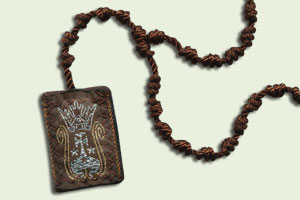
Who can blame a man for hoping to save his soul, even at this late stage . The third and last request that followed weighed on Brennan, who was conscious of leaving any clues that might link him to the killing. Moloney asked that he take the holy scapular from around his neck and post it to his mother in Tipperary.

Miss Slowey was done with him now and she walked him towards the elevator.

-Thank you so much Mr. Brennan They shook hands and he noticed the size of the diamond rings festooned on her narrow fingers. – I hope we do business again. Now Schulz will see you out. The young bell hop came out from the shadows at the end of the hall. 

 –You’re welcome Miss Slowey but it’s not a business I’m intending to expand.

 –What a shame, you are very good at it!

It was a business transaction. That is all. As the elevator began its descent Brennan recalled how Moloney had called him brother, somehow that had made his task easier.

-I won’t shake hands with you in this life brother, whoever you are, but at least I know who sent you and I know why.

 –It’s a crazy country we left and a crazier one we came to’ replied Brennan.

 -I’d imagine we have both done things against God but if he does show us mercy and we meet in the hereafter, we will share a glass and toast dear old Ireland.

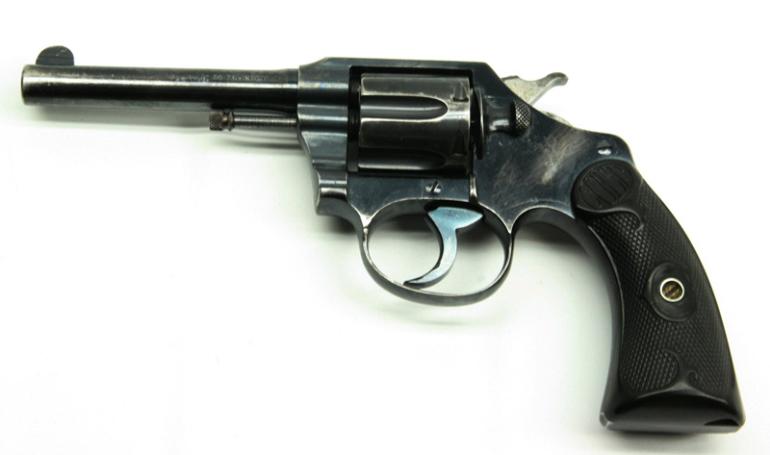
revolverBrennan did not reply, he squeezed the trigger. Thy will be done. Tears began to roll down his face  as he stood over the body of his fallen countryman.  He had killed a brother but wasn’t this the way it was always  destined to be since Cain and Abel.

What a fool he had been to think that their noble fight back home would have changed anything. When the dust settled and the guns were put away, the men had no work, their families had little food. What difference did it make to the rich in their comfortable drawing rooms? Not a whit. He was finished railing against the world. He opened the dead man’s blood-soaked collar, with his penknife he cut the scapular from around Moloney’s neck. He saw that the wound was neat passing right through the left side of the chest.  Oblivion was instant. Normally he’d do a head shot but this way the morticians would do a good job and the family, if he had one out here, could have an open casket.

         scapulaBrennan rolled up the scapular and the little medal attached to it, carefully placing it in his inside jacket pocket which it now shared with the .38. He knew that he would find out over the next few days where Moloney was from. Word would quickly pass through the neighborhood about the killing.  He scooped out the contents of the dead man’s wallet, the contents he’d send to the relatives anonymously. This would also make it look like a robbery saving the Cops having to invent a motive.

Finally with the chorus of foghorns, steamers and an overhead train, Brennan knelt down on cold cobbles, holding the still warm hand of the man whose life he had just taken, he leaned in and whispered contritely into his ear.

 ‘Oh my God, I am heartily sorry for having offended thee, may this soul and the souls of all the departed, rest in peace, amen’


‘The longest way round is the shortest way home’ – James Joyce’s Leitrim origins

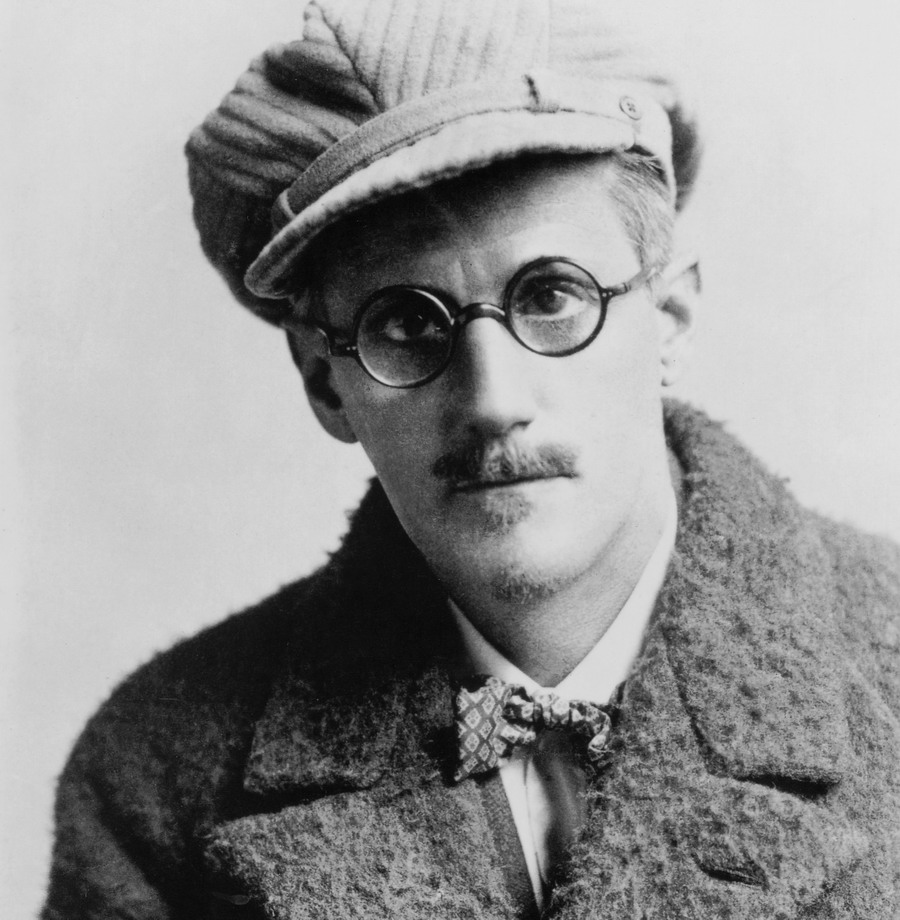
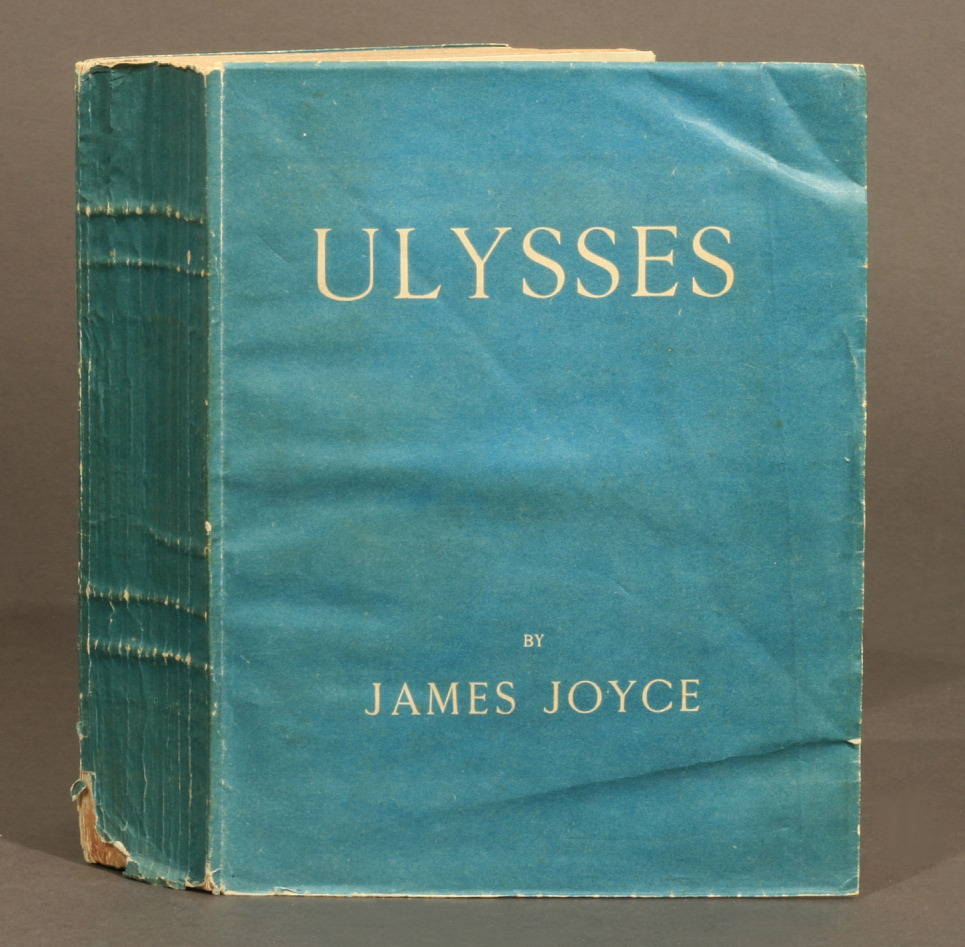
james-joyceMore people start reading Ulysses than will ever finish it. It is a difficult novel to read, crafted as such by the author, who himself declared ‘I’ve put in so many enigmas and puzzles that it will keep the professors busy for centuries arguing over what I meant, and that’s the only way of insuring one’s immortality’. Yet despite all this complexity tackling the greatest modernist novel of all is a rewarding experience. Some commentators note that this ‘Selective secrecy’ on the part of Joyce was in fact ‘a brilliant marketing strategy’ ensuring that ‘scholars still debate the mysteries of this obscure and difficult text’ ad infinitum[i].

I was intrigued to find out a few years back that the creator of the enigmatic modern hero, Leopold Bloom, had strong Leitrim connections and in particular with the parish of Gortlettragh. Joyce’s maternal ancestors were the Murrays, tenant farmers on the shores of Lough Rynn, about 3 miles south of the town of Mohill in the townland of Tulcon. Well-known local historian Michael Whelan wrote an excellent article some years back about the family. Joyce’s grandfather was a John Murray who was born in Tulcon in 1829. The infamous Lord Leitrim, William Sydney Clements acquired the Tulcon lands in or about 1862. He immediately set about reducing the number of tenants on the lakeside and took the best of the Tulcon lands into the Lough Rynn home farm. In 1866 Hugh Murray (granduncle of James Joyce) and family had been moved to the other side of the lake. They took up residence in the townland of Gortlettragh from which the parish bears its name. Hugh’s brother, Patrick Murray was the Parish priest in Carrick-Finea parish on the Cavan-Longford border and became well known in the area for helping to found the United Land League in Mullahoran in 1879.

By the time the Murrays had left Tulcon, John Murray had already established himself in Dublin. In 1854 he married Margaret Theresa Flynn whose family owned the iconic ‘Eagles Nest’ public house in Terenure. Margaret herself was the licence holder in 1860. The Flynn family were well known in business circles in Dublin where Patrick Flynn was master of a spirit store and later a starch & blueing factory, at 53 Back Lane. Margaret Theresa Flynn had two sisters Elizabeth and Anne Flynn who ran schools for piano and singing. It is believed the Miss Morkans of the famous short story “The Dead” is based on them. It was also said that Elizabeth Flynn may at some point have been a governess at the court of Louis Napoleon of France. “The Dead” was subsequently made into a feature film by John Huston in 1987.

In 1859 Mary “May” Murray, the future mother of James Joyce was born. May was an accomplished pianist, no doubt influenced by her talented Aunts. At this time the family had moved to 7 Clanbrassil St. It was on this very street that John Stanislaus Joyce, a charming, failed medical student, amateur tenor and incompetent business man met and fell in love with 20 year old May Murray. Joyce had moved to Dublin from Fermoy in Cork where his family were modest landlords and business people and firmly part of the rising Catholic middle classes.

According to Michael Whelan[ii], John Stanislaus Joyce was secretary at a distillery in Chapelizod where John Murray also transacted business. It is also known that May Murray and John S Joyce both sang in the choir at the Church of the Three Patrons, Rathgar. The young couple married in Rathmines Church on the 5th May, 1880 to the disapproval of both the Murrays and Mrs Joyce; the latter who returned to Cork after the nupitals and never reconciled with her son. On return from honeymoon in London the newly-weds settled at 47 Northumberland Ave., Kingstown. A first child John Augustine Joyce died in 1881 and their second, James Augustine Joyce was born on the 2nd February 1882, at their next home in 41 Brighton Sq. W., Rathgar.

John S. Joyce spent most of his life dodging creditors. After James the couple had three more boys and six girls. The youngest, Freddie, died in infancy in 1894. There is evidence that John S Joyce may have been violent towards his wife when drunk and at least on one occasion the police became involved. Joyce moved from job to job, selling off assets, taking out mortgages, moving house. Through all this May Murray-Joyce’s health began a long spiral of decline. Another son George died in 1902 and this was a huge blow to her as was James’ rejection of his Catholic religion.

James visited her from Paris over Christmas 1902 and she appeared to rally. Within a few months however she was confined to bed. She does not seem to have confided in James on how ill she really was. On Good Friday morning 1903, Joyce sent her a postcard asking her to tell him what was wrong, but when he returned to his hotel that evening he found his father’s telegram informing him that his mother was dying. May Joyce was diagnosed with cirrhosis of the liver but it is now believed this was a misdiagnosis and that she was dying of cancer. Joyce returned from Paris to be with his mother who lingered on throughout the summer in great discomfort until her death on 13 August. It is said that Joyce and his brother Stanislaus refused to kneel and pray at the bedside of their dying mother, despite being ordered to do so by his uncle John Murray. Mrs Joyce was laid out in a brown habit at their house at St Peter’s Terrace before being buried in a plot in Glasnevin Cemetery. A year later Joyce writing to Nora Barnacle said that when he looked upon his mother’s grey and wasted face as she lay in her coffin, he knew that he was looking on the face of a victim, and he cursed the system that had made her a victim.

Ulysses

In A Portrait of the Artist as a Young Man (1916), Stephen Dedalus describes his father Simon – for whom John Stanislaus Joyce was the model – as having been a ‘medical student, an oarsman, a tenor, an amateur actor, a shouting politician, a small landlord, a small investor, a drinker, a good fellow, a storyteller, somebody’s secretary, something in a distillery, a tax-gatherer, a bankrupt and at present a praiser of his own past.’

 When he died James remembered his father to his friend Harriet Shaw Weaver in the following terms:-

“My father had an extraordinary affection for me. He was the silliest man I ever knew and yet cruelly shrewd. He thought and talked of me up to his last breath. I was very fond of him always, being a sinner myself, and even liked his faults. Hundreds of pages and scores of characters in my books came from him. His dry (or rather wet) wit and his expression of face convulsed me often with laughter. When he got the copy I sent him of Tales Told &c (so they write me) he looked a long time at Brancusi’s Portrait of J.J. and finally remarked: Jim has changed more than I thought. I got from him his portraits, a waistcoat, a good tenor voice, and an extravagant licentious disposition (out of which, however, the greater part of any talent I may have springs) but, apart from these, something else I cannot define. But if an observer thought of my father and myself and my son too physically, though we are all very different, he could perhaps define it. It is a great consolation to me to have such a good son. His grandfather was very fond of him and kept his photograph beside mine on the mantelpiece.

 I knew he was old. But I thought he would live longer. It is not his death that crushed me so much but self-accusation …”

Whilst Joyce had a very dysfunctional upbringing his parents ensured he did receive a classical Jesuit education. 

His extended family contributed many characters that appear in his works and he in turn gave the modern world its greatest novel. He may not have been over-enamoured with his Murray ancestors who had made their money purveying ‘grog’ to the city. In the cyclops chapter Bloom muses,

Where do they get the money? Coming up redheaded curates from the county Leitrim, rinsing empties and old man in the cellar. Then, lo and behold, they blossom out as Adam Findlaters or Dan Tallons. Then think of the competition. General thirst. Good puzzle would be cross Dublin without passing a pub”.

In the age of constantly changing fashions and almost a century since publication, it is remarkable that Ulysses still occupies such an exalted position in literature. My favourite story about the often cantankerous Joyce is the one in where he is confronted by a former British Officer shortly after the end of the Great War. It was the era of men recounting what military campaigns they had fought in and how they had helped shape history. Not been a part of the ‘action’ was frowned upon in much the same way as a draft dodger is in an American election campaign today. The seasoned British officer seeking to embarrass the Dublin exile in front of a gathering asked, ‘and what did you do during the War, Mr. Joyce?’ to which the prompt reply was ‘Why I wrote Ulysses, what did you do?’ I’m sure his Leitrim cousins would have approved.

“What’s in a name? That is what we ask ourselves in childhood when we write the name that we are told is ours.” 


[i] Dr Sarah Davison, University of Nottingham

[ii] Michael Whelan ‘James Joyce Leitrim Conncection’ – Leitrim Guardian 2004 ed

The Moustache is hiring

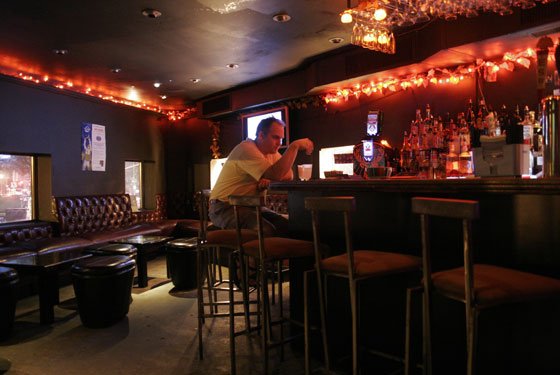
Bar in QueensAs he crossed Queens Boulevard and strolled up the wide sidewalk towards the Bar, Tommy McKillen checked his watch again, 8.45pm. His mate Jimmy had said he’d be there by 9.00pm. Tommy didn’t want to be late. He wondered had Jimmy changed much? He hadn’t seen him in five years now. They had grown up beside each other and were inseparable. Jimmy’s family had returned to the States when he was 14. Growing up in the North West there were several American born kids in school? There was the Harrington’s who were from New Jersey, who could ever forget Colleen Harrington playing basketball in the front courts at school. Tommy remembered how they had all gone to support the school team in the Connacht Finals but the truth was they had all gone to watch Colleen strut around the court. Tommy was shy back then and if she had spoken to him he knew he would have probably died there and then. Joe Burke and Jimmy were from Sunnyside, Brian O’Donnell was Chicago. Then there was that lad from Cashel who was from San Francisco, he was Moran, Tommy couldn’t recall his first name. He did remember him out at Annagh Lake one summer, at swimming lessons, bragging about little league baseball.  Jimmy later punched his lights out at the back of the school gym. God knows what had ignited the row but he recalled afterwards that Moran and Jimmy shared a cigarette; Moran’s hands were trembling so much he could barely hold the match to light his smoke.  Later he gave the entire pack to Jimmy, a sort of peace offering or reparations. We smoked some of the cigarettes under the Cryan’s Bridge until Tommy was dizzy and sick. Then we smoked some more that evening when Jimmy came with me to count the cattle over in Annagh. That’s when he told me they were going back.

Approaching the Bar the Elevated line roared overhead as the Number 7 braked for its stop at the 40th Street station. The old steel frames vibrated, the rails rattled all the way to Manhattan. The Citibank building in the distance stood there proud, alone defiant against the bigger skyline across the East River. Inside the bar was quiet. Tommy pulled in halfway down the bar and picked the middle of three vacant stools. Two older guys on his left were talking about a ball game. Slowly he got his bearings relishing the air-conditioning. There were two girls and a guy on his right who were shooting the breeze about some friend of theirs who had flunked in College. The girl looked nice, a lovely tan, blonde hair and white teeth. Frankie the barman nods as they make contact, Frankie the Greek/ Italian/ Irish barman. “Hey Tommy, What’s up?’ his right hand outstretched to shake mine as his left throws a fresh beermat on the counter. ‘I’m good Frankie’, a cold bottle of Bud is placed on the beermat. Jimmy threw down a few bills beside it. ‘Has Jimmy McHugh being in yet?’ ‘No haven’t seen Jimmy in months. He’s living up state now. Up around Tarrytown’. Tommy nodded and sipped the cold beer. He had telephoned Jimmy’s mother on Tuesday, or was it Wednesday. He wasn’t sure now but she told him shed she’d be speaking to Tommy. When he spoke to her again yesterday and she said Tommy would be here by 9.00pm. He sipped some more.

New york bar‘Jimmy’s a good guy. I like him. We went to the same High School’ utters Frankie as he passes by wiping the counter with a cloth, fastidious, clean cut Frankie. Tommy notes that there a baseball game on the television. He hates the isolation and sitting here listening to other people’s conversations, longing to join in. He checks his watch again, 9.10pm and wishes Jimmy would arrive and not leave him waiting like this.

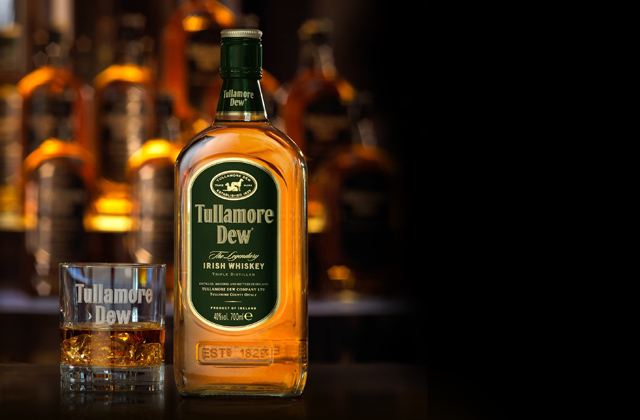
Tommy’s contemplation is broken by one of the guys on his left, ‘give us two more here Frankie….. and two Irish Whiskies’ Tommy could see the moustachioed guy in the mirror behind the bar. ‘Here you go Roger, what type whiskey you want, I got Jameson, Tullamore Dew, Paddy?’ The Moustache thinks before replying ‘Two Jameson on the rocks and have one yourself my friend’. Tommy takes out his cigarettes and lights a Parliament before stopping to read the matchbox.

‘American Festival Café, Rockefeller Center, 600 5th Ave, New York, NY 10020’

He hates his job there, hates been out in the sun all day, hates the way he must play this phoney friendly waiter all day long. The match card has the famous statue as its centre piece. One of his colleagues Andy said he likes the statue at work, said he saw it in a movie, ‘You do know the Restaurant closes in winter and is turned into an ice rink’. Tommy nodded before telling Andy that the statue is of Prometheus. ‘Oh yeah’ shrugged Andy, ‘that’s cool’ before racing off to berate the two Bengali busboys again. A few days ago he argued with Tommy that the correct term was Bangladeshi when Tommy said you could also say Bengali. Tomato, Tomato, who cares, whatever, fini

Tullamore DewFrankie comes back with the whiskies. ‘Hey aren’t you having one yourself? C’mon Frankie I’m buying, have a drink with us even if those Mets suck, at least the Knicks are flying’ the Moustache is well on it, looks like he’s been here all evening, getting slowly pissed and gradually louder. Frankie takes a shot glass and grabs a bottle of Tullamore Dew, he pours himself a drink. Tommy sucks on his Parliament watching the proceedings out of the side of my eye and through the mirror. Where the fuck is Jimmy, 9.21pm. ‘Here’s to those Knicks, going to do it this season, you heard it here first, and don’t forget it’ Yeah that’s a very loud moustache, muses Tommy, his mate doesn’t even respond, the glasses raised, clink and down the hatch. Tommy watches Frankie; the whiskey doesn’t knock a stir out of him. He recalled one of the Barmen telling him that sometimes Bartenders have their own favourite shot. ‘So it goes like this’ he explained, ‘Couple of guys want a Jaeger, you fill them a Jaeger and then they start putting pressure on you to have one, so you have your own bottle, let’s say it’s a whiskey, so you take out your bottle of Tullamore Dew and fill your glass, you do the shot with them, and the next one and so on. They think you’re a great guy, part of their night out, but they are getting wasted, you’re not because your Tullamore Dew is filled with Iced Tea, all you have to do is clean up the fucking tips’. Frankie has a bottle of Tullamore Dew which he returns under the counter not on the shelf, he’s in on it notes Tommy, determined some night to play him at his own game just to let him know, that he knows. It won’t happen tonight because Tommy is skint. He is hoping Jimmy has some contacts, anything, a phone number, Tommy needs work.

So Roger is the name of Moustache. Now he’s telling his mate about his little girl and what a smart kid she is. Tommy notices the girl to his right again, lovely long tanned legs, hint that she’s been out on the beach, it reminds me to call out to visit his Grandmothers cousins in Breezy Point. She looks about 21. She lazily drapes her arm over the shoulder of one of the guys with her. He is in the middle of some story too, stories being told all around him but what story am I in?wonders Tommy. Then it kicks off to his left ‘Get the fuck out of here, you fucking asshole’. Tommy turns just in time to see Roger the Moustache jumping up and over his mate who is now stretched on the ground with a right hook, his stool is lying beside him, he is gingerly getting to his feet, raising a hand as if to protect himself from any more punishment. Tommy didn’t see the punch clearly but the blood now trickling from the guy’s mouth suggests that it was a sweet connection. Frankie has jumped the counter and is holding the Moustache, ‘Easy Roger, not here man, take your quarrel outside, not here’, ‘You dirty bastard’ the moustache roars trying to kick his former mate, ‘douchebag’. The wounded friend is now on his feet backing away to the door, then he is gone, his shadow passing by the window heading towards Woodside. Frankie still has a bear hold of the Moustache who stretched out is a big unit, 6’2 or 6’3 at least; they go over to a corner by the pool table. Tommy sips his beer again. Move on, nothing to see here, move along.

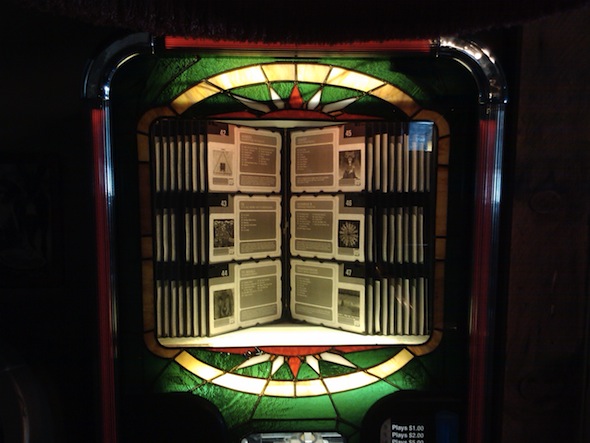
JukeboxThe girl next to Tommy asks ‘What is that all about?’ ‘I have absolutely no idea’ gesturing with open arms to reinforce his view. They all laugh and shrug shoulders, bemused. The girl gets up and goes to the juke-box, she starts flicking through the lists. ‘You’re Irish’ says one of the guys. ‘Yes I can’t hide it can I?’ ‘My family are Irish, from County Cork; my Gran never lost her brogue even though she is here since the early 50’s’. ‘I’d imagine that it’s hard to keep your accent in a place like this’ I reply for the sake of replying. Tommy remembers a girl who went to work in Bundoran for a summer, seven weeks later and it was all ‘Ock aye’ and ‘wee’ this and ‘wee’ that. Frankie comes back behind the Bar. ‘Sorry about that folks, excitement over. The guys had a bit of a disagreement, Roger there was right though so I’m letting him stay of that’s okay. He’s a good guy, he’s from the neighbourhood’. A few minutes later Roger the Moustache comes back from the restrooms, he has on a Polo shirt, cream shorts, white socks and sneakers. He takes up again on his stool, gathering his money, folding the bills before placing them again on the counter in a neat pile.

Tommy lights another Parliament, the jukebox kicks into life, Ace of Base. The trio on his right start chatting again, he is on his own again, and he is going to kill McHugh, 10.04pm. ‘I saw the sign and it opened up my eyes, I saw the sign…’ Frankie comes back with some bowls of pretzels, placing one in front of the Moustache and one in front of me. ‘Cheers man’ says the moustache ‘I’m sorry Frankie you know I’m not like that but fucking hell what an asshole’Frankie is working his way along the bar only half listening, so the Moustache starts talking to Tommy. ‘You just never know do you?’ he says. ‘Know what?’‘This guy, I was drinking with him for like two hours, seemed like a decent guy, he was Navy so was my Dad, ya’know, just having a beer. I was telling him how my father was chosen to be Neptune when they crossed the Equator, you know the tradition right, meant so much to my old man’ He stopped for a moment and threw his whiskey on his head and slammed the glass on the counter. ‘Son of a bitch! So I was telling him about my daughter and showed her photo like this’ he takes his wallet out and shows Tommy a photo of this young oriental looking girl, his daughter. Must have got a mail order wife assumes Tommy, Thai, Filipino somewhere like that. ‘So he says nice kid and asks me do I want to see his, I say yeah sure, I thought you weren’t married blah! Blah! and he takes out his wallet and shows me some pictures of young kids nude, disgusting man, young kids, fucking paedo, sick bastard!’Christ I think, he was right to box him so, ‘I’m sorry kid but this guy really got me, if Frankie wasn’t here I would have done some real harm, Frankie give is two beers and I’m gone’ Frankie places two fresh beers on the counter, ‘There on me’ The moustache is off again, ‘I was just telling your friend here about that creep, fucking hell’ Frankie winks at me without the Moustache seeing and heads back up along the bar. ‘I’m sorry I didn’t get your name kid, I’m Roger by the way, Roger Wallstein’ his hand is out so I shake hands, ‘How are ya, I’m Tommy’‘Irish huh, this neighbourhood was all Irish once upon a time, when I was growing up it was all Irish, all the businesses too. I’m Catholic, German, family, Bavarian, yeah a good Catholic boy. So what’s your story Tommy?’ 

Tommy takes a drag out of his cigarette before answering, ‘Well I was supposed to meet a mate of mine but he’s stood me up. Irish guy I grew up with, well he was born here but family came back to Ireland and then back over here again. Frankie knows him. I’m looking for work to be honest, only been here six weeks. Have a job in a bar in midtown but the hours aren’t great’ ‘Midtown not great for tips either save Thursday and Friday afternoons’ says Roger. ‘There’s some temporary positions going in our place, easy work, money is okay’. This sounds good thinks Tommy, ‘Where bout’s that? Doing what?’ ‘It’s an apartment block on the Upper East Side, concierge, you know, Doorman, elevator cars that sort of thing. You might get a few months’ work, who knows’. ‘That would be great, really need something soon’. ‘Frankie give me a pen’ When the pen arrives Roger starts writing an address and number,

Empire House, 180 East 72nd St 3rd & Lex., Shaun Richards

‘You give them a call or call in and speak to Richards. Who knows he might give you a break’. The Moustache looks at his watch ‘Oh my god, I’m out of here!  Nice talking to you ….’ ‘it’s Tommy’ ‘yeah Tommy’ he throws his bottle on his head, picks up his Bills and throws a twenty back on the counter, ‘Thank you Frankie, I’m sorry about earlier buddy’. With that Roger the Moustache is gone. Tommy looks at the napkin, Upper East Side he thinks and places the napkin in his wallet. Frankie is over and picks up his tip and wipes the counter down, ‘Roger was in good form tonight eh Tommy?’ ‘Yeah, certainly was a bit of drama alright, I never met him before’. Frankie continues wiping the counter ‘I suppose he told you all about the wife leaving him, he really misses his daughter. He met this girl Chinese or something through some agency in the church, she comes over, they marry, have a kid, lovely little girl, then she ups stick and are now living in Manhattan with some other Chinese guy. Roger thinks he was set up, maybe he was but he certainly got her a green card and she’s here to stay but he’s left paying the bills. He’s drinking a good bit these days. I worry about him’. Frankie reaches into the under-counter fridge and pulls out another Bud for me ‘That guy surely ruffled his feathers earlier’ Frankie goes through the whole story about the  porn pics in the wallet and the man claiming they were his kids. ‘Dirty bastard’ Tommy shakes his head and then asks ‘What does Roger do for a crust? ‘He works in some building in the city, security or something. Not sure Tommy’

apartmentBack in the Apartment Tommy tip toes by their Ecuadoran room-mate. There is no sign of Andy in the bedroom, out on the town again. With the stifling heat, Tommy can’t wait to turn on the fan for some relief. There is no air conditioning in the apartment and they struggle to sleep. The noise of the city wakes him up and he looks at his watch; it’s just after 7.30am and he is covered in a lather of sweat. The pillow is soaked through and the sheets also. He even kicked off his boxer shorts during the night. Not able to sleep any more he takes a shower, relief, relief god that water is good he thinks but then he can’t dry himself with the towel, as he starts sweating again. He hates this heat, he hates this apartment, but most of all he hates being broke in this city. In a few minutes he is gone down the stairs out into the bright, blinding white of day. He wants to go home but he can’t. In the Diner he has some breakfast Canadian bacon, eggs and coffee. He can feel a slight thud in his forehead. Jimmy never showed. He takes several refills of coffee and read the The Post.

Two hours later and he comes up out of the subway station. He takes a few seconds to orientate when he does he continues over East 72nd Street and into a shady atrium. Tommy walks to the front door and is met by a man in a smart uniform and white gloves. ‘Can I help sir?’ he asks, stretching his arms across to ensure Tommy doesn’t consider entering the building. ‘Can you show where the reception is?’ ‘Reception’ he looks curiously ‘this is an apartment building not a hotel. This is the main entrance and is for tenants only sir; you’re going to have to move on sir’. Tommy turns to walk away but then shouts after the Doorman, ‘I’m looking for the manager Mr. Richards, Shaun Richards?’  ‘Go back to the service entrance on the corner of 71st and 3rd, you better go now’.

The building is huge, Tommy looks up at the sky and it seems to cover an entire city block, a central tower with two substantial wings with probably several hundred apartments in total. He walks around the block and thinks about abandoning his mission. He stands at the entrance for a few seconds. This is not near as glamorous as the entrance on the other side of the building where he’s just been. A couple of men point me towards the office and he enters the bowels of the building, down a ramp and into furnace like heat and the deafening noise of a rubbish compactor. Men in overalls push overflowing garbage bins up the ramp to waiting trucks. At the bottom of the ramp a corridor leads on and he sees a sign for the office. There is a glass window and he can see a number of men inside deep in conversation. There is a time clock on the wall and a large board with dozens of employee’s time cards in neat rows. Tommy pauses before knocking on the door but when nobody answers he just opens it. A man is sitting at a desk; he is on the phone but momentarily puts the mouthpiece to his chest and says ‘What you want?’ ‘I’m looking for Mr. Shaun Richards’. He points towards another door, returns to his call and I go on further, knock on the door,

‘Come in’ is the reply so Tommy opens the door, ‘C’mon, c’mon I don’t fucking bite, what can I do for you?’ says a Burt Lancasteresque figure in a sharp suit. ‘I’m here to meet Mr. Richards’ ‘Oh yeah well I’m Richards, Shaun Richards, who are you?’  he roars, why is he roaring? ‘Tommy McKillen, here about the job, Roger sent me’ He gleams with big white teeth showing and a powerful stare. ‘Roger?  Roger who?’ ‘Roger Wallstein’ I reply. ‘I have no idea what the fuck you are talking about son, Saunders! Saunders get in here!’ the man on the phone rushes in., ‘Saunders are we hiring? Summer relief? You know anything?’ ‘Well yes sir we do need some cover yep’, ‘Listen this kid looks the part, and he’s got balls to walk in on me like this’ says Richards as he reverts his gaze back on Tommy‘ look son we have a few weeks work that’s all but there may be something more permanent come out of it. Be on time, always be on fucking time and be polite to the tenants, if you’re not, you’ll have me to deal with, now get the fuck out of here’.

Saunders leads Tommy out of the office and down the corridor where he takes out a bunch of keys and opens the door. When the lights flicker on Tommy can see rack upon rack of uniforms, some still in dry-cleaning covers. ‘What size waist?’ asks Saunders ‘34”’ ‘Here try these’ the trousers don’t fit so Tommy tries another. With trial and error he gets fully kitted out and is then given a locker in the changing rooms to keep his stuff in. ‘Get a lock, get 3 or 4 white shirts, always come in clean and tidy. No bad breath or BO, you start tonight at 11.00pm, you be here by 10.30pm and relieve the man at Elevator 6 at 10.45. You give good relief you get a good relief. In the morning your replacement will try and be in for 6.45am. Where are you living?’ ‘Oh Elmhurst, just off Broadway’ replies Tommy. ‘Okay, if you haven’t shirts there is a Sears out at the Queens Center, it’s just another couple stops on your train, get some’

At 10.44pm that night Tommy takes the service elevator up to the lobby. It is a beautiful hall of mirrors with a water feature behind the main entrance where he had initially been this afternoon. Two door men look towards him and he can sense they are checking him out. Tommy has a piece of paper with instructions about polishing brass and cleaning mirrors, on the other side is his Roster for the next 3 weeks. He walks towards where I’ve been told Elevator 6 is. A uniformed man with a moustache stands outside the car, looking in the mirror, fixing his collar, ‘Hi Roger I got the job’ Tommy announces excitedly, ‘Hey kid, thanks for the relief’ he looks peculiarly at Tommy, ‘We met in the Blackthorn last night, remember?’ but Roger just frowns, ‘The Blackthorn?’ he looks at Tommy vacantly.  ‘Yes remember the old guy with the kid’s photos?’ Roger opens the door to the service elevator, grabs his bag and says ‘I’m sorry kid I think you must be mixing me up with someone else, have a good one’

Dithane and Doodlebugs

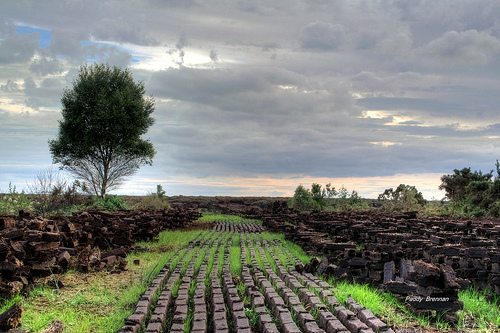
'Turf Rearing' P Brennan ‘Turf Rearing’ P Brennan

My Granduncle lived a very regimental and ordered life, practically all of it in the industrial heart of England. It was a country where my young mind believed the trains always ran on time and drivers never exceeded the speed limit. The Granduncle was in London first but then moved to Coventry where he had secured a job in the Standard Motor Company factory. A company that was standard, what more could a standard Irish migrant want.  

The factory later became the even larger Massey Ferguson plant, ‘Twenty Thousand people walked through those gates every day’ he’d boast. The uncle always simply called it Massey ‘Oh aye’ which suggested he hadn’t much time for the Ferguson half of the operation.

He came home every summer without fail, using up all his annual holidays. He brought us a bag of Humbug mints each – which none of us liked. He smoked Players cigarettes, tip less and toxic and his long thin fingers were like stained amber with years of nicotine layers. The first cigarettes myself and my brother ever smoked were pilfered from his box. We would smoke them in the hay-shed; it seemed to us a logical place to smoke back then. Unfortunately this logic put paid to a career in the local Fire Service, something about ‘deficit in risk assessment and prevention’.

During his holidays my father would bring the Uncle to town every Saturday night and occasional visits to our many relatives houses. My father would often be working on the farm until nine or ten o’clock at night and the Uncle couldn’t understand why Irish people only went to town at half past Ten, “some of them don’t even come in until after eleven’ he moaned.  In the UK, he often reminded us, people would be going home at that time, they had to he said, ‘last bus goes at half ten’. Somehow I don’t think he ever missed that last bus of a Saturday night in Coventry.

I was always interested in history. After much prising, the Uncle might be encouraged to give up some titbits about life in London, particularly about the Blitz which he had lived through. He pronounced the word Bomb as Bum so we of course mischievously kept asking him about the Blitz just to hear him say Bum over and over; ‘Oh they pounded London with bums, all bloody night, those bums raining down, fires everywhere’. I never heard him say he was afraid but he must have been, a 20 year old lad thrust from a small farm in the North West of Ireland into this cauldron of fire and death.

My Grandmother and another brother were with him at the time. My grandmother also spent time in Manchester but came back to Ireland and soon after met my grandfather and married. It was 1942.

The Uncle stayed on. He got work down near the South Coast ‘where they were sent’. I couldn’t understand that part of it, who sent them? Of course it was a well-kept secret what was happening but the Uncle told us he knew well they were getting ready to cross the Channel and invade France. No flies on him, he knew all about D-Day months before everyone else.

Back in London he recalled the V2 rockets landing; ‘if you heard it coming you were fine, it meant it had already passed you by’. I explained to him this was because the rocket was travelling faster than the speed of sound so it arrived at its target before you heard it. I told him that the speed of sound was 768 miles per hour; he informed me this couldn’t be as he had once seen a V2 flying in the sky and it wasn’t going that fast!

I, like many young boys my age idolised the great Liverpool team of the 70’s and 80’s. The Uncle had no time for them; he said that they scored a goal and then just kept the ball, passing it over and back to each other. I fancied that this was quite a clever way for a team to fill the Club’s trophy cabinet but he was having none of it.

He liked his home town club, the Sky Blues, Coventry City, who at the time were a mid-table team in the First Division who occasionally survived tense relegation dogfights.

I began to memorize the players babes from Panini sticker books. I asked the Uncle if he ever went to games in Highfield Road; ‘Oh aye’. He told me later that the the last time he was at a game there were over 60,000 there. I couldn’t fathom this as at the time Coventry was averaging about 20,000 attendances per game. I remember checking the record books and discovered that there was over 50,000 at a match in 1967 when they beat Wolves to gain promotion. Was this the last game the Granduncle was at?

My father visited him in 1985. My mother and he were over visiting our maternal Uncle who was gravely ill in London. My father got the train up to Coventry and the Uncle met him at the station.

He asked my dad if he was hungry and the pair went in search of a renowned Cafe which the Uncle proclaimed served the best roast dinner in town. They walked around for nearly an hour, passing dozens of Asian and Chinese restaurants, before the Uncle gave up aghast; ‘it used to be around here somewhere’. It may have been there in 1967 when he last ate there, perhaps on the way to the big game.

The Granduncle lived in a small neat bedsit in a large building with dozens of other Irishmen of similar age. I remember my father was moved by it, surprised even, maybe he had expected that he had a nice mock-Tudor semi-d in the suburbs.

When he came home the Granduncle liked the open fields, the cattle, making the hay and silage pits but most of all he loved the turf bog. He would be on the bog by eight o’clock in the morning. He couldn’t understand how we young fellas only went down at ten. When we got there we often broke the tedium by having mud fights – throwing buts of wet turf at each other. Sometimes we would abandon our posts and head off over to the high bank, jumping drains and bog holes, catching frogs, chatting with other people on the bog.

But the Uncle would stick at it, back bent, a steady pace, slowly but relentlessly making his way down the plot of turf. He often chastised our father for not having control of us but my father only told us what was being said about us. The day after these tell tales we would give the Granduncle the silent treatment.

My father liked to foot the turf once, making small footings but the uncle insisted on lifting them, turning them, this was only stage one of a laborious process. It became our summer penance. When this was done he went back to the beginning and made small footings of six to eight clods and then when that was done he would wait a few days before starting all over again and making them into bigger clamps.

He would look with disdain at a neighbour whose turf were cut weeks and lain untouched, green grass growing high around and sometimes through them. The neighbour would then come down nonchalantly and make a start, work for fifteen minutes, chat, smoke and then head home. The Uncle couldn’t understand it. Yet I often remarked that the neighbour usually got his turf home as soon as we did.

The summers of 1985 and ’86 were terrible in the bogs and in the meadows. The farm felt like a Gulag. The turf was the new sausage machine variety and they were impossible to work with. They just broke and crumbled in our hands and we all cursed them but none more so than the Uncle who lamented the old ways of slan and barrow.

In 1987 he retired from Massey (I don’t think he ever developed any fondness of Mr. Ferguson because he was again not mentioned). He got a Gold watch from the company, just like thousands before him. I don’t know who instigated it but he packed his bags there and then and came home. Maybe he had always planned to come home. He had been away forty eight years but he still only had one home.

The house he had grown up in was still standing and home to his older brother and his wife. They had married late in life, well past child bearing years. The house was pretty much as it had been in the 1930’s when the rest of the family took the Mail-boat to Holyhead.

The Uncle adopted a superior tone when speaking about his elder brother who had never left home, but it seemed lost on him that this man never had to leave home, and it wasn’t as if his own decision was one of choice, the reality being that it was one of economic necessity. So when he came home he moved in with my Grandparents who lived up the lane from us.

After leaving a life that was ordered and routine it must have been difficult for him to adjust. It showed in little things like when he smoked he seldom finished his cigarette. He usually butted it out halfway down. The habit was obviously borne out of the short ciggy breaks in the East Midlands factory where he had been incarcerated.

The rigidity and regimental nature of his working life was completely out of sync with the more laid back life in the rural west of Ireland. It wasn’t that people didn’t work hard, they often worked harder, it was just that they were not slaves to the clock. They didn’t clock in but they never clocked out. No 5 o’clock finish in the evenings, they would work to midnight if they had to or if felt like it. The only things exercising any control of their time were the seasons. To me it seemed a more natural way to live life.

The homecoming year of 1987 was also a monumental year for Coventry FC. They won the FA Cup beating a highly fancied Spurs team at Wembley. The Uncle didn’t even watch the match and seemed indifferent when I told him the news. He did have interest in GAA and could recall cycling to games including a Junior All-Ireland Semi-Final in Breffni Park in the early 40’s.  Leitrim were going well against Meath until the great Red Moran from Aughavas broke his leg. He also extolled the skill and strength of the larger than life, Jack Bohan, centre half back on the Leitrim team in 1927.

When we were younger we thought the Uncle had built every Massey Ferguson tractor that had ever ploughed a field. We had an old Ferguson Twenty and a 1968 MF 165. Surely he had built some part of these tractors. One Saturday morning my father asked the Uncle to hop up on the 165 to tow the Twenty (the last time there was a battery in the Twenty was when it left the Massey plant in the early 50’s). So the Uncle got up and let the clutch up too quickly and the engine conked out. He began fidgeting and it quickly became apparent that he didn’t know how to start a tractor. How could this be? How could a man that worked in a factory for over forty years, the place where hundreds of thousands of tractors were built, including the one he was now sitting on, not know how to drive one? My father wasn’t that surprised and he soon let us know that he had heard that the Uncle had worked all those years in the stores.


If there was one other job that animated the Granduncle it was spraying the spuds. The name itself was weighted with danger, you’d never call a child or a family pet Dithane! The anti-fungal powder had replaced bluestone as the number one agent in fighting the dreaded potato blight.

My father would drop down a couple of barrels of water to the bog garden where we grew the spuds. The spraying paraphernalia was quite simple. A plastic knapsack, with a handle on one side and nozzled hose on the other, a plank of timber, a thick branch or brush handle, a jug and a pair of Granny’s old tights. The Uncle or my Granny would throw the tin of Dithane into the barrel of water and mix it with the branch. When the Uncle did it he invariably stood downwind for some reason? The contents of the barrel were now what Patrick Kavanagh called ‘the copper-poisoned ocean’.  The plank of wood was placed across the barrel and then the knapsack on top. The lid was screwed off and the tights placed across the opening of the tank which was filled using an old plastic jug.

When full I would reverse like a donkey into a cart, be strapped in and away I’d go down between the potato ridges, pumping the lever whilst arching the nozzle left and right spraying the stalks with this chemical mist, him thinking of the floury spuds on the table next year, me about the life cycle of ‘Phytophthora infestans’ that we were studying in Biology at school.

The Uncle didn’t trust me by this stage and he would watch my every move making sure I didn’t miss any stalks. He insisted I got in under the leaves as well as covering the top side. The trust was gone, too many times I had been found out by him, the stolen cigarettes, the little lies. One time my parents were away and we never checked the cattle. There were 45 cattle in one holding, 15 weanlings in one field and 30 cows and calves in another. ‘Did you check the cattle down in Lily’s?’ he asked ‘I did’ I said without flinching, ‘How many were there?’ ’15’ ‘Oh is that right well there was 30 cows and calves there this morning’. Other indiscretions such as skipping church on Sunday and then been asked who had said eleven o’clock Mass, ‘Fr. Corcoran’ says I, ‘Oh that’s strange because he also did Half ten in Gorvagh’. I was never going to amount to much in his eyes, only a passing interest in cattle or farming, just dossing, or staying in the house like a woman, reading books.

It had already been established that the Uncle, for a man who had spent his entire career in the auto-motive industry was not very mechanically minded. He was always breaking things, wrenches, spanners, vice-grips, vices, hacksaw blades, shovel handles, axe-handles, measuring tapes and my father’s patience. He could however fix a puncture on the High Nelly bike he had commandeered from my Grandmother.

He was suited to manual labour and would toil all day at the same task unmarred by monotony. At silage time he would spend two days trimming the sides of the pit until you could almost hear the big clamp of freshly cut grass cry, ‘enough! enough!’ He would bend into a yard-scraper pushing slurry ahead of him until he got to the chute leading to the slurry tank, then back again repeating the process again and again. If there was a quick, easy, mechanical way of doing a task he would favour the slow, grinding, back breaking method. He did this well into his eighties but slowly and surely he had to relent, but, he wasn’t done fully, he became the obstinate overseer, watching everything that was done on the farm and passing judgement.

Nobody was immune from his scrutiny. He commented on the time you got up in the morning to the time the light went off in your room at night. He had an indomitable spirit and great work ethic but his life did not have to be so hard, so dreary, and so weary. When he ended up in hospital after taking a fall off his bike the nurse gave him painkillers to take. He couldn’t swallow them, he didn’t know how. He had never taken a tablet in his life, he was Eighty two. He knocked in another few boundaries after that before he got bowled out.

  Spraying the Potatoes 

(an extract)

The barrels of blue potato-spray

Stood on a headland in July

Beside an orchard wall where roses

Were young girls hanging from the sky.

The flocks of green potato stalks

Were blossom spread for sudden flight,

The Kerr’s Pinks in frivelled blue,

The Arran Banners wearing white.

And over that potato-field

A lazy veil of woven sun,

Dandelions growing on headlands, showing

Their unloved hearts to everyone.

And I was there with a knapsack sprayer

On the barrel’s edge poised. A wasp was floating

Dead on a sunken briar leaf

Over a copper-poisoned ocean.

The axle-roll of a rut-locked cart

Broke the burnt stick of noon in two.

An old man came through a cornfield

Remembering his youth and some Ruth he knew.

He turned my way. ‘God further the work’.

He echoed an ancient farming prayer.

I thanked him. He eyed the potato drills.

He said: ‘You are bound to have good ones there’.

By Patrick Kavanagh

© estate Patrick Kavanagh

AFTER ‘SAMHAIN’ I’M HEADING TO SPAIN

Samhain

Samhain

The children are on mid-term this week or Halloween break as we used to call it. On Friday last they went to school in their outfits; The oldest went as the Grim Reaper, the second as a Dark Swan and the youngest as a Ghost with an incredibly long tongue. They seemed to have a great day and the teachers got in on the action too. The weather has contributed; the weekend has brought cooler, showery weather, overcast and the trees are shedding the last of their leaves. You can’t get more Halloween than that weather outlook.

Halloween is a global event these days but October 31 is really Samhain, the Celtic New Year. The ancient Celts society was based on cattle rearing. They were the Masai of Europe. Even in their Brehon Laws many serious offences such as murder would result in a fine called an Eric which consisted of a set number of cows. The cattle were given to the victim or the victim’s family, and if the perpetrator could not pay, or failed to pay, then his family picked up the tab. Cattle were the legal tender of Celtic Ireland and in this context the end of October was the date when the cattle were driven down from upland pastures, down to the lowlands for shelter in the winter. They would stay in the lowlands until the following Bealtaine, or May day, the first day of Summer, and then they were moved to the lower slopes again.

Samhain is also associated with light and the lighting of Bonfires. In the United Kingdom however the Bonfires will as usual be a few days after ours. Guy Fawkes Night on the 5th November is now the traditional night on which Bonfires are lit, in celebration of the discovery of the plot to blow up Westminster. Despite his notoriety, Guy Fawkes is sometimes toasted as “the last man to enter Parliament with honest intentions”.

One other thing I’ve noticed in recent years are the number of Pumpkins we see in our shops. Pumpkins are difficult to grow in our climate but the tradition of carving Jack-o-lanterns seems to have travelled to us from across the Atlantic. This would suggest that there was a tradition of lighting lanterns to ward off evil spirits prior to the colonisation of North America. I have read that hereabouts turnips were used, but it’s not something I wish to promote as the smell of burning turnip has to be one of the vilest odours known to man. On the other hand it might be useful if you are allergic to trick-or-treaters.

Samhain and the traditions associated with it are another example of how Christian culture simply took the existing Celtic Pagan traditions and painted them with a veneer of Christianity. The Celts believed that on Samhain the doors were opened between their world and the underworld and this allowed the spirits to pass between the two. The tradition was carried to Europe in the Dark Ages by the Irish Monks. In the year 998, October 31st was adopted as a Christian festival known as All Saint’s Day, or All Soul’s Day. It came to be commonly known as, All Hallow’s Eve or Halloween.

One tradition that didn’t carry over from the Celtic period was that of human sacrifice. The practice itself predated the Celts coming to Ireland. Many sacrifices were carried out on the Cavan – Leitrim border close in the parish of Templeport. In ancient times the place was known as Magh Slecht. Tigermas (Tighearnmhas) was an early High King of Ireland and around this day three thousand five hundered years ago he and his supporters and army made their way to Magh Slecht (translated as ‘The Field of Adoration’) to worship the Sun God, Crom Cruach. Tigermas had a long reign of seventy seven years but it was one in which he was in continual war with the the Sons of Eber (from which we get the word Hibernian) but which he was ultimately always successful. It was said that during this time Gold was first smelted in Ireland, by a man called Luchadán.

Tigermas also made a law that each grade of society should be known by the number of colours in its clothes: — the clothes of a slave should be of one colour; those of a soldier of two right up to the Chieftains who were allowed up to five colours. Tigermas as King, his family and Druids were allowed to wear up to six different colours in their apparel.

In 1544BC Tigernas headed to Magh Slecht to worship Crom Cruach and whatever happened there it resulted in three quarters of his army (as well as himself) dying. I am not sure who was doing the outdoor catering but let’s just say the investigation was inconclusive . Tigermas is described as the 13th Milesian King of Ireland. The Milesians came to Ireland from Spain and when they arrived here the Island was inhabited by the Tuatha de Dannan. The mythology states that the two peoples agreed to divide up Ireland with the tuatha taking all that was under the ground and the Milesians all that was above. This of course ties in neatly with the longstanding belief that there are people inhabiting the underground who come up above ground around this time of year.

I recently came across some interesting writings on the Spanish origins of the Milesians. It seemed that not only were the Irish aware of the Iberian link but the Spanish were also. This came to a head when the Irish Gaelic Lords fled Ireland in 1607. Many sought and received the protection of the Spanish king who decreed that the Irish in Spain were to be given all of the rights and privileges due to Spanish subjects. This unique legal position was confirmed in subsequent decrees by Charles II and Philip V of Spain in 1680, 1701 and 1718.

The French Revolution spread terror amongs the monarchies of Europe and this fear led to registers of foreign subjects been created in Spain. The register also required foreign subjects to take a particular Oath which was not a requirement of native Spaniards. This led to three Irish natives living in Cadiz agreeing to sign the register, but refusing to take the oath claiming they were not required to take it. The three appealed to the Royal Council in Madrid, who decreed (after consulting the attorney-general) that “the taking of the oath, to which all foreigners have been directed to submit, shall not be extracted from the Irish, seeing that by the sole fact of their settling in Spain the Irish are regarded as Spaniards and have the same rights. The decision led to King Charles IV of Spain issued a further decree in 1792 confirming this decision by his Council and the special and unique position of the sons of Mil back in their ‘old country’.

So to summarise this blog entry:_

  1. Enjoy Samhain or Halloween wherever you are,
  2. Don’t eat anyone
  3. Be careful with the fireworks and the outdoor catering
  4. Wear as many colours as you like, it flaunts your social status,
  5. Don’t worry if this winter gets too cold we can always head back home to Spain.


The Month’s Mind

I have reworked a previous blog post about shaving into a short story. The title refers to  requiem mass celebrated about one month after a person’s death, in memory of the deceased. The tradition is of great antiquity and some believe the word is derived from the Norse word ‘Minne’  describing a ceremonial drinking to the dead. The tradition survives in Ireland where the family and close friends attend. The story is reworked into a rites of passage narrative. 


shaving brush


I walk down the lane to the neat little farmhouse half consciously counting the cars parked in the farm yard and driveway. It is four weeks since he died and since then the dahlias in the front garden have come out rejoicing I n full bloom. My granduncle is standing sentry-like at the back door, smoking his cigarette and fumbling in an effort to put his matches back into the inside pocket of his well-worn suit. My Aunt says she swears it is the same suit he wore twenty seven years previous to my parents wedding. ‘It’s hard to believe, it sure is, hmm’ he mutters cigarette smoke bellowing from his mouth and nostrils like an old train, ‘imagine hah….. Where does the time go to?’ I’m sure he can barely make my shape out through his glossy, brandy dulled eyes.

The second I open the door I am almost overcome with the unnatural heat and noise coming from inside the house. ‘It’s nice that they laid him out in the home place’ said Mrs Noone to my mother, ‘even of the house is showing its age and all that, it’s what he would have wanted.’ Mrs. Heeran interjects ‘I’m not gone on these funeral homes at all; they’re pure pagan so they are’ to which Mrs Noone replies ‘It’s hard to beat a good wake at home amongst your own and then the chapel’. I am stranded here between them like a net on a tennis court when my aunt rescues me, ‘There he is, won’t be long before he’s off to University, isn’t that right Liam, now come up here to your Grandmother for  a minute, Grainne will you get Mrs Noone a fresh brew?’

In a few short minutes I find myself sitting in the room where he once sat, in the chair that he would have sat in. I settle down and look around the room at the people gathered for his Months Mind. Trays of sandwiches are passed around followed by plates laden with slices of fruit flan and apple tart, the latter flavoured with cloves of course, my Grandmother’s way. My Aunts and Cousins fly about with pots of steaming tea topping up delicate china cups, in a room where an epic turf fire blazes. On a shelf above the radio, a small statue of St. Martin de Porres acts as a paperweight for numerous Mass Cards, the little figurine itself surrounded by various miraculous medals and bottles of holy water from Knock, Fatima and Lourdes. There too are his reading glasses, the ones he detested and fumed about constantly. On the inside sits a shiny box red and black containing his electric razor.

Shaving had never seemed routine to me as a boy. I believe that shaving is something ceremonial, almost ritual and more than mere necessity; it can be a performance, the theatre of the everyday, the essence of life, a mark of manhood and flash of vigour. I remembered my father used a wooden handled foam brush to mix the cool shaving cream that he then daubed over his prickly face to soften the stubble. He then began by slowly dragging the sharp Wilkinson blade across his jaw, like mowing a meadow in straight swathes, before cleaning the blade under the cold tap after every second or third stroke, repeating the motion, cleansing, shearing and renewing. He would finish with the more difficult movements around the mouth and lips, which he pinched, in deep concentration, before finally washing the residual foam away with a wet cloth. A quick dab of cold water marked the end of the ceremony; all the time unaware that I was standing there watching, learning, in awe.

No doubt he too would have looked at his father, my Grandfather, shaving, or perhaps his uncles when they came home from England in the summer. Once I had tried to mimic the act of shaving with my father’s razor, a foolish act borne out of my impatience to become a man, and testified by the cross-like scar on my upper lip. The scar is hidden now by my own stubble only to appear anew when I shave. My Grandfather had berated me for my stupidity, a silly boy trying to be a man.   ‘Have you the bags packed Liam? You won’t find it now. He would have been so proud of you’  It is my cousin Aileen smiling, her words breaking my trance-like reminiscing and I become aware of her heady perfume. ‘Yes just two weeks away, won’t find it’ I reply, ‘Have you digs organised?’ she asks, ‘yes, I was lucky to get a room in a house on Quay Road. Only got word yesterday so I’m taking it blind but it should be fine’ She puts her hand on my knee and squeezes it ‘It’ll be the making of you young man, the world is your oyster, he’d be so proud, he’ll be with you Liam, he’ll be by your side’.

It was I who used hang at my Grandfather’s side watching him, learning from him, like in McKee’s Bar on the nights of the big sales in the local Mart, the pub full of jobbers, tanglers, dealers, Northern buyers, tobacco smoke and thick ash plants for beating cattle up trailer ramps. I would sit on a high stool beside him, aping his gestures and movements, my legs dangling, swinging in time to the beat and blare of the mixed accents of men from Cavan, Longford, Roscommon and Fermanagh. The air was thick with the sounds of laughter, merriment, rows, insults and the vigorous shaking of hands, the entire drama that went on such nights as I pretended my frothy Cavan Cola was a glass of Guinness.

Later I would link my Grandfather home from town, standing well in on the grassy verge when car lights approached, until finally we came as far as our lane.  On the way home he would denounce what ‘They’ had done to men like Blessed Oliver Plunkett; He would tell me how Parnell was let down badly but had let himself down too. He would get most animated when he spoke of about his own Great-Grandfather, ‘don’t ever forget’ he said that ‘we were burnt out of  our house, put to the road and they after hanging him from the shafts of a cart.’ Unbeknownst I was being passed on invisible torches, whether I wanted to hold them or not. Then as we approached the house he would straighten up, puff out his chest, fortified for meeting my Grandmother. ‘Liam you’ll have this’ it was my Uncle Martin, ’put hairs on your chest’. In his hands are two small glasses with two large pours of whiskey, one of which he is pointing towards me. I don’t usually drink whiskey yet instinctively I take one. I lift the glass to my nose and savour its woody pungency before slowly sipping the burning malt.

In summer time my Grandfather had often shaved outside on the back street of the house. A red basin with warm water set on a chair brought out from the kitchen, a fresh towel laid across the high back, a small mirror propped up on the wall with a red brick. I am back there again; the brown faced Collie lying stretched out, but watching him, panting in the heat of the mid-morning sun. I am sitting there watching him too. With his braces now hanging down by his sides, he looks like a character from a Western; standing there he could’ve been out on the high plains. We are both engrossed in his labour. When finished he bends down scooping up the water in his cupped hands, washing away the last of the foam from his now shiny skin. He then pats his face dry with the towel, which is then thrown over his shoulder, before he picks up the basin with a flourish, flinging its contents down the yard, scattering cats and hens in all directions. He is gone then into the house, his ablutions over. When he emerges he is wearing his bright sports coat and a gaudy wide tie, the latter clearly from another decade, another continent even. He pinches my cheek first and then pats the dog and mutters something about looking like a ‘broken down gentleman’ then he is gone away for the day to some meeting.

Martin has now come back with the bottle of Jameson and topped up my glass again. I feel my cheeks aglow and the whiskey now tastes far sweeter than that initial sip just minutes before. ‘SsH! SSh! began to pass through the house and as the various conversations subside the reprise of the Rosary can be heard from the living room. The people sitting next to me begin the reply ‘Holy Mary, Mother of God, pray for us sinners, now and at the hour of our death.’ Our neighbour Patrick Joseph gets down tentatively on his knees and manoeuvres himself so that he is facing into the armchair he’d just been sitting on. I couldn’t help but notice the well-worn shiny seat of his pants. For all his piety he is more accustomed to sitting than kneeling. I thought of the line from the reading I had read at the funeral mass, ‘To everything there is a season, A time for every purpose under heaven’. The whiskey was making me dreamy as was the murmuring uniformity of the prayers. ‘A time to be born, a time to die, A time to plant, and a time to pluck up what is planted’. Ecclesiastes, egg cheesy elastic, heck cheesy plastic. ‘Holy Mary, Mother of God, pray for us sinners, now and at the hour of our death.’

My grandfather had become a frail man, his body shaking with uncontrollable tremors that mocked him and broke his spirit. His daughters took turns in shaving him. His shaking hand would only have done himself harm. Instead of a sharp razor blade they preferred to use the Remington electric Razor. It was a present they had bought for him one recent Christmas. It was very sleek and modern with a tilting head to match the contours of his rugged, well lined country face. I remember thinking that one day I would like to own a smart looking Remington too. ‘Hail, holy Queen, Mother of Mercy, To thee do we cry, poor banished children of Erin’. An hour later as we are all leaving I ask my Grandmother if I can have his razor. ‘Of course’ she says, ‘of course, why wouldn’t you, …… sure we’ve no use for it now’. I reach up to the shelf for the box and say my good nights. As I approach the  door my Aunt walks into the back kitchen, she sees the box in my hand and I can see her eyes well up. She takes a tissue and wipes her eyes ‘Good night Liam’ her hand touches my shoulder as I leave.

I awake with a dry mouth. I lie there for several minutes until the the thirst is too much. In the bathroom I greedily drink a gulps of cold water straight from the tap. Looking in the mirror I rub my chin and cheeks. My stubble feels rough and bristly. Need to look presentable the first day. I open the cabinet door and take down the box. Inside are various brushes, the razor and the power lead.  I plug the razor into the two pronged socket. The shaver buzzes loudly until I place against my skin so that it hums softly. I trace a path across my face down the the jawbone and then faxk il again. The razor starts to struggle and choke.  Flipping open the lid I see it us full and I tap it firmly against the side of the wash hand basin tipping the contents out. The slow running water from the cold tap gathers up the discarded stubble. The colour of the water, turns first grey, then dark and mottled, making ever increasing concentric circles. Suddenly I am startled by sight of my own fresh stubble now mixed with the last my grandfather ever grew. I remembered now, I remembered the women below in the corpse room preparing his body for the wake, and our cousin coming up the hall with the Remington box in her hand. She placed the box on the shelf.  I gaze in the mirror at my half shaven face looking deep at and through my now glossy eyes, overcome with the significance of the stubble, slowly emptying down the plughole of eternity.