Author Archives: Tighearnan

Where have all the fish gone?

Where have all the fish gone picture

Where have all the fish gone?
The fish we caught as children, in abundance,
with hand cut rods of bamboo or sally,
under the guiding hands of Grandfathers
with soft white hair and kind, haggard faces.

Where have all the restless Springs gone?
When we walked barefoot along muddy streams,
with jam jars of frog spawn.
When we jumped rivers like Olympians
and were masters of the little Kingdoms of our minds.

Where have all the busy, sultry Summers gone?
When we hurriedly lapped fast melting ice cream,
Watched hay and silage a making and turf reared,
Fought wars of imperial importance,
in back lanes and o’er freshly cut meadows.

Where have all the children gone?
The ones we learned to ride bikes and skip ropes with,
kicking ball until the last flickerings forsook the day.
Where have all the fish gone?
Perhaps some have eaten their fill and lie resting in deep pools.

It’s an ill wind that doesn’t blow some good

Night of the Big Wind

Night of the Big Wind

Many with an interest in family history will have come across many discrepancies between the ages of people enumerated in both the 1901 and 1911 census. Often people are left scratching their heads wondering why John Smith in the townland of Ballybuck is listed as being 55 years of age in 1901 and is then miraculously noted as being 73 years of age at the next census ten years later. There may be errors of course but the main culprit for these anomalies is Mr. David Lloyd George. As Chancellor of the Exchequer from1908 to 1915, Lloyd George was a key figure in the introduction of many reforms which laid the foundations of the modern welfare state. One of the most famous of these liberal reforms was the passing of the old age pensions Act in August 1908.

In 1906 the Liberal Party regained power with a landslide victory under Henry Campbell-Bannerman. Within the liberal Party there was friction between the old style of liberal thinking, as encapsulated by Gladstone, and the new Liberal Reformers, men such as Asquith and Lloyd George, who advocated an active role for Government in protecting the Welfare of its citizens. In the following years ground breaking legislation would be passed granting protection to workers, children, the sick and the poor. Part of this new liberal agenda was formulated to counter the rise of the new Labour Party and the threat of Trade Unionism. Nevertheless many of the new liberals had a clear social conscience and zeal to implement legislation which would improve the living conditions of the masses.

In this context the Old Age Pensions Bill was passed. It provided for a pension of up to five shillings for people (Seven shillings and six pence for a married couple) over seventy years of age and payments were to be commuted through the Post Office. Only those with ‘good character’ could receive the pension and any who served a lengthy prison sentence were excluded. Also excluded were those in receipt of poor relief, ‘lunatics’ in asylums, persons convicted of drunkenness (at the discretion of the court), and any person who was guilty of ‘habitual failure to work’ according to their ability.

The first payment was made on New Year’s Day, 1909. In Ireland an application had to be made to the Public Office in the GPO. Many people had no birth certificates so they sent in baptismal records. However many parishes had no baptismal records either or peoples surnames were spelt differently. Cross referencing with the Census of 1841 was also difficult. In the end many field officers simply visited people and asked them if they could recall certain historical events. Seventy years previous there occurred an event that any who experienced would be unlikely to forget.

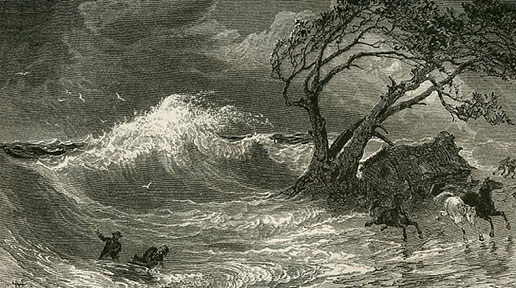
The night of the 6th January, 1839, Little Christmas, has now come to be known simply as ‘The night of the Big Wind’ or ‘Oíche na Gaoithe Móire’. The 6th January was known as the Twelfth Night, the night the dead walk. The day was unusual weather wise. It started off cold and snow had fallen. Gradually as the day wore on the temperature rose, melted the snow and kept rising. The Thermometer kept rising and the barometer kept falling and by late afternoon the conditions were warm and humid and most unseasonal. Unknown to anyone a huge weather system was lurking in the North Atlantic and heading towards Ireland. In the evening the winds began to freshen. Warm air coming up from the Azores met cold air coming from Greenland. The wind reached its crescendo and hurricane strength in the middle of the night between 2.00 and 5.00 am. the country was in darkness and this made the experience even more frightening. It was to be Ireland’s worst storm

What greeted people the next day was a scene from Armageddon. Over three million threes were knocked, forty ships lost at sea, thousands of animals killed and over three hundred people dead and thousands injured. Turtle Bunbury described the tempest as follows, “It was the most devastating storm ever recorded in Irish history and made more people homeless in a single night than all the sorry decades of eviction that followed it”.[i]

Farmers were hit particularly hard, hay ricks were scattered and cattle that survived would later starve. Buildings destroyed included old Norman castles and modern military barracks. The storm did not differentiate between rich and poor; it levelled Churches and hospitals as well as the hovels and mud cabins.

“Innumerable houses in County Leitrim were unroofed on that terrible night, with one roof, according to legend, sailing serenely across Fenagh Lough. In the shadow of Slieve Anierin, many left their houses and took refuge in the ‘Alths’, and near Mohill, one mother put her child into an oak chest, setting stones on top of it for the child’s protection. Also at Mohill the dispensary and Roman Catholic chapel were severely damaged. According to Peter Carr’s book “Mr William Blake of Farnaght, had a range of offices lately built, blown down, two heifers killed, and a corn mill completely unroofed.” In Leitrim the wind took the colour of red.

About fifty houses were blown down between Drumsna and Elphin, there was immense destruction of property especially amongst the plantations. In Carrick-on-Shannon several houses were blown down, others stripped of their roofs. The report of the wind said “The produce of the harvest lies scattered over the whole face of the surrounding country.”[ii]

The country slowly recovered but within a few years a much bigger catastrophe would befall the land. The Great Famine, ‘An Gorta Mor’. Yet the terrifying night remained in people’s memories and folk history and seventy years later would be re-told to Post office officials. In late 1908 and early 1909 many applicants were devoid of any documentary proof of age to apply for the pension. It became apparent that very few births were registered prior to 1865 in Ireland. An Irish Pensions Committee was set up to investigate.

“As such, the Irish Pensions Committee decreed that if someone’s age had ‘gone astray’ on them, they would be eligible for a pension if they could state that they were ‘fine and hardy’ on the Night of the Big Wind. One such applicant was Tim Joyce of County Limerick. ‘I always thought I was 60’, he explained. ‘But my friends came to me and told me they were certain sure I was 70 and as there were three or four of them against me, the evidence was too strong for me. I put in for the pension and got it’.[iii]

Naturally anyone remembering such a cataclysmic event would be at least seventy years of age, and anyone who was over seventy years of age would be entitled to five shillings a week from Lloyd George’s purse. It certainly was an ill wind that didn’t blow some good.

[i] Turtle Bunbury ‘The Night of the Big Wind 1839’

[ii] Peter Carr “The Night of the Big Wind” by Peter Carr ISBN 1 870132 50 5 Published by White Row Press 1993

And Leitrim Observer – 28th July 2012

[iii] Turtle Bunbury ‘The Night of the Big Wind 1839’

Dublin on film (1925)

Irish Destiny


College Green into Westmoreland St


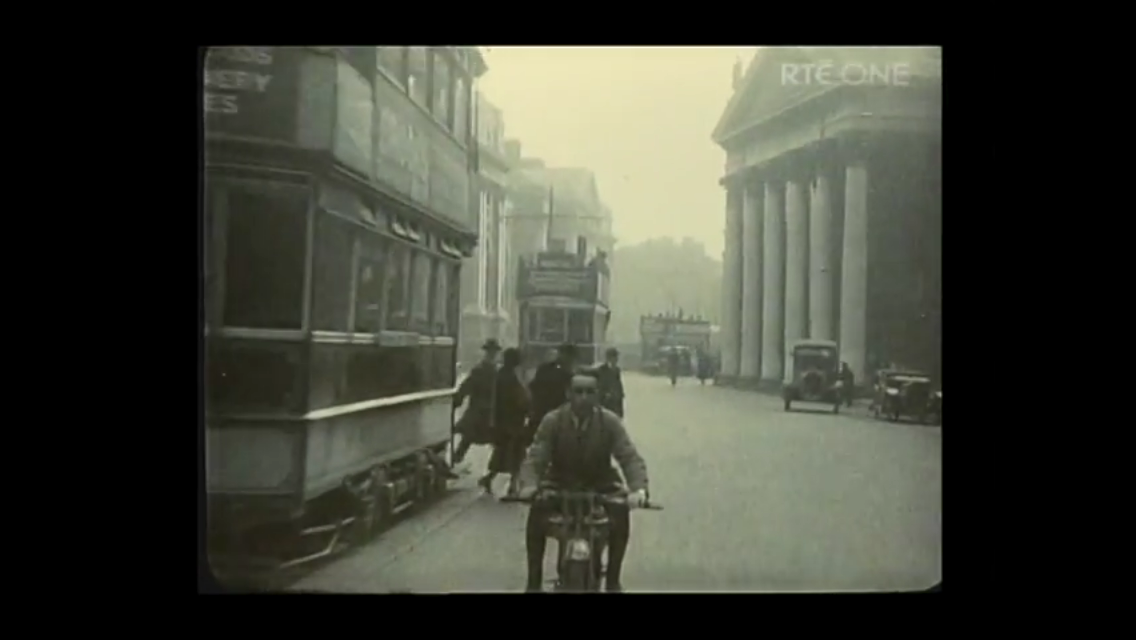
 The opening sequence of the first feature-length film to deal with the Irish War of Independence. It was a silent film called “Irish Destiny”, made in 1925-26. The man on the motorbike is actor Paddy Dunne Cullinan, playing an IRA volunteer. 

The scene re- enacts a republican messenger on his way to a hotel to warn Michael Collins of an impending raid from the auxiliaries.

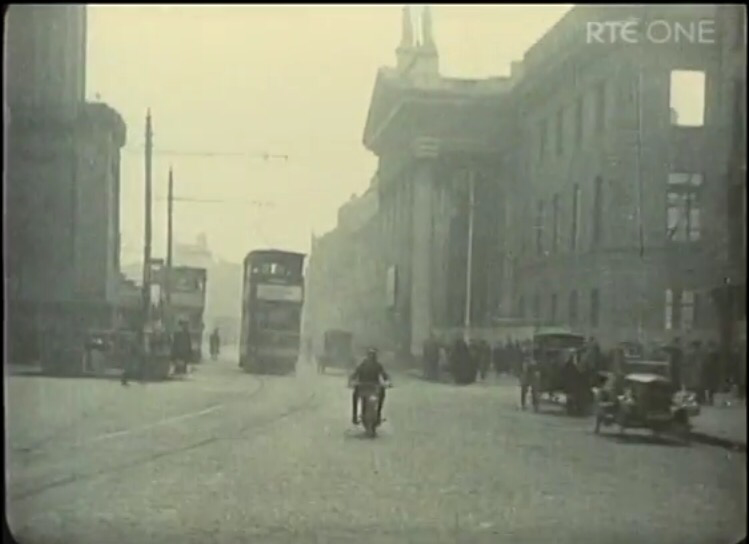
The GPO is still not rebuilt nearly a decade after the Easter Rising. 


The ruins of the GPO. on O’Connell St

 
The Movie is available on DVD with fully restored picture and new musical soundtrack. Well worth a look.
click on the link here 

The Mothers Ashes

 The week started off inauspiciously. A quick greeting at the airport as the guests walked into the arrivals hall, red-eyed from the over night flight from Newark and clearly in dire need of caffeine. The five Americans really didn’t know what to expect from Ireland. Earlier emails advised them not to wear Aran Sweaters, unless of course they wanted to be mugged or boycotted in public. They had been keeping a close eye on the weather forecast and were becoming adept at converting Fahrenheit into Celsius. Other than that they may not have known what to expect of this small green island, a place of which they had heard so much, a place adrift in the North Atlantic, battered by winds and storms, invaded, conquered and freed, a land for whom many were prepared to die for, a land that had scattered so many of its children to the four corners of the world, like thistle down on a soft breeze. They were Irish-Americans, they were my cousins, on a maiden trip to the mother country, a voyage of connection, a journey of discovery, a trip into the unknown, a homecoming.

Their Grandmother had left Ireland in 1903, a slip of a girl with beautiful porcelain skin, a new world beckoned for her, America! America, the land of opportunity, where dreams can come true. She left behind a three roomed house in the West of Ireland where she and thirteen other siblings were born. The story was similar to many West of Ireland families at the time. Twelve of the siblings survived infancy; five of them would go on to make their home in America. Today their descendant’s number in the hundreds and are spread across the US from North and South and coast to coast .

We booked a hotel in Dublin but it was too early to check in so I took the group north to the Boyne Valley, the cradle of Irish Civilisation. But first a quick stop by Drogheda for some coffee. I told them all about how Cromwell had massacred most of the town’s inhabitants after the siege of 1649 and how poor old Arthur Aston, a captain in the garrison was beaten to death with his own wooden leg. I told them how the ‘lucky’ ones were deported to the sugar plantations of Barbados where many died from disease or just exhaustion. It was bad but it was better than hell, only just. I was doing my job of putting Ireland in in its proper cultural context and it would be remiss of me bit to bring up Cromwell! We then visited St. Peter’s Church where we viewed the macabre yet beautiful head of St. Oliver Plunkett. America might have some nice churches I thought, but how many have a three hundred and thirty four year old decapitated head on public view. As we sat for a while in the quiet of the church a local man approached the statue of the blessed virgin and began loudly remonstrating with her about some omission or indiscretion by either him or her. It became apparent that he was ‘duine le dia’ or as one of our group said ‘crackers’. This was confirmed a few minutes later when he began putting his hand and forearm in the naked flame of the blessed candles. It was time to leave.

We took a short journey out through the Boyne valley, through the battle lines of 1690 the mother of all defining moments in this islands sad history. When King James fled the field here above the village of Donore he brought with him all of the old Gaelic worlds hopes and future with him. We passed the place where the wise druid Finegas spent seven long years fishing for the Salmon of Knowledge, ‘An Breadan Feasa’ in a dark pool in a bend in the river. When the fish was finally caught Finegas was happy for his student, young Finn MacCumhaill, to prepare and cook the fish, warning him not to taste or eat it. When Finn arrived with the cooked fish Finegas noticed a change in the boy’s demeanour. He asked Finn if he had eaten any of the fish and the boy replied that he hadn’t and would not dare disobey him. However, Finn told him that as he turned the fish he noticed a blister had formed on the skin which he then burst with his thumb. The resulting burn was painful and he instinctively placed his thumb in his mouth to ease the sting. Finegas had heard enough, he was heartbroken but what could he do. He told Finn that he would now have to leave this place as Finn as by tasting the fish he had gained all the knowledge of the world. Finegas then went to bed muttering something to Finn about ‘not letting the door hit him in the arse on the way out’, or words to that effect.

We drove to Slane where St. Patrick had first lit the famous fire on the hill overlooking the river crossing. That was one thousand six hundred years previous, a light that signified the start of Christianity in Ireland. We doubled back through narrow roads with high hawthorn ditches until we rounded a corner and there was Newgrange, the great Neolithic tumulus built over 5,500 years ago. History and the appreciation of time is always something that is very different on either side of the Atlantic where the US is a country only just over 200 years old. When I tell the group that Newgrange is a 1,000 years older than the Great Pyramid the antiquity of the site is appreciated a little more, I think.

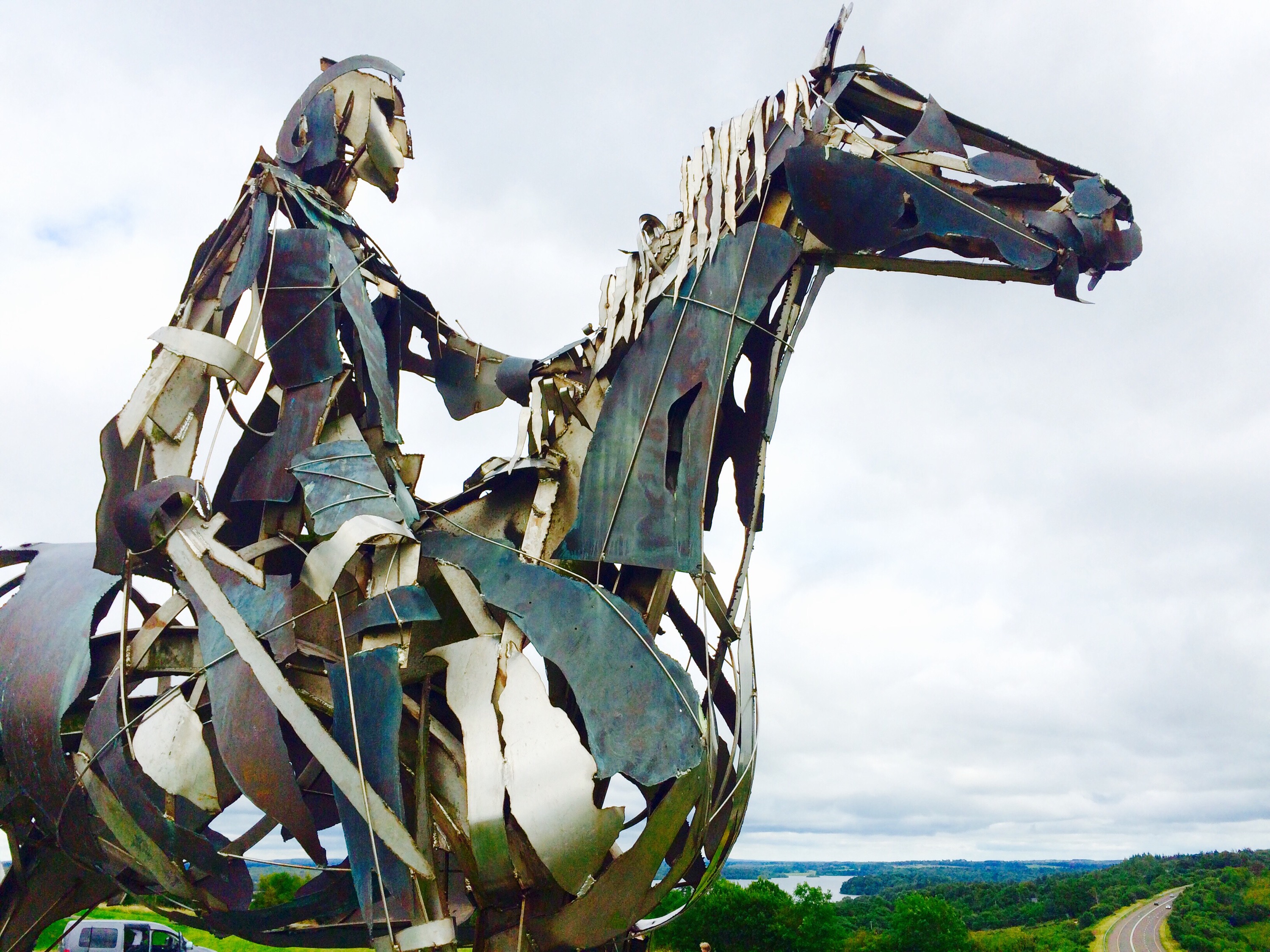
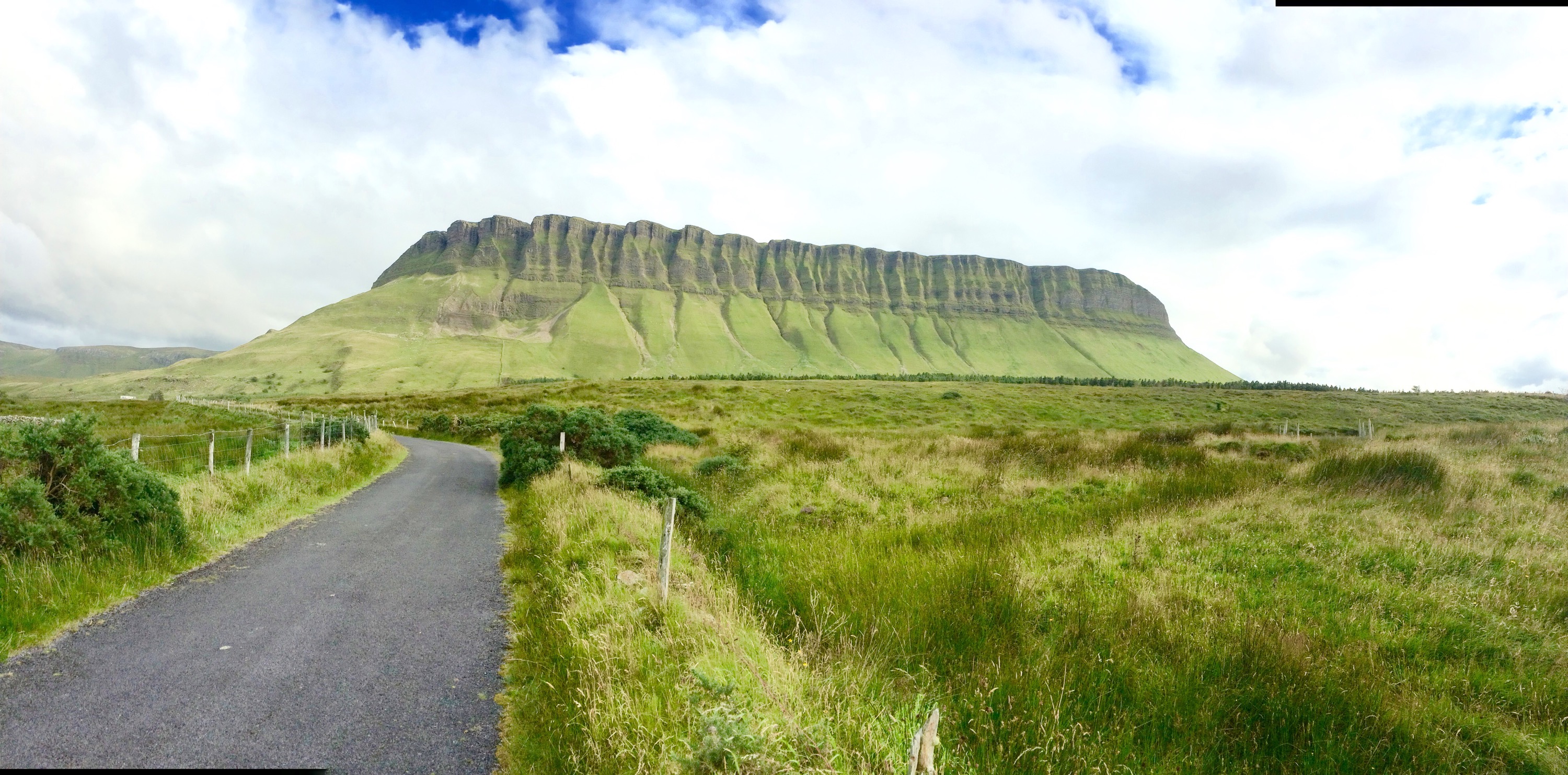
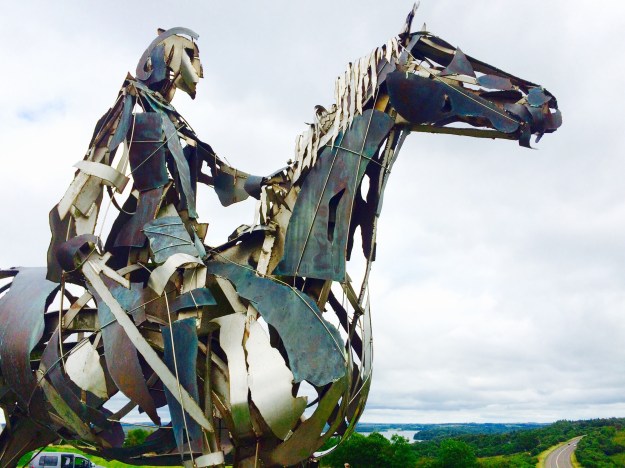
We then headed for the City of Dublin and checked in to the Hotel. That night some of us went to a few of the hostelries, including O’Donoghues, The Dawson Lounge and Nearys. Next morning a mini tour of the near deserted Sunday morning city, before like the sun, we headed to the west. Over the next few days we went to a Tug-o-War contest, a Gaelic Football Game and Fr. Mychal Judges family homestead. We walked up Shop Street in Galway, had pizza in Fat Freddy’s, admired the old Quad in the University in Galway. We drove through the fields around Athenry, watched cattle graze on the edge of the Cliffs of Moher, along with busloads of people from “Jersy”. We ate fresh scones in Kinvara, Mussels and Hake, garlic cheese chips in Supermacs. We viewed Galway Bay from Dunguaire Castle, crossed the Burren, drove up and over Sliabh an Iarrain, close to  where our ancestor ‘Ultachs’ settled, we viewed Lough Allen and the beautiful Shannon, saw the smallest church in Ireland, stood where the rebels of 1798 were hung, looked over six counties from atop the Curlew Hills beside a Gaelic Chieftain on horseback. We got used to the rain, one of us got a cold, we realised just how over-rated the Guinness Storehouse is, ssshhhh!!! We brought brollies, lost brollies and bought some more. We took a train to Dublin from the platform where our grandmother stood on the 16th May, 1903, a place where she probably shed tears but now we shared moments of joy and uproarious laughter, the laughter of people comfortable in each others company. We met cousins we never knew we had, but who knew of us, and of the bonds that bind us, cousins who opened up their hearts and homes and fed and watered us with the humble generosity of the Gael. The one couple amongst us renewed their wedding vows in a quiet country church with a bouquet plucked seconds earlier from the Churches flower beds. We visited Mullaghmore, the beautiful harbour where the dark stain of the dead Lord Mountbatten is slowly receding in conciliatory times. We “cast a cold eye” on the mystical Ben Bulben, sheltering the grave of the national poet below. We drove up mountainy paths where sheep stared at us in their “Will ya look at this crowd, where do they think they are they going” looks, and after realising we were on a less travelled and ever narrowing cul-de-sac, we then endured the same sheep on the return leg giving us the smug“I told you so” look. That night in a small but atmospheric church, we listened to John Spillane singing ‘The dance of the cherry trees’ and playing ‘Carolans Fancy’ and ‘Sheebeg and Sheemore’ on his guitar. Meanwhile outside the chapel and across the street stood the last of the Gaelic Bards, Carolan himself, sat in statued bronze, beneath a cherry tree, strumming his Harp.
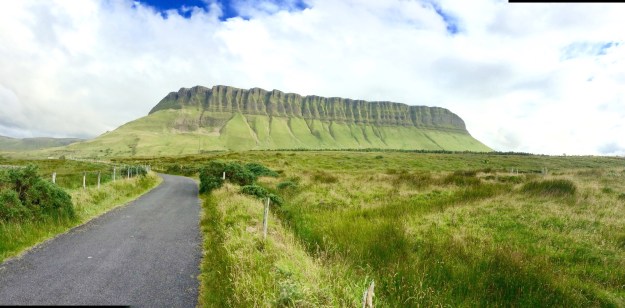
 But more than all this we found where we came from, figuratively, literally and spiritually. We visited the birthplace of our grandmother, and the birthplace of her father and mother before. We stood where they stood, in the modest three roomed house, where we wondered where fourteen children somehow lived, breathed, ate and slept together. The property is now beautifully renovated and restored by a kind English couple. We buried a mass card of a brother that didn’t make it to Ireland like we had, but who no doubt would have told many people growing up that he was Irish. Part of him is forever Irish now. We carried throughout the ashes of a loving mother, dead now these two years past. We brought her all over Ireland with us, and the only complaint she can have is that we didn’t bring her into the Galway Crystal or Beleek China factories. On the last day we buried her ashes in the grave of her grandparents. In the summer of 1930 she and her mother and brothers had come to Ireland to visit her grandmother, she was just ten years old. My own grand-mothers letter to her in 2001 recalled that 1930 was a wet summer, raining every day, however the children from New York revelled in the freedom of a small west of Ireland farm. When it was time to leave my great-grandfather, grandmother and Granduncle left them to the train on the 1st September. My Grandmother described the scene with an economy of words that conveys the emotions of the moment; she simply says “it was a sad parting”.

Now the ashes are placed with the elders in the same graveyard where so many family members lie, facing the rising sun in their eternal sleep. It was this moment of all the memorable moments of a memorable week that encapsulated what was happening. Whilst the soda bread recipes may have been a little different (never heard of caraway seeds as an ingredient) the kinship was the same, the familial bond is strong, renewed and come full circle. They say to truly know where you are going you must know where you have come from. I hope my dear cousins may now have this knowledge, for like Finegas and the boy Finn, I cannot tell them any more than they already know within.

This is for them. John Spillane ‘All the way you wander’

Planxty Peyton

In my last post you will have noted that Francis McGann lost  his life in a snow drift returning from a meeting at Keshcarrigan Fair on the the morning of the 21st December, 1815. The meeting was organised by McGann and his ‘Rockite’ acquaintances to denounce a local landlord by the name of Minor Peyton. Peyton had been involved in subduing civil disturbances in the local area. His retaliation apparently consisted of burning several houses in the townland of Drumcollop and cutting the road in the townland of Laheen Peyton.

The cutting of the road was a major inconvenience to the local people, including my own ancestors who lived in the adjoining townland of Corderry Peyton. The people were prevented from travelling in one direction towards Mohill and Drumsna and in the other to the village of Keshcarrigan. Whilst the act of Minor Peyton was purely retributive it also appears to be petty and vindictive. At the public meeting McGann denounced Peyton as a Tyrant, and cleverly instead of dwelling on the daily inconvenience fested on the locals, focussed instead on the obstruction of their worship at the local Catholic chapel.

The estate at Laheen was originally associated with the Reynolds family of Lough Scur. John Peyton married a daughter of Christopher Reynolds of Laheen in the early 18th century and thus the Peytons inherited Laheen. The Peytons first acquired land in Leitrim through an earlier marriage with the Reynolds family of Lough Scur around 1650. Several members of the family served as High Sheriffs of Leitrim in the 18th and early 19th centuries. The family traditionally buried in Fenagh.

In the 1790’s Arthur O’Neill visited Laheen and described it and the incumbent, old Toby Peyton as follows:

“I went to Toby Peyton’s, for whom Carolan composed ‘Planxty Peyton’. This gentleman had a fine, unencumbered estate, and exclusive of the expenses of groceries and spices he spent the remainder of his income in encouraging national diversions, particularly harping and all other wired instruments. He lived to the age of a hundred and four, and at the time he was a hundred he mounted his horse as dexterous as a man of twenty and was the first in at the death of a fox or a hare. This gentleman’s age accounts for my observations of him and my visiting him, Carolan’s time being before mine”.

This Tobias Peyton died aged 104 in 1796 so it is likely his son, also Tobias is the ‘Minor’ Peyton of 1815.

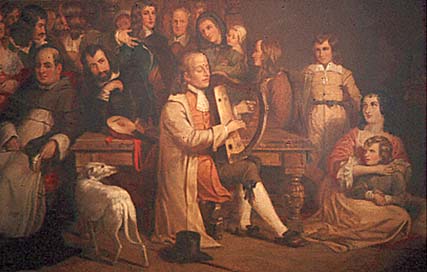
Carolan

Carolan

The elder Peyton’s first meeting with Turlough Carolan was not very auspicious. Meeting the blind harpist on the road Peyton is reputed to have told the bard that he rode his horse crooked. Carolan quickly retorted “I will pay you for that remark with a crooked tune”. Despite the tone of this initial meeting Peyton invited Carolan to his house on many occasions.

Notwithstanding the old saying that ‘he who pays the piper calls the tune’ the nomadic harpist and the local squire seem to have genuinely liked the others company.  A Thomas Furlong later put words to Carolan’s tribute to Peyton:

“For Toby’s the soul of sport, me boys

His home is our gayest resort, me boys

Where the toasts fly round

And all care is drowned

In brimmers of sparkling Port, me boys”

Certainly the music conveys the spirit of a convivial big house where Carolan’s glass was regularly topped up. The musical tribute has lasted much longer than the Peytons. Within a century the Estate was encumbered and soon broken up through various leases, mortgages and sales. Their name is perpetuated in several townlands in the area which continue to bear the suffix ‘Peyton’ and of course in ‘Planxty Peyton’ performed here by Musica Pacifica of San Francisco.

Francis McGann – Leitrim Mathematician, Surveyor, Patriot (1786-1815)

Growing up in South Leitrim I had often heard of the brilliant but tragic Francis McGann. McGann was a native of Eslin and a noted scholar who died at the early age of 29. McGann was simply known to his peers as “the Bright Boy” and his early demise was sadly lamented for generations of people who saw in his passing the loss of one who had the potential to be a great leader of the people.

Francis McGann was born in 1786 in Drumlara, a townland in the parish of Mohill and on the northwestern shore of Lough McHugh. His father’s name was Peter McGann and his mother was a Mulvey from Aughacashel.

Francis was born into a country where the penal laws restricted the life and prospects of most Catholics. He initially attended a local Hedge School run by a Hugh McDonald where his genius soon became apparent. Soon he was enrolled in a highly regarded private school run by an Owen Reynolds at Glebe St., Mohill. The building where Reynolds school was located still stands and is now converted into two private residences. The Reynolds School was highly regarded in the teaching of Mathematics and McGann excelled in this discipline.

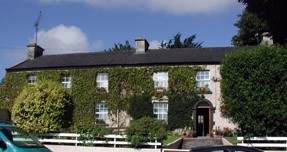
Owen Reynolds School. Mohill

    Owen Reynolds School. Mohill


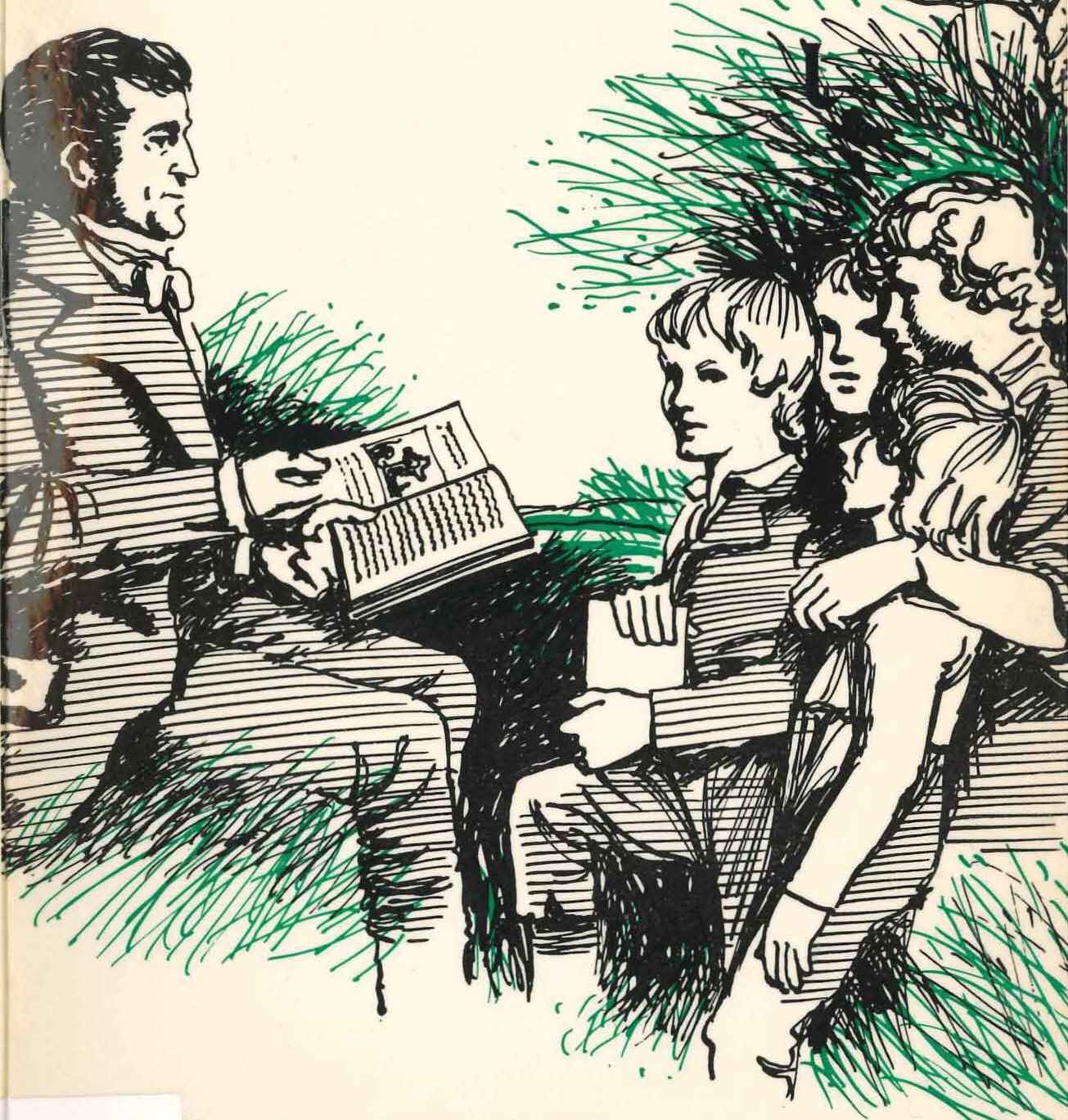
Hedge school

Hedge school

McGann later moved on to a classical school in Drumsna run by a Parson Kane where he became proficient in Greek and Latin. By this stage McGann’s own reputation as a gifted scholar was widely known. In order to further his education in Mathematics, McGann travelled to Ballingarry, Co. Limerick, where he was enrolled in a school conducted by a Mr. James Baggot, himself a famous Mathematician of the day. In 1805 Baggott was advertising that he had acquired a supply of “curious mathematical and astronomical instruments,” in which he hopes his pupils will find “both pleasure and profit in the prosecution of their studies.”

Baggott was also noted for the fact that he was a friend and correspondent of Pierre Simon Marquis Laplace, the great French scientist and tutor to Napoleon. It is recorded that when Laplace was once in conversation with a Colonel O’Dell, a Limerick MP, he enquired if O’Dell knew of  “the great Irish mathematician. The Great O’Baggott”.

The Baggott School was an environment where the young McGann from Leitrim thrived but it wasn’t only Mathematics he was now learning. Baggott was also a member of the United Irishmen and his house in Ballingarry was where Lord Edward Fitzgerald stayed when he toured the country stoking up rebellion in 1798. Baggott is also said to have devised a plan for the capture of the city of Limerick. The plan was however discovered and the plotters all arrested. It is not known if McGann was amongst those interrogated but it is clear that Baggott had a huge influence on him and helped formulate in McGann’s mind the revolutionary ideals which were to become more apparent later in his life.

The Government in Dublin Castle were kept fully informed by a spy who signed himself “J.D.” of all Baggott’s movements, and a General Payne wrote advised Dublin Castle: “That rascal Baggott can neither be frightened nor bribed, and when Mr. O’Del returns I think we had better take him up.” The Government were right to be worried about Baggott and his school, particularly in light of his known correspondence with well figures in Parisian Society. Baggott died at Charleville on 31st August 1805 at the age of thirty five. He was widely mourned as can be noted from the following contemporary verse penned in his honour.

O Science, mourn! thy favourite is no more,

Alas! he’s numbered with the silent dead;

 Hibernia’s genius will his loss deplore

Whom he to fame’s exalted temple led.

By nature blessed with an exploring thought,

His brows were decked from the Newtonian tow’r

The deep arcana of fair Science sought,

And gleaned her fields of ev’ry golden flow’r

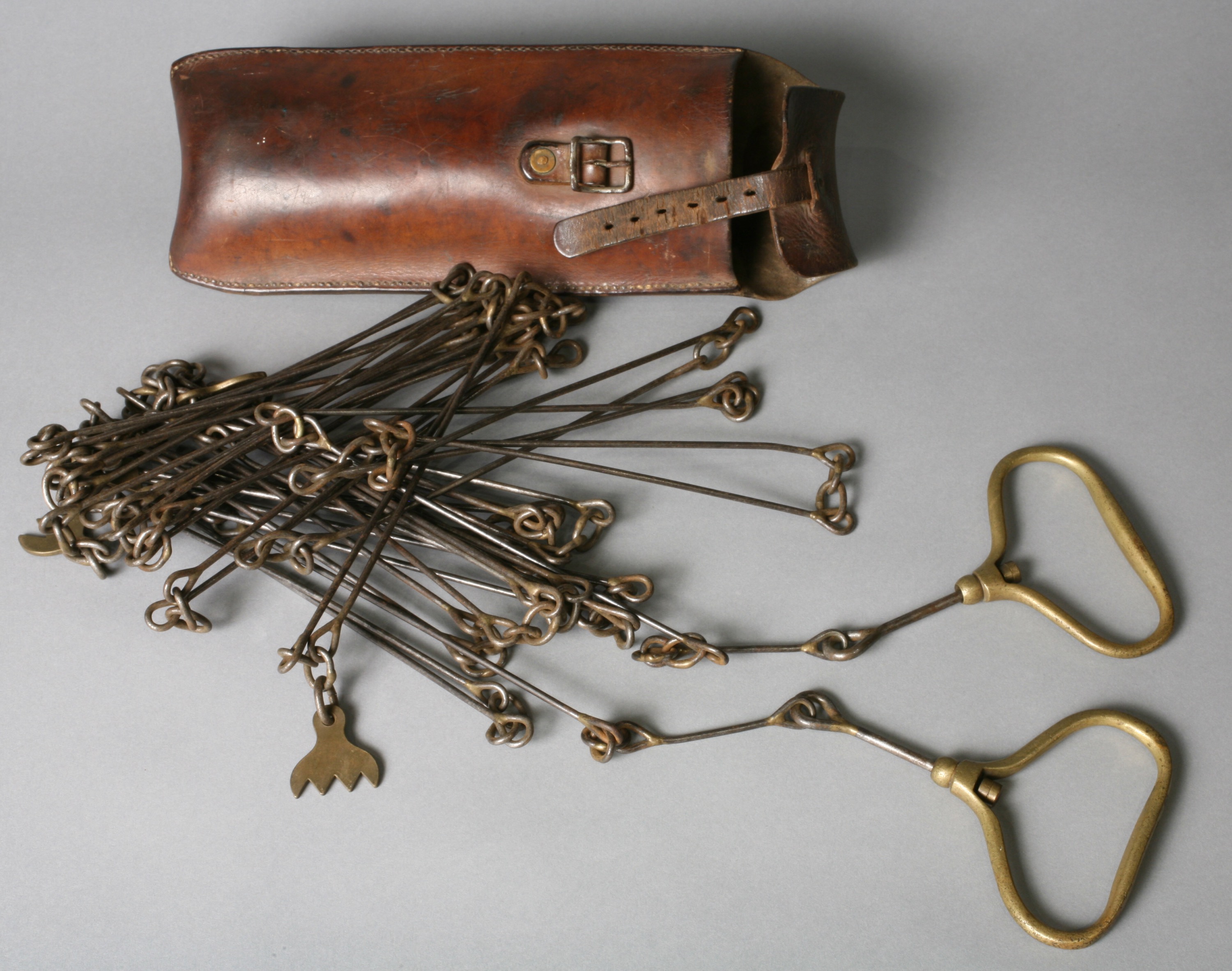
It can be surmised that the end of Baggott also signalled the end of Francis McGann’s education. Returning to Drumlara, McGann began working as a mapper / surveyor and a pioneer in the art of preparing accurate large-scale maps which were developed later by the Ordnance Survey. His attention to detail was widely known and it was said locally that he would even take care to “rub the breath off the chain” he used for surveying so that it would not distort his measurements.

 
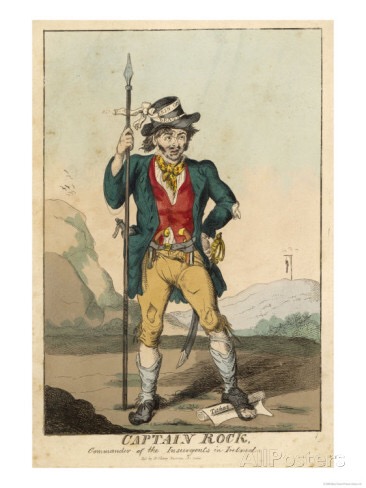
He drew a map of the district of Bunnybeg, Attymanus and Annaghhasna on a dried and pressed sheepskin for the landed Lawder family. He also mapped the townland of Killamaun and the length of the Eslin river. It is said that he was offered a position with the East India Company as chief surveyor but he declined. The Leitrim that McGann  returned to was the subject of considerable military activity in the decade following the failed insurrection of 1798. Although the United Irishmen were broken McGann became leader of a secret society known as “the Rock” “White Rock” or “Rockites”. It is little surprise that McGann was prominent and he may even have helped found such a militant agrarian society. The area where he had lived whilst in Baggott’s school was also a major centre of “Rockite” activity. A John Hickey of Doneraile, was suspected by the English authorities of the time of being ‘Captain Rock’. The Rockites tended to use United Irishman rhetoric and regularly mentioned that “assistance was to be given from France” to any Irish insurgents. One of the main Rockite aims was the placing “Catholics upon a level with Protestants”.


In late 1815 there were major civil disturbances in the Keshcarrigan and Gorvagh areas. In the aftermath several houses and farms were burned to the ground. A local landlord by the name of Minor Peyton had also retaliated by cutting the road into the townland of Laheen Peyton thus preventing the Catholic Tenants from getting to Mass. McGann organised a large meeting to be held at Keshcarrigan Fair on December 20th, 1815. His speech to the massive crowd there is recorded in oral tradition. He told the assembled crowd that he was there;

“to meet the intelligence, the genius and the mind of Kiltubrid and to denounce Minor Peyton, a tyrannical brute and a disgrace to humanity, who not being content with burning Drumcollop, he now tears up the pathway which lead to the ‘House of God’. But the Sun of his glory is set and today he is like the remnant of a melancholy wreck having nothing but tradition to point to his former grandeur and greatness”

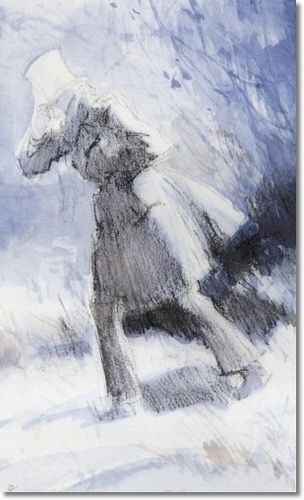
When returning from the mass meeting at Keshcarrigan Fair, McGann in the company of two men called Billy the Joiner and James Ward took shelter in a Sheebeen near Kilnagross. It had begun snowing quite heavily. The country had been enduring a severe cold snap and snow had lain on the ground for over six weeks. The people it was said had to boil snow to get a drink for their cattle. After a few hours McGann left the Sheebeen “for want of drink and fire” . It is believed he intended to visit the home of a young McKeon lady nearby with whom he was on friendly terms. Sadly McGann never reached his destination. The following day his body was found frozen to death in a snow drift, only short distance from McKeon’s house. Sadly ‘The Bright Boy” was no more and a few days later he was buried in Mohill. According to local tradition the place where McGann died was marked for many years by an evergreen tree which had become known as ‘The Monument’.
McGann’s passing was a huge blow to the people in the area.  His intellectual ability was noted from an early age. In many ways his life mirrored that of his mentor Baggott.

When McGann returned from Limerick he had matured and was clearly someone unafraid to take on the establishment both privately and publicly. Such men were in short supply in places like rural Leitrim.

The ballad, “The Fate of Francis McGann,” was penned by John Cox, the poet of Clooncarne in the parish of Bornacoola and in its folksy way it records the life and tragic death of this brilliant young man.

“He was versed in the language of all foreign parts,
And master of several bright liberal arts,
The art of surveying he had a command,
Mathematics and logic he did understand.
He could measure the air, the sea or the land,
John Cox gives his praises to Francis McGann.”


From Mohill to the Majors – The story of Tom Dowse

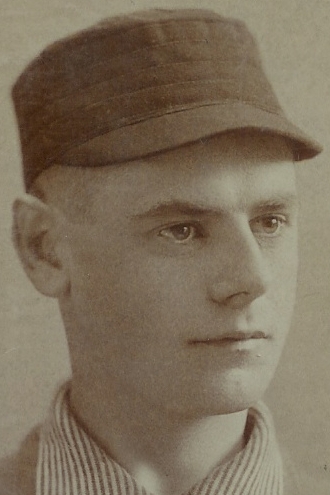
It might seem implausible now, a Leitrim man playing Major League Baseball, but a trawl through the Archives reveals that this is fact not fantasy. Although it may be fact, it is a rare one, and it seems likely that only one Leitrim native has played in the Majors. The achievement belongs to a man called Thomas Joseph Dowse who was born in Mohill on the 12th August, 1866. It is unlikely that Tom  honed his batting and catching skills on Hyde Street or Glebe Street in his home town. When just shy of his second birthday, Tom and family, like many before and plenty since,crossed the Atlantic to start a new life.

Tom Dowse

Tom Dowse

Tom was the fourth child of William and Sydney Dowse (nee Burgess). At the time of his birth Tom’s father was working as a law clerk.The Dowse family had moved to Leitrim from Cavan. Tom’s paternal grandfather was the English born John Dowse (1788-1869) who worked as a servant to the gentry all his life. John died at Bridge Street, Cootehill and is buried in Drumgoon Church of Ireland graveyard.

Tom’s maternal grandparents Robert and Elizabeth Burgess were of Scottish origins. The Burgess family were also of the servant classes and lived in Crookahatten, Bailieborough, Co. Cavan and this is where Tom’s mother Sydney was born on the 1st February, 1829. William Dowse worked as the groom in the rectory at Glebe House, Baileborough and whilst there he met and married Sydney in 1850.

The Dowse family boarded the Brittania in the port of Derry in the summer of 1868. William and Sydney were accompanied by their children, John (9) Robert (5), Anna (3) and baby Tom. They arrived in New York on the 19th June 1868. They arrived to a country where re-unification after the bitter Civil War was moving apace. In the week of their arrival Arkansas, Alabama, Florida , Louisiana, Georgia, North and South Carolina were all readmitted to the Union.

Within a decade the Dowse family were well established in the city of Albany, Capital of the State of New York. William was working as a Superintendent of Gas Lighters in the City. The eldest son John had by now married and set up his own home. Robert was working as blacksmith and would soon open his own business. Sadly Robert would die in 1898 at the age of 36 of pneumonia. His mother Sydney had passed away the previous year of influenza.

Tom Dowses baseball career was as short as it was unremarkable save for the fact that he shared a record of playing for four different league teams in one season (1892). If the term had not already being invented Tom could surely have laid a justifiable claim to the title of ‘journeyman’. American sports have an obsession with statistics but especially with averages. Unless you go at least 3 decimal places it’s not really a worthwhile statistic at all. Dowses record is as follows;

“he was a catcher/outfielder who played in Major League Baseball from 1890 through 1892. Listed at 5′ 11″, 175 lb, Dowse batted and threw right-handed.

In a three-season career, Dowse was a .197 hitter (116-for-590) with 46 RBI without home runs in 160 games played. Despite his modest numbers, he entered the record books by playing for four different teams in a single season, matching a very uncommon feat set by Harry Wheeler in 1884.

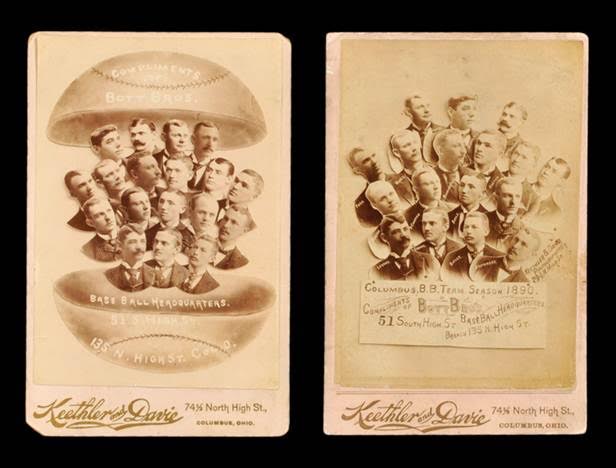
Basically a catcher, Dowse also played every position but third baseman and shortstop during his major-league tenure. He started his career in 1890 with the Cleveland Spiders of the National League, appearing in 40 games for them while hitting a .208 average. That season, he also served as an emergency umpire in three games. In 1891 he played for the Columbus Solons of the American Association and posted career-numbers in average (.224), RBI (22), runs (24), and doubles (7). Dowse returned to the National League in 1892 with the Louisville Colonels, appearing in 41 games for them before moving to the Cincinnati Reds (one),Philadelphia Phillies (16) and Washington Senators (7), hitting .165 in a career-high 65 games. He never appeared in a major league game again.”

Baseball definitely didn’t make Tom Dowse rich but it certainly ensured that he got to see more of the US than just the Hudson Valley where he grew up. In his first season he married Alice Mabel Seaver in Chicago. Alice was also from New York and one can speculate that she and Tom had travelled to the mid-west together. Tom was 24 and Mabel was just 20 at the time of their nupitals. Their only daughter Vivian arrived in July 1893.

Columbus Solons1891

Columbus Solons1891

The family had a nomadic lifestyle initially. In 1900 they were living in Buffalo, New York. In 1910 they were in Denver where Tom was working in Insurance. They seemed to have stayed a considerable time in Colorado before 1925 finds them on the West Coast living in San Diego.

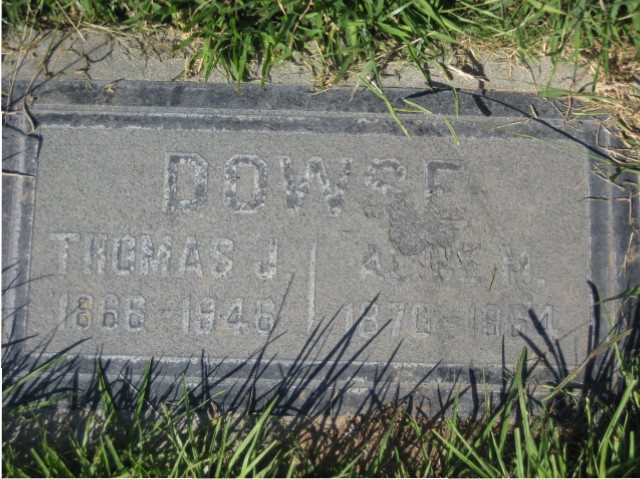
By 1930 Tom and his wife are living in Santa Ana, Orange County where they share their home with their son-in -law Horace Chielero and his young family. Sadly Tom and Mabel’s daughter Vivian had passed away back in Denver. Tom Dowse died on the 14th December 1946 in Riverside, California. He was 80 years old. His wife Alice (Mabel) Sever-Dowse survived him and lived to the ripe old age of 95, passing away in May 1965.

Grave

Many Swallows make a Summer

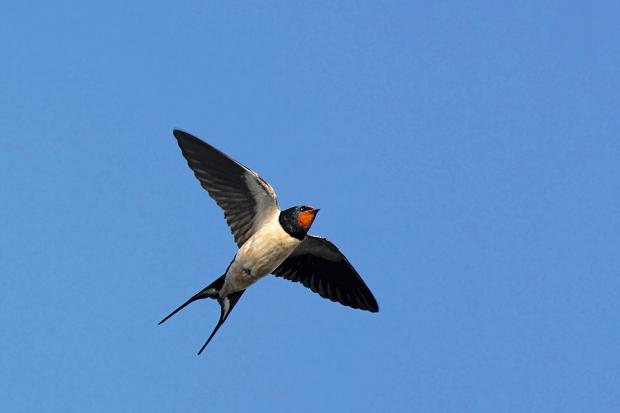
swallow

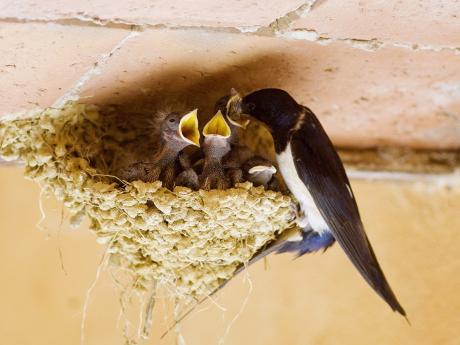
The annual arrival of the Swallow is one of the surest signs that Summer is on its way. We have had them since the beginning of April. The first weeks are spent securing their nests, building new ones and repairing old ones. You can find them anywhere but they seem to like farmyards and their byres, haysheds and barns. We have two permanent nests on our dwelling house, the oldest of which is here at least ten years now. I have managed to affix some plain corrie board from an old  poster directly underneath the nests to catch the droppings. The swallows might be cute but they have little respect for a freshly painted or whitewashed wall. One of our nests is high up under the eave on the Western Gable of the house whilst the other is squeezed in between an eave and a drainpipe. I’m reminded of the  The Wind in the Willows, where the swallows discuss with relish their impending return to “the house of the perfect eaves”. Not only are these tiny birds amazing flyers but they are great architects and precision builders too.

By now the birds are paired off, well settled in, with eggs laid and soon to hatch. The swallow practices love in a cold climate. The male and female will build the nest together. The long evenings are now spent darting and diving in the acrobatic pursuit of insects. It was the swallow after all who first invented the concept of in-flight dining. They say that the swallow is so adept that they can even swoop low along a watercourse and drink water without stopping. The skill and athleticism of these little birds are a sight to behold in the dying hours of the day. They are also very brave little birds and will swoop low like an F16 fighter pilot on any man or beast getting too close to the nest. I have vivid memories of the swallows teasing an old sheepdog we had at home, dive bombing him and turning him around in circles in the farm yard, in what for them must have been a source of endless amusement and mischief. The rest of their summer will now be spent rearing the insatiable chicks.

swallow 2

I always find it amazing to think that these little birds will next year return to this same place, the place of their birth and in some ways I feel honoured..

Billy Flynn, an ecologist for the Irish Wildlife Trust said , “Swallows travel in families, with the younger birds following their parents when they migrate for the cold months. What is incredible about them, Flynn explained, is that young swallows are still able to make the journey themselves, even if their parents have died or got lost before they had a chance to show them.

No one is exactly sure how they manage this but it is thought instinct plays a big part, as well as magnetism. Most animals have the mineral magnetite in their skulls and this gives birds a kind of internal compass. It’s an amazing journey, they pass over deserts, seas, they fly through all sorts of weather and when you see the tiny size of them, you can fit two in the palm of your hand.[i]

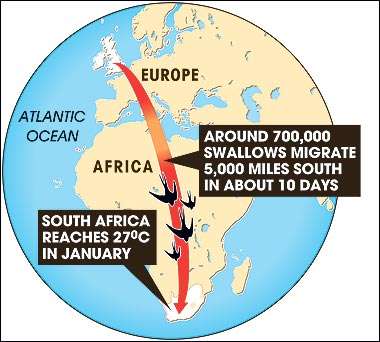
Migration map

Migration map

The swallow doesn’t seem to do retirement and is constantly on the move, He simply cannot sit still, a consummate workaholic. As if inventing in flight dining wasn’t enough he also promoted the classic long distance commute. As much as I look forward to them coming I hate to see them going; their departure signals the end of the summer. If they are gone before the Hurling final you can watch out for a bleak winter, if they linger on until October then it mightn’t be too bad. In the months following this I will curse again the price of oil, whilst Comrade Swallow has retired five thousand miles to the south, to his dacha in sub-Saharan Africa. Observers say the numbers of swallows are depleting and I sincerely hope that this can be reversed. It will be a very sad day if ever the swallow does not return.

The Swallow Song

Come wander quietly and listen to the wind
Come here and listen to the sky
Come walking high above the rolling of the sea
And watch the swallows as they fly

There is no sorrow like the murmur of their wings
There is no choir like their song
There is no power like the freedom of their flight
While the swallows roam alone[ii]

[i] http://www.thejournal.ie/swallows-summer-2067147-Apr2015/

[ii] Richard farina – Chapell music

“The savage loves his native shore”

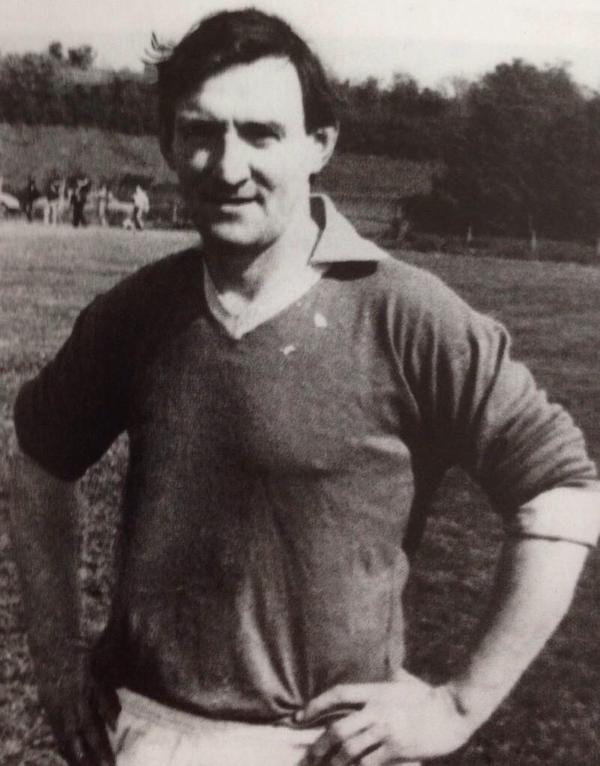
Packy McGarty

I’ve had the pleasure of meeting Packy McGarty on a few occasions and one thing that always strikes me is how he remains, even at 82, quick in mind and light on foot. In an era of high performance coaching, increasing demands on players and the onset of the ‘elite’ County player, programmed to play numerous systems and tactical set-ups, McGarty remains a beacon of light, a reminder of what makes the GAA great and unique. Surprisingly, to some at least, its not about a dresser full of medals.

I enjoyed this piece by David Kelly in today’s ‘Independent’.

http://www.independent.ie/sport/gaelic-games/gaelic-football/we-never-won-anything-but-we-competed-and-i-made-great-friends-in-every-county-31330735.html

“He Wishes for the Cloths of Heaven”

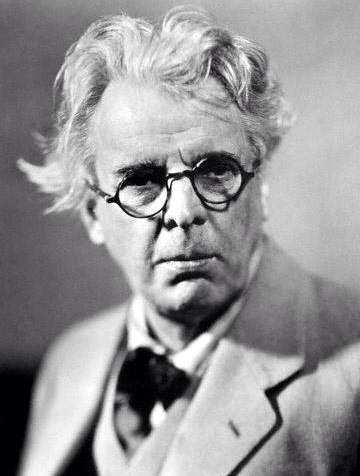
 William Butler Years was born on this day in 1865. Although born into the Anglo-Irish ascendancy Yeats could arguably be said to have done more to reshape the modern Irish identity than any if his contemporaries. Yeats drew his inspiration from ancient Irish myths and folklore and as an ardent cultural nationalist, valued the classical past as an inspiration for a modern pluralist society. He has so many great poems and this is one of my favourites that simply has to be read aloud.

He Wishes for the Cloths of Heaven”

Had I the heavens’ embroidered cloths,
Enwrought with golden and silver light,
The blue and the dim and the dark cloths
Of night and light and the half-light,
I would spread the cloths under your feet:
But I, being poor, have only my dreams;
I have spread my dreams under your feet;

Tread softly because you tread on my dreams.