Category Archives: Leitrim

1979

1979The Infant School is gone now. It made way for the amalgamation of the old Boys and Girls schools. The Boys School was viewed by the Nuns with a deep suspicion as if it was an academy of evil and vice. The Girls School was a place where they set out to promote virtue. They would strive to educate a few aspiring teachers, an odd nurse, occasionally a nun, but for most girls it would be a low level civil service position or a farmer’s wife.

Sr. Eugenia was her name. She was a sadistic bitch who ruled her Senior Infant’s class with fear, fear and lashings of more fear. She did have her pets in that room; those whom she favoured because they were from what she would have termed ‘good’ families. Some of these favoured few were clever enough to know that there was a game to be played and if you knew the rules you could get by, relatively unscathed. The Pets were gratified with little errands such as handing out the pencils that were kept in a metal box on the teacher’s desk. The pets were mostly girls from the town. Even at that stage it was clear that most girls were much more advanced than boys of the same age. They didn’t fear her like we did. It was as if they could miraculously anticipate her moods. We boys just threaded carefully in constant fear of her sudden outbursts and rages.

Vatican_CityIt began as a day not unlike any other.  It was the year the Pope came to Ireland. I can’t recall what time of the year it was, nor the time of day, or the weather. I can clearly recall though that precise moment when the mood changed in that space between those four walls, this mini State where her writ did run. The change was sudden and without warning and seemed to catch even the pets off-guard. The Nun said a toy was missing, stolen no doubt, by a boy no doubt, a boy from the town no doubt. At the side of the room were various cupboards and shelves containing the tools and machinery for running a classroom. There was paper and paints, pencils, word cards and charts. On one particular side arrayed neatly on a counter there was a row of abacuses. To one side of these ancient counting tools were a collection of small toys such as little cars, tractors, trucks and various animals. I don’t ever recall that we ever got to play with these toys. I remember how teasing and tempting they were, their different hues of racing green and fire engine red, distracting us from the lessons been drummed into us throughout the long day.

The Nun began a mass interrogation of the class. “Who took it? Own up whoever it is? We can’t have any thieves among us? Someone here is a thief” Everyone was scared as they knew when she got this angry someone would have to suffer. She would have to have satisfaction. “That’s it I’m going to go down to the Barracks and get the Sergeant. When he comes up he’ll find out who took it and they will be thrown in the Black Hole in the Station. Ye won’t see your Mammies and Daddies tonight”. A few of the children began to whimper, one boy uncontrollably. By now she had stormed out of the room and in a moment we saw her black habited silhouette rushing past the window in the direction of town. She was going to the Barracks and she was going to get the Guards. This is bad we thought and we realised that she really was going to go through with this. What if we never see our families again? More children whimpered the cries and sobs of the damned.

I don’t know how long she was gone. It might only have been a few minutes but to the five and six year olds huddled in that room, shivering with fear, it seemed like an age. Return she did in the same bluster as her leaving; her eyes were now dancing wildly in her head and her face was distorted with unfettered anger. “Was it you?” she shouted accusingly at Carr singling him out from the herd. She always singled him out for some reason. He was a strange kid but we were all friends with him in those early days where the tolerance of the innocent prevails. My mother said that he was adopted. We didn’t know what that meant. It was a strange sounding word loaded with meanings that we as children could not comprehend or grasp. His adoptive mother died soon after he arrived into their house. Terrible luck to lose one mother but to lose two before you had even crawled must have been crushing. He was raised by a soft spoken, meek father and a frail, elderly housekeeper. The father sold ecclesiastical supplies and was often away at night. His shop was adorned with all the effigies and idols of the Catholic Faith. When one entered the shop your senses were overwhelmed with the smell of candle wax. One side of the shop was given over to toys and stationery. There were rows and rows of matchbox cars. It was a strange mix, the religious icons reinforcing submission to the Word and the colourful toys which were tools to fire a child’s imagination. It was a palace of wonderment, the Willy Wonka Chocolate Factory of our little country town.

“Stand up I said” but even as she was saying this he was already shuffling up and out of his seat. She had him caught by the ear like a hooked fish. “Where is it? Where is it? I’m giving you one chance and once chance only”. Carr was shaking now in fits. Paradoxically many of the rest of us were relieved that she had now chosen her victim and it wasn’t us. We all waited for Carr’s fate to unfold before us. “I’m going to teach you a lesson and show you all what happens to thieves”. She was gone again, out of the room with Carr left standing there, like a man stuck in No Man’s Land, doomed, forlorn, awaiting his fate.

This time when she returned she had what looked like a skipping rope in her hands. There were no handles on either end and it now became clear it was some sort of chord. She took a chair, stood up on it and began passing the rope through a metal ring that was protruding from the ceiling. The ring and other hooks were used for holding the Christmas decorations and hanging paper lanterns and aeroplanes. The nun was furiously making a loop and tying a knot on the other end of the rope. We all just sat there quiet and cowed watching this bizarre event unfold. Bizarre quickly yielded to shock and then to the macabre.

The Nun got Carr to stand up on the chair and purposefully passed the newly made noose over his head, jerking it down over his frightened face, around his neck before tightening the loop until it pressed against his tiny throat. All this had been achieved in near total silence but this lull was finally broken when some child wailed. The rest of us just sat there motionless and helpless, unable to move or act or to comprehend what was happening in front of our eyes. Carr was going to hang for stealing a toy car. This is what happens to thieves.

The Nun began shaking the seat under Carr’s feet as if to pull the life out from under him. Carr didn’t make a sound up to this but now the tears streamed down his face in rivulets. He began mumbling repeatedly “I didn’t do it, I didn’t do it” pangs of desperation in his shaking voice. She didn’t believe him or she simply didn’t want to believe him.

Carr didn’t hang that day. I don’t believe we even told our parents about what happened. The next day the missing car was back in its place on the counter but Carr hadn’t put it there. Carr had no need for any more toys. He had a whole shop full of them for his own amusement. Carr didn’t take the toy, he wasn’t lacking in material things, what he was lacking was a Mother and Brothers and Sisters.

Twenty years later I was talking to my brother who was also there that day. Memory has a habit of playing tricks on us all. I had recently recalled the events of that day. The truth is I had come to doubt myself on whether it had happened at all. “Do you remember anything in High Infants with Sr. Eugenia and Carr?   Without hesitating he replied “Do you mean the time she went to hang him?” Not long after this I met a girl who was in the class that day also. She remembered it too.

Nobody knew where Carr went to after school but everyone knew his life had gone completely off the rails. The old housekeeper died. His timid father re-married again in middle age to a cold heartless creature that had no time for Carr. He spiralled even more out of control. He was expelled from Secondary School. Some nights he wouldn’t go home at all. He often slept rough in the local mart, alone, except for nights after big sales when some cattle were left over night. He had acquaintances as he always had cigarettes to share. He had no friends. Parents discouraged their children from having anything to do with him. He was described variously as mad or bad, wild, a nutter, a crazy mental case. He had become the town pariah. It was rumoured he had fondled a young boy in town from another dysfunctional home. It was said he would pay the young lad money. He always had money when we had nothing but a few small pence to buy penny sweets.

Then he went away to God knows where before making one brief memorable appearance up at the school. It was around the time we were preparing for our Leaving Cert and he waltzed up to the school yard. His hair was gelled up in punk-style spikes, he was wearing a huge chain around his neck and a frayed black leather biker-jacket. He was drunk or high or possibly both. We were glad to see him again but almost as quickly he was gone. It was the last time we would ever see him. We heard he was in prison on Spike Island, or that he was in a band in Athlone, or that he was sleeping rough in Dublin, Galway or Cork.

Sr. Eugenia moved on too. Our paths crossed again some years later when we were preparing for our Confirmation. She was now a Catechist touring the Diocese on behalf of the Bishop. Her mission was to ensure that we believed in the sacred Scripture and were ready to receive the Holy Spirit the following Month of May. I can’t recall if Carr was in our class that day she called to the School but he must have been. He is there in the Sixth Class School Photo, second row, first on the right, there we are lined up in front of the school on a wet drizzly day. I wonder now how he must have felt as he watched the Nun that day, the woman who had tortured him and humiliated him, standing there at the top of our class beaming. Was he sickened by her cheesy smiles and the babble of the phoney small chat between her and the Principal?

I also wonder now what state of mind he was in when he decided on Christmas Day twenty years later to take his own life. I wonder too when he slipped the ligature around his neck that morning, his last on this earth,  did he recall, even if only for an instant, the very first time a rope was wrapped so snugly around his soft throat.

He was Thirty Two years old, the same age as our lord was when he was crucified.  The Catechism told us that our Lord had descended into hell and rose again on the third day. Carr never ascended from his Hell.


So it came to Pass

This is a short story set against the background of Leitrim’s historic Connacht Championship win in 1994 – but it takes place thousands of miles away.


“SO IT CAME TO PASS”

Late July and August weather in the city with its moisture heavy air can be stiflingly oppressive.  I can never acclimatise to this alien humidity. On muggy days like these I often long for those cool breezes, rising through the dales at the back of the home house, announcing the coming of a shower of rain, and no, not just a soft harmless drizzle, I crave a mighty downpour to deluge and cleanse me of my suffocating urban cloak. Who would ever have thought that I would miss the rain? The rain that as children we prayed would go to Spain. Yet on days like this I just longed for those cool breezes and showers that I grew up in.  As the train pulls in and the crowd rushes forward I laugh to myself at the oddity of it.

Twenty minutes later I am trudging up the subway station steps into the late evening light at 63rd and Lexington. As I continue on up the steady incline towards Hunter College and past the Armoury I think of how familiar these places had become to me. How punctuated our lives are by places and landmarks. These buildings, churches, bridges, statues are now the  monoliths of my mind.

The most important landmark of my childhood was the Mountain and it enthralled me for whatever the season it always stole my attention. From the hilly meadow where we stacked bales in July, or from the window of the classroom in February where through frost sculpted glass I watched its dome, draped in a whitewash of snow. I was drawn in to it, studying its contours and lines, sometimes seeming so near and at others so far away. I recalled its changing hues as the Sun would drift behind some dark cummulus clouds, then back out again, re-emerging until the round summit arose again, reborn in light anew. Sometimes I caught snapshots of the great mound in October when we were out picking the potatoes in ever-shortening evenings after school. I knew every part of the mountain, each nook, crag, rock and ridge. To me it was an ever changing tapestry with its forests of dark green pasted onto a collage of cinnamon and chestnut. Now in late July and many miles away from me I can still see it clearly in my mind. Now in mid-summer the ridge would be a brilliant carpet of amber and honey dominating the little houses and farms nestled below.

This Mountain dominated us in a benevolent way. She was not generally harsh. She was a matriarch incarnate, a sanctuary and haven for many of these people living below her and clinging to her sides, my own included.  Never was she more compassionate than in part forgotten times when these people’s forebears had been thrown from their land in the North. When they took to the road they dared not look back as Lot’s wife did, for they knew in their breaking hearts that there was no going back. For a fortnight they walked on into the west living off what people gave them along the way until they stopped at this place. For these last two hundred years they looked on the Mountain as it came into view each day at sunrise. This kind mountain, although not rich or abundant, had sustained and looked after this flock. Her people knew she was there in the dead of night even though they couldn’t see her, yet they could feel her safe embrace all around them. Once again they could dream of better days ahead and we were the children of these people, we were the seed of the Ultachs.

“Hey Whats up!” I snap out of the daydream. Approaching me is my workmate Abel Pereira. I always think Abel looks like a Latin boxer. He is taut and lean and he is light and lively on his feet, a ball of energy moving and darting, “Hey Tommy my main man?” He already has his hand out for this ritual we go through every shift, the clenched handshake, then knuckle to knuckle. To me it’s ridiculous but I want to fit in and not stand out in this place so I participate. Abel is part Puerto-Rican and Cuban ancestry and I am always keen to learn something about his culture. He thinks this curiosity ridiculous. “Look man I’m just a New Yorker, I dunno nothin about Puerto Rico or Cuba” (which he pronounces Quba)

Yet strangely Abel is keen to know about my home and I am as exotic as any animal he has seen up in the Bronx Zoo. He also thinks that I “talk real funny” walk even funnier and he laughs at the un-orthodox way I pitch at softball.

Abel’s knowledge of basic geography is terrible as I’ve already discovered. Just last month Ireland was set to play Holland down in Orlando. “So how you guys doing in this Soccer World Cup Series?”, he asked me. “Well we are still in it” I replied. “But we don’t fancy the heat in Florida again; we are not built for it”. Abel laughed, “Yeah you poor Irish white asses can’t take the heat, that’s why you spend the summer in the air conditioning in a bar”. Stung somewhat by this observation I simply said “I think we might do okay though, we have a good record against the Dutch”. “The Dutch?” said Abel, “but you’re not playing the Dutch, you just said you were playing the Hollanders!

There then followed a lengthy geography lesson where I taught Abel that Hollanders were from Holland, The Dutch were not from Deutschland and the Dutch and Hollanders lived in a country called the Netherlands. Abel just brushed it off by saying “Europe is complicated”.

Just after 2.00am I make my way over to the Deli on 3rd Avenue. The city sounds different at this time of night but is still a rollicking assembly of sounds. The whistles of doormen summonsing taxi’s for late night guests leaving dinner parties, the sirens of emergency vehicles hurtling to nearby hospitals, fire-trucks the loudest of all, boom boxes from cars at red lights, the garbage trucks crunching up the mounds of city waste, cop cars whizzing up, down and cross town, the city beating, ebbing, flowing, the midnight music of life itself in under and all around the man made canyons of this island of Manhattan.

On 3rd Avenue I pass two taxis pulled in hard along the kerb. The sidewalk is empty save for two prostrate men, their prayer mats rolled out, bent in prayer, facing east towards the Food Emporium but in their own minds to Mecca.

I cross the road and enter the Bodega to get my usual order,  pastrami on rye and a Gatorade. Jose the owner and one of his shop assistants are outside watering the fresh flowers. Jose is smoking a thick cigar that he trims with what looks like a garden clippers or secateurs.  “Buenas noches SenorI say.

“Gracias, Gracias, tu español es cada vez major…getting better every day Tommy, soon you have to come live up Washington Heights no Spanish Harlem” says a grinning Jose until he breaks into a rattling series of deep coughs. His assistant grins even though I don’t think he knows what is been said. When Jose finishes spluttering I say “Fumar Maloand he nods acknowledging with a raised hand as I cross the street back to Empire House.

Mike Considine has now joined Abel up in the Lobby. Hi Tommy, what’s up?” “Not much Mike, how are all in the Bronx?” I reply, tucking into my sandwich. Usual Tom, keeping out of trouble”, Mike is a squat bull of a man of about thirty years old. As usual he has taken a house out on Long Island with his wife and her brother’s family for the summer months. I have no doubt he has spent the last few days out on the beach as his face is a glowing crimson shade. Mike is always on the attack and keen to wind me up. He takes particular delight in baiting me. So I guess a greenhorn like you’ll be heading up to Gaelic Park tomorrow to hang with your homies eh?”  “Don’t know Mike I might come visit you in hospital instead, you don’t look healthy with that oompa loompa look, haven’t you heard of melanoma?” 

Mike has that mischievous grin that he assumes when he knows there is a chance of some proper banter “jeez that’s very nice of you to be thinking of my well-being Paddy McFurniture, we look after you guys too, only for us you’d be speaking Russian” and so on and on it goes for twenty minutes over and back whilst Abel finishes mopping the lobby floor and starts shining the brass in the main elevator car. Our exchange is only stopped when a black limousine pulls up outside, I hurry out and get the door.

I can see it is Mr. and Mrs Gertstein. They are a nice old friendly couple. “Good night Mr. Gertstein I say as I open the rear passenger door. “Hi Tommy, how are you, the old place still standing eh? This is the ugliest building in New Yawk I tell ya” “Ah come on now Mr. Gertstein there’s uglier around”. “No I tell yaw only for my Ruthie likes the neighbourhood and her buddies, what’s left of them, are nearby, I’d be out of here period”.

 I help Mrs. Gertstein with her other bags, Mike has got the luggage from the trunk. “So were you out of town for long?” I enquire. Mr Gertstein starts to talk but by now his wife is broadside and talks over him. He throws his eyes up in mock despair and heads towards the lobby. “Yes Tommy dear we were actually down in Florida for my grandson’s bar mitzvah. It was wonderful and to top it all Rabbi Feltstein was there. It was a surprise. I’m sure you’ve heard of him Tommy? “, “Oh Yes” I lie, to do otherwise will only prolong the story. “It was wonderful Tommy, you should have seen the food, the most beautiful Rugelach and Babka and the tastiest Knishes and blintzes, beautiful, beautiful they were. Eh I must give you the recipes, I have them written down here somewhere you know, got them from Rosie Haas, you know her don’t you, used to live in 14J, never shuts up, but a sweet heart” and she starts fumbling in her handbag.

 Mr. Gertstein is getting impatient, “Ay Yay Yay Tommy and Mike aren’t interested in kosher, they’re Irish. They like steak and corn beef, potatoes that sort a thing, and cabbage, yeah cabbage, C’mon Ruthie its gettin’ late, Geh Schlafen”.

I walk with Mrs. Gertstein down through the lobby as she continues to fumble away in her handbag, “I know it’s here somewhere”. As she holds her bag I suddenly glimpse the inside of her wrist. There amongst the aged and freckled skin I see the faint outline of tattooed letters. For a moment time stands still and I am taken aback. Auschwitz! For the first time outside of a textbook I am face to face with the horror of Hitler. My mind races. Here is an elderly woman, probably in her eighties who has been through the worst human nightmare imaginable. At the Elevator we wait for the car to comedown, 15, 14, 12, and 11 it has stopped on 11. My mind races and I see her as a young girl, her hair in plats, her pale cheeks and large eyes, standing at a barbed wire fence, gazing out on a vast green Polish meadow. 4, 3, 2, “here we are” says Mr. Gertstein as the doors open.

 Arbeit macht frei ….what terrible things she must have seen, and yet how normal she seems, a nice gregarious kind-hearted Jewish lady.  The bell rings we are at 15. Mr. Gertstein yawns as he walks out of the elevator car. His wife and I both go for the handle of her large handbag at the same time and again I see the tattooed numbers, faded but real. There is a pause and I wonder if she is now aware that I have seen how the Nazis branded her like an animal for slaughter. I feel shame and I don’t know why.

Mr. Gertstein fumbles with the keys at the apartment. I offer to take them but he is stubbornly persistent. Eventually the mechanism clicks and we are in the hallway. I leave the bags down and Mr. Gertstein tips me with three or four crumpled bills. “Thank you Tommy and have a good night” he says. “And you too, sleep well you must both be very tired after the flight”. The hallway ends in a wall adorned by a framed print with some nude figures. “It’s a Lucian Freud” says Mr. Gertstein “I’m not too gone on him but Ruthie thinks he is great. Can’t beat a good landscape Tommy, gimme one of your Jack Yeats any ….“  Mrs Gertstein cuts him off suddenly “I’m so sorry Tommy I can’t find it but I will, I promise, and I will hand it to the main Doorman for you, okay honey” She finally gives up the search for the recipe, “Oh yeah but it’s a wonderful stuffed Knish that your wife could make for you”. I cross the threshold back out to the landing as I reply “But I’m not married Mrs. Gertstein, although you never know maybe I might meet a nice Jewish girl one day who can cook all these blintzes and knishes for me”. There was a pause, not much but definitely a pause “Zie ga zink Tommy you are such a good boy” she half chuckles “but surely you know we cannot marry a Goy! Goodnight”. I stood there for a few seconds after the door shut in my face.

Also on this floor are the Farrago’s, the Fleischer’s, the Karliners and Sandlers the names sound to me like a list of dead composers of long forgotten waltzes and polkas. How many of them also bear these marks and brands and why am I feeling shame? It had nothing to do with me. Back in the Lobby Mike and Abel are still hanging out. When Abel sees me approach he exclaims in mock tones “Oh if it isn’t Tommy the Schmuk, loves all the Jews in the Upper East Side”. I sidle up to the front desk “Actually I’m just interested in learning about them ya know. You think the world revolves around this city and there is nothing beyond of any interest. I bet you’ve never even been outside the tri-state area”. Abel is animated now and he is out in the middle of the front lobby “Oh listen to the Irishman, hadn’t a dime before he came here to My City!!! And now he’s breaking my balls!!! You hearing this Mike? You hearing this kid?……Well actually I have been out of the city, twice in fact, once to Atlantic City and another time to the Hershey Factory in Pennsylvania, so there.” I fight the temptation to point out that Atlantic City is just down the shore in Jersey. Abel and geography shall forever be just strangers passing in the night.

Mike is reading yesterdays Daily Post that he found in a drawer at the front door desk. A few minutes pass in the silence of the night shift until I ask him “Mike Whats a Goy?” He looks around towards me and then back at the paper, “it means someone who is not Jewish, ya know a Gentile, someone like me and you”. After another long pause and without looking up Mike says, “So you saw the tattoos?” He continues looking at the page. “Yeah how’d you know” I said. “Well I just saw you looking” I hadn’t realised my reaction was so obvious. “I just knew by the way you went so quiet………a lot of them here have them you know”, “Really”, “Yep plenty they are the survivors. It’s Amazing really that they were so near total annihilation and now they live in this fancy place. The Gertsteins are nice people, they are very good to the boys here at Christmas and holidays and they always look after me well too”. 

For once the City seems so quiet. There is no noise coming sneaking in and all I can hear is the hum of the water feature coming from across the lobby. Mike puts the paper back in the drawer and stretches his arms above his head.

 “Look Tom I know you’re curious but take my advice and don’t ever ask them about those numbers right, they’d only get upset, who knows what they went through. I heard it said that Mrs Gertstein is the only one who survived from her family. Think about it if that was you. Here they feel safe, nobody ever thinks that could happen to them but they, they know, they know what man can do the most evil things”.

 But I had thought about nothing else these last few minutes. In College in Dublin I had worn a PLO scarf and had great sympathy with the Palestinians. I saw comparisons with the way my own people were dis-possessed, my own ancestors were refugees from Armagh having lost everything. Now though I was confronted by these nice decent people who had also suffered so much but at the hands of their own neighbours and just a few short decades ago. “Abel was right, Europe is complicated”. Mike grinned, “Abel’s a survivor too Tommy”

 “When I started here about eight years ago I used to do this shift with an old timer called Savo”. “Where was he from?” I asked. “He told me he was from Montenegro. I never heard of the place to be honest, I thought it was a city or sumtin. At least I hadn’t heard of it until the last few years and the Yugoslavs started butchering each other. Late at night we‘d be chatting away just like me and you now. Savo had come to New York after the war and he lived up in the Bronx in Kingsbridge. He got on really well with some of the residents here. He was always on time and always immaculately dressed.

 Then this one night he didn’t show up for work. I mean he never called in sick or nothing; he never got any one to call in either. So about a week later the manager asked me if I’d do him a favour and call around to his place as I was living nearby at the time. So I called over to his building and rang the buzzer a few times, had a look around, the usual.  A resident came along and I asked her about Savo but she didn’t seem to know anything. I mean she lived just a floor above him for years and didn’t even know what the guy looked like.

 I was off the following day and was over by Kingsbridge so I decided to call by again. This time I got into the building and up to his floor but he never answered the door. I checked the post boxes and his was stuffed full of junk mail. I met the Super and he said that the man who lived in that apartment had gone to California to visit his brother who was ill. Savo had never mentioned he had any family in the States. I told the guys in the office what I found out and they just took him off payroll but said they’d keep paying his union card for six months in case he came back. They were gutted, he was a great worker, never caused any trouble”.

 “Well did you ever hear from him again?” “No, I didn’t, that is until one night I was at home watching the news and a picture came up on the fuckin screen, it was the nightly news and there was our Savo. Turns out our Savo’s real name was Nikola Ivanović and turns out he was a Croat and he was working for the fuckin Nazis rounding up the Jews and Gypsies during the War. He was on the FBI’s most wanted and all as they got a tip off. Nobody here could believe it. There he was in his SS Uniform, a young man but it was definitely our Savo. No doubt whatsoever”.

 “I’m sure I heard about this case. Was he ever found?”  “Not a trace Tommy. Bank accounts not touched either. But he’s alive. I know it. I know it. The Management got lots of grief from the residents. I suppose they are just coming to terms with the fact that the smartly dressed ever so polite concierge is a fuckin Nazi and many of them lost everything and everyone in the ovens. You could say they were pretty pissed alright. It’s not that Savo was a threat anymore but here they’ve rebuilt their lives and they thought they were free of all that went on. This new life, new world, no killers, no fear anymore”.

 “That’s unreal and I’m doing his shift. So what do I do if he comes back for his old job?” “He won’t be back. I’ve heard the church helped many of these guys after the war. He was a Catholic. My sister’s husband said he used see him at mass in St. Johns on Kingsbridge. Always on his own but always there every Sunday.”

 Abel comes up the foyer and he’s humming to himself. Mike puts a finger to his lips declaring the Savo Story over for now and not for sharing with Abel.

 It doesn’t take long for Mike to take up a new thread of conversation “So are you heading up to Gaelic Park tomorrow for a few beers or no?”  “Not tomorrow Mike I’m going out to Queens to watch a game, a big game in fact, looking forward to it”. Abel feels left out, “So what games that?” With all this chat about Nazis and the Holocaust I had forgotten all about the bloody game and now suddenly I was tense and nervous again. For a moment I wonder how can I possibly convey  the significance of this game, how do I explain to a Twenty Five Year old year old Hispanic lad from Jamaica, Queens what a Connacht Championship would mean to a success starved County like mine. More importantly how can I explain to Abel how bad I feel that I’m over three thousand miles of seawater from where I should be right now.  I try but the words I come out with sound out of place, out of tune with the Upper East Side at 3.00am in the huge glass lobby of a an apartment building. “It’s a huge game for my home place Abel, it’s 67 years since we won this cup, everyone will be there, all my family, friends, neighbours, the whole town will be deserted, it’s that big” I explain.

“Getta out a’ here” – oh what like bigger then a Yankees World Series. There is nothing bigger then the Yankees. You saw the Rangers in the Stanley Cup last month right? Now that’s a big deal”. Mike has been quietly listening, “I know Tom it’s huge. Two years ago my old man went back home to watch Clare win the Munster Final. He was still in tears two weeks later when he got back. He said of all the times he left Ireland, this was one of the hardest. He said he was never so proud and it was bigger than putting a man on the moon. The sad thing is none us got it, none of us could really share the moment with him”

“Man you crack me up” said Abel. “You Irish just make up stuff so you can party. Abel’s no fool, I get ya. So Monday morning Abel’s pager goes,  Tommy’s on the line, sorry I had a late one, I’m all messed up, Abel bro can you cover me for work. You see I got it, I can see where this is going, don’t be trying to pass off that bullshit on me” and he breaks into a laugh heading down the lobby to finish his chores.

“You know my Dad passed away last year Tommy” Mike’s expression  had changed, gone is the usual bravado. He is pensive and sombre “I’m sorry to hear that Mick. I didn’t know, was it sudden?” There is a pause and Mike gathers himself, “well it was kinda sudden for us. The son of a bitch never told us he was sick. That trip home to Ireland was all planned by him knowing that this was it, this was the last time”.

 Mike took a drink from a can of coke he was holding before continuing, “You know he came here in 1949 and didn’t go back for thirty years. Even when his mother died he didn’t go. Then the Pope says he’s coming and all of a sudden he decides he wants to go home and see everybody.

He brought my sister Pat and me and we flew into Shannon and from there until we got to Cooraclare he never shut up. He described every field, tree, and crossroads and he told us who lived in each house and who owned that pub and so on. It was just too much information for Pat or me to take in. I was only fourteen. But I never heard the old man so passionate about a place. I mean he didn’t even know who lived in the next door Apartment to us in Bedford Park and there is this place he left behind that stretches for miles and miles, from here to Poughkeepsie I guess, and he knows who lives in every bloody house”. Mick laughed heartily as he thought over what he had just said.

“My uncle was a nice quiet man but my cousins looked at Pat and me as if we were from Mars. After a few days we settled in and we became great friends. My cousin Vincent lives over here now, he is up in Pearl River. He’s done well for himself got his own business. That was a great trip though. I finally got to understand what it meant to be Irish not just Bronx Irish and Father Mulcahy in St. Brendans and all that baloney. Anyway don’t mind me I’m babbling on here”. But I didn’t mind at all, no in fact it was great.

I had known Mike for a few months only; usually he would be ribbing me about being straight off the boat, a Greenhorn, unlike himself, in his own eyes a thoroughbred Irish American narrowback. I had thought him a tough steely character and he wore the fact that he was from the Bronx like a badge of honour, an “Okay you were in Vietnam, but hey I live in the Bronx” attitude. He told me that as a kid he ran with a rough crew, a mix of Irish and Italian kids from Fordham and on up to Bainbridge. He told how some Friday nights they would roll a guy coming home from some of the bars on 204th, usually some Irish guy the worst for wear after cashing his weekly pay cheque. Mike told me he stopped one night when he overheard his Father telling his Mother how one of his work mates was mugged by some Puerto Rican kids. Mike knew it wasn’t the Puerto Ricans, it was him and a McDermott lad. Now here he was talking about the Pope’s Visit something I remembered from my early childhood too. How could Irish America be so similar and yet so alien?

“They are good memories Mike. Did you go get to see the Pope after all?” “Oh yeah” he replied, “we got up to Ballybrit Racetrack in Galway, we nearly caught our deaths it was so wet, it was bigger than Woodstock.

When I came back to school Sr. Martha made me stand in front of the class and tell the kids about it. That wasn’t so cool. I’ve been over a few times since. Ya’know I love it there but now that Pop’s gone it’s just not the same, you know what I mean?”

I didn’t know what to say but just nodded and then to change the direction of the conversation I said, “You know, often at home we dread when the American cousins are visiting. The house has to scrubbed clean from top to bottom, and my mother and grandmother start fussing over ye with the best china and silver cutlery taken out”. Mike laughed, “Oh yeah and you think we enjoy it! Going around to all your houses from morning to night, drinking warm sugary tea and eating all that sickly sponge cake”.

It was a revelation to talk to Mike like this. Over the next hour no work was done. Mike recalled how he had played Gaelic Football as a kid for the Fordham Shamrocks and how they weren’t very good but they were the toughest team in the league. In that part of the Bronx been able to stand up for yourself mattered above all else, don’t back down even if it means taking your beating. “Look it’s nearly 6 o’clock Mike I better do some work”. “Yeah I’ll catch you before you head out”.

Our shift finished at 7.00 am. At this stage I had a lump in my throat and was edgy in anticipation of the game. I looked at my watch for the umpteenth time. It is now noon at home. They will be all be on the road to Roscommon by now, crossing the bridge at Rooskey perhaps, leaving Leitrim behind for the day. When I got out of the locker room I began walking up the long corridor and in the direction of the ramp that led out into the early morning sun.

“Hey Tommy wait”. It was Mike again. “Hey I was looking for you before you went, look I just wanted to say good luck to you guys today”. “Thanks Mike I suppose it’s now or never”. “No I really think ye’re going to do it. Two years ago when my old man came back it was incredible. He said he could die happy now that Clare were champions. I didn’t get it until a few weeks after.  It was a Sunday I called over to my parent’s place. Dad wasn’t there and Mum said he was down in Meaneys. It’s our neighbourhood bar. Tommy Meaney is from Clare too and he and my old man know each other since before they even came out here. I said I’d go down and have a beer there. There was no one about, the street was deserted and outside Meaneys was quiet too, but when I opened the door there was at least a hundred people maybe more all watching this Irish satellite TV showing Clare playing in Croke Park.

 My Dad saw me, and he smiled. I bought us some beers and I’ll never forget it, my own fuckin father said ‘you’re alright son even if you are a narrowback’.

 I looked around the bar and all these people, wherever they came out of, their eyes glued to this screen, looking at images of this old packed creaking stadium in this far off land, and you know what, I finally got it! Here I was a stranger in my own backyard. So fuck it, if Clare can do it why not Leitrim?”

I could think of a hundred reasons why Clare could do it and Leitrim couldn’t but I didn’t want to annoy Mike with them. For once in the hurly burly of New York I have time to kill. Although I’d been up all night the adrenaline was starting to flow in anticipation of the game. I stride down Lexington Avenue until I meet Ahmed, the man from the Yemen who has a little kiosk shop beside the 63rd Street Subway. “Good morning Mr. Tommy” “and a Good morning to you Ahmed” I respond. I buy some mints and continue on my way.

Dawn in the city can be eerie but a Sunday morning dawn is eeriest of all,

‘The Dawn! The Dawn! The crimson-tinted comes, Out of the low still skies, over the hills, Manhattan’s roofs and spires and cheerless domes’

 It is too early to get the subway as the game won’t start until 9.00am. On down the avenue I go and just after Bloomingdale’s I turn left under the vast steel underbelly of the Queensboro Bridge. The traffic is light. The city is just getting used to the idea of a new day. A few cars rumble above but otherwise I am deep in my own thoughts. The truth is I am in the deep despair that comes when asking oneself those hard questions, the ones we hate to confront.

What the hell am I doing here in this city?

I shuffle into Sutton Place a lovely leafy street lined with upmarket apartment buildings of stylish brick facades. I walk into Sutton Square, a cul de sac, and at the end of the street I looked out over FDR Drive, Roosevelt Island, the Cable Car and the 59th Street Bridge to my left, on out on the East River and the vast borough of Queens beyond. How is it that here in a metropolis of sixteen million people a person can feel so alone?

The Pogues song “Thousands are Sailing” is playing as if on a loop in my head and I just can’t get it out of there.

 “Thousands are sailing, Across the western ocean, Where the hand of opportunity, Draws tickets in a lottery

Where e’er we go, we celebrate, The land that makes us refugees, From fear of priests with empty plates, From guilt and weeping effigies”

I check my watch again, I better get moving. I walk down past the UN Building, turning into 42nd Street and over to Grand Central to catch the No. 7 train. I wait on the platform for that moment when you see the front beacon of the train, faint, far away down the tunnel but getting bigger, brighter and nearer. The Jazz busker’s noise grows dimmer and the train’s rattle grew louder. In the side of my eye I catch a flicker of a subway rat scurrying for cover between the tracks.

The 7 is my favourite train, the first subway line I took when I came here. As I sit down I immediately began to relax. The line rumbles out of the tunnel that brings it deep under the East River so that your ears pop. Then it comes up again in Queens, up into the daylight. It feels like a roller coaster shunting and creeping, lurching from side to side. It takes one sharp bend of almost ninety degrees before Queensboro Plaza. The wheels crunch and screech with the effort but it gives you a fine panoramic of the Midtown Skyline. They are all there, the usual suspects, the silvery spaceship top of the Chrysler, the solid mass of the Met Life and the huge obelisk of the Empire State overlooking the entire. The train is nearly empty. It is a glorious sunny morning and the oppressive heat hasn’t had time to build up yet, but it won’t be too long. The carriage is a cool sanctuary.  At each stop a gush of warm air rushes in when the carriage doors open.

We shunt on up through the old neighbourhoods of Sunnyside and Woodside. I catch a glimpse of ‘White Castle’ and the Sunoco Gas Station and beyond that ‘Blooms’, ‘The Breifne’, ‘Sidetracks’ ‘The Startin Gate’ and ‘Toucan Tommys’ more landmarks of my life. Low flung red brick apartment buildings fly by at cinemagraphic speed. I can barely read the staccato like glimpses of building numbers and street signs as the train rat a tats on. My stop is 74th Street and Broadway-Roosevelt Avenue. It is calm, almost subdued compared to the hubbub around here midweek, when you can be lifted up by the throngs heading towards the exits. A garish looking black woman with torn leggings is humming a song to herself as she lies prostrate on a bench in the station. Her eyes are closed and as I pass her I realise it sounds like a children’s lullaby. The air is an eclectic mix of smells from many cultures and continents. The Colombian Nail Parlour, the Korean Butchers, The Bengali Kebab House, The Ecuadorian Bodega, the Greek Diner, the Jamaican Auto-shop, an Indian Electronics store and all these on just one side of the street. Just two blocks up is a small neat Irish bar, there tucked in quietly and neatly amongst all these nations of the world. For all the traditions and cultures in its midst this bar sits snugly at peace with itself, for it has been here for generations, it has seen many people come and go from this neighbourhood that it clings on proudly and stubbornly to.

This is Jackson Heights, Queens on a typical Sunday morning. It is the 24th July 1994. I pull open the door and I’m instantly enveloped hit by the cool air the orchestra of a hundred all at once conversations of the packed bar. The communion of babble draws me in to its reassurance that buries the mountain of anxieties of the previous hours. Today will surely be our day.

So it came to pass.

Leitrim’s Titanic Victim

titanic_ship-1920x1080

Matthew Sadlier was born on the Lough Rynn Estate, Mohill, Co. Leitrim in 1892 where after school he took employment as a farm labourer. In 1912 he decided to emigrate and join some family members who had previously settled in Lakewood, New Jeresey, USA. Matthew purchased a 3rd Class ticket (Ticket No. 367655 , £7 14s 7d) and embarked from Queenstown, Co. Cork on Thursday the 11th April, 1912. The name of the ship was ‘Titanic’ the pride of the White Star Line enroute to new York on her maiden voyage. The rest  as the saying goes is History.

When the iceberg hit Matthew was in the wrong place at the wrong time. Matthew Sadlier died in the disaster. His body, if it was recovered, has never been idenitifed.

I came across this link which goes a little way to remembering the young lad.

http://www.titanicattraction.com/titanic-stories/titanic-stories-week19.php

Local media reports that a Committee has been set up with Mohill Foroige Group and other people interested in commemorating the short life, and tragic end of young Matthew Sadlier, on one of the most iconic ships ever built.

Sir Frederick Hamilton 1590-1647

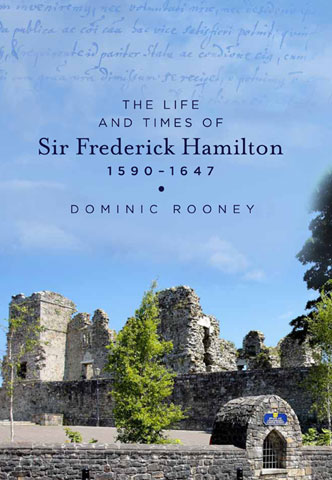
I am really looking forward to reading Dominic Rooney’s well reviewed publication, ‘The Life and Times of Sir Frederick Hamilton 1590-1647’ as my holiday read. The subject was the founder of the town which bears his name, Manorhamilton, the cultural and commercial hub of North Leitrim.

Frederick Hamilton

The Introduction courtesy of Four Courts Press whets the appetite

“This is the story of Sir Frederick Hamilton, an ambitious and boastful 17th-century Scottish nobleman who secured a grant of land during the Leitrim Plantation in 1620. Unlike many other grantees, he and his English wife, Sidney, took up residence on their estate and enlarged it through purchase or mortgage from their British and Irish neighbours. The adventurous and enterprising Hamilton raised a regiment to fight for Gustavus Adolphus during the Thirty Years War in Germany, but later sought redress from the Swedish council of state for the ‘unlawful’ disbandment of this regiment. From then on, he concentrated on consolidating his situation in Leitrim, where his impregnable castle at Manorhamilton served him well during the turbulent years of the 1641 rebellion. Hamilton moved to Derry in 1643 in the hope of succeeding his father-in-law as governor of that city. He joined the covenanter movement and then sought military promotion from the covenanters’ allies – the English parliament. Having failed in his quest – despite all his bragging – he retired to Scotland to take command of a regiment in the Army of the Solemn League and Covenant. He was discharged in 1647 with little or no compensation and died a ruined man.”

Breifne Ua Ruairc

breifne_baronies


Extract from the Rev. M. Connellan,a wonderful historian which explains the origins of the O’Rourkes of Breifne:-

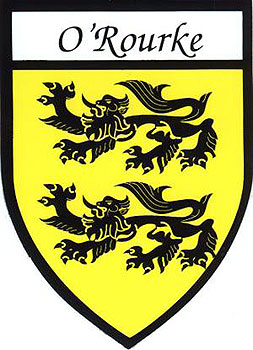
THE chiefs and clans of Brefney and the territories they possessed in the twelfth century, are, according to O’Dugan, as follows:–1. O’Ruairc or O’Rourke; 2. O’Raghailaigh or O’Reilly: these were the princes of the territory of Brefney. 3. Mac-Tighearnain (tigherna, Irish, “a lord or master”), anglicised MacTernan, McKiernan, and Masterson, were chiefs of Teallach Dunchada (signifying the tribe or territory of Donogh), now the barony of “Tullyhunco,” in the county Cavan. 4. The Mac-Samhradhain (anglicised MacGauran, Magauran, and Magovern) were chiefs of Teallach Eachach (which signifies the tribe or territory of Ecchy), now in the barony of “Tullaghagh,” county Cavan. This sirname is by some rendered “Somers,” and “Summers,” from the Irish word “Samhradh” [sovru], which signifies “summer”. 5. MacConsnamha (snamh: Irish, “to swim”; anglicised “Ford” or “Forde”), chief of Clan Cionnaith or Clan Kenny, now known as the Muintir Kenny mountains and adjoining districts near Lough Allen, in the parish of Innismagrath, county Leitrim. 6. MacCagadhain or MacCogan, chief of Clan Fearmaighe, a district south of Dartry, and in the present barony of Dromahaire, county Leitrim. O’Brien states that the MacEgans were chiefs of Clan Fearamuighe in Brefney: hence MacCagadhain and MacEgan may, probably, have been the same clan.

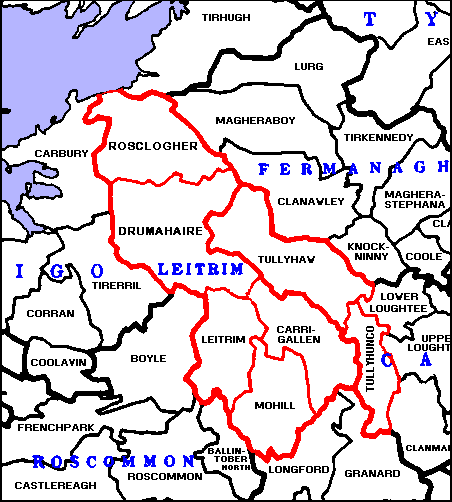
7. MacDarchaidh or MacDarcy, chief of Cineal Luachain, a district in the barony of Mohill, county Leitrim, from which the townland of Laheen may he derived. 8. MacFlannchadha (rendered MacClancy), chief of Dartraidhe or Dartry, an ancient territory co-extensive with the present barony of Ross-Clogher in Leitrim. 9. O’Finn and O’Carroll,# chiefs of Calraighe or Calry, a district adjoining Dartry in the present barony of Dromahaire and comprehending, as the name implies, an adjoining portion of Sligo, the parish of “Calry” in that county. 10. MacMaoilliosa or Malllison, chief of MaghBreacraighe, a district on the border of Leitrim and Longford. 11. MacFionnbhair or Finvar, chief of Muintir Gearadhain (O’Gearon or O’Gredan), a district in the southern part of Leitrim. 12. MacRaghanaill or MacRannall (angilcised Reynolds), who were chiefs of Muintir Eoluis, a territory which comprised almost the whole of the present baronies of Leitrim, Mohill, and Carrygallen, in the county Leitrim, with a portion of the north of Longford. This family, like the O’Farrells, princes of Annaly or Longford, were of the race of Ir or Clan-na-Rory; and one of their descendants, the celebrated wit and poet, George Nugent Reynolds, Esq., of Letterfian, in Leitrim, is stated to have been the author of the beautiful song called “The Exile of Erin,” though its composition was claimed by Thomas Campbell, author of “The Pleasures of Hope.” 13. O’Maoilmiadhaig or Mulvey, chief of Magh Neise or Nisi, a district which lay along the Shannon in the west of Leitrim, near Carrick-on-Shannon. The clans in the counties of Cavan and Leitrim, not given by O’Dugan, are collected from other sources:

14. MacBradaigh or MacBrady, was a very ancient and important family in Cavan; they were, according to MacGeoghagan, a branch of the O’Carrolls, chiefs of Calry. 15. MacGobhain, MacGowan, or O’Gowan (gobha: Irish, “a smith”), a name which has been anglicised “Smith,” etc., were of the race of Ir; and were remarkable for their great strength and bravery. Thus Smith, Smyth, Smeeth, and Smythe, may clam their descent from the Milesian MacGowan, originally a powerful clan in Ulidia. 16. MacGiolladuibh, MacGilduff, or Gilduff, chiefs of Teallach Gairbheith, now the barony of “Tullygarvey,” in the county Cavan. 17. MacTaichligh or MacTilly, chief of a district in the parish of Drung, in the barony of Tullygarvey. 18. MacCaba or MacCabe, a powerful clan originally from Monaghan, but for many centuries settled in Cavan. 19. O’Sheridan, an ancient clan in the county Cavan. Richard Brinsley Sheridan, one of the most eminent men of his age, as an orator, dramatist, and poet, was of this clan. 20. O’Corry was a clan located about Cootehill.

21. O’Clery or Clarke was a branch of the O’Clerys of Connaught and Donegal, and of the same stock as the authors of the Annals of the Four Masters. 22. O’Daly and Mulligan, were hereditary bards to the O’Riellys. 23. Fitzpatrick, a clan originally of the Fitzpatrlcks of Ossory. 24. Fitzsimon, a clan long located in the county Cavan of Anglo-Norman descent, who came originally from the English Pale ##. 25. O’Farrelly, a numerous clan in the county Cavan. 26. Several other clans in various parts of Cavan, as O’Murray, MacDonnell, O’Conaghy or Conaty, O’Connell or Connell, MacManus, O’Lynch, MacGilligan, O’Fay, MacGafney, MacHugh, O’Dolan, O’Drum, etc.27. And several clans in the county Leitrim, not mentioned by O’Dugan, as MacGloin of Rossinver; MacFergus, who were hereditary erenachs of the churches of Rossinver, and whose name has been auglicised “Ferguson”; O’Cuirnin or Curran, celebrated bards and historians; MacKenny or Keaney, MacCartan, O’Meehan, etc.

O'Rourkecropped-leitrim-coco.gif

* Brefney: In Irish this word is “Breifne” or “Brefne,” wbich signifies the Hilly Country; it was cailed by the English “The Brenny,” and has been Latinized “Brefnia” and “Brefinnia.” This ancient territory comprised the present counties of Cavan and Leitrim, with a portion of Meath, and a part of the barony of Carbury in Sligo; O’Rourke being prince of West Brefney or Leitrim; and O’Rielly, or O’Reilly, of East Brefney or Cavan. Brefney extended from Kells in Meath, to Drumcliff in the county Sligo and was part of the Kingdom of Connaught, down to the reign of Queen Elizabeth, when it was formed into the Counties of Cavan and Leitrim, and Cavan was added to the province of Ulster. In this territory Tiernmas, the 13th Monarch of Ireland, was the first who introduced Idol worship into Ireland; and set up at Moy Slaght (now Fenagh, in the barony of Mohill, county Leitrim) the famous idol Crom Cruach, the chief deity of the Irish Druids which St. Patrick destroyed.

Brefney was inhabited in the early ages by the Firvolgians who are by some writers called Belgae and Firbolg), who went by the name of “Ernaidhe”, “Erneans”, and “Ernaech”; which names are stated to have been given them from their inhabiting the territories about Lough Erne. These Erneans possessed the entire of Brefney. The name “Brefney” is, according to “Seward’s Topography,” derived from “Bre,” a hill, and therefore signifies the country of hills or the hilly country: a derivation which may not appear inappropriate as descriptive of the topographical features of the country, as innumerable hills are scattered over the counties of Cavan and Leitrim. On a vast number of these hills over Cavan and Leitrim are found those circular earthen ramparts called forts or raths, and some of them very large; which circumstance shows that those hills were inhabited from the earliest ages. As several thousands of these raths exist even to this day, and many more have been levelled, it is evident that there was a very large population in ancient Brefney. The erection of these raths has been absurdly attributed to the Danes, for it is evident that they must have formed the chief habitations and fortresses of the ancient Irish, ages before the Danes set foot in Ireland, since they abound chiefly in the interior and remote parts of the country, where the Danes never had any permanent settlement.

Ancient Brefney bore the name of Hy Briuin Breifne, from its being possessed by the race of Brian, King of Connaught, in the fourth century, brother of Niall of the Nine Hostages, and son of Eochy Moyvane, Monarch of Ireland from A.D. 357 to 365, and of the race of Heremon. That Brian had twenty-four sons, whose posterity possessed the greater part of Connaught and were called the “Hy-Briuin race.” Of this race were the O’Connors, kings of Connaught; O’Rourke, O’Rielly, MacDermott, MacDonogh, O’Flaherty, O’Malley, MacOiraghty (MacGeraghty, or Geraghty), O’Fallon, O’Flynn (of Connaught), MacGauran, MacTiernan, MacBrady or Brady, etc. In the tenth century Brefney was divided into two principalities, viz, Brefney O’Rourke or West Brefney, and Brefney O’Rielly or East Brefney. Brefney O’Rourke comprised the present county Leitrim, with the barony of Tullaghagh and part of Tullaghoncho in the county Cavan; and Brefney O’Rielly, the rest of the present county Cavan: the river at Ballyconnell being the boundary between Brefney O’Rourke and Brefney O’Rielly, the O’Rourkes being the principal chiefs. “O’Rourke’s Country” was called Brefney O’Rourke; and “O’Rielly’s Country” Brefney O’Rielly. The O’Rourkes, and O’Riellys maintained their independence down to the reign of James the First, and had considerable possessions even.”


The Forgotten Poet

WILLIAM HENRY DRUMMOND

“LEITRIMS FORGOTTEN POET”

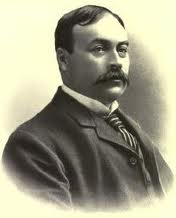
William Portrait

William Henry Drummond was born on Holy Thursday April 13, 1854 in the townland of Curraun(1854-04-13), in the northern end of the parish of Mohill.  At that time William’s family used the surname Drumm but changed it to Drummond in 1875.

The world that William grew into was one where the British Empire was entering its zenith with Victorian ingenuity, innovation and industrial might allowing the Empire to spread its power and influence around the globe. Just a fortnight prior to William’s birth, Britain and France had declared war on Russia and the Crimean War officially began. A few miles away at Lough Rynn, William Sydney Clements had acquired the title the Third Earl of Leitrim and begun his infamous lordship.

In the Leitrim that the young Drummond was born into An Gorta Mor, the Great Famine had not long ended and this seismic event had changed the demographics and landscape of the County forever. In Dublin, Oscar Fingal O’Flaherty Wilde was born, a talent whose popularity and fame endures to the present. How ironic it is then that in the latter decades of the Nineteenth Century, William Henry Drummond’s name was as well known and in some countries his writings more popular than that of his compatriot. Today though is very different and Drummond’s work has fallen into disuse and obscurity. We should not forget however this Leitrim man, born in relatively humble beginnings in Mohill who would go on to become the First National poet of Canada.

Early Life

William was the oldest of the four sons born to George Drumm and Elizabeth Morris Soden. George was an officer of the Irish Constabulary (not yet Royal until 1867). Elizabeth’s family were native to Mohill and lived on a comfortable holding at Creenagh. In 1856 The Drumm Family moved to North Leitrim and lived at Tawley, Tullaghan. The Archives of the University of Toronto record that the young Drummond was tutored by a Paddy McNulty whilst at Tawley. J. B Lyons records that

While in Tawley, William attended an Irish National school where he fell under the spell of a gifted and charismatic teacher by the name of Patrick McNulty. At this time, William began to “scribble” his first verses and was exposed to the tradition of Celtic legends expressed in the popular poetry of the day.

The family returned briefly to Mohill in 1863-64 before emigrating permanently to Canada in 1865.

According to Williams wife May, George Drumm was dismissed from the Police Force because of a quarrel he had with Lord Leitrim. It appears his health also broke at this time. Despairing with conditions in Ireland and worried about the family’s future, George and his Elizabeth decided to emigrate with their children to Lower Canada. The family arrived in Montreal in the summer of 1864. Sadly the new beginning very quickly turned into a false dawn because in February 1866 George died suddenly and his family, left without even his small pension, faced financial ruin and hardship.

Elizabeth Drumm opened a shop in the front room of their house in Montreal. The boys all sold newspapers, and, when he was 14, William Henry left school and became an apprentice telegraph operator. He worked for several years for a logging firm spending his summers at L’abord-à-Plouffe, an isolated lumber town in Quebec.  It was here that Drummond had his first encounters with the speech and customs of the French-Canadian backwoodsmen. Many of these men were miners, prospectors or fur trappers and they were known colloquially as Habitants and Voyageurs. These characters, many of whom shunned the bright lights and comforts of city life, would be the primary inspiration for the future writings of William Henry Drummond.

Williams’s earnings with his telegraph work helped to keep the family and provide his three younger brothers with an education.

In 1875, having been convinced by a cousin that “the name Drumm was but a Corruption of the name Drummond our ancient family name,” William officially changed his surname and that of his mother and brothers to Drummond.

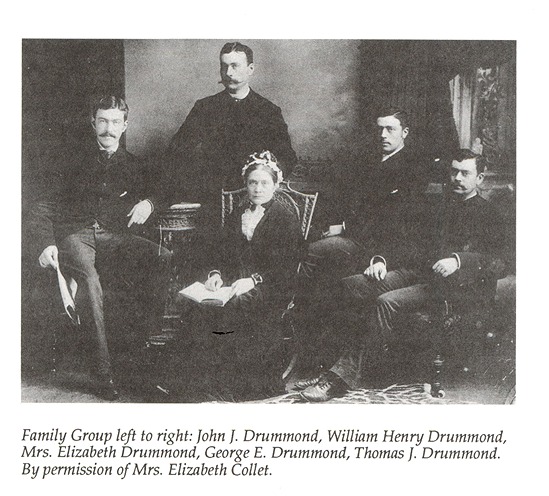
Drummond Family Portrait

     After six summers working in the remote logging camps Drummond set his sights on pursuing a career in Medicine.  In 1876–77 Drummond attended the High School of Montreal. He began studying medicine at McGill University the following year but subsequently failed his second year. Sir William Osler, of McGill University fame remembered Drummond as “a brilliant and loveable personality, but at the same time one of the least studious in my class.”

In 1879 he transferred to the medical faculty of Bishop’s College, Montreal and he completed his studies there. One source records,  “Bill Drummond was better known as an athlete than as a student, excelling in snowshoeing, hammer throwing, putting the shot, and fast walking and for a time was Canadian Amateur Champion of the last named exercise and one of the most popular men in College”.

Drummond spent his internship and early years of practice in numerous locations throughout rural Quebec. In 1888 he returned to Montreal, and set up a General medical practice in the family home. In 1893 he was appointed as Professor of Hygiene at his alma Mater, Bishops College. In 1894 he was made assistant Registrar and Professor of Medical Jurisprudence. In 1895 he became associate editor of the Canada Medical Record.

Drummond was also well known as a breeder and exhibitor of Irish terriers. He was a member of the Montreal Kennel Club and the Irish Terrier Club of Canada.

Drummond’s brothers George Edward, John James, and Thomas Joseph, all became successful businessmen and the Drummonds were one of the most influential families in both Montreal and Canadian society. William also invested successfully in various ventures with his brothers ranging from Ironworks to silver mines.

When Drummond was 40, he married May Isobel Harvey, a native of Jamaica in the West Indies. The couple was reputed to have met in September 1892 at the Laurentian Club, a well known social club in Montreal. Drummond later travelled to Jamaica where the couple were engaged before marrying at Savanna la Mar, Jamaica. After their marriage they made frequent trips between Montreal and Jamaica. Drummond became interested in the French Creole and Patois language patterns and dialects found in the West Indies.

Work

In his work Drummond embraced the folklore and way of life of rural Québec. His style of narrative verse was written in the English idiom but totally inspired by the French Canadian farmers and woodsmen.

Drummond’s best-known poem, “The wreck of the ‘Julie Plante’” was written in the late 1870s. The poems origins were later recounted by Mrs. Drummond; Drummond had been warned by an old French Canadian man to come in off the Lac des Deux Montagnes in a windstorm. The old man had said “An’ de win’ she blow, blow, blow lak a hurrican!” According to  Mrs. Drummond these words spoken in dialect “rang so persistently in his ears that, at the dead of night, unable to stand any longer the haunting refrain, he (Drummond) sprang from his bed and penned” the lines that were “to be the herald of his future fame.” With its clever mixture of English and French words, strong rhythms, and witty lines, the poem was an immediate success when eventually published.

“De win’ can blow lak hurricane
An’ s’pose she blow some more,
You can’t get drown on Lac St. Pierre
So long you stay on shore”

Drummond had composed occasional poems for circulation amongst friends and for informal recitation throughout the 1880’s. In the early 1890s his verses began appearing in Periodicals and he made his début reciting his own poetry.

Drummond does not appear to have deliberately courted literary fame and preferred to compose his verse for private readings and intimate gatherings. By 1895-96 however he was planning a published volume with much encouragement from his family and friends. He was also greatly encouraged by the well known French-Canadian poet Louis Fréchette, whom he had met in 1896. The eagerly awaited publication “The Habitant and other FrenchCanadian poems” was a runaway success and transformed Drummond into one of the most popular authors in the English-speaking world. The Volume contained 23 poems and several illustrations by Frederick Simpson Coburn.

In the Introduction Drummond said that having lived beside French Canadians most of his life, he had “grown to admire and love them.” Although the English-speaking public might be familiar with the urban French Canadian, it “had little opportunity of becoming acquainted with the habitant”.

      “The Habitant” as well as being a popular work was also a critical success. The volume was favorably reviewed in the literary press of Great Britain and North America. The poems themselves became subjects of detailed critical comment. It is unclear how much money Drummond made from sales, but the attention that he received both enabled and forced him to change his life to cope with these new demands      Three more volumes were published “Philorums canoe and Madeleine Vercheres; two poems” (1898); “Johnnie Courteau and other poems” (1901); and “The Voyageur and other poems” (1905). All three publications were successful and were reprinted many times.   Drummond was besieged with requests for speaking engagements, recitations, tours, and more books.

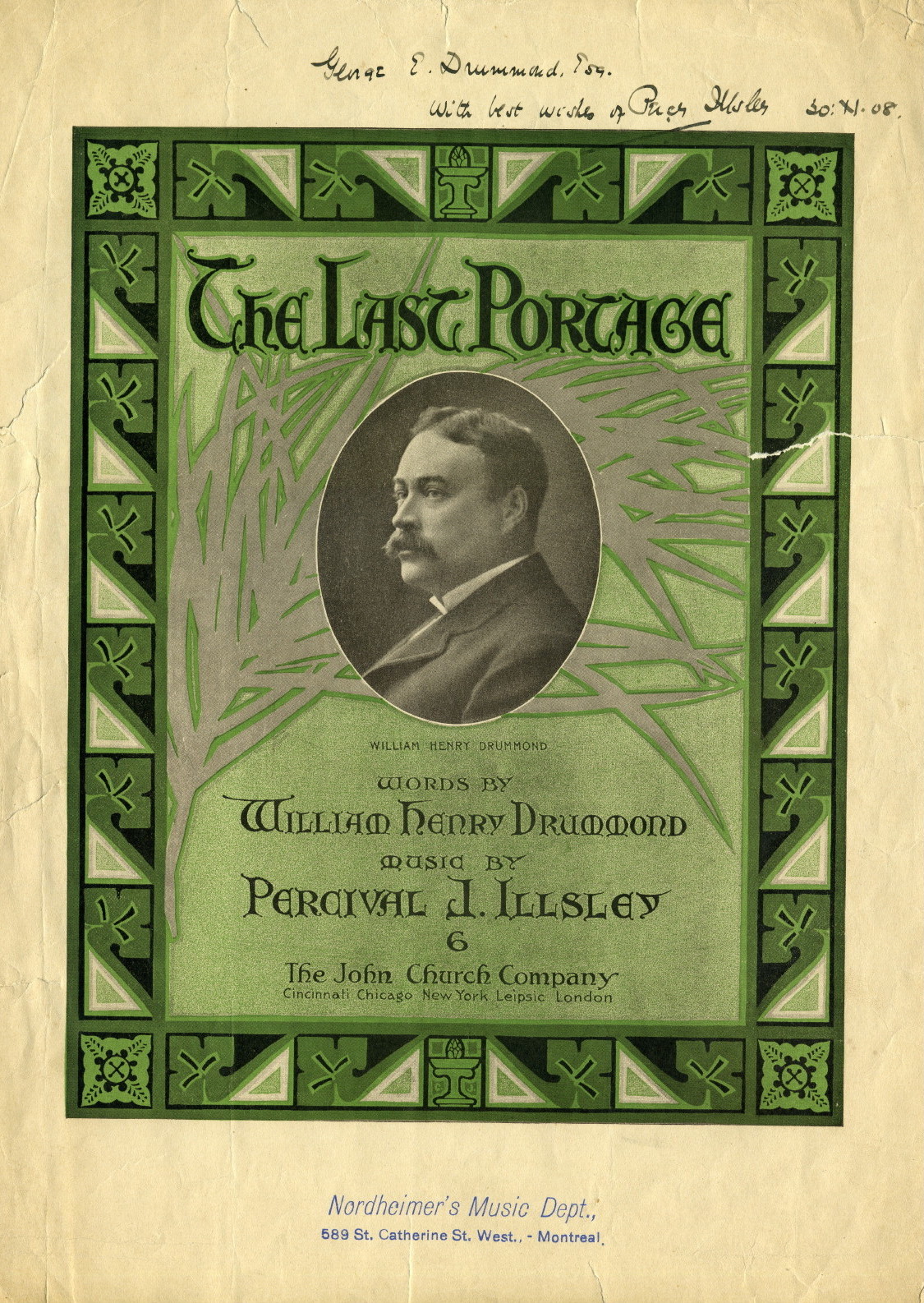
The Last Portage Image dated 1908

Later Life

As his fame grew Drummond undertook various lecture tours in the United States and Canada. In 1902 he spent part of the summer in Britain and Ireland. It is not recorded whether he had the opportunity to revisit his birth place. All of these activities brought even more fame as he brought his work to a wider audience. He also received other honors. He was elected a fellow of the Royal Society of Literature of the United Kingdom in 1898 and a fellow of the Royal Society of Canada in 1899. In 1902 he was awarded an honorary degree by the University of Toronto and in 1905 another would be conferred on him by Bishop’s College.

In August 1904 Moira, Drummond’s only daughter, was born. The following September his third son William Harvey, died aged three. One of his most famous poems, “The last portage,” which appeared in “The Voyageur and other poems”, came to him as a result of a dream that he had on Christmas Eve 1904 while he was still mourning the boy’s death.  In 1905 he closed his medical practice in Montreal. His mother, Elizabeth died in April 1906 and the weight of personal grief seems to have greatly affected Drummond at this time.

Increasingly Drummond was spending more and more time in the mining town of Cobalt where he and his brothers had acquired an interest in silver mines. He spent most of the winter of 1906–7 in Cobalt fighting a smallpox epidemic in the settlement. Drummond’s own health suffered in this period.  He returned to Montreal in early March, and was the guest speaker at the annual dinner of the St Patrick’s Society in Montreal on 18 March 1907. He returned to Cobalt shortly after and died suddenly on the 6th April 1907 from a cerebral hemorrhage. William Henry Drummond, Canada’s first national poet was buried in Mount Royal Cemetery, Montreal. He was widely mourned.

A year after his passing “The Great Fight: poems and sketches”, a collection of 20 poems and two sketches, with a short biography by his widow and illustrations by Coburn, was published. “The poetical works of William Henry Drummond” was also published posthumously in 1912.

Summary

For decades Drummond and his poetry remained important elements within the canon of English Canadian literature. Gradually though his poetry became to be seen as old-fashioned and unrepresentative. Commentators such as Lee Briscoe Thompson lamented that Drummond was a “victim of an attack of modernists on late-19th-century poetry”. Other critics believe that Drummond’s poetry was sidelined because it lacked political correctness and might offend the Quebecois people. Thompson believes the “shelving” of this “people’s poet” was unfortunate, for Drummond represents a very sincere attempt to articulate a sympathetic portrayal of rural French Canadians.  Thompson also believed Drummond’s work was a valid portrayal of a uniquely Canadian language and dialect which was borne of the fusion of two distinct ancient cultures in the New World. In his most recent biography, J.B Lyons seeks to redress the fate of  Drummond by placing him in the context of dialect poets, the best known being Robert Bums of course. It remains to be seen what the future holds for the poetry of William Henry Drummond. What cannot be denied is that for a few short decades this son of Leitrim was one of the most popular, and celebrated authors of the day and was considered Canada’s National Poet.

J. F. Macdonald, William Henry Drummond (Toronto, [1923?]), is the sole book-length study of the poet.

L. J. Burpee, “W. H. Drummond: interpreter of the habitant,” Educational Record of the Prov. of Quebec (Quebec), 61 (1945): 208–12, reissued as “W. H. Drummond [1854–1907],” Leading Canadian poets, ed. W. P. Percival (Toronto, 1948), 71–78. R. H. Craig, “Reminiscences of W. H. Drummond,” Dalhousie Rev., 5 (1925–26): 161–69. M. J. Edwards, “William Henry Drummond,” The evolution of Canadian literature in English. . ., ed. M. J. Edwards et al. (4v., Toronto and Montreal, 1973), 2: 94–97. R. G. Moyles, EnglishCanadian literature to 1900: a guide to information sources (Detroit, 1976), 129–31. Gerald Noonan, “Drummond – the legend & the legacy,” Canadian Lit. (Vancouver), no.90 (autumn 1981): 179–87. Thomas O’Hagan, “A Canadian dialect poet,” Catholic World (New York), 77 (April–September 1903): 522–31; Intimacies in Canadian life and letters (Ottawa, 1927). R. E. Rashley, “W. H. Drummond and the dilemma of style,” Dalhousie Rev., 28 (1948 49): 387–96. L. B. Thompson, “The shelving of a people’s poet: the case of William Henry Drummond,” Journal of American Culture (Bowling Green, Ohio), 2 (1980): 682–89.

“William Henry Drummond” (1854-1907) by John Garvin, (1872-1934)
Garvin, John William, ed. Canadian Poets. Toronto, Canada: McClelland, Goodchild & Stewart, Publishers, 1916. pp. 177-188.

Parkes Castle

Parke's Castle

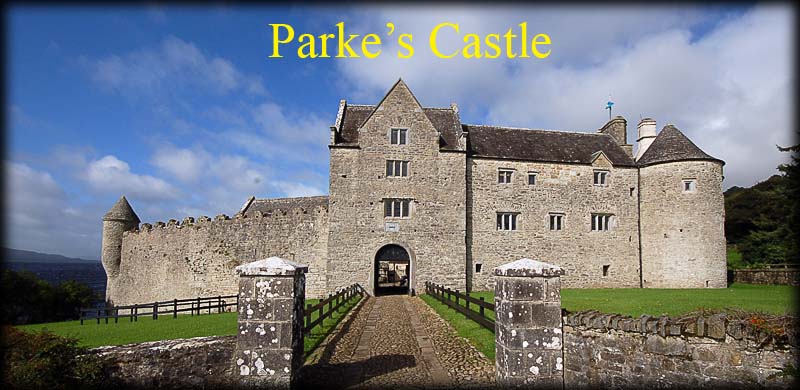
Parkes Castle is one of my favourite places in Leitrim.

As the scion of a dispossessed native family, this Planters home shouldn’t really hold much enjoyment for me. I think it is perhaps because it has a picturesque natural setting. The soft lapping waters of Lough Gill provide a fitting foreground and the beautiful Glens of North Leitrim give it formidable background. You couldn’t fault the planter for picking such a fantastic site to set up home.

Parkes Castle isn’t in fact a Castle at all. It is a restored plantation house dating to the early 17th century. It was once the home of Mr. Roger Parke and his family but the site also once boasted a Manor House owned by Sir Brian O’Rourke or Brian na Murtha (Brian of the Ramparts). The O’Rourke Manor at Newtown was where O’Rourke entertained the famous survivor of the shipwrecked Spanish Armada, Francisco de Cuellar.

In his memoirs De Cuellar said of his host “Although this chief is a savage, he is a good Christian and an enemy of the heretics and is always at war with them.” O’Rourke was the son of Brian Ballagh O’Rourke and he became the Chief of West Breifne in 1566 after disposing of his chief rivals, his elder brothers. He was well educated in the classical fashion and was regarded by the Tudor Administration in Dublin as being proud and insolent. The president of Connacht, Sir Nicholas Malby, described O’Rourke as ‘the proudest man living in Ireland today’.

O’Rourke was knighted by the English in 1575 but his relationship with them was fraught as they extended their control into his territory. He just about survived implication in the doomed Desmond rebellion (1579) but by the mid 1580’s he was complaining bitterly about harassment by the President of Connacht Sir Richard Bingham. O’Rourke took his complaints to Dublin Castle and seems to have enjoyed, for awhile, the friendship and protection of Sir John Perrot, the Lord Deputy. Brian entered negotiations to surrender his lands and receive a royal title but does not appear to have ever taken up the letters patent.

In 1588 he was condemned for providing assistance to over 80 survivors of the shipwrecked Armada and helping most of them return to Spain. Tensions rose throughout 1589 and all talks between Bingham, O’Rourke and the new Lord Deputy, Fitzwilliam failed. Bingham invaded Leitrim in 1590 and occupied several of O’Rourke’s Manor houses. O’Rourke fled to Scotland where he was the equivalent of a political refugee seeking asylum. Queen Elizabeth seeking to rely on the recent Treaty of Berwick sought to have O’Rourke extradited and the Leitrim noble became a cause celebre. The Scots eventually did have him extradited and he soon found himself in the Tower of London. O’Rourke’s Trial for treason attracted a lot of attention but the sentence of death was inevitable.

O’Rourke was brought to Tyburn on the 3rd of November, 1591where he was hung, drawn and quartered. His final request to the hangman was reputedly to be hung in the Irish Fashion with a willow rope but this was refused.

By now Ireland was in rebellion in what became known as the ‘Nine Years War’, it would end in defeat for the Irish at the Battle of Kinsale. Brian son, Brian Og played a prominent part in defeating the English at the Battle of the Curlews in 1599. Brian died in 1604 and was succeeded by his brother Tadhg, the last ‘Lord’ of Breifne who died the following year, probably poisoned. The heirs to these last two ‘Lords’ were declared illegitimate and the family lands confiscated. Robert Parke received a grant of the lands and Manor at ‘Baile Nua’ and within a couple of years he had demolished the O’Rourke tower and built his house within the original protective walls. The house was rebuilt in the late 1600’s and was occupied until the late 1700’s when it was abandoned permanently.

The Office of Public Works has carried out a sympathetic and impressive restoration. The ‘Castle’ is definitely worth a visit and is close to the village of Dromahaire and convenient to Sligo also.

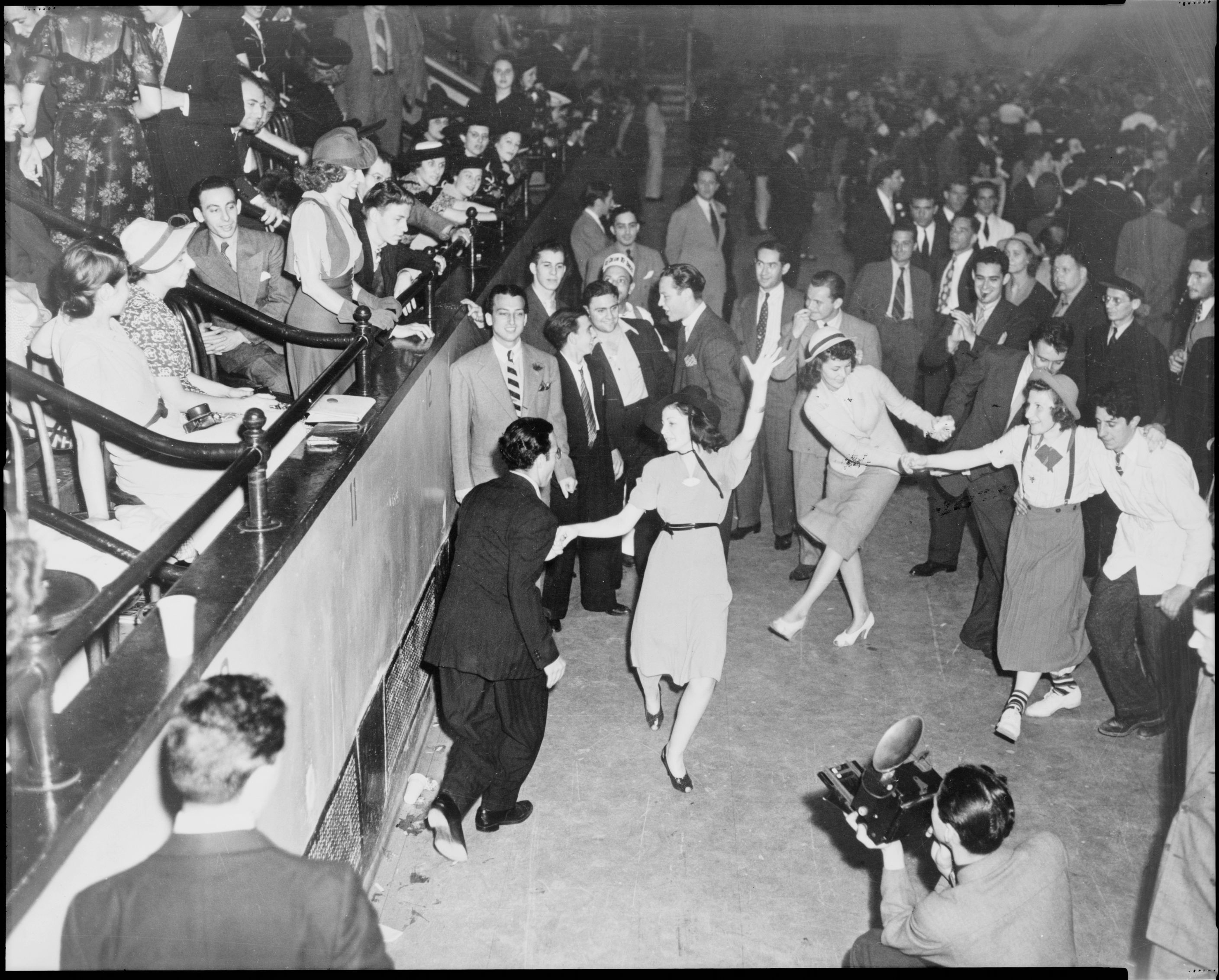
‘JAZZING EVERY NIGHT OF THE WEEK’

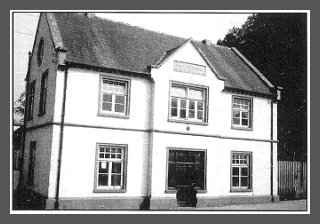
Canon Donohoe Hall, Mohill, Co. LeitrimJitterbug_dancers_NYWTS

The Anti-Jazz Campaign

Mohill and Cloone became the national centre of the infamous Anti – Jazz campaign of the early 1930’s. The leader of the campaign was the parish priest of Cloone, Fr. Peter Conefrey.  Conefrey was an ardent cultural nationalist and was heavily involved in the promotion of Irish music, dancing and the Irish language.  He devoted his life to making parishioners wear home – spun clothes and become self – sufficient in food.

Many people who look at the anti-jazz campaign often do so in isolation of the cultural context and background in which these events played out. The new Irish State faced enormous economic and social problems including high unemployment rates and falling living standards. The hierarchy of the Catholic Church had grown considerably in power and influence after independence and began to pre-occupy itself with perceived threats to the virtue of it flock. In the Lenten pastorals of 1924 the Irish Bishops addressed mass-goers on a number of evils and sources of degradation; these threats included women’s fashions, immodest dress, indecent dancing, theatrical performances and cinema exhibitions, evil literature, drink, strikes and lock-outs. By 1931 Archbishop McRory had taken to attacking the dangers of increased mobility which was bringing people into more and more contact with various evil vices. Now even the humble bicycle was a conduit for moral danger whilst ‘the motor car was seen as an instrument of seduction in the hands of unscrupulous males’.

Of all the perceived threats to the moral health of the nation one rose high above all others, the unlicensed Dance Hall, The clergy were not against dancing in principle. It was a perfectly healthy activity so long as the dances were of Irish Origin and the supervision was close. Cardinal Logue stated

‘They (ceili dances) may not be the fashion in London and Paris. They should be the fashion in Ireland. Irish dances do not make degenerates’.

In 1931 a Government appointed committee investigated the moral condition of the Nation, and its subsequent report, known as the Carrigan Report, concluded that the moral sate of the nation was very poor and legislation would have to be passed to improve the situation.

‘The ‘commercialised’ dance halls, picture houses of sorts, and the opportunities afforded by the misuse of motor cars for luring girls, are the chief causes alleged for the present looseness of morals’.

The Clergy led the way in seeking to have unlicensed dance halls closed and foreign dances banned entirely and pressurised the Government at every juncture for legislative reform. The definition of a ‘Street’ in the Criminal Law Amendment Bill was extended to include the evil motor car leading the liberal Senator Dr. Mahaffy to suggest that a wheelbarrow was a street and therefore could be used for an immoral purpose!

The Gaelic League re-launched its anti-jazz campaign in 1934. Fr. Peter Conefrey, the parish priest of Cloone came to national prominence as one of the leaders of the Anti-Jazz Campaign. Before long the campaign had grown into a national frenzy with Mohill at the epicentre. To have an alternative opinion was to be considered ‘anti-Gaelic’ and ‘un-Irish’.

Leitrim County Council adopted a resolution condemning jazz and all-night dancing. From the benches of local Courts District Justices took up the refrain talking of the dangers of ‘Nxxxxr music’ and the orgy of unrestricted all-night dances’.

In January 1934 a large demonstration took place in Mohill, County Leitrim. It was made up mostly of young people and the press estimated the attendance at 3,000, with five bands and banners inscribed with ‘DOWN WITH JAZZ’ and ‘OUT WITH PAGANISM’. Support came from church and state. A meeting was then held at the Canon Donohoe Hall organised and chaired by Canon Masterson the local Parish Priest. A letter from Cardinal McRory was read out:

‘I heartily wish success to the Co. Leitrim executive of the Gaelic League in its campaign against all night jazz dancing. I know nothing about jazz dancing except that I understand that they are suggestive and demoralising: but jazz apart, all night dances are objectionable on many grounds and in country districts and small towns are a fruitful source of scandal and ruin, spiritual and temporal. To how many poor innocent young girls have they not been an occasion of irreparable disgrace and lifelong sorrow?

The campaign was given official state blessing in a letter from Eamonn de Valera:

‘I sincerely hope that the efforts of Conradh na Gaeilge in your county to restore will be successful, and within the reasonable hours which have always been associated with Irish entertainment’.

Douglas Hyde also sent a message of support to the meeting and he hoped in future that all dances and games should be Irish. The Secretary of the Gaelic League Sean O’Ceallaigh condemned the Minister for Finance, Sean McEntee;

‘Our Minister of Finance has a soul buried in jazz and is selling the musical soul of the nation for the dividends of sponsored jazz programmes. He is jazzing every night of the week’.  A voice from the floor shouted, ‘Put him (MacEntee) out.’ To which Ó Ceallaigh replied, ‘Well I did not help to put him in,’ and added,

As far as nationality is concerned, the Minister for Finance knows nothing about it.  He is a man who will kill nationality, if nationality is to be killed in this country.

This prompted the local Fianna Fáil TD, Ben Maguire, to defend his party colleague.  He agreed that the broadcasting was not as national as it should be but he declared that if the minister was to be attacked personally he would take up the challenge on his behalf.  He added, ‘I hope it will not pass unanswered and that the minister will be given the opportunity of defending himself.’

 Fr. Conefrey then got up to speak. He declared that jazz was a greater danger to the Irish people than drunkenness and landlordism and concerted action by church and state was required. Jazz, Fr. Conefrey advised the gathering, emanated from “the savages of Africa” and had been brought to Ireland by “the anti-God society, with the object of destroying morals and religion.” He called on the government to circularise Garda barracks to forbid the organisation of jazz dances and to compel dance halls to shut at 11 pm.  He also called for the training of young teachers in Irish music and dancing. The meeting in Mohill was the high point of the anti-jazz campaign and it was covered by all the major newspapers and further afield.

Fr. McCormack from Granard, Co. Longford, informed the meeting that GAA clubs were some of the worst offenders for organising jazz dances while Mr. B. Fay of the Ulster Council of the GAA called for legislation regulating the use of dance halls and excluding young people under the age of 16 from entering them.  He also warned that it was a sign of degradation to see young women smoking in public. Not surprisingly the meeting was then followed by a concert and Céilí in the hall.

On the 20th of January, the Leitrim Observer published a letter from ‘Lia Fáil and fellow Gaels.’  The writer advised the ‘Gaels of Breffini’ that,

‘we are with you in the fight against the imported slush. Keep out, we say the so – called music and songs of the Gall; his silly dances and filthy papers, too.  We can never be free until this is done’.

The piece went on to say,

‘Let the pagan Saxon be told that we Irish Catholics do not want and will not have the dances and the music that he has borrowed from the savages of the islands of the Pacific.  Let him keep them for the 30 million pagans he has at home.’

It was eventually decided that Dance Halls should be the subject of separate legislation. The Dance Halls Act of 1935 was passed without any debate in the Dail. The act was draconian and made it practically impossible to hold dances without the sanction of the trinity of clergy, police and judiciary. It marked the end of private dances in private homes which were popular up to that time. It also led to the closing of many privately owned Halls who could not compete with the many new Parish Halls that sprung up around the country. At last the Church and Conradh na Gaelige could rest content that one of its main proposals for legal control of personal morality had become the law of the land.

Bibliography

Leitrim Observer, 6th January 1934,

Leitrim Observer, 13th January 1934.

Leitrim Observer, 20th January 1934.

Leitrim Observer, 10th February 1934.

http://www.historyireland.com/20th-century-contemporary-history/dancing-depravity-and-all-that-jazz-the-public-dance-halls-act-of-1935-by-jim-smyth/

http://www.theirishstory.com/2011/07/01/the-anti-jazz-campaign/#.U2TmefldVWU