Category Archives: Leitrim

Francis McGann – Leitrim Mathematician, Surveyor, Patriot (1786-1815)

Growing up in South Leitrim I had often heard of the brilliant but tragic Francis McGann. McGann was a native of Eslin and a noted scholar who died at the early age of 29. McGann was simply known to his peers as “the Bright Boy” and his early demise was sadly lamented for generations of people who saw in his passing the loss of one who had the potential to be a great leader of the people.

Francis McGann was born in 1786 in Drumlara, a townland in the parish of Mohill and on the northwestern shore of Lough McHugh. His father’s name was Peter McGann and his mother was a Mulvey from Aughacashel.

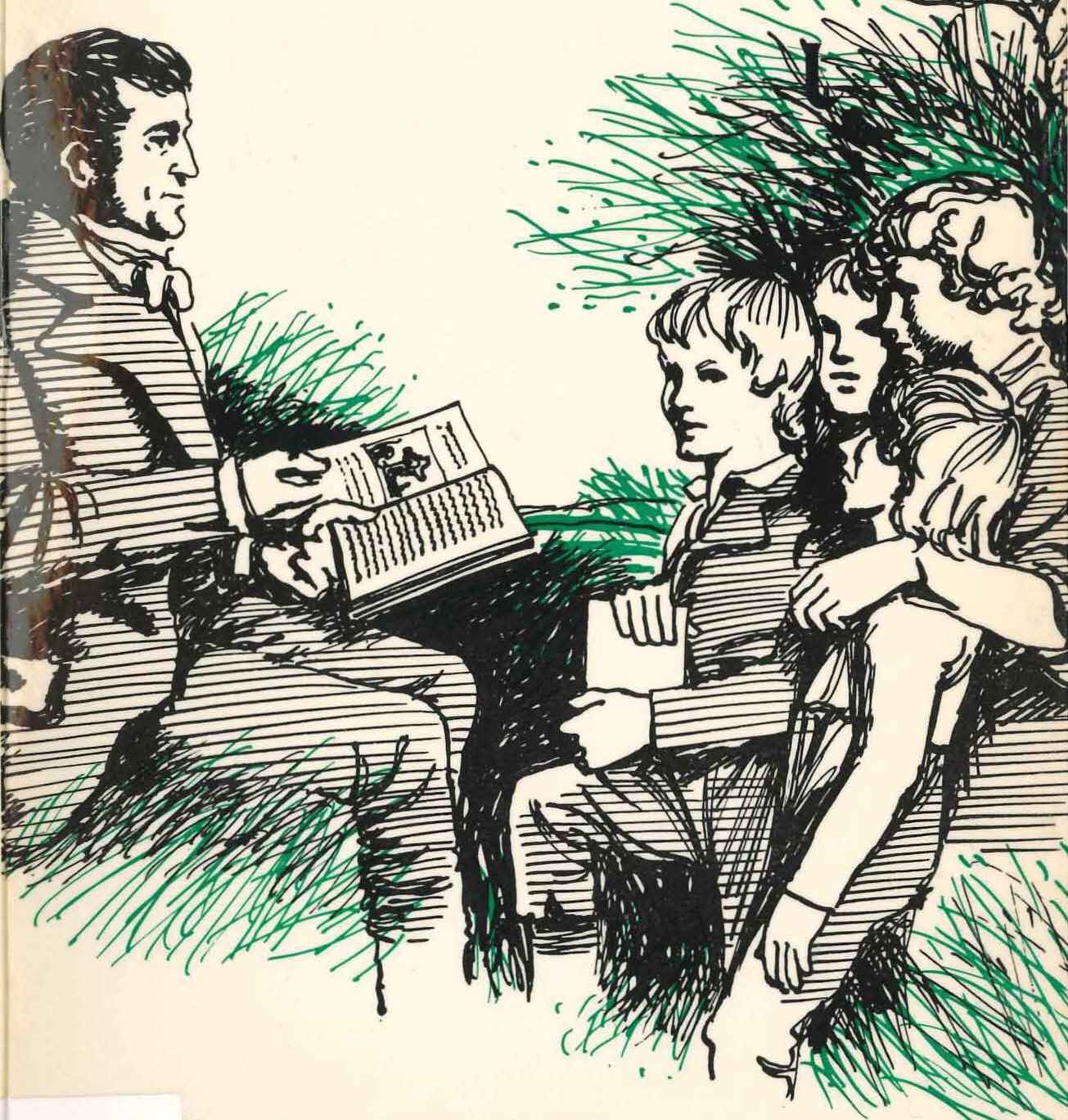
Francis was born into a country where the penal laws restricted the life and prospects of most Catholics. He initially attended a local Hedge School run by a Hugh McDonald where his genius soon became apparent. Soon he was enrolled in a highly regarded private school run by an Owen Reynolds at Glebe St., Mohill. The building where Reynolds school was located still stands and is now converted into two private residences. The Reynolds School was highly regarded in the teaching of Mathematics and McGann excelled in this discipline.
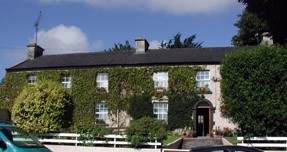
Owen Reynolds School. Mohill
    Owen Reynolds School. Mohill


Hedge school

Hedge school

McGann later moved on to a classical school in Drumsna run by a Parson Kane where he became proficient in Greek and Latin. By this stage McGann’s own reputation as a gifted scholar was widely known. In order to further his education in Mathematics, McGann travelled to Ballingarry, Co. Limerick, where he was enrolled in a school conducted by a Mr. James Baggot, himself a famous Mathematician of the day. In 1805 Baggott was advertising that he had acquired a supply of “curious mathematical and astronomical instruments,” in which he hopes his pupils will find “both pleasure and profit in the prosecution of their studies.”

Baggott was also noted for the fact that he was a friend and correspondent of Pierre Simon Marquis Laplace, the great French scientist and tutor to Napoleon. It is recorded that when Laplace was once in conversation with a Colonel O’Dell, a Limerick MP, he enquired if O’Dell knew of  “the great Irish mathematician. The Great O’Baggott”.

The Baggott School was an environment where the young McGann from Leitrim thrived but it wasn’t only Mathematics he was now learning. Baggott was also a member of the United Irishmen and his house in Ballingarry was where Lord Edward Fitzgerald stayed when he toured the country stoking up rebellion in 1798. Baggott is also said to have devised a plan for the capture of the city of Limerick. The plan was however discovered and the plotters all arrested. It is not known if McGann was amongst those interrogated but it is clear that Baggott had a huge influence on him and helped formulate in McGann’s mind the revolutionary ideals which were to become more apparent later in his life.

The Government in Dublin Castle were kept fully informed by a spy who signed himself “J.D.” of all Baggott’s movements, and a General Payne wrote advised Dublin Castle: “That rascal Baggott can neither be frightened nor bribed, and when Mr. O’Del returns I think we had better take him up.” The Government were right to be worried about Baggott and his school, particularly in light of his known correspondence with well figures in Parisian Society. Baggott died at Charleville on 31st August 1805 at the age of thirty five. He was widely mourned as can be noted from the following contemporary verse penned in his honour.

O Science, mourn! thy favourite is no more,

Alas! he’s numbered with the silent dead;

 Hibernia’s genius will his loss deplore

Whom he to fame’s exalted temple led.

By nature blessed with an exploring thought,

His brows were decked from the Newtonian tow’r

The deep arcana of fair Science sought,

And gleaned her fields of ev’ry golden flow’r

It can be surmised that the end of Baggott also signalled the end of Francis McGann’s education. Returning to Drumlara, McGann began working as a mapper / surveyor and a pioneer in the art of preparing accurate large-scale maps which were developed later by the Ordnance Survey. His attention to detail was widely known and it was said locally that he would even take care to “rub the breath off the chain” he used for surveying so that it would not distort his measurements.
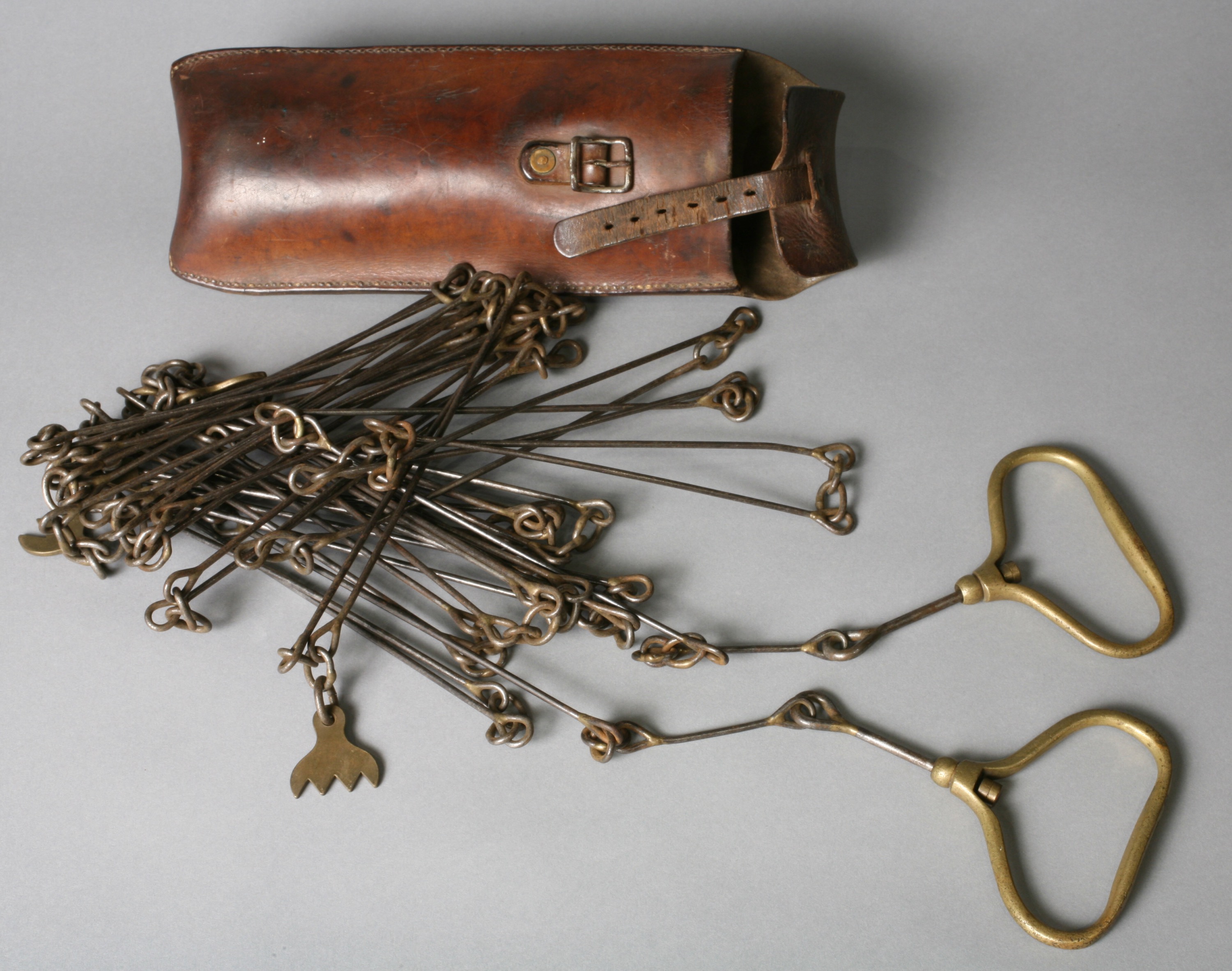
 
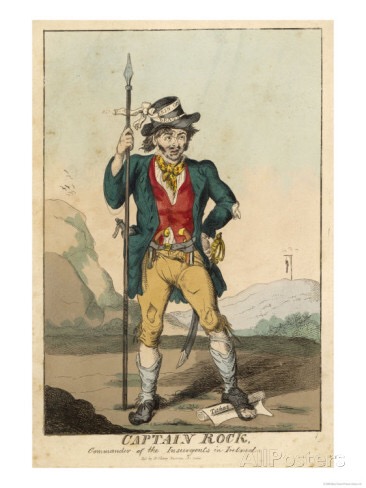
He drew a map of the district of Bunnybeg, Attymanus and Annaghhasna on a dried and pressed sheepskin for the landed Lawder family. He also mapped the townland of Killamaun and the length of the Eslin river. It is said that he was offered a position with the East India Company as chief surveyor but he declined. The Leitrim that McGann  returned to was the subject of considerable military activity in the decade following the failed insurrection of 1798. Although the United Irishmen were broken McGann became leader of a secret society known as “the Rock” “White Rock” or “Rockites”. It is little surprise that McGann was prominent and he may even have helped found such a militant agrarian society. The area where he had lived whilst in Baggott’s school was also a major centre of “Rockite” activity. A John Hickey of Doneraile, was suspected by the English authorities of the time of being ‘Captain Rock’. The Rockites tended to use United Irishman rhetoric and regularly mentioned that “assistance was to be given from France” to any Irish insurgents. One of the main Rockite aims was the placing “Catholics upon a level with Protestants”.
 

In late 1815 there were major civil disturbances in the Keshcarrigan and Gorvagh areas. In the aftermath several houses and farms were burned to the ground. A local landlord by the name of Minor Peyton had also retaliated by cutting the road into the townland of Laheen Peyton thus preventing the Catholic Tenants from getting to Mass. McGann organised a large meeting to be held at Keshcarrigan Fair on December 20th, 1815. His speech to the massive crowd there is recorded in oral tradition. He told the assembled crowd that he was there;

“to meet the intelligence, the genius and the mind of Kiltubrid and to denounce Minor Peyton, a tyrannical brute and a disgrace to humanity, who not being content with burning Drumcollop, he now tears up the pathway which lead to the ‘House of God’. But the Sun of his glory is set and today he is like the remnant of a melancholy wreck having nothing but tradition to point to his former grandeur and greatness”

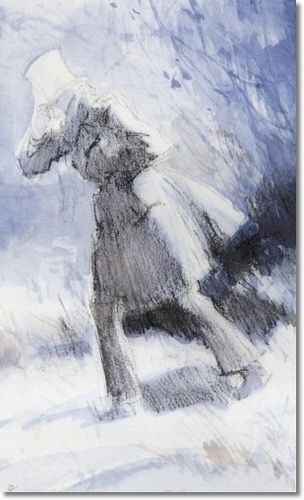
When returning from the mass meeting at Keshcarrigan Fair, McGann in the company of two men called Billy the Joiner and James Ward took shelter in a Sheebeen near Kilnagross. It had begun snowing quite heavily. The country had been enduring a severe cold snap and snow had lain on the ground for over six weeks. The people it was said had to boil snow to get a drink for their cattle. After a few hours McGann left the Sheebeen “for want of drink and fire” . It is believed he intended to visit the home of a young McKeon lady nearby with whom he was on friendly terms. Sadly McGann never reached his destination. The following day his body was found frozen to death in a snow drift, only short distance from McKeon’s house. Sadly ‘The Bright Boy” was no more and a few days later he was buried in Mohill. According to local tradition the place where McGann died was marked for many years by an evergreen tree which had become known as ‘The Monument’.
McGann’s passing was a huge blow to the people in the area.  His intellectual ability was noted from an early age. In many ways his life mirrored that of his mentor Baggott.

When McGann returned from Limerick he had matured and was clearly someone unafraid to take on the establishment both privately and publicly. Such men were in short supply in places like rural Leitrim.

The ballad, “The Fate of Francis McGann,” was penned by John Cox, the poet of Clooncarne in the parish of Bornacoola and in its folksy way it records the life and tragic death of this brilliant young man.

“He was versed in the language of all foreign parts,
And master of several bright liberal arts,
The art of surveying he had a command,
Mathematics and logic he did understand.
He could measure the air, the sea or the land,
John Cox gives his praises to Francis McGann.”
 

Many Swallows make a Summer

swallow

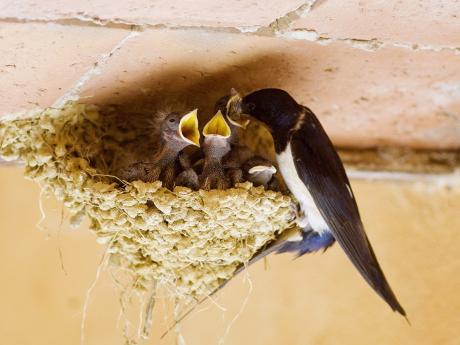
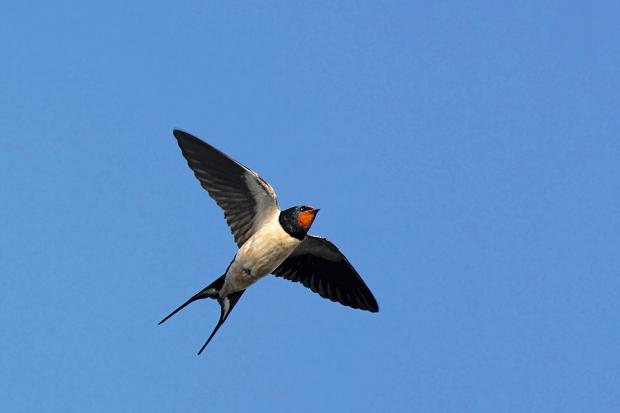
The annual arrival of the Swallow is one of the surest signs that Summer is on its way. We have had them since the beginning of April. The first weeks are spent securing their nests, building new ones and repairing old ones. You can find them anywhere but they seem to like farmyards and their byres, haysheds and barns. We have two permanent nests on our dwelling house, the oldest of which is here at least ten years now. I have managed to affix some plain corrie board from an old  poster directly underneath the nests to catch the droppings. The swallows might be cute but they have little respect for a freshly painted or whitewashed wall. One of our nests is high up under the eave on the Western Gable of the house whilst the other is squeezed in between an eave and a drainpipe. I’m reminded of the  The Wind in the Willows, where the swallows discuss with relish their impending return to “the house of the perfect eaves”. Not only are these tiny birds amazing flyers but they are great architects and precision builders too.

By now the birds are paired off, well settled in, with eggs laid and soon to hatch. The swallow practices love in a cold climate. The male and female will build the nest together. The long evenings are now spent darting and diving in the acrobatic pursuit of insects. It was the swallow after all who first invented the concept of in-flight dining. They say that the swallow is so adept that they can even swoop low along a watercourse and drink water without stopping. The skill and athleticism of these little birds are a sight to behold in the dying hours of the day. They are also very brave little birds and will swoop low like an F16 fighter pilot on any man or beast getting too close to the nest. I have vivid memories of the swallows teasing an old sheepdog we had at home, dive bombing him and turning him around in circles in the farm yard, in what for them must have been a source of endless amusement and mischief. The rest of their summer will now be spent rearing the insatiable chicks.

swallow 2

I always find it amazing to think that these little birds will next year return to this same place, the place of their birth and in some ways I feel honoured..

Billy Flynn, an ecologist for the Irish Wildlife Trust said , “Swallows travel in families, with the younger birds following their parents when they migrate for the cold months. What is incredible about them, Flynn explained, is that young swallows are still able to make the journey themselves, even if their parents have died or got lost before they had a chance to show them.

No one is exactly sure how they manage this but it is thought instinct plays a big part, as well as magnetism. Most animals have the mineral magnetite in their skulls and this gives birds a kind of internal compass. It’s an amazing journey, they pass over deserts, seas, they fly through all sorts of weather and when you see the tiny size of them, you can fit two in the palm of your hand.[i]

Migration map

Migration map

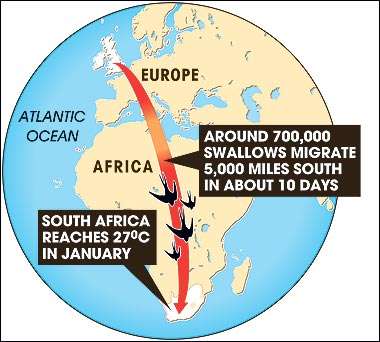
The swallow doesn’t seem to do retirement and is constantly on the move, He simply cannot sit still, a consummate workaholic. As if inventing in flight dining wasn’t enough he also promoted the classic long distance commute. As much as I look forward to them coming I hate to see them going; their departure signals the end of the summer. If they are gone before the Hurling final you can watch out for a bleak winter, if they linger on until October then it mightn’t be too bad. In the months following this I will curse again the price of oil, whilst Comrade Swallow has retired five thousand miles to the south, to his dacha in sub-Saharan Africa. Observers say the numbers of swallows are depleting and I sincerely hope that this can be reversed. It will be a very sad day if ever the swallow does not return.

The Swallow Song

Come wander quietly and listen to the wind
Come here and listen to the sky
Come walking high above the rolling of the sea
And watch the swallows as they fly

There is no sorrow like the murmur of their wings
There is no choir like their song
There is no power like the freedom of their flight
While the swallows roam alone[ii]

[i] http://www.thejournal.ie/swallows-summer-2067147-Apr2015/

[ii] Richard farina – Chapell music

“The savage loves his native shore”

Packy McGarty

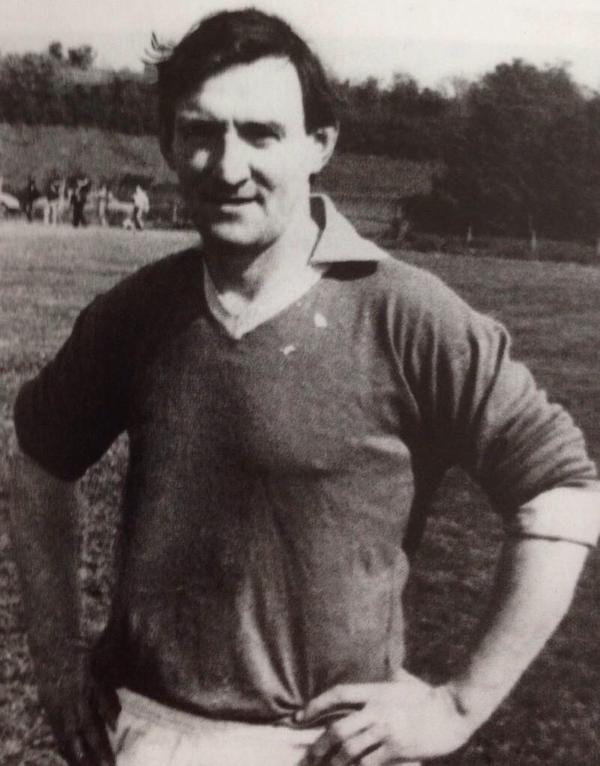
I’ve had the pleasure of meeting Packy McGarty on a few occasions and one thing that always strikes me is how he remains, even at 82, quick in mind and light on foot. In an era of high performance coaching, increasing demands on players and the onset of the ‘elite’ County player, programmed to play numerous systems and tactical set-ups, McGarty remains a beacon of light, a reminder of what makes the GAA great and unique. Surprisingly, to some at least, its not about a dresser full of medals.

I enjoyed this piece by David Kelly in today’s ‘Independent’.

http://www.independent.ie/sport/gaelic-games/gaelic-football/we-never-won-anything-but-we-competed-and-i-made-great-friends-in-every-county-31330735.html

“He Wishes for the Cloths of Heaven”

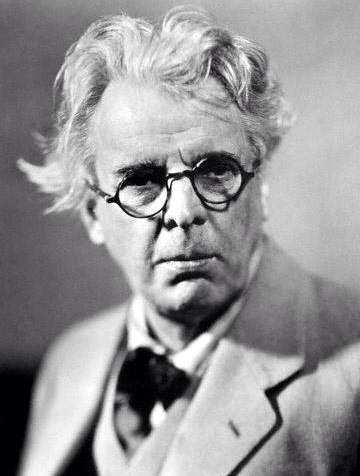
 William Butler Years was born on this day in 1865. Although born into the Anglo-Irish ascendancy Yeats could arguably be said to have done more to reshape the modern Irish identity than any if his contemporaries. Yeats drew his inspiration from ancient Irish myths and folklore and as an ardent cultural nationalist, valued the classical past as an inspiration for a modern pluralist society. He has so many great poems and this is one of my favourites that simply has to be read aloud.

He Wishes for the Cloths of Heaven”

Had I the heavens’ embroidered cloths,
Enwrought with golden and silver light,
The blue and the dim and the dark cloths
Of night and light and the half-light,
I would spread the cloths under your feet:
But I, being poor, have only my dreams;
I have spread my dreams under your feet;

Tread softly because you tread on my dreams.

A Loop in the River

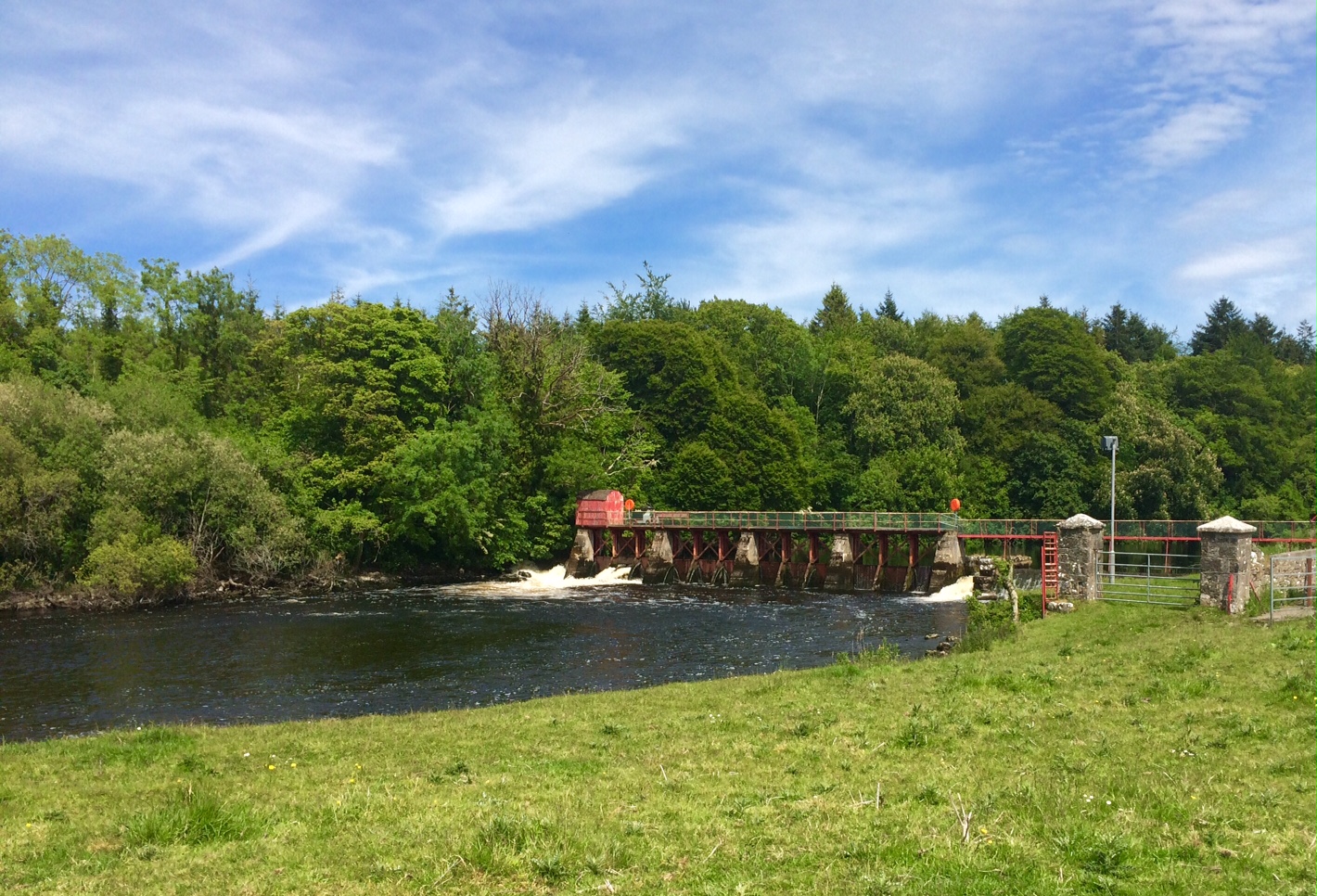
The Weir at Jamestown

The Weir

This Blog’s title owes itself to the River Shannon. The river meanders its way through the countryside and provides us with some beautiful backdrops. Today the sun was shining brightly which can be rarity hereabouts, at least of late. I was smiling to myself after a friend told me a little anecdote about Rick Santorum the US Republican Senator. Apparently Santorum had said that Pope Francis ought to leave climate change to the scientists! Poor Rick however was apparently unaware that the Pope, prior to taking orders was a trained chemical lab technician. Little matters like Ricks oversight can make you feel happy sometimes. As I was passing through Jamestown the river came into view.  I just had to stop the car to admire the beautiful Weir and the sound of the cascading waters. I was reminded of those beautifully crafted lines of Kavanagh:-

“Where by a lock Niagariously roars

The falls for those who sit in the tremendous silence

Of mid-July. No one will speak in prose

Who finds his way to these Parnassian islands.”

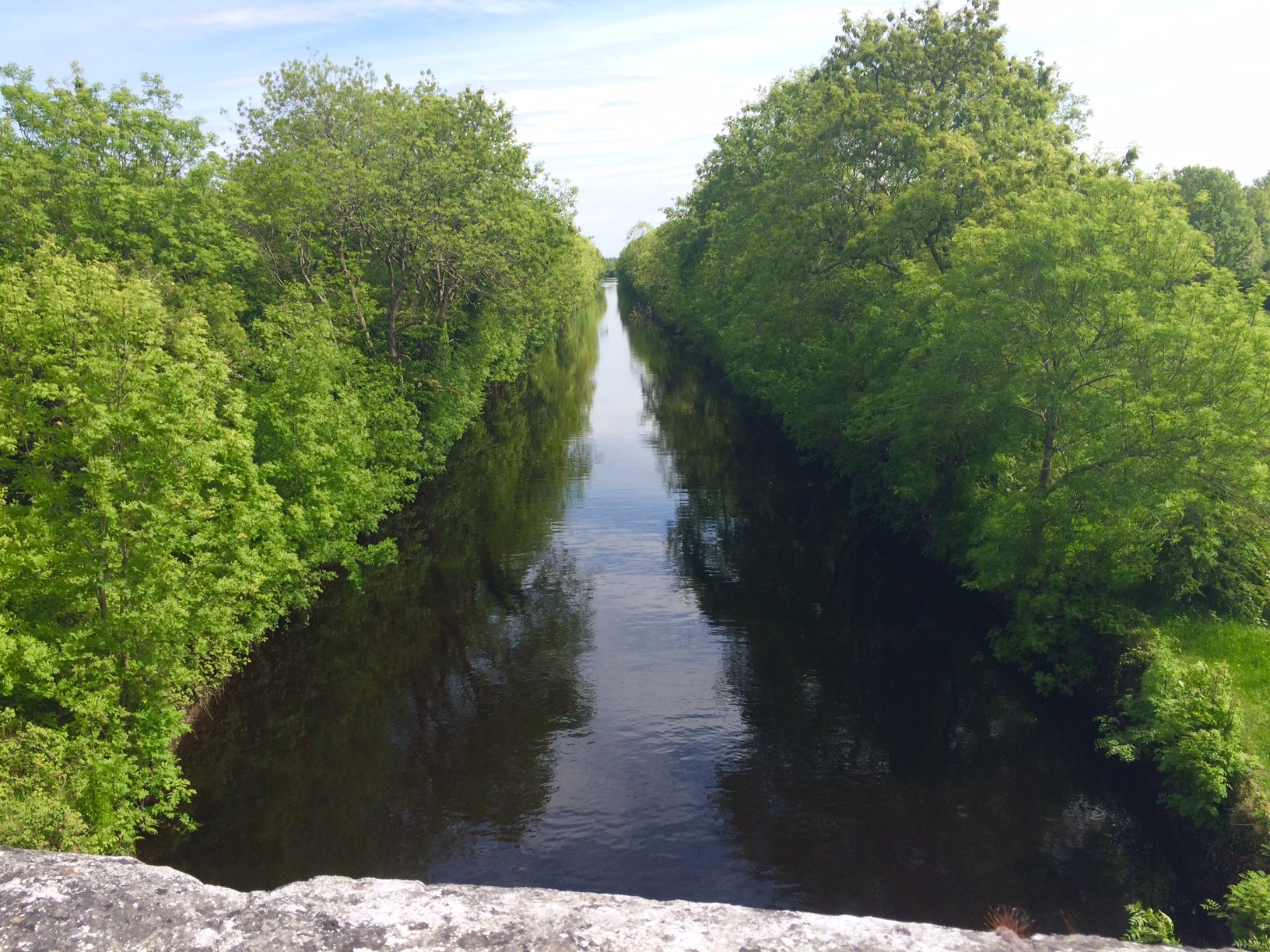
A few minutes later I stopped at one of the bridges that traverse the Albert Lock and Canal. This stretch of water is likely to be very familiar to the boating fraternity on the Upper Shannon.  It is also an area rich in history ancient and modern. The canal is also known as the ‘Jamestown Cut’ and it bypasses an un-navigable part of the river in the loop between the neat villages of Jamestown and Drumsna.

The Albert Canal

The Albert Canal

Jamestown itself was founded in 1622 as a walled plantation town and remarkably, as a recognised borough, it returned two MP’s up until the Act of Union in 1801 . The town itself never really flourished in the manner envisaged by its founders. Its prominence peaked in the mid seventeenth century when it was fought over during the 1641 Rebellion. In 1650 a famous Synod of the Bishops was held here but from then on the town declined although it retained a modest river trade and was still a significant fording point over the Shannon. The importance of the crossing point has long been recognised. The area marked the traditional fording area and point of demarcation between the ancient provinces of Connacht and Ulster. The ‘Doon’ of Drumsna stretched for over 1.6 km between the villages of Drumsna and Jamestown.The Doon consisted of a large earthenwork rampart up to six metres high on its northern side. The ramparts also had a fortified gate or entrance and was effectively an ancient ‘Checkpoint Charlie’. It is believed that the Doon was in use in the period 500BC to 400AD.

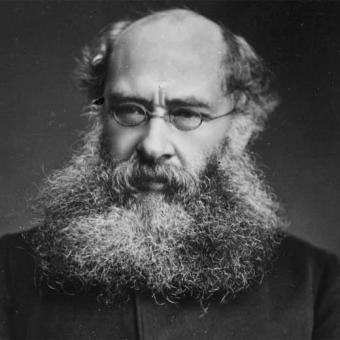
Drumsna is also a picturesque riverside village. Up until the mid Nineteenth Century it was of huge significance as the main postal town of the southern part of the County of Leitrim. The Novelist Anthony Trollope lived for a time in the Village and penned one of his earliest novels ‘The Macdermotts of Ballycloran’ here.

Trollope

Trollope

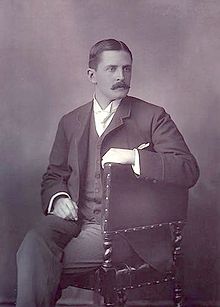
Another famous person associated with the area is the famous Surgeon and Explorer Thomas Heazle Parke who was born in nearby Clogher House. Parke made a name for himself in the relief of Gordon at Khartoum in 1885. He also worked with Henry Morton Stanley in the Emin Pash Relief Expedition. Whilst in Central Africa Parke is said to have purchased a pygmy girl, a strange act in modern terms but one which saved his life. When he contracted malaria the girl nursed him back from death. Unfortunately he could not bring her with him as her eyes could not adjust to the sunlight after coming out of the dark of the forest.

Thomas Heazle Parke

Thomas Parke

The Canal was first mooted in the 1600’s as part of an overall scheme to make the Shannon navigable. A canal was not constructed however until 1769. The original canal was much smaller and narrower than what we see today and its depth averaged only 1.2 metres. The Shannon Commissioners approved new works in 1844 and much of the construction work was carried out by Poor Relief Committees during the famine. On average 300 men worked on the Canal daily at this time. The new Lock was named after the Prince Consort and husband of Queen Victoria. The canal served the area well commercially until the late 1950’s by which time increased use of road haulage made the river barges obsolete. From a highway of commerce the river has now become a leisure route . I hope today’s  canal users take just a moment to think of the local labourers whose backbreaking toil, with hand tools, built this fine canal, all for the measly sum of six pence a day.

All the toil of man is for his mouth, yet his appetite is not satisfied

Ecclesiastes 6:7

Archaeology of Leitrim

I see a new Facebook page dedicated to the extensive Archaeology of County Leitrim. This is the link:- https://www.facebook.com/pages/The-Archaeology-of-Co-Leitrim/937361499659406

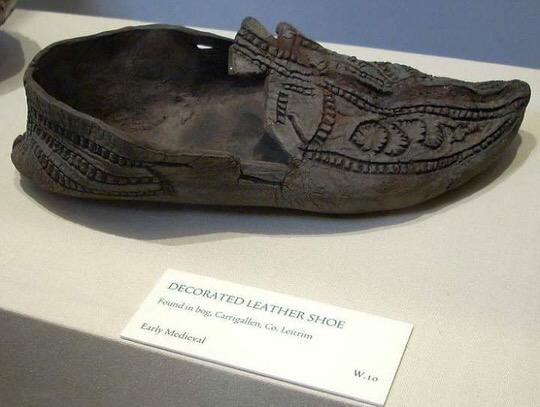
This is my favourite picture; some fancy footwear from medieval Carrigallen, found near the Ringfort in Kilahurk apparently.

  
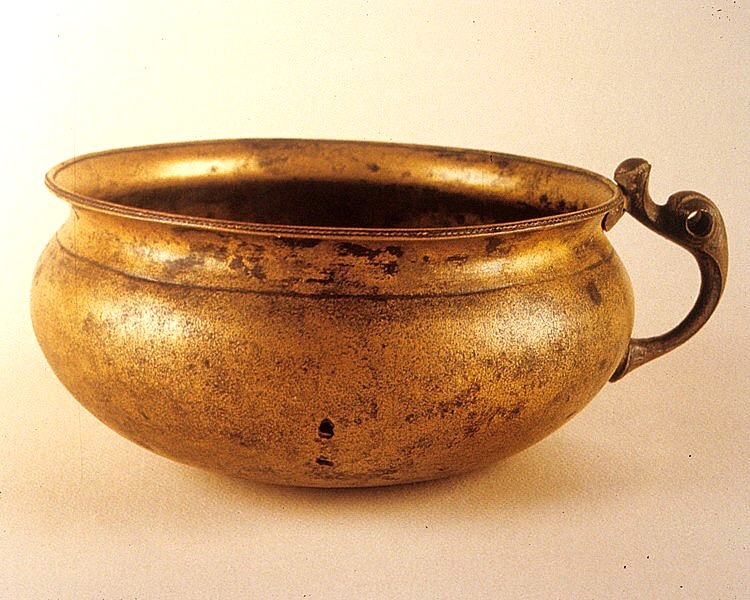
Of course one of the most beautiful pieces ever found in the County has to be the Keshcarrigan Bowl. 

  
The Facebook page goes on to say: 

“The Keshcarrigan Bowl …..discovered in Loch Marrave near Keshcarrigan village in 1854 during the original excavations of the Shannon/Erne Waterway . The vessel which may have been a ceremonial drinking bowl,is of fine golden bronze about 1mm thick and was formed by spinning. The handle which is cast ,is in the form of a bird . The eye sockets, now empty, probably held enamel settings . It is on display is in the National Museum”

The Bowl also appears on the wonderful Book and App entitled ‘History of Ireland in 100 Objects’ ,well worth a look http://www.100objects.ie

Leitrim is brimful of some great Archeaology both ancient and relatively modern from the 19th Century Lime Kiln at Farnaught to the portal tombs of Fenagh. Looking forward to future updates on this page.

Roscommon / South Leitrim: Bold Child or ‘Deliverance’ Country

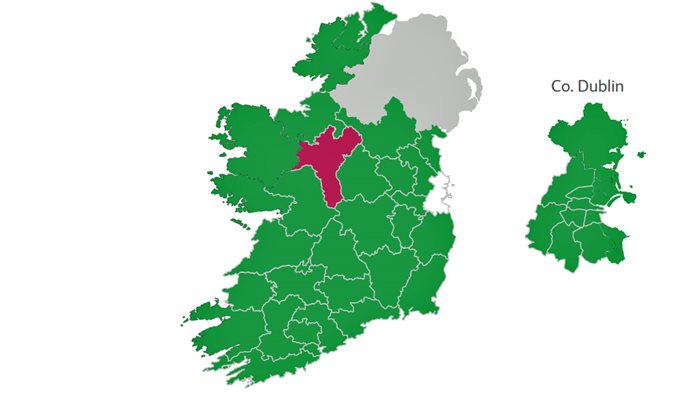
Referendum Map

Recently one of my children had a birthday party at our house. One of the adults asked them if they now felt older? The child appeared a little bemused before emphatically replying ‘No’. For the majority of people in this State the same applies to us today. Yesterday was a significant moment in our Nation’s history but it is hard for many to describe how this different new reality actually feels. Many of these same people voted magnanimously to extend the right of marrying the person they love to all citizens. Marriage is no longer the preserve of heterosexual couples and marriage will be simply defined as a union of two people based on the bond of love. Yet so much in our Country remains the same. The weather forecast for Ireland yesterday said that it would be sunny, with the rain spreading in from the West and patchy showers later in the afternoon. Strangely in a scene similar to that in the film ‘Grounghog Day’, the weather forecast for today also says that there would be sunny spells, followed by showers spreading from the West later. No change there then! But things have changed, dramatically, especially for the many supporters of what will become the 34th Amendment to our Constitution. Many will have woken up feeling that they are now living in a more tolerant, accepting society, a country that despite today’s weather forecast, will seem just a little bit warmer than it did yesterday.

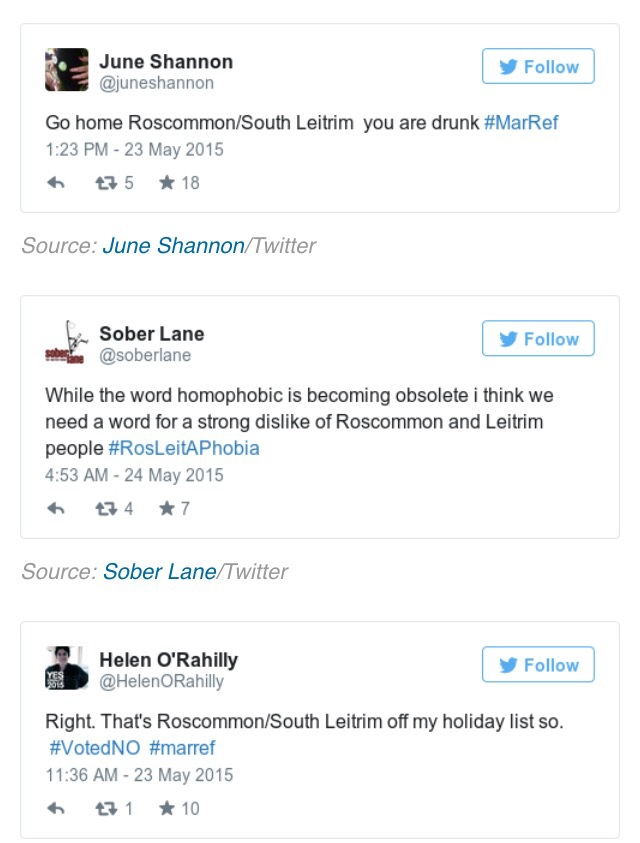
Except in Roscommon-South Leitrim that is, where many ‘Yes’ supporters are disappointed that their Constituency is the odd man / woman out by not voting yes to Marriage Equality. Outside the Constituency the response has been predictable enough. Twitterati and Facebookers are quick to point the accusing finger at those homophobic, medievalists that populate this area. Some of the comments are particularly uninformed and generic. One comment suggested people in the area were banjo-playing opportunistic rapists waiting for a ‘purdy mouth’ to come along. Comparing Roscommon-South Leitrim to ‘Deliverance’ country does not however cut as deep as to be ridiculed by one’s own. 

Many expats decried Roscommon and South Leitrim kinspeople for letting them down and spoiling the party. The comedienne, Katherine Lynch said that ‘Leitrim was dead to her’, but the Mohill native is known for being tongue in cheek, and I hope she is this time too. Others made quips about Roscommon seceding and joining Zimbabwe, more suggested that if the Referendum was about marrying cousins or farm animals, there would have been a better response. Most of the authors of such comments probably only did so for fun but the cumulative effect of this condemnation is to pillory and castigate a rural constituency where 48.52% of Voters actually supported the idea of Gay marriage. That is phenomenal figure yet many ‘Yes’ campaigners are quick to forget about those same people who made the effort to go out and vote for the same cause as them. Such an attitude seems bizarre and is surely the best recent example of throwing the proverbial baby out with the bathwater.

  In such a rush to chastise and cajole the Voters of Roscommon-South Leitrim it seems completely lost on the accusers of just how paradoxical their utterances are; especially in light of what they themselves were asking the people of Ireland to do last Friday. In doing so and in disregarding the right of a person to Vote in whatever way they wished, the accusers are themselves guilty of spreading intolerance, narrow-mindedness and prejudice. In many ways it spoiled some of the positivity that emanated from the result. Surely any accuser should wait and carry out a little analysis of why there was a higher percentage of No voters in this area than any other constituency.  Don’t  forget the referendum was carried by a slim margin of just 33 votes in Donegal North East and was in the low fifties in some other areas. Roscommon-South Leitrim is only unique because the bar is set at 50%, the simple majority rule , and it just fell short of that threshold. 

This is a predominantly rural community but its traditionalism and conservatism does not always stand up to scrutiny. Leitrim is home of one of the seven signatories of our Proclamation of Independence and a true social revolutionary, Sean MacDiarmada. It also is the birthplace of the socialist Jimmy Gralton, the only man to be deported from the country of his birth for his ‘radicalism’.  It is the home of John McGahern a paradigm of tolerance, respect and liberal values. Leitrim is also well known for its large Bohemian community of artists, writers and sculptors who have certainly made the area more diverse in both thought and outlook. So why is the area so out of kilter with the predominantly urban / sub-urban parts of the country. Firstly, I’d advise anyone who supports the lazy sterotyping of the constituents here as homophobic banjo players, to take a short tour through the Constituency and make a few notes on the following matters in particular;

  1. What do think of the vibrancy of the towns in the area? Are the high streets thriving?
  2. Did you meet many young people in the 18-35 age bracket?
  3. How did you travel by the way? Was it by public transport? Doubtful.
  4. How many flourishing businesses did you see?
  5. Make sure to bring bottled water (it’s a case of ‘water water everywhere but not a drop to drink’ in large areas here you cant even drink the tap water?
  6. Did it take you long to upload one of your barbed comments to your social media account? Seriously try it, the broadband here is terrible and satellite alternatives are expensive.

If you tried the above suggestions you’d invariably find many depressed market towns, some dead, some dying, others like Carrick-on-Shannon dependent on tourism and weekends of stag and hen parties. But when the stags and hens leave, and we clean up after them, nothing much has changed. There are very little employment opportunities in the area, most of the young people have left and one of the best barometers to confirm this is the local GAA clubs struggling to field teams. So what about those who are left? The majority are members of a demographic that the yes campaign had most difficulty connecting with throughout the country, nothing unique there. The difference is that a larger percentage of them reside here proportionally than in any other constituency. We have the oldest electorate, fact.

Not all ‘No’ voters in the area are part of this traditional, conservative group and the majority, I’m absolutely sure of this, are not homophobic. This is an area where the people are frustrated and disconnected from Government and Politics in general. Their communities are decimated by the loss of essential services; Rural post offices – Gone, Rural Garda Stations – Gone, Rural Scools and teaching posts – under threat,  Public Transport- almost non-existent with routes been cut by Bus Eireann annually. Oh and on your tour you will have noticed the motorway ended before Mullingar. The IDA rarely ever visits places like Leitrim, Longford and Roscommon and therefore he chances of major investment is slim. The largest employer in the north of the area, MBNA, is gone and despite all the assurances of Minister Bruton no replacement has been found. Those small and medium enterprises that do exist find they are hamstrung by poor infrastructure, especially the lack of adequate broadband. A mobile phone call usually involves leaving the house and finding a place of optimum coverage, maybe climb up on the roof or up a tree! Mental Health campaigners will confirm that the erosion of services has led the greater isolation amongst the elderly in the area, many of whom have had their home help hours cut back. The area also has had the highest rates of suicide in the country particularly amongst our young people. When people talk about Equality do they factor these issues in to the equation. 

Many will say these issues have nothing to do with the Marriage equality Referendum but such a view is foolish and naïve. The Voters in this area are completely disconnected from National Government and detached from the prevailing messages of the mainstream Dublin based media. They are chastised now as bold children who did not do what they were expected and urged to do. That is precisely the point, a community that has been neglected so much in terms of investment, both socially and economically will also be prone not to toe the establishment line. And let’s be absolutely clear, whatever about past prejudice and mores, supporting same sex marriage is the establishment view and was advocated by all the main political parties. 

It is in such an environment as exists in Roscommon and South Leitrim that induces the people to elect people such as Ming Flanagan and Michael Fitzmaurice, two men who many in polite society on this Island would consider square pegs in the neat round holes of Dail Eireann. Yes campaigners will also say that the vote in traditional working class areas was high but all this shows is that rural and urban deprivation are two different creatures altogether. This constituency and its people are rooted in the soil, its towns developed to serve the farming hinterland in a symbiotic model. Now both are in decline and nothing is been done to address it. The influence of the church is also a red herring. There are hardly any vocations now for the priesthood in this area no more than Dublin or Cork or any of the cities and mass attendances have dwindled. The voters here are as likely to react negatively to Mother Church telling them ‘Vote No’ as to the Taoiseach telling them to ‘Vote Yes’.

Despite all the foregoing almost half of the people who voted in Roscommon South Leitrim voted YES to change, Yes to a more inclusive society for members of the LGBT community. That is something the YES keyboard warriors should be celebrating and instead of pulling the plug and letting their own children flow out with the bathwater. Many people from the area who would be voting ‘Yes’ now live in other parts of the country and contributed to the Yes campaigns and votes in those areas. In the run up to the election many ‘Yes’ campaigners told us this Referendum was about promoting tolerance of difference and respect for minorities. Surely then if the accusers are genuine and honest, they should extend the same respect to the people of Roscommon South Leitrim who simply didn’t agree with them, something which it is their hard won, Constitutional right to do so. As Evelyn Beatrice Hall famously wrote ‘.   “I disapprove of what you say, but I will defend to the death your right to say it’. 

The only way of depicting the Roscommon South-Leitrim result as indefensible is to portray the constituents as backward, conservative zealots and such a strategy diminishes the core and heart of what was achieved by the ‘Yes’ campaign in this Referendum. So a huge sorry from us for not being above-average and being 13% behind the average test score nationally. Feel free to go ahead and bully us on the internet. At least Marian Keyes had the decency to apologise but insults are like toothpaste, once out its impossible to get it back into the tube.

SUPPING AND GLAMPING

Shannon-Blueway-TourismShannon_blueway_icon

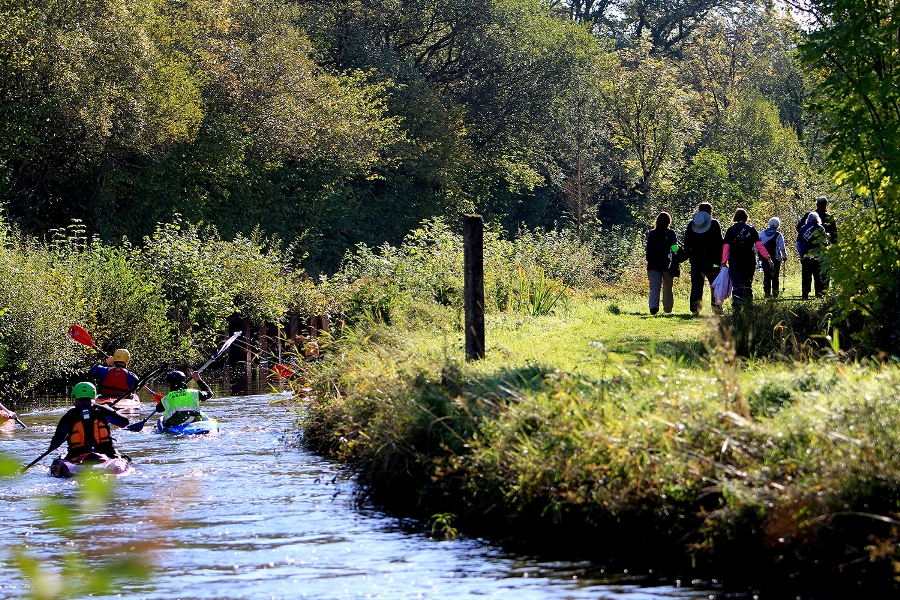
A few years ago many of us would not have known what terms like Glamping or Supping meant. The cousin, JP, thought Glamping was a nocturnal activity himself and Eddie Joe did at the weekends with a large spotlight attached to the bullbars of his jeep, scanning the bogs for Foxes.  So you can imagine my surprise when JP announced recently that he and ‘the woman’ were SUPping over in Drumshanbo at the weekend. Being old school I thought supping was something JP did whilst shouting at a TV screen in the local whilst elucidating on the performances of his ‘beloved’ Everton. For JP, until now that is, a good sup, usually consisted of 8-10 pints of Smithwicks. This time though JP wasn’t having me on, he had just spent a few leisurely hours paddling down a canal in what is now known as Leitrim’s Blueway.

The Shannon Blueway is in fact the first of its kind in Ireland, an inland series of  water and land based trails. It facilitates paddling from Drumshanbo to Carrick-on Shannon via Battlebridge and Leitrim Village. JP isn’t the only one raving about it, numerous Travel Writers and journalists are focussing in on places like Leitrim and initiatives like the Blueway. In the coming years we will likely see the development of a number of Greenways in the County. One of these planned Greenways will traverse North Leitrim from Dromahaire to Glenfarne on the route of the old Sligo-Leitrim and Northern Railway. Another Rail Trail is planned for South Leitrim running from Mohill to Belturbet in Cavan along the former route of the Cavan-Leitrim narrow gauge railway. All of these projects are wonderful and all hope to emulate the success of the Greenway in Mayo.

I decided to investigate at the weekend and although it was damp and cold I was well wrapped up by the time I got out of the Jeep at ‘Beirnes of Battlebridge’. Set on the banks of the River Shannon, there is a charming caravan and camping park her, set in natural sylvan surroundings. The Pub at Battlebridge has being in the Beirne family for generations. The place was one of Ireland’s best kept secrets until the charming rural retreat was the proud recipient of several awards, including: Black & White Pub award and Irish Pub of Distinction. In 2014 Beirnes was nominated by “The Irish Restaurants Association” for “The best gastro pub award”. The Caravan and Camping Park has standard pitches as well as the opportunity for some Glamping and has been listed as one of the “10 best Irish camp-sites” by the Irish Independent. You can even do a bit of paint ball shooting here.

Battlebridge has in fact two bridges, one crosses the Canal and the other the Shannon itself. The Canal was built as to assist navigation south of Drumshanbo and I head for a walk that starts between the Canal and the river. The walk is a loop walk to Drumhauver. It is a pleasant walk and like all canal-side trails is easy going due to the level ground. The sun is starting to dip in the west and I can see the Shannon to my left and its flat ‘calloughs’ fields and plenty of ‘pools among the rushes’ as Yeats wrote. The halfway point is a set of locks at Drumaleague. Here the frost laden crest of Sliabh an Iarainn comes into view, it’s white crown unseasonal but not unprecedented.  The turning point in my walk is Drumhauver Bridge and I take a break after walking for an hour at this stage.  I have met a score of people walking on the canal bank both visitors and locals I surmise. The lack of fitness begins to tell on the southern return leg. At Drumaleague I am like a marathon runner who has hit the infamous wall. I curse my over-confidence but struggle on, get a second wind, and in the fading light I reach Battlebridge again. I reward myself with the wonderful restorative properties of a pint of plain in Beirnes. Whilst I didn’t meet any SUPpers enroute I can appreciate that a paddle down the canal from Drumshanbo to Carrick-on-Shannon is on my to-do list for when the long evenings ahead. There are certainly many more activities such as trails and walks in Leitrim these days as we strive to attract those interested in activity based holidays. Great credit is due to the Leitrim Development Company, Leitrim Tourism and funds such as Leader and the Rural Development Programme (RDP) which have provided practical advice and financial resources to people interested in developing tourism focussed projects.

Recently, Pol O’Conghaile, the Travel Writer wrote a heart-warming article in  the Irish independent setting out Ten Great Reasons to visit Leitrim. Pol opened with “It’s small, off-radar and home to just 32,000 souls. But Leitrim packs a serious punch… and lots of surprises for the visitor” and went on to list the County’s Literary connections, its natural beauty spots, adventure breaks, award winning restaurants and describes the place as an ‘adventure Eden’ and ‘walkers paradise’. The article went mini-viral and was shared, mostly by Leitrim residents and ex-pats, although few in number, we Leitrim folk are very proud of our little corner of God’s creation. The article had the capacity to instil a pride in a person’s home place in the way that a parent feels  all gooey inside when their young daughter wins first prize at the local feis. I was no different, anybody who reads this blog will quickly realise that for me Leitrim is one of the loves of my life. Hopefully such articles will be read by more than just sentimental Leitrimites around the world. Come visit we’re open. 

http://www.independent.ie/life/travel/ireland/10-great-reasons-to-visit-leitrim-30739767.html

MATTHEW SADLIER – Leitrim’s ‘Titanic’ victim remembered

titanic_ship-1920x1080

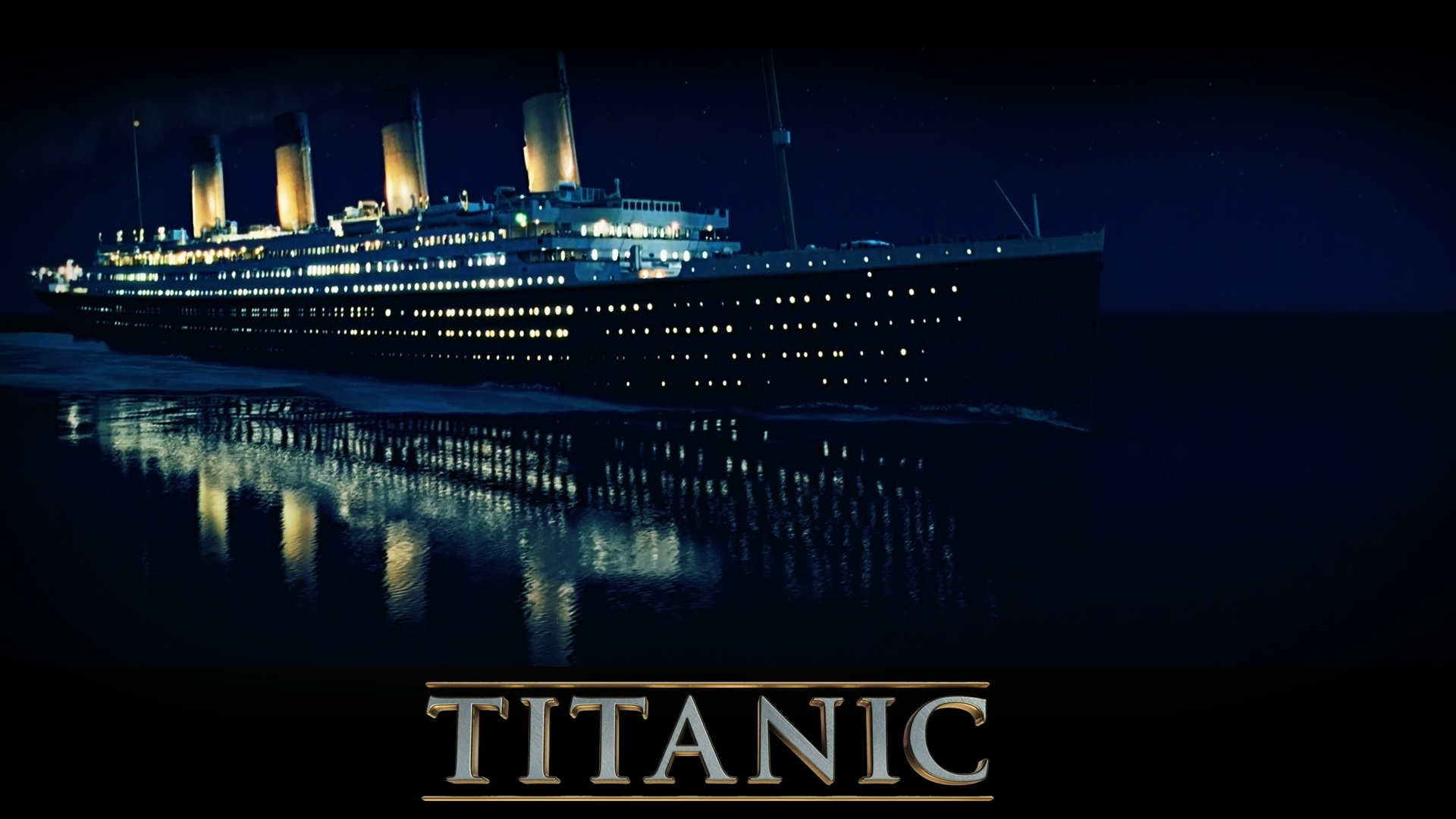
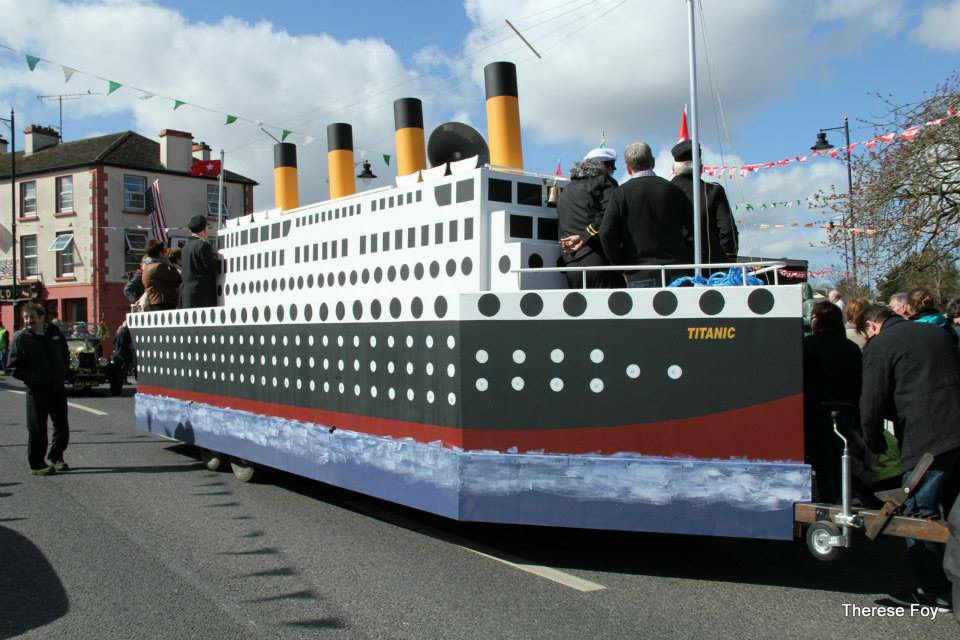
April can be considered ‘Titanic Month’ for even though the famous liner sank to the sea floor 103 years ago, people’s fascination with the story shows no signs of diminishing. Titanic is the ultimate story that just keeps on giving: it is romance, and tragedy, there are heroes and villains, there is superstition and most of all the folly of man underestimating the power of nature.

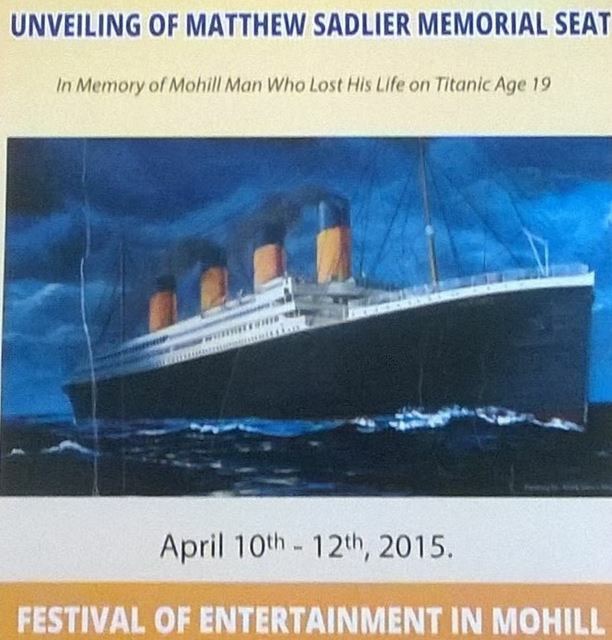
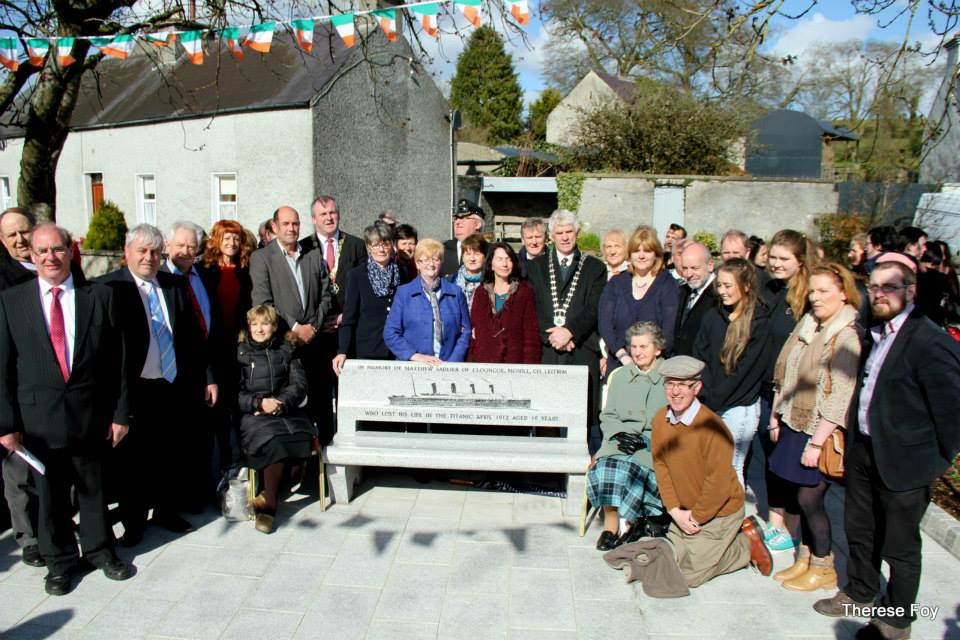
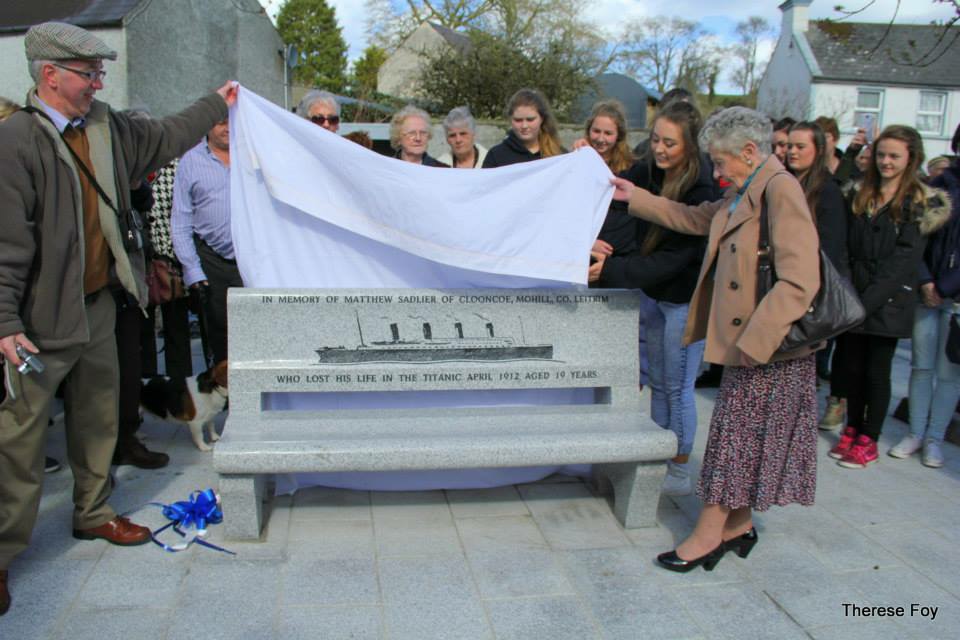
This month a small town in the North West of Ireland took centre stage as its own connection to the Titanic disaster was recalled and a commemorative seat unveiled to its own maritime victim. Mohill is the home of Matthew Sadlier a 19 year old lad who set out for New York to start a new life for himself. Over a year ago a Committee was set up in the town involving the local youth group, Foroige. They were joined by some more experienced hands and they got to work preparing a plan to commemorate the life of young Matt Sadlier. They decided upon a commemorative seat to be located in a prominent position in the town and also set out to contact any living relatives of Matthew. The Committees work came to fruition in a wonderful weekend of events associated with the Titanic, the highlight of which was the unveiling of the memorial in a newly renovated plaza.

IMG_1837

Who was Matthew Sadlier?

Matthew was born in 1892 to Matthew & Catherine Sadlier at their house at Clooncoe on the shores of beautiful Lough Rynn. The house was located on the famous Lough Rynn Estate, home of the Clements family, the Earls of Leitrim. The Sadliers were members of the Church of Ireland and Matthew was baptised at Farnaught Church on the 8th October, 1892. Matthews Civil Birth Record shows his birth was recorded just over two weeks later on the 26th October. The Civil Record gives his date of birth as the 8th October also, the same date as his baptism, something which seems extraordinary today. The informant is Dr Henry Pentland from Mohill who it says was present at the birth. This would suggest that Matthew may have been brought to the baptismal font on the same day as he came into this world. The fact that the Sadlier home is located so close to Farnaught Church means this would not have been a long journey but would have been, at the very least, be a great imposition on poor Catherine. Matthew Seniors occupation is recorded as an Agricultural Labourer. Catherine’s occupation is not given but as she was to bear Matthew Senior 9 children, 7 of whom would survive infancy, it is likely all Catherine’s time was taken up with child rearing and keeping house.

Matthew and Catherine did not always live at Lough Rynn. They married on the 25th February, 1881 at St. Marys Church of Ireland, Mohill. The church is reputedly built on the site of the original monastery, Maothail Manachain which was the precursor to the modern town of Mohill. The founder of the monastery was St. Manachan and his feast day is the 25th February, the same day that Catherine & Matthew Senior took their vows.

Matthew Senior and Catherine were both born in the same townland on small tenant farms just a mile west of the town of Mohill. Matthew Seniors father was Henry Sadlier, who was born circa 1810, but unfortunately the location is unknown. As well as farming his small holding Henry also for some time was a weaver. The fact that he was engaged in weaving might suggest that the family may have migrated to Leitrim from a more north eastern location where the linen trade was predominant. Henry Sadlier died on the 25th November, 1885 at the age of 75. He was buried in Mohill Church of Ireland Cemetery and we also know he died a widower, his wife having predeceased him. Present at his death was a Sarah McCombs.

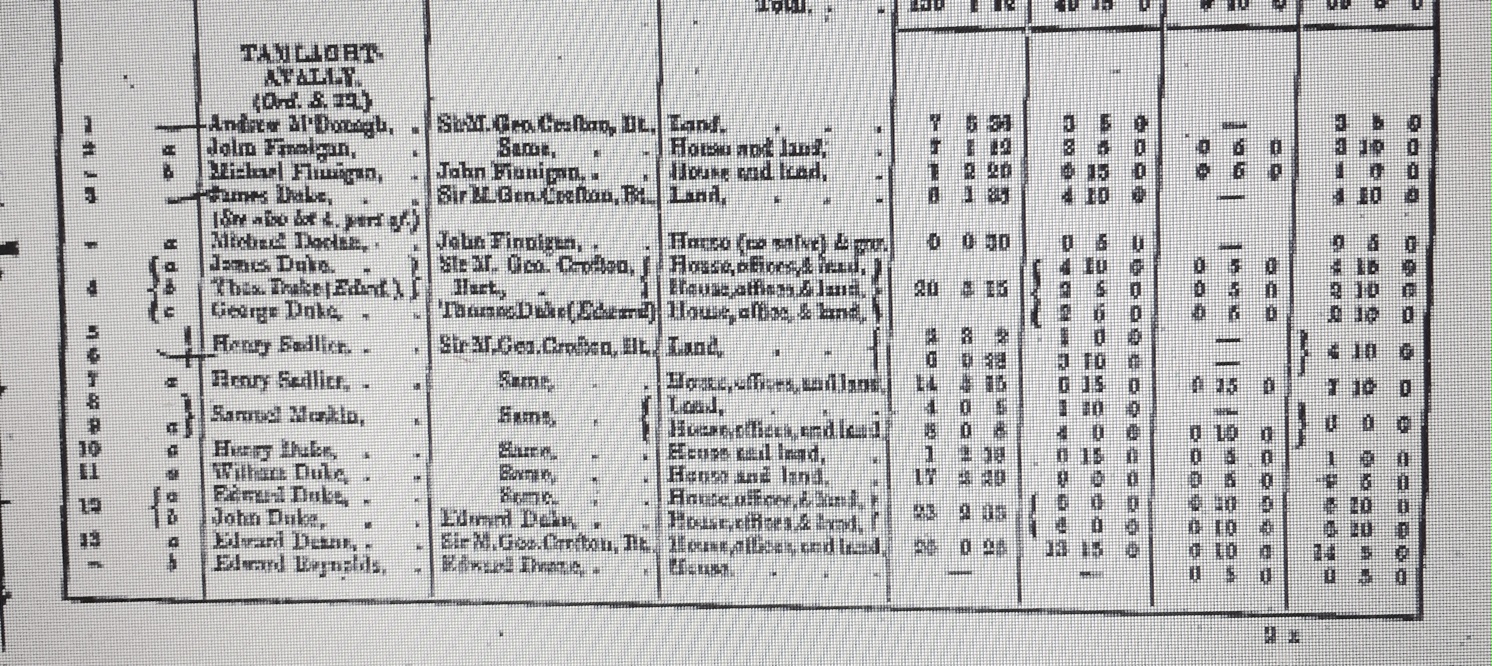
Griffiths Valuation (1857) shows Henry as holding a tenancy on the Crofton Estate in the townland of Tamlaghtavally. His holding is just shy of 15 acres in size which would have been well above the average holding in the area at that time.

 Tamlaghtavalley 1857 Griffiths

Sadlier Holding No’s 5,6 & 7 Tamlaghtvalley, Mohill, 1857.

 Catherine Sadlier, the mother of tragic Matthew, was born to Thomas and Anna Duke, also in Tamlaghtavally, Mohill in 1852. She was baptised in St.  Marys Church of Ireland on the 22nd December that year.

The 1901 Census will show Matthew Senior and Catherine Sadlier living in Clooncoe with their 7 surviving children Thomas (19), William (18), Jane A (16), Fanny (15), Henry (11), Kate (9) and young Matthew (8). 10 years later when the enumerators called again to the Sadlier household only Kate and Matthew remained at home. Catherine would go on to marry a William Boddy and live out her days in Mohill.

William the second eldest appears to have been the first of the Clooncoe family to cross the Atlantic circa 1904. The following year, the elder brother Thomas made the crossing, stating on the ship manifest that he was travelling to William at 49 Grove St., New York.

It is clear that young Matthew was intent on joining his siblings in America as soon as he possibly could. Matthew purchased a 3rd Class ticket (Ticket No. 367655 , £7 14s 7d) on the White Star Line to New York. It was a considerable sum of money at the time. Senan Maloney recounts some local lore about Matthews final days in Clooncoe;-

‘His parents didn’t wish him to leave , his mother being particularly attached to her youngest, having already see offspring William, Thomas and Fanny take the American boat. On the morning he was to leave, a cockerel came to the doorstep and crowed three times. His mother, seizing on superstition for her own ends, declared,‘That’s enough now!’ grabbing Matthews suitcase from his hand. It was unspoken knowledge that a cockcrow at the door meant sad news. Matthew patiently retrieved his case from his mother’s grasp, said farewells and went about his journey’[i]

Matthew made the long journey to Cork and then boarded the illustrious liner ‘Titanic’ embarking from Queenstown, Co. Cork on Thursday the 11th April, 1912.

Catherine Sadlier had already lost 2 children out of the 9 she brought into this world. Another local tale recalled by Maloney tells of a man called Easterbrook who was cycling home at night on the long sylvan Avenue leading to Lough Rynn House. This man claimed he met the ghost of Matthew Sadlier’s sister who had predeceased him. The ghost’s hair was dripping wet as if it were submerged in water. With fright he lost his balance and when he regained his nerve the ghost was nowhere to be seen. Apparently when this apparition occurred word had not yet made it to Leitrim that the ‘Titanic’ was lost.

In an interesting postscript, on the 25th September 1922 Matthew Sadlier Senior leaves Mohill and headed for New York on board the ‘Cedric’ of the same White Star Line that owned the ‘Titanic’. He purchased his ticket through Thomas J. Gannon Agent in Mohill and boarded at Liverpool. His next of kin is stated to be his daughter Mrs William Body of Tawlaghtavalley, Mohill and he was travelling to his son Thomas Sadlier of Fairfield, Connecticut. Matthew Senior arrived in New York 2nd October 1922.

For Matthew Junior there is no burial plot but the sea, his body if ever found has never been identified. Thanks to the Matthew Sadlier Committee there is however a place to remember him and to contemplate the incredible tragedy he was destined to become part of. The memorial is just a few feet from the final resting place of his dear sister Kate, to whom he was so close too. When you see the beautifully crafted seat commemorating Matt Sadlier you cannot but think of the words of Patrick Kavanagh.

“O commemorate me where there is water,

Canal water, preferably, so stilly

Greeny at the heart of summer. Brother

Commemorate me thus beautifully”[ii]

Committee IMG_1827

[i] Senan Molony ‘The Irish onboard the Titanic’ Mercier Press (October 24, 2012)

[ii] Lines Written on a Seat on the Grand Canal, Dublin -Patrick Kavanagh © Estate of Katherine Kavanagh