This is a short story set against the background of Leitrim’s historic Connacht Championship win in 1994 – but it takes place thousands of miles away.

“SO IT CAME TO PASS”
Late July and August weather in the city with its moisture heavy air can be stiflingly oppressive. I can never acclimatise to this alien humidity. On muggy days like these I often long for those cool breezes, rising through the dales at the back of the home house, announcing the coming of a shower of rain, and no, not just a soft harmless drizzle, I crave a mighty downpour to deluge and cleanse me of my suffocating urban cloak. Who would ever have thought that I would miss the rain? The rain that as children we prayed would go to Spain. Yet on days like this I just longed for those cool breezes and showers that I grew up in. As the train pulls in and the crowd rushes forward I laugh to myself at the oddity of it.
Twenty minutes later I am trudging up the subway station steps into the late evening light at 63rd and Lexington. As I continue on up the steady incline towards Hunter College and past the Armoury I think of how familiar these places had become to me. How punctuated our lives are by places and landmarks. These buildings, churches, bridges, statues are now the monoliths of my mind.
The most important landmark of my childhood was the Mountain and it enthralled me for whatever the season it always stole my attention. From the hilly meadow where we stacked bales in July, or from the window of the classroom in February where through frost sculpted glass I watched its dome, draped in a whitewash of snow. I was drawn in to it, studying its contours and lines, sometimes seeming so near and at others so far away. I recalled its changing hues as the Sun would drift behind some dark cummulus clouds, then back out again, re-emerging until the round summit arose again, reborn in light anew. Sometimes I caught snapshots of the great mound in October when we were out picking the potatoes in ever-shortening evenings after school. I knew every part of the mountain, each nook, crag, rock and ridge. To me it was an ever changing tapestry with its forests of dark green pasted onto a collage of cinnamon and chestnut. Now in late July and many miles away from me I can still see it clearly in my mind. Now in mid-summer the ridge would be a brilliant carpet of amber and honey dominating the little houses and farms nestled below.
This Mountain dominated us in a benevolent way. She was not generally harsh. She was a matriarch incarnate, a sanctuary and haven for many of these people living below her and clinging to her sides, my own included. Never was she more compassionate than in part forgotten times when these people’s forebears had been thrown from their land in the North. When they took to the road they dared not look back as Lot’s wife did, for they knew in their breaking hearts that there was no going back. For a fortnight they walked on into the west living off what people gave them along the way until they stopped at this place. For these last two hundred years they looked on the Mountain as it came into view each day at sunrise. This kind mountain, although not rich or abundant, had sustained and looked after this flock. Her people knew she was there in the dead of night even though they couldn’t see her, yet they could feel her safe embrace all around them. Once again they could dream of better days ahead and we were the children of these people, we were the seed of the Ultachs.
“Hey Whats up!” I snap out of the daydream. Approaching me is my workmate Abel Pereira. I always think Abel looks like a Latin boxer. He is taut and lean and he is light and lively on his feet, a ball of energy moving and darting, “Hey Tommy my main man?” He already has his hand out for this ritual we go through every shift, the clenched handshake, then knuckle to knuckle. To me it’s ridiculous but I want to fit in and not stand out in this place so I participate. Abel is part Puerto-Rican and Cuban ancestry and I am always keen to learn something about his culture. He thinks this curiosity ridiculous. “Look man I’m just a New Yorker, I dunno nothin about Puerto Rico or Cuba” (which he pronounces Quba)
Yet strangely Abel is keen to know about my home and I am as exotic as any animal he has seen up in the Bronx Zoo. He also thinks that I “talk real funny” walk even funnier and he laughs at the un-orthodox way I pitch at softball.
Abel’s knowledge of basic geography is terrible as I’ve already discovered. Just last month Ireland was set to play Holland down in Orlando. “So how you guys doing in this Soccer World Cup Series?”, he asked me. “Well we are still in it” I replied. “But we don’t fancy the heat in Florida again; we are not built for it”. Abel laughed, “Yeah you poor Irish white asses can’t take the heat, that’s why you spend the summer in the air conditioning in a bar”. Stung somewhat by this observation I simply said “I think we might do okay though, we have a good record against the Dutch”. “The Dutch?” said Abel, “but you’re not playing the Dutch, you just said you were playing the Hollanders!”
There then followed a lengthy geography lesson where I taught Abel that Hollanders were from Holland, The Dutch were not from Deutschland and the Dutch and Hollanders lived in a country called the Netherlands. Abel just brushed it off by saying “Europe is complicated”.

Just after 2.00am I make my way over to the Deli on 3rd Avenue. The city sounds different at this time of night but is still a rollicking assembly of sounds. The whistles of doormen summonsing taxi’s for late night guests leaving dinner parties, the sirens of emergency vehicles hurtling to nearby hospitals, fire-trucks the loudest of all, boom boxes from cars at red lights, the garbage trucks crunching up the mounds of city waste, cop cars whizzing up, down and cross town, the city beating, ebbing, flowing, the midnight music of life itself in under and all around the man made canyons of this island of Manhattan.
On 3rd Avenue I pass two taxis pulled in hard along the kerb. The sidewalk is empty save for two prostrate men, their prayer mats rolled out, bent in prayer, facing east towards the Food Emporium but in their own minds to Mecca.

I cross the road and enter the Bodega to get my usual order, pastrami on rye and a Gatorade. Jose the owner and one of his shop assistants are outside watering the fresh flowers. Jose is smoking a thick cigar that he trims with what looks like a garden clippers or secateurs. “Buenas noches Senor” I say.
“Gracias, Gracias, tu español es cada vez major…getting better every day Tommy, soon you have to come live up Washington Heights no Spanish Harlem” says a grinning Jose until he breaks into a rattling series of deep coughs. His assistant grins even though I don’t think he knows what is been said. When Jose finishes spluttering I say “Fumar Malo” and he nods acknowledging with a raised hand as I cross the street back to Empire House.
Mike Considine has now joined Abel up in the Lobby. “Hi Tommy, what’s up?” “Not much Mike, how are all in the Bronx?” I reply, tucking into my sandwich. “Usual Tom, keeping out of trouble”, Mike is a squat bull of a man of about thirty years old. As usual he has taken a house out on Long Island with his wife and her brother’s family for the summer months. I have no doubt he has spent the last few days out on the beach as his face is a glowing crimson shade. Mike is always on the attack and keen to wind me up. He takes particular delight in baiting me. “So I guess a greenhorn like you’ll be heading up to Gaelic Park tomorrow to hang with your homies eh?” “Don’t know Mike I might come visit you in hospital instead, you don’t look healthy with that oompa loompa look, haven’t you heard of melanoma?”
Mike has that mischievous grin that he assumes when he knows there is a chance of some proper banter “jeez that’s very nice of you to be thinking of my well-being Paddy McFurniture, we look after you guys too, only for us you’d be speaking Russian” and so on and on it goes for twenty minutes over and back whilst Abel finishes mopping the lobby floor and starts shining the brass in the main elevator car. Our exchange is only stopped when a black limousine pulls up outside, I hurry out and get the door.
I can see it is Mr. and Mrs Gertstein. They are a nice old friendly couple. “Good night Mr. Gertstein” I say as I open the rear passenger door. “Hi Tommy, how are you, the old place still standing eh? This is the ugliest building in New Yawk I tell ya” “Ah come on now Mr. Gertstein there’s uglier around”. “No I tell yaw only for my Ruthie likes the neighbourhood and her buddies, what’s left of them, are nearby, I’d be out of here period”.
I help Mrs. Gertstein with her other bags, Mike has got the luggage from the trunk. “So were you out of town for long?” I enquire. Mr Gertstein starts to talk but by now his wife is broadside and talks over him. He throws his eyes up in mock despair and heads towards the lobby. “Yes Tommy dear we were actually down in Florida for my grandson’s bar mitzvah. It was wonderful and to top it all Rabbi Feltstein was there. It was a surprise. I’m sure you’ve heard of him Tommy? “, “Oh Yes” I lie, to do otherwise will only prolong the story. “It was wonderful Tommy, you should have seen the food, the most beautiful Rugelach and Babka and the tastiest Knishes and blintzes, beautiful, beautiful they were. Eh I must give you the recipes, I have them written down here somewhere you know, got them from Rosie Haas, you know her don’t you, used to live in 14J, never shuts up, but a sweet heart” and she starts fumbling in her handbag.
Mr. Gertstein is getting impatient, “Ay Yay Yay Tommy and Mike aren’t interested in kosher, they’re Irish. They like steak and corn beef, potatoes that sort a thing, and cabbage, yeah cabbage, C’mon Ruthie its gettin’ late, Geh Schlafen”.
I walk with Mrs. Gertstein down through the lobby as she continues to fumble away in her handbag, “I know it’s here somewhere”. As she holds her bag I suddenly glimpse the inside of her wrist. There amongst the aged and freckled skin I see the faint outline of tattooed letters. For a moment time stands still and I am taken aback. Auschwitz! For the first time outside of a textbook I am face to face with the horror of Hitler. My mind races. Here is an elderly woman, probably in her eighties who has been through the worst human nightmare imaginable. At the Elevator we wait for the car to comedown, 15, 14, 12, and 11 it has stopped on 11. My mind races and I see her as a young girl, her hair in plats, her pale cheeks and large eyes, standing at a barbed wire fence, gazing out on a vast green Polish meadow. 4, 3, 2, “here we are” says Mr. Gertstein as the doors open.
Arbeit macht frei ….what terrible things she must have seen, and yet how normal she seems, a nice gregarious kind-hearted Jewish lady. The bell rings we are at 15. Mr. Gertstein yawns as he walks out of the elevator car. His wife and I both go for the handle of her large handbag at the same time and again I see the tattooed numbers, faded but real. There is a pause and I wonder if she is now aware that I have seen how the Nazis branded her like an animal for slaughter. I feel shame and I don’t know why.
Mr. Gertstein fumbles with the keys at the apartment. I offer to take them but he is stubbornly persistent. Eventually the mechanism clicks and we are in the hallway. I leave the bags down and Mr. Gertstein tips me with three or four crumpled bills. “Thank you Tommy and have a good night” he says. “And you too, sleep well you must both be very tired after the flight”. The hallway ends in a wall adorned by a framed print with some nude figures. “It’s a Lucian Freud” says Mr. Gertstein “I’m not too gone on him but Ruthie thinks he is great. Can’t beat a good landscape Tommy, gimme one of your Jack Yeats any ….“ Mrs Gertstein cuts him off suddenly “I’m so sorry Tommy I can’t find it but I will, I promise, and I will hand it to the main Doorman for you, okay honey” She finally gives up the search for the recipe, “Oh yeah but it’s a wonderful stuffed Knish that your wife could make for you”. I cross the threshold back out to the landing as I reply “But I’m not married Mrs. Gertstein, although you never know maybe I might meet a nice Jewish girl one day who can cook all these blintzes and knishes for me”. There was a pause, not much but definitely a pause “Zie ga zink Tommy you are such a good boy” she half chuckles “but surely you know we cannot marry a Goy! Goodnight”. I stood there for a few seconds after the door shut in my face.
Also on this floor are the Farrago’s, the Fleischer’s, the Karliners and Sandlers the names sound to me like a list of dead composers of long forgotten waltzes and polkas. How many of them also bear these marks and brands and why am I feeling shame? It had nothing to do with me. Back in the Lobby Mike and Abel are still hanging out. When Abel sees me approach he exclaims in mock tones “Oh if it isn’t Tommy the Schmuk, loves all the Jews in the Upper East Side”. I sidle up to the front desk “Actually I’m just interested in learning about them ya know. You think the world revolves around this city and there is nothing beyond of any interest. I bet you’ve never even been outside the tri-state area”. Abel is animated now and he is out in the middle of the front lobby “Oh listen to the Irishman, hadn’t a dime before he came here to My City!!! And now he’s breaking my balls!!! You hearing this Mike? You hearing this kid?……Well actually I have been out of the city, twice in fact, once to Atlantic City and another time to the Hershey Factory in Pennsylvania, so there.” I fight the temptation to point out that Atlantic City is just down the shore in Jersey. Abel and geography shall forever be just strangers passing in the night.
Mike is reading yesterdays Daily Post that he found in a drawer at the front door desk. A few minutes pass in the silence of the night shift until I ask him “Mike Whats a Goy?” He looks around towards me and then back at the paper, “it means someone who is not Jewish, ya know a Gentile, someone like me and you”. After another long pause and without looking up Mike says, “So you saw the tattoos?” He continues looking at the page. “Yeah how’d you know” I said. “Well I just saw you looking” I hadn’t realised my reaction was so obvious. “I just knew by the way you went so quiet………a lot of them here have them you know”, “Really”, “Yep plenty they are the survivors. It’s Amazing really that they were so near total annihilation and now they live in this fancy place. The Gertsteins are nice people, they are very good to the boys here at Christmas and holidays and they always look after me well too”.
For once the City seems so quiet. There is no noise coming sneaking in and all I can hear is the hum of the water feature coming from across the lobby. Mike puts the paper back in the drawer and stretches his arms above his head.
“Look Tom I know you’re curious but take my advice and don’t ever ask them about those numbers right, they’d only get upset, who knows what they went through. I heard it said that Mrs Gertstein is the only one who survived from her family. Think about it if that was you. Here they feel safe, nobody ever thinks that could happen to them but they, they know, they know what man can do the most evil things”.
But I had thought about nothing else these last few minutes. In College in Dublin I had worn a PLO scarf and had great sympathy with the Palestinians. I saw comparisons with the way my own people were dis-possessed, my own ancestors were refugees from Armagh having lost everything. Now though I was confronted by these nice decent people who had also suffered so much but at the hands of their own neighbours and just a few short decades ago. “Abel was right, Europe is complicated”. Mike grinned, “Abel’s a survivor too Tommy”
“When I started here about eight years ago I used to do this shift with an old timer called Savo”. “Where was he from?” I asked. “He told me he was from Montenegro. I never heard of the place to be honest, I thought it was a city or sumtin. At least I hadn’t heard of it until the last few years and the Yugoslavs started butchering each other. Late at night we‘d be chatting away just like me and you now. Savo had come to New York after the war and he lived up in the Bronx in Kingsbridge. He got on really well with some of the residents here. He was always on time and always immaculately dressed.
Then this one night he didn’t show up for work. I mean he never called in sick or nothing; he never got any one to call in either. So about a week later the manager asked me if I’d do him a favour and call around to his place as I was living nearby at the time. So I called over to his building and rang the buzzer a few times, had a look around, the usual. A resident came along and I asked her about Savo but she didn’t seem to know anything. I mean she lived just a floor above him for years and didn’t even know what the guy looked like.
I was off the following day and was over by Kingsbridge so I decided to call by again. This time I got into the building and up to his floor but he never answered the door. I checked the post boxes and his was stuffed full of junk mail. I met the Super and he said that the man who lived in that apartment had gone to California to visit his brother who was ill. Savo had never mentioned he had any family in the States. I told the guys in the office what I found out and they just took him off payroll but said they’d keep paying his union card for six months in case he came back. They were gutted, he was a great worker, never caused any trouble”.
“Well did you ever hear from him again?” “No, I didn’t, that is until one night I was at home watching the news and a picture came up on the fuckin screen, it was the nightly news and there was our Savo. Turns out our Savo’s real name was Nikola Ivanović and turns out he was a Croat and he was working for the fuckin Nazis rounding up the Jews and Gypsies during the War. He was on the FBI’s most wanted and all as they got a tip off. Nobody here could believe it. There he was in his SS Uniform, a young man but it was definitely our Savo. No doubt whatsoever”.
“I’m sure I heard about this case. Was he ever found?” “Not a trace Tommy. Bank accounts not touched either. But he’s alive. I know it. I know it. The Management got lots of grief from the residents. I suppose they are just coming to terms with the fact that the smartly dressed ever so polite concierge is a fuckin Nazi and many of them lost everything and everyone in the ovens. You could say they were pretty pissed alright. It’s not that Savo was a threat anymore but here they’ve rebuilt their lives and they thought they were free of all that went on. This new life, new world, no killers, no fear anymore”.
“That’s unreal and I’m doing his shift. So what do I do if he comes back for his old job?” “He won’t be back. I’ve heard the church helped many of these guys after the war. He was a Catholic. My sister’s husband said he used see him at mass in St. Johns on Kingsbridge. Always on his own but always there every Sunday.”
Abel comes up the foyer and he’s humming to himself. Mike puts a finger to his lips declaring the Savo Story over for now and not for sharing with Abel.
It doesn’t take long for Mike to take up a new thread of conversation “So are you heading up to Gaelic Park tomorrow for a few beers or no?” “Not tomorrow Mike I’m going out to Queens to watch a game, a big game in fact, looking forward to it”. Abel feels left out, “So what games that?” With all this chat about Nazis and the Holocaust I had forgotten all about the bloody game and now suddenly I was tense and nervous again. For a moment I wonder how can I possibly convey the significance of this game, how do I explain to a Twenty Five Year old year old Hispanic lad from Jamaica, Queens what a Connacht Championship would mean to a success starved County like mine. More importantly how can I explain to Abel how bad I feel that I’m over three thousand miles of seawater from where I should be right now. I try but the words I come out with sound out of place, out of tune with the Upper East Side at 3.00am in the huge glass lobby of a an apartment building. “It’s a huge game for my home place Abel, it’s 67 years since we won this cup, everyone will be there, all my family, friends, neighbours, the whole town will be deserted, it’s that big” I explain.
“Getta out a’ here” – oh what like bigger then a Yankees World Series. There is nothing bigger then the Yankees. You saw the Rangers in the Stanley Cup last month right? Now that’s a big deal”. Mike has been quietly listening, “I know Tom it’s huge. Two years ago my old man went back home to watch Clare win the Munster Final. He was still in tears two weeks later when he got back. He said of all the times he left Ireland, this was one of the hardest. He said he was never so proud and it was bigger than putting a man on the moon. The sad thing is none us got it, none of us could really share the moment with him”
“Man you crack me up” said Abel. “You Irish just make up stuff so you can party. Abel’s no fool, I get ya. So Monday morning Abel’s pager goes, Tommy’s on the line, sorry I had a late one, I’m all messed up, Abel bro can you cover me for work. You see I got it, I can see where this is going, don’t be trying to pass off that bullshit on me” and he breaks into a laugh heading down the lobby to finish his chores.
“You know my Dad passed away last year Tommy” Mike’s expression had changed, gone is the usual bravado. He is pensive and sombre “I’m sorry to hear that Mick. I didn’t know, was it sudden?” There is a pause and Mike gathers himself, “well it was kinda sudden for us. The son of a bitch never told us he was sick. That trip home to Ireland was all planned by him knowing that this was it, this was the last time”.
Mike took a drink from a can of coke he was holding before continuing, “You know he came here in 1949 and didn’t go back for thirty years. Even when his mother died he didn’t go. Then the Pope says he’s coming and all of a sudden he decides he wants to go home and see everybody.
He brought my sister Pat and me and we flew into Shannon and from there until we got to Cooraclare he never shut up. He described every field, tree, and crossroads and he told us who lived in each house and who owned that pub and so on. It was just too much information for Pat or me to take in. I was only fourteen. But I never heard the old man so passionate about a place. I mean he didn’t even know who lived in the next door Apartment to us in Bedford Park and there is this place he left behind that stretches for miles and miles, from here to Poughkeepsie I guess, and he knows who lives in every bloody house”. Mick laughed heartily as he thought over what he had just said.
“My uncle was a nice quiet man but my cousins looked at Pat and me as if we were from Mars. After a few days we settled in and we became great friends. My cousin Vincent lives over here now, he is up in Pearl River. He’s done well for himself got his own business. That was a great trip though. I finally got to understand what it meant to be Irish not just Bronx Irish and Father Mulcahy in St. Brendans and all that baloney. Anyway don’t mind me I’m babbling on here”. But I didn’t mind at all, no in fact it was great.
I had known Mike for a few months only; usually he would be ribbing me about being straight off the boat, a Greenhorn, unlike himself, in his own eyes a thoroughbred Irish American narrowback. I had thought him a tough steely character and he wore the fact that he was from the Bronx like a badge of honour, an “Okay you were in Vietnam, but hey I live in the Bronx” attitude. He told me that as a kid he ran with a rough crew, a mix of Irish and Italian kids from Fordham and on up to Bainbridge. He told how some Friday nights they would roll a guy coming home from some of the bars on 204th, usually some Irish guy the worst for wear after cashing his weekly pay cheque. Mike told me he stopped one night when he overheard his Father telling his Mother how one of his work mates was mugged by some Puerto Rican kids. Mike knew it wasn’t the Puerto Ricans, it was him and a McDermott lad. Now here he was talking about the Pope’s Visit something I remembered from my early childhood too. How could Irish America be so similar and yet so alien?
“They are good memories Mike. Did you go get to see the Pope after all?” “Oh yeah” he replied, “we got up to Ballybrit Racetrack in Galway, we nearly caught our deaths it was so wet, it was bigger than Woodstock.

When I came back to school Sr. Martha made me stand in front of the class and tell the kids about it. That wasn’t so cool. I’ve been over a few times since. Ya’know I love it there but now that Pop’s gone it’s just not the same, you know what I mean?”
I didn’t know what to say but just nodded and then to change the direction of the conversation I said, “You know, often at home we dread when the American cousins are visiting. The house has to scrubbed clean from top to bottom, and my mother and grandmother start fussing over ye with the best china and silver cutlery taken out”. Mike laughed, “Oh yeah and you think we enjoy it! Going around to all your houses from morning to night, drinking warm sugary tea and eating all that sickly sponge cake”.
It was a revelation to talk to Mike like this. Over the next hour no work was done. Mike recalled how he had played Gaelic Football as a kid for the Fordham Shamrocks and how they weren’t very good but they were the toughest team in the league. In that part of the Bronx been able to stand up for yourself mattered above all else, don’t back down even if it means taking your beating. “Look it’s nearly 6 o’clock Mike I better do some work”. “Yeah I’ll catch you before you head out”.
Our shift finished at 7.00 am. At this stage I had a lump in my throat and was edgy in anticipation of the game. I looked at my watch for the umpteenth time. It is now noon at home. They will be all be on the road to Roscommon by now, crossing the bridge at Rooskey perhaps, leaving Leitrim behind for the day. When I got out of the locker room I began walking up the long corridor and in the direction of the ramp that led out into the early morning sun.
“Hey Tommy wait”. It was Mike again. “Hey I was looking for you before you went, look I just wanted to say good luck to you guys today”. “Thanks Mike I suppose it’s now or never”. “No I really think ye’re going to do it. Two years ago when my old man came back it was incredible. He said he could die happy now that Clare were champions. I didn’t get it until a few weeks after. It was a Sunday I called over to my parent’s place. Dad wasn’t there and Mum said he was down in Meaneys. It’s our neighbourhood bar. Tommy Meaney is from Clare too and he and my old man know each other since before they even came out here. I said I’d go down and have a beer there. There was no one about, the street was deserted and outside Meaneys was quiet too, but when I opened the door there was at least a hundred people maybe more all watching this Irish satellite TV showing Clare playing in Croke Park.
My Dad saw me, and he smiled. I bought us some beers and I’ll never forget it, my own fuckin father said ‘you’re alright son even if you are a narrowback’.
I looked around the bar and all these people, wherever they came out of, their eyes glued to this screen, looking at images of this old packed creaking stadium in this far off land, and you know what, I finally got it! Here I was a stranger in my own backyard. So fuck it, if Clare can do it why not Leitrim?”
I could think of a hundred reasons why Clare could do it and Leitrim couldn’t but I didn’t want to annoy Mike with them. For once in the hurly burly of New York I have time to kill. Although I’d been up all night the adrenaline was starting to flow in anticipation of the game. I stride down Lexington Avenue until I meet Ahmed, the man from the Yemen who has a little kiosk shop beside the 63rd Street Subway. “Good morning Mr. Tommy” “and a Good morning to you Ahmed” I respond. I buy some mints and continue on my way.
Dawn in the city can be eerie but a Sunday morning dawn is eeriest of all,
‘The Dawn! The Dawn! The crimson-tinted comes, Out of the low still skies, over the hills, Manhattan’s roofs and spires and cheerless domes’
It is too early to get the subway as the game won’t start until 9.00am. On down the avenue I go and just after Bloomingdale’s I turn left under the vast steel underbelly of the Queensboro Bridge. The traffic is light. The city is just getting used to the idea of a new day. A few cars rumble above but otherwise I am deep in my own thoughts. The truth is I am in the deep despair that comes when asking oneself those hard questions, the ones we hate to confront.
What the hell am I doing here in this city?
I shuffle into Sutton Place a lovely leafy street lined with upmarket apartment buildings of stylish brick facades. I walk into Sutton Square, a cul de sac, and at the end of the street I looked out over FDR Drive, Roosevelt Island, the Cable Car and the 59th Street Bridge to my left, on out on the East River and the vast borough of Queens beyond. How is it that here in a metropolis of sixteen million people a person can feel so alone?
The Pogues song “Thousands are Sailing” is playing as if on a loop in my head and I just can’t get it out of there.
“Thousands are sailing, Across the western ocean, Where the hand of opportunity, Draws tickets in a lottery
Where e’er we go, we celebrate, The land that makes us refugees, From fear of priests with empty plates, From guilt and weeping effigies”
I check my watch again, I better get moving. I walk down past the UN Building, turning into 42nd Street and over to Grand Central to catch the No. 7 train. I wait on the platform for that moment when you see the front beacon of the train, faint, far away down the tunnel but getting bigger, brighter and nearer. The Jazz busker’s noise grows dimmer and the train’s rattle grew louder. In the side of my eye I catch a flicker of a subway rat scurrying for cover between the tracks.
The 7 is my favourite train, the first subway line I took when I came here. As I sit down I immediately began to relax. The line rumbles out of the tunnel that brings it deep under the East River so that your ears pop. Then it comes up again in Queens, up into the daylight. It feels like a roller coaster shunting and creeping, lurching from side to side. It takes one sharp bend of almost ninety degrees before Queensboro Plaza. The wheels crunch and screech with the effort but it gives you a fine panoramic of the Midtown Skyline. They are all there, the usual suspects, the silvery spaceship top of the Chrysler, the solid mass of the Met Life and the huge obelisk of the Empire State overlooking the entire. The train is nearly empty. It is a glorious sunny morning and the oppressive heat hasn’t had time to build up yet, but it won’t be too long. The carriage is a cool sanctuary. At each stop a gush of warm air rushes in when the carriage doors open.

We shunt on up through the old neighbourhoods of Sunnyside and Woodside. I catch a glimpse of ‘White Castle’ and the Sunoco Gas Station and beyond that ‘Blooms’, ‘The Breifne’, ‘Sidetracks’ ‘The Startin Gate’ and ‘Toucan Tommys’ more landmarks of my life. Low flung red brick apartment buildings fly by at cinemagraphic speed. I can barely read the staccato like glimpses of building numbers and street signs as the train rat a tats on. My stop is 74th Street and Broadway-Roosevelt Avenue. It is calm, almost subdued compared to the hubbub around here midweek, when you can be lifted up by the throngs heading towards the exits. A garish looking black woman with torn leggings is humming a song to herself as she lies prostrate on a bench in the station. Her eyes are closed and as I pass her I realise it sounds like a children’s lullaby. The air is an eclectic mix of smells from many cultures and continents. The Colombian Nail Parlour, the Korean Butchers, The Bengali Kebab House, The Ecuadorian Bodega, the Greek Diner, the Jamaican Auto-shop, an Indian Electronics store and all these on just one side of the street. Just two blocks up is a small neat Irish bar, there tucked in quietly and neatly amongst all these nations of the world. For all the traditions and cultures in its midst this bar sits snugly at peace with itself, for it has been here for generations, it has seen many people come and go from this neighbourhood that it clings on proudly and stubbornly to.
This is Jackson Heights, Queens on a typical Sunday morning. It is the 24th July 1994. I pull open the door and I’m instantly enveloped hit by the cool air the orchestra of a hundred all at once conversations of the packed bar. The communion of babble draws me in to its reassurance that buries the mountain of anxieties of the previous hours. Today will surely be our day.
So it came to pass.


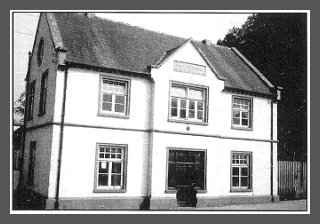
 The Infant School is gone now. It made way for the amalgamation of the old Boys and Girls schools. The Boys School was viewed by the Nuns with a deep suspicion as if it was an academy of evil and vice. The Girls School was a place where they set out to promote virtue. They would strive to educate a few aspiring teachers, an odd nurse, occasionally a nun, but for most girls it would be a low level civil service position or a farmer’s wife.
 It began as a day not unlike any other. It was the year the Pope came to Ireland. I can’t recall what time of the year it was, nor the time of day, or the weather. I can clearly recall though that precise moment when the mood changed in that space between those four walls, this mini State where her writ did run. The change was sudden and without warning and seemed to catch even the pets off-guard. The Nun said a toy was missing, stolen no doubt, by a boy no doubt, a boy from the town no doubt. At the side of the room were various cupboards and shelves containing the tools and machinery for running a classroom. There was paper and paints, pencils, word cards and charts. On one particular side arrayed neatly on a counter there was a row of abacuses. To one side of these ancient counting tools were a collection of small toys such as little cars, tractors, trucks and various animals. I don’t ever recall that we ever got to play with these toys. I remember how teasing and tempting they were, their different hues of racing green and fire engine red, distracting us from the lessons been drummed into us throughout the long day.