Category Archives: Uncategorized

Leitrim 1916 

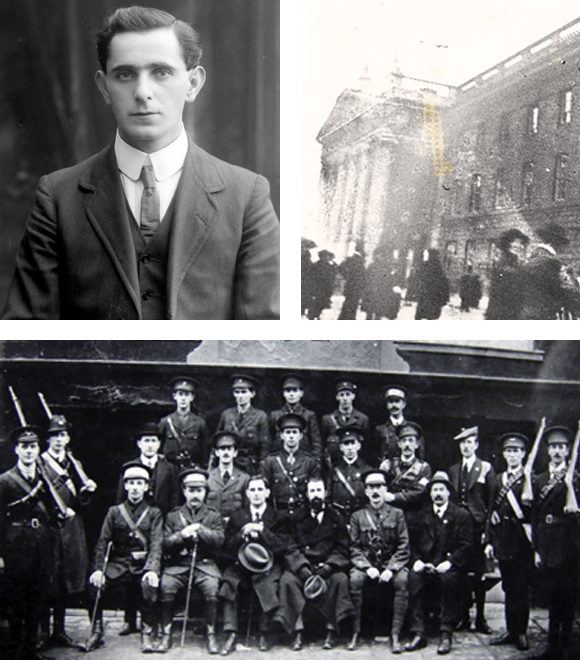
  Every County has a connection with Easter 1916 but Leitrim can be rightly proud of its connections with Sean MacDiarmada and Thomas Clarke – two of the seven signatories of the Proclamation of Independence. 

Before his execution, Mac Diarmada wrote: “I feel happiness the like of which I have never experienced. I die that the Irish nation might live!”

He was executed by firing squad at Kilmainham on May 12. 

Sean McDermott Street in Dublin is named in his honour as is Mac Diarmada rail station in Sligo, and Páirc Seán Mac Diarmada, the GAA ground in Carrick-on-Shannon. 

Sean MacDermott tower in Ballymun, which was demolished in 2005, was also named after him.

http://www.rte.ie/player/ie/show/every-county-has-a-story-30003910/10541256/

Incidentally, the Lord Mayor of Dublin at the time of the Easter Riskng was also a North Leitrim man, James Gallagher. 

Spencer Harbour 


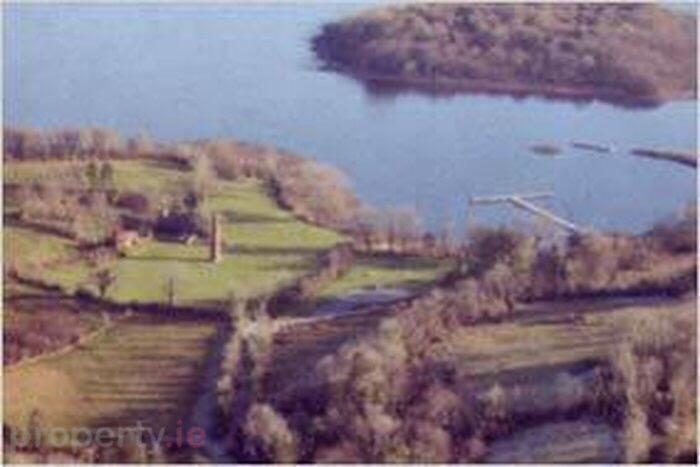
 Interesting video history of Spencer Harbour, Drumkeeran highlighting transport links between Lough Allen and Limerick.

Credit – ‘Best of Memories’ Facebook 

Photo credit – aiveencooper.wordpress.com

The Month’s Mind

I have reworked a previous blog post about shaving into a short story. The title refers to  requiem mass celebrated about one month after a person’s death, in memory of the deceased. The tradition is of great antiquity and some believe the word is derived from the Norse word ‘Minne’  describing a ceremonial drinking to the dead. The tradition survives in Ireland where the family and close friends attend. The story is reworked into a rites of passage narrative. 
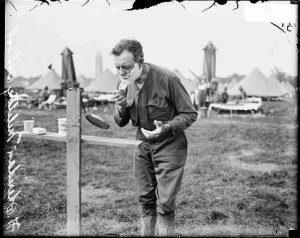

shaving brush


I walk down the lane to the neat little farmhouse half consciously counting the cars parked in the farm yard and driveway. It is four weeks since he died and since then the dahlias in the front garden have come out rejoicing I n full bloom. My granduncle is standing sentry-like at the back door, smoking his cigarette and fumbling in an effort to put his matches back into the inside pocket of his well-worn suit. My Aunt says she swears it is the same suit he wore twenty seven years previous to my parents wedding. ‘It’s hard to believe, it sure is, hmm’ he mutters cigarette smoke bellowing from his mouth and nostrils like an old train, ‘imagine hah….. Where does the time go to?’ I’m sure he can barely make my shape out through his glossy, brandy dulled eyes.

The second I open the door I am almost overcome with the unnatural heat and noise coming from inside the house. ‘It’s nice that they laid him out in the home place’ said Mrs Noone to my mother, ‘even of the house is showing its age and all that, it’s what he would have wanted.’ Mrs. Heeran interjects ‘I’m not gone on these funeral homes at all; they’re pure pagan so they are’ to which Mrs Noone replies ‘It’s hard to beat a good wake at home amongst your own and then the chapel’. I am stranded here between them like a net on a tennis court when my aunt rescues me, ‘There he is, won’t be long before he’s off to University, isn’t that right Liam, now come up here to your Grandmother for  a minute, Grainne will you get Mrs Noone a fresh brew?’

In a few short minutes I find myself sitting in the room where he once sat, in the chair that he would have sat in. I settle down and look around the room at the people gathered for his Months Mind. Trays of sandwiches are passed around followed by plates laden with slices of fruit flan and apple tart, the latter flavoured with cloves of course, my Grandmother’s way. My Aunts and Cousins fly about with pots of steaming tea topping up delicate china cups, in a room where an epic turf fire blazes. On a shelf above the radio, a small statue of St. Martin de Porres acts as a paperweight for numerous Mass Cards, the little figurine itself surrounded by various miraculous medals and bottles of holy water from Knock, Fatima and Lourdes. There too are his reading glasses, the ones he detested and fumed about constantly. On the inside sits a shiny box red and black containing his electric razor.

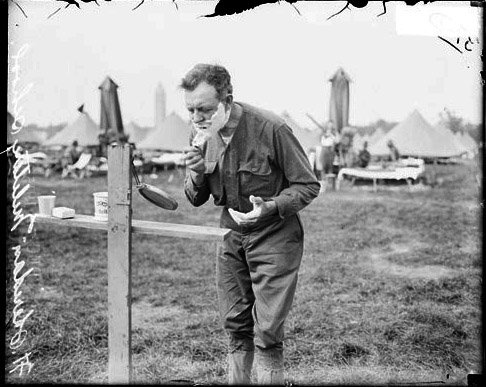
Shaving had never seemed routine to me as a boy. I believe that shaving is something ceremonial, almost ritual and more than mere necessity; it can be a performance, the theatre of the everyday, the essence of life, a mark of manhood and flash of vigour. I remembered my father used a wooden handled foam brush to mix the cool shaving cream that he then daubed over his prickly face to soften the stubble. He then began by slowly dragging the sharp Wilkinson blade across his jaw, like mowing a meadow in straight swathes, before cleaning the blade under the cold tap after every second or third stroke, repeating the motion, cleansing, shearing and renewing. He would finish with the more difficult movements around the mouth and lips, which he pinched, in deep concentration, before finally washing the residual foam away with a wet cloth. A quick dab of cold water marked the end of the ceremony; all the time unaware that I was standing there watching, learning, in awe.

No doubt he too would have looked at his father, my Grandfather, shaving, or perhaps his uncles when they came home from England in the summer. Once I had tried to mimic the act of shaving with my father’s razor, a foolish act borne out of my impatience to become a man, and testified by the cross-like scar on my upper lip. The scar is hidden now by my own stubble only to appear anew when I shave. My Grandfather had berated me for my stupidity, a silly boy trying to be a man.   ‘Have you the bags packed Liam? You won’t find it now. He would have been so proud of you’  It is my cousin Aileen smiling, her words breaking my trance-like reminiscing and I become aware of her heady perfume. ‘Yes just two weeks away, won’t find it’ I reply, ‘Have you digs organised?’ she asks, ‘yes, I was lucky to get a room in a house on Quay Road. Only got word yesterday so I’m taking it blind but it should be fine’ She puts her hand on my knee and squeezes it ‘It’ll be the making of you young man, the world is your oyster, he’d be so proud, he’ll be with you Liam, he’ll be by your side’.

It was I who used hang at my Grandfather’s side watching him, learning from him, like in McKee’s Bar on the nights of the big sales in the local Mart, the pub full of jobbers, tanglers, dealers, Northern buyers, tobacco smoke and thick ash plants for beating cattle up trailer ramps. I would sit on a high stool beside him, aping his gestures and movements, my legs dangling, swinging in time to the beat and blare of the mixed accents of men from Cavan, Longford, Roscommon and Fermanagh. The air was thick with the sounds of laughter, merriment, rows, insults and the vigorous shaking of hands, the entire drama that went on such nights as I pretended my frothy Cavan Cola was a glass of Guinness.

Later I would link my Grandfather home from town, standing well in on the grassy verge when car lights approached, until finally we came as far as our lane.  On the way home he would denounce what ‘They’ had done to men like Blessed Oliver Plunkett; He would tell me how Parnell was let down badly but had let himself down too. He would get most animated when he spoke of about his own Great-Grandfather, ‘don’t ever forget’ he said that ‘we were burnt out of  our house, put to the road and they after hanging him from the shafts of a cart.’ Unbeknownst I was being passed on invisible torches, whether I wanted to hold them or not. Then as we approached the house he would straighten up, puff out his chest, fortified for meeting my Grandmother. ‘Liam you’ll have this’ it was my Uncle Martin, ’put hairs on your chest’. In his hands are two small glasses with two large pours of whiskey, one of which he is pointing towards me. I don’t usually drink whiskey yet instinctively I take one. I lift the glass to my nose and savour its woody pungency before slowly sipping the burning malt.

In summer time my Grandfather had often shaved outside on the back street of the house. A red basin with warm water set on a chair brought out from the kitchen, a fresh towel laid across the high back, a small mirror propped up on the wall with a red brick. I am back there again; the brown faced Collie lying stretched out, but watching him, panting in the heat of the mid-morning sun. I am sitting there watching him too. With his braces now hanging down by his sides, he looks like a character from a Western; standing there he could’ve been out on the high plains. We are both engrossed in his labour. When finished he bends down scooping up the water in his cupped hands, washing away the last of the foam from his now shiny skin. He then pats his face dry with the towel, which is then thrown over his shoulder, before he picks up the basin with a flourish, flinging its contents down the yard, scattering cats and hens in all directions. He is gone then into the house, his ablutions over. When he emerges he is wearing his bright sports coat and a gaudy wide tie, the latter clearly from another decade, another continent even. He pinches my cheek first and then pats the dog and mutters something about looking like a ‘broken down gentleman’ then he is gone away for the day to some meeting.

Martin has now come back with the bottle of Jameson and topped up my glass again. I feel my cheeks aglow and the whiskey now tastes far sweeter than that initial sip just minutes before. ‘SsH! SSh! began to pass through the house and as the various conversations subside the reprise of the Rosary can be heard from the living room. The people sitting next to me begin the reply ‘Holy Mary, Mother of God, pray for us sinners, now and at the hour of our death.’ Our neighbour Patrick Joseph gets down tentatively on his knees and manoeuvres himself so that he is facing into the armchair he’d just been sitting on. I couldn’t help but notice the well-worn shiny seat of his pants. For all his piety he is more accustomed to sitting than kneeling. I thought of the line from the reading I had read at the funeral mass, ‘To everything there is a season, A time for every purpose under heaven’. The whiskey was making me dreamy as was the murmuring uniformity of the prayers. ‘A time to be born, a time to die, A time to plant, and a time to pluck up what is planted’. Ecclesiastes, egg cheesy elastic, heck cheesy plastic. ‘Holy Mary, Mother of God, pray for us sinners, now and at the hour of our death.’

My grandfather had become a frail man, his body shaking with uncontrollable tremors that mocked him and broke his spirit. His daughters took turns in shaving him. His shaking hand would only have done himself harm. Instead of a sharp razor blade they preferred to use the Remington electric Razor. It was a present they had bought for him one recent Christmas. It was very sleek and modern with a tilting head to match the contours of his rugged, well lined country face. I remember thinking that one day I would like to own a smart looking Remington too. ‘Hail, holy Queen, Mother of Mercy, To thee do we cry, poor banished children of Erin’. An hour later as we are all leaving I ask my Grandmother if I can have his razor. ‘Of course’ she says, ‘of course, why wouldn’t you, …… sure we’ve no use for it now’. I reach up to the shelf for the box and say my good nights. As I approach the  door my Aunt walks into the back kitchen, she sees the box in my hand and I can see her eyes well up. She takes a tissue and wipes her eyes ‘Good night Liam’ her hand touches my shoulder as I leave.

I awake with a dry mouth. I lie there for several minutes until the the thirst is too much. In the bathroom I greedily drink a gulps of cold water straight from the tap. Looking in the mirror I rub my chin and cheeks. My stubble feels rough and bristly. Need to look presentable the first day. I open the cabinet door and take down the box. Inside are various brushes, the razor and the power lead.  I plug the razor into the two pronged socket. The shaver buzzes loudly until I place against my skin so that it hums softly. I trace a path across my face down the the jawbone and then faxk il again. The razor starts to struggle and choke.  Flipping open the lid I see it us full and I tap it firmly against the side of the wash hand basin tipping the contents out. The slow running water from the cold tap gathers up the discarded stubble. The colour of the water, turns first grey, then dark and mottled, making ever increasing concentric circles. Suddenly I am startled by sight of my own fresh stubble now mixed with the last my grandfather ever grew. I remembered now, I remembered the women below in the corpse room preparing his body for the wake, and our cousin coming up the hall with the Remington box in her hand. She placed the box on the shelf.  I gaze in the mirror at my half shaven face looking deep at and through my now glossy eyes, overcome with the significance of the stubble, slowly emptying down the plughole of eternity.

It’s an ill wind that doesn’t blow some good

Night of the Big Wind

Night of the Big Wind

Many with an interest in family history will have come across many discrepancies between the ages of people enumerated in both the 1901 and 1911 census. Often people are left scratching their heads wondering why John Smith in the townland of Ballybuck is listed as being 55 years of age in 1901 and is then miraculously noted as being 73 years of age at the next census ten years later. There may be errors of course but the main culprit for these anomalies is Mr. David Lloyd George. As Chancellor of the Exchequer from1908 to 1915, Lloyd George was a key figure in the introduction of many reforms which laid the foundations of the modern welfare state. One of the most famous of these liberal reforms was the passing of the old age pensions Act in August 1908.

In 1906 the Liberal Party regained power with a landslide victory under Henry Campbell-Bannerman. Within the liberal Party there was friction between the old style of liberal thinking, as encapsulated by Gladstone, and the new Liberal Reformers, men such as Asquith and Lloyd George, who advocated an active role for Government in protecting the Welfare of its citizens. In the following years ground breaking legislation would be passed granting protection to workers, children, the sick and the poor. Part of this new liberal agenda was formulated to counter the rise of the new Labour Party and the threat of Trade Unionism. Nevertheless many of the new liberals had a clear social conscience and zeal to implement legislation which would improve the living conditions of the masses.

In this context the Old Age Pensions Bill was passed. It provided for a pension of up to five shillings for people (Seven shillings and six pence for a married couple) over seventy years of age and payments were to be commuted through the Post Office. Only those with ‘good character’ could receive the pension and any who served a lengthy prison sentence were excluded. Also excluded were those in receipt of poor relief, ‘lunatics’ in asylums, persons convicted of drunkenness (at the discretion of the court), and any person who was guilty of ‘habitual failure to work’ according to their ability.

The first payment was made on New Year’s Day, 1909. In Ireland an application had to be made to the Public Office in the GPO. Many people had no birth certificates so they sent in baptismal records. However many parishes had no baptismal records either or peoples surnames were spelt differently. Cross referencing with the Census of 1841 was also difficult. In the end many field officers simply visited people and asked them if they could recall certain historical events. Seventy years previous there occurred an event that any who experienced would be unlikely to forget.

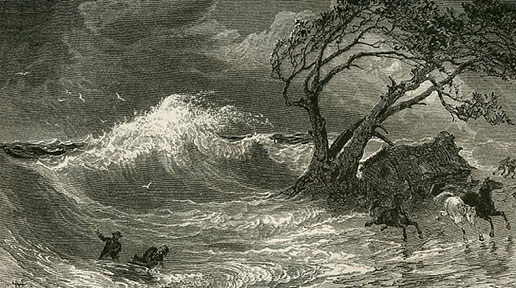
The night of the 6th January, 1839, Little Christmas, has now come to be known simply as ‘The night of the Big Wind’ or ‘Oíche na Gaoithe Móire’. The 6th January was known as the Twelfth Night, the night the dead walk. The day was unusual weather wise. It started off cold and snow had fallen. Gradually as the day wore on the temperature rose, melted the snow and kept rising. The Thermometer kept rising and the barometer kept falling and by late afternoon the conditions were warm and humid and most unseasonal. Unknown to anyone a huge weather system was lurking in the North Atlantic and heading towards Ireland. In the evening the winds began to freshen. Warm air coming up from the Azores met cold air coming from Greenland. The wind reached its crescendo and hurricane strength in the middle of the night between 2.00 and 5.00 am. the country was in darkness and this made the experience even more frightening. It was to be Ireland’s worst storm

What greeted people the next day was a scene from Armageddon. Over three million threes were knocked, forty ships lost at sea, thousands of animals killed and over three hundred people dead and thousands injured. Turtle Bunbury described the tempest as follows, “It was the most devastating storm ever recorded in Irish history and made more people homeless in a single night than all the sorry decades of eviction that followed it”.[i]

Farmers were hit particularly hard, hay ricks were scattered and cattle that survived would later starve. Buildings destroyed included old Norman castles and modern military barracks. The storm did not differentiate between rich and poor; it levelled Churches and hospitals as well as the hovels and mud cabins.

“Innumerable houses in County Leitrim were unroofed on that terrible night, with one roof, according to legend, sailing serenely across Fenagh Lough. In the shadow of Slieve Anierin, many left their houses and took refuge in the ‘Alths’, and near Mohill, one mother put her child into an oak chest, setting stones on top of it for the child’s protection. Also at Mohill the dispensary and Roman Catholic chapel were severely damaged. According to Peter Carr’s book “Mr William Blake of Farnaght, had a range of offices lately built, blown down, two heifers killed, and a corn mill completely unroofed.” In Leitrim the wind took the colour of red.

About fifty houses were blown down between Drumsna and Elphin, there was immense destruction of property especially amongst the plantations. In Carrick-on-Shannon several houses were blown down, others stripped of their roofs. The report of the wind said “The produce of the harvest lies scattered over the whole face of the surrounding country.”[ii]

The country slowly recovered but within a few years a much bigger catastrophe would befall the land. The Great Famine, ‘An Gorta Mor’. Yet the terrifying night remained in people’s memories and folk history and seventy years later would be re-told to Post office officials. In late 1908 and early 1909 many applicants were devoid of any documentary proof of age to apply for the pension. It became apparent that very few births were registered prior to 1865 in Ireland. An Irish Pensions Committee was set up to investigate.

“As such, the Irish Pensions Committee decreed that if someone’s age had ‘gone astray’ on them, they would be eligible for a pension if they could state that they were ‘fine and hardy’ on the Night of the Big Wind. One such applicant was Tim Joyce of County Limerick. ‘I always thought I was 60’, he explained. ‘But my friends came to me and told me they were certain sure I was 70 and as there were three or four of them against me, the evidence was too strong for me. I put in for the pension and got it’.[iii]

Naturally anyone remembering such a cataclysmic event would be at least seventy years of age, and anyone who was over seventy years of age would be entitled to five shillings a week from Lloyd George’s purse. It certainly was an ill wind that didn’t blow some good.

[i] Turtle Bunbury ‘The Night of the Big Wind 1839’

[ii] Peter Carr “The Night of the Big Wind” by Peter Carr ISBN 1 870132 50 5 Published by White Row Press 1993

And Leitrim Observer – 28th July 2012

[iii] Turtle Bunbury ‘The Night of the Big Wind 1839’

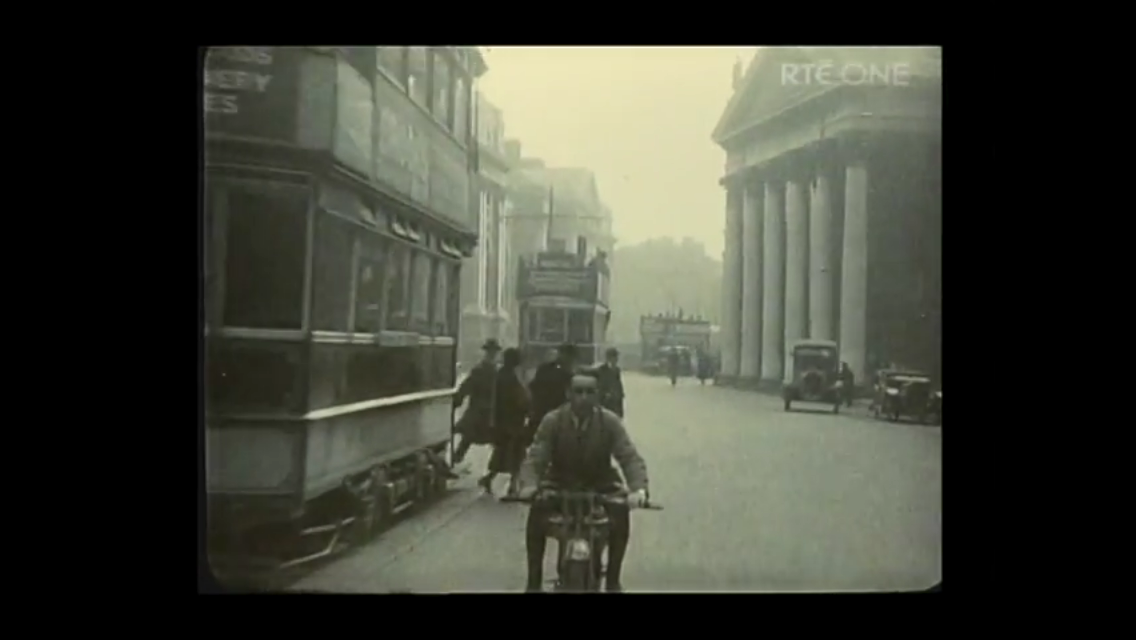
Dublin on film (1925)

Irish Destiny


College Green into Westmoreland St


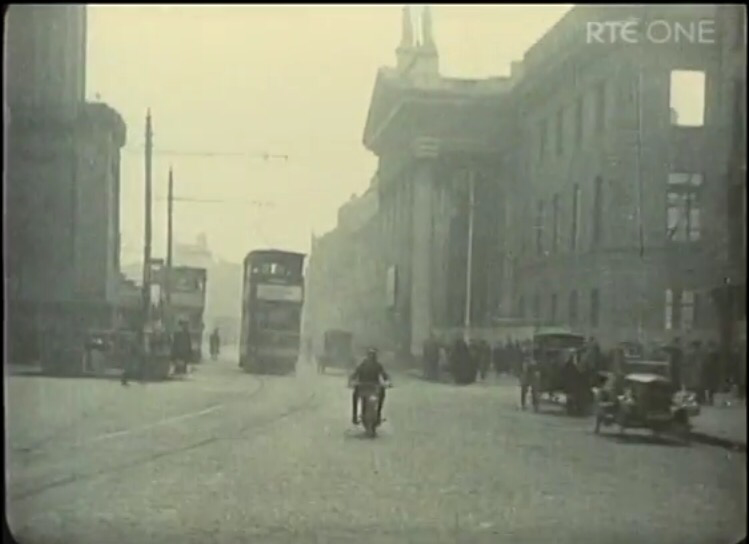
 The opening sequence of the first feature-length film to deal with the Irish War of Independence. It was a silent film called “Irish Destiny”, made in 1925-26. The man on the motorbike is actor Paddy Dunne Cullinan, playing an IRA volunteer. 

The scene re- enacts a republican messenger on his way to a hotel to warn Michael Collins of an impending raid from the auxiliaries.

The GPO is still not rebuilt nearly a decade after the Easter Rising. 


The ruins of the GPO. on O’Connell St

 
The Movie is available on DVD with fully restored picture and new musical soundtrack. Well worth a look.
click on the link here 

The Mothers Ashes

 The week started off inauspiciously. A quick greeting at the airport as the guests walked into the arrivals hall, red-eyed from the over night flight from Newark and clearly in dire need of caffeine. The five Americans really didn’t know what to expect from Ireland. Earlier emails advised them not to wear Aran Sweaters, unless of course they wanted to be mugged or boycotted in public. They had been keeping a close eye on the weather forecast and were becoming adept at converting Fahrenheit into Celsius. Other than that they may not have known what to expect of this small green island, a place of which they had heard so much, a place adrift in the North Atlantic, battered by winds and storms, invaded, conquered and freed, a land for whom many were prepared to die for, a land that had scattered so many of its children to the four corners of the world, like thistle down on a soft breeze. They were Irish-Americans, they were my cousins, on a maiden trip to the mother country, a voyage of connection, a journey of discovery, a trip into the unknown, a homecoming.

Their Grandmother had left Ireland in 1903, a slip of a girl with beautiful porcelain skin, a new world beckoned for her, America! America, the land of opportunity, where dreams can come true. She left behind a three roomed house in the West of Ireland where she and thirteen other siblings were born. The story was similar to many West of Ireland families at the time. Twelve of the siblings survived infancy; five of them would go on to make their home in America. Today their descendant’s number in the hundreds and are spread across the US from North and South and coast to coast .

We booked a hotel in Dublin but it was too early to check in so I took the group north to the Boyne Valley, the cradle of Irish Civilisation. But first a quick stop by Drogheda for some coffee. I told them all about how Cromwell had massacred most of the town’s inhabitants after the siege of 1649 and how poor old Arthur Aston, a captain in the garrison was beaten to death with his own wooden leg. I told them how the ‘lucky’ ones were deported to the sugar plantations of Barbados where many died from disease or just exhaustion. It was bad but it was better than hell, only just. I was doing my job of putting Ireland in in its proper cultural context and it would be remiss of me bit to bring up Cromwell! We then visited St. Peter’s Church where we viewed the macabre yet beautiful head of St. Oliver Plunkett. America might have some nice churches I thought, but how many have a three hundred and thirty four year old decapitated head on public view. As we sat for a while in the quiet of the church a local man approached the statue of the blessed virgin and began loudly remonstrating with her about some omission or indiscretion by either him or her. It became apparent that he was ‘duine le dia’ or as one of our group said ‘crackers’. This was confirmed a few minutes later when he began putting his hand and forearm in the naked flame of the blessed candles. It was time to leave.

We took a short journey out through the Boyne valley, through the battle lines of 1690 the mother of all defining moments in this islands sad history. When King James fled the field here above the village of Donore he brought with him all of the old Gaelic worlds hopes and future with him. We passed the place where the wise druid Finegas spent seven long years fishing for the Salmon of Knowledge, ‘An Breadan Feasa’ in a dark pool in a bend in the river. When the fish was finally caught Finegas was happy for his student, young Finn MacCumhaill, to prepare and cook the fish, warning him not to taste or eat it. When Finn arrived with the cooked fish Finegas noticed a change in the boy’s demeanour. He asked Finn if he had eaten any of the fish and the boy replied that he hadn’t and would not dare disobey him. However, Finn told him that as he turned the fish he noticed a blister had formed on the skin which he then burst with his thumb. The resulting burn was painful and he instinctively placed his thumb in his mouth to ease the sting. Finegas had heard enough, he was heartbroken but what could he do. He told Finn that he would now have to leave this place as Finn as by tasting the fish he had gained all the knowledge of the world. Finegas then went to bed muttering something to Finn about ‘not letting the door hit him in the arse on the way out’, or words to that effect.

We drove to Slane where St. Patrick had first lit the famous fire on the hill overlooking the river crossing. That was one thousand six hundred years previous, a light that signified the start of Christianity in Ireland. We doubled back through narrow roads with high hawthorn ditches until we rounded a corner and there was Newgrange, the great Neolithic tumulus built over 5,500 years ago. History and the appreciation of time is always something that is very different on either side of the Atlantic where the US is a country only just over 200 years old. When I tell the group that Newgrange is a 1,000 years older than the Great Pyramid the antiquity of the site is appreciated a little more, I think.

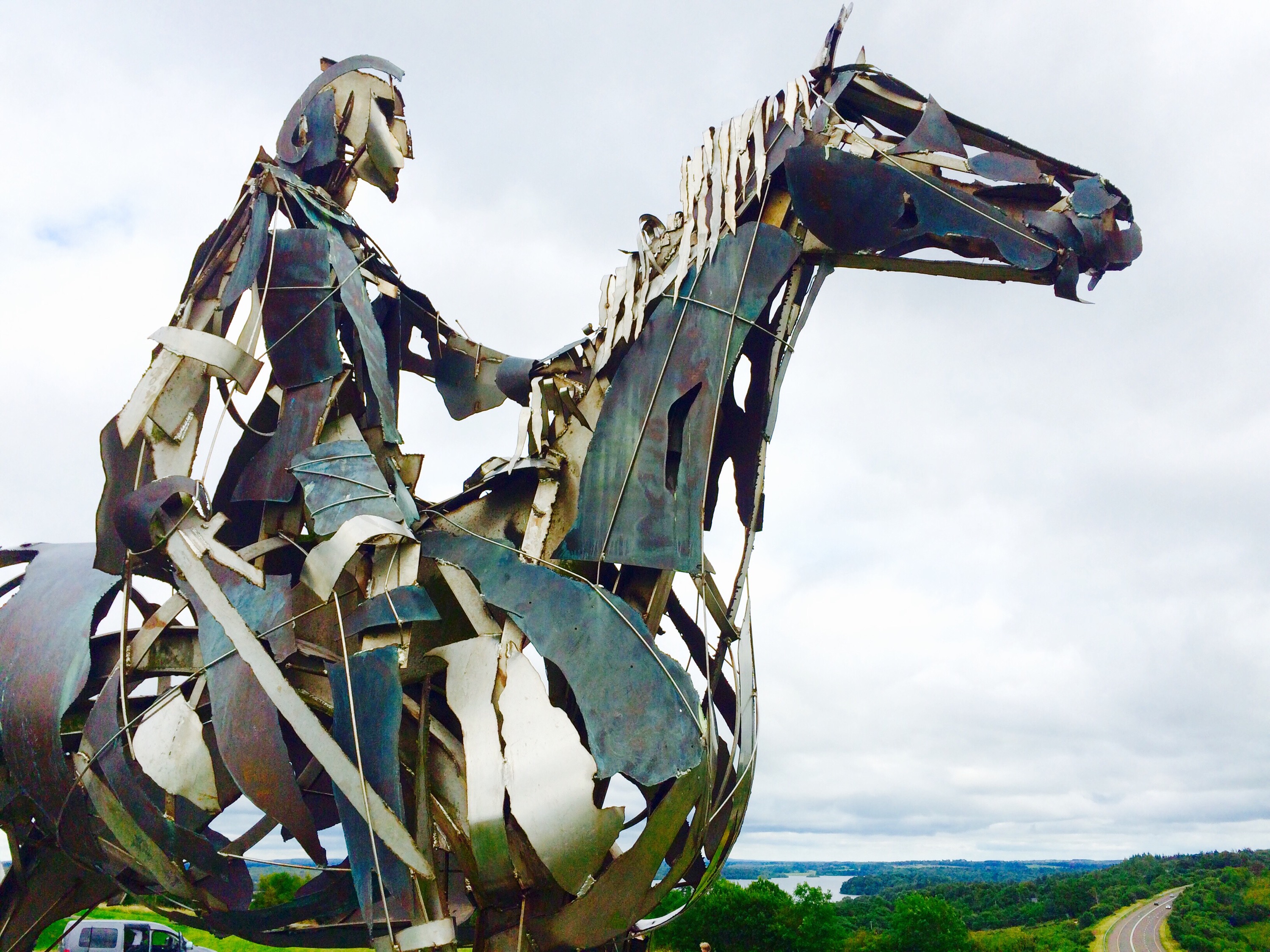
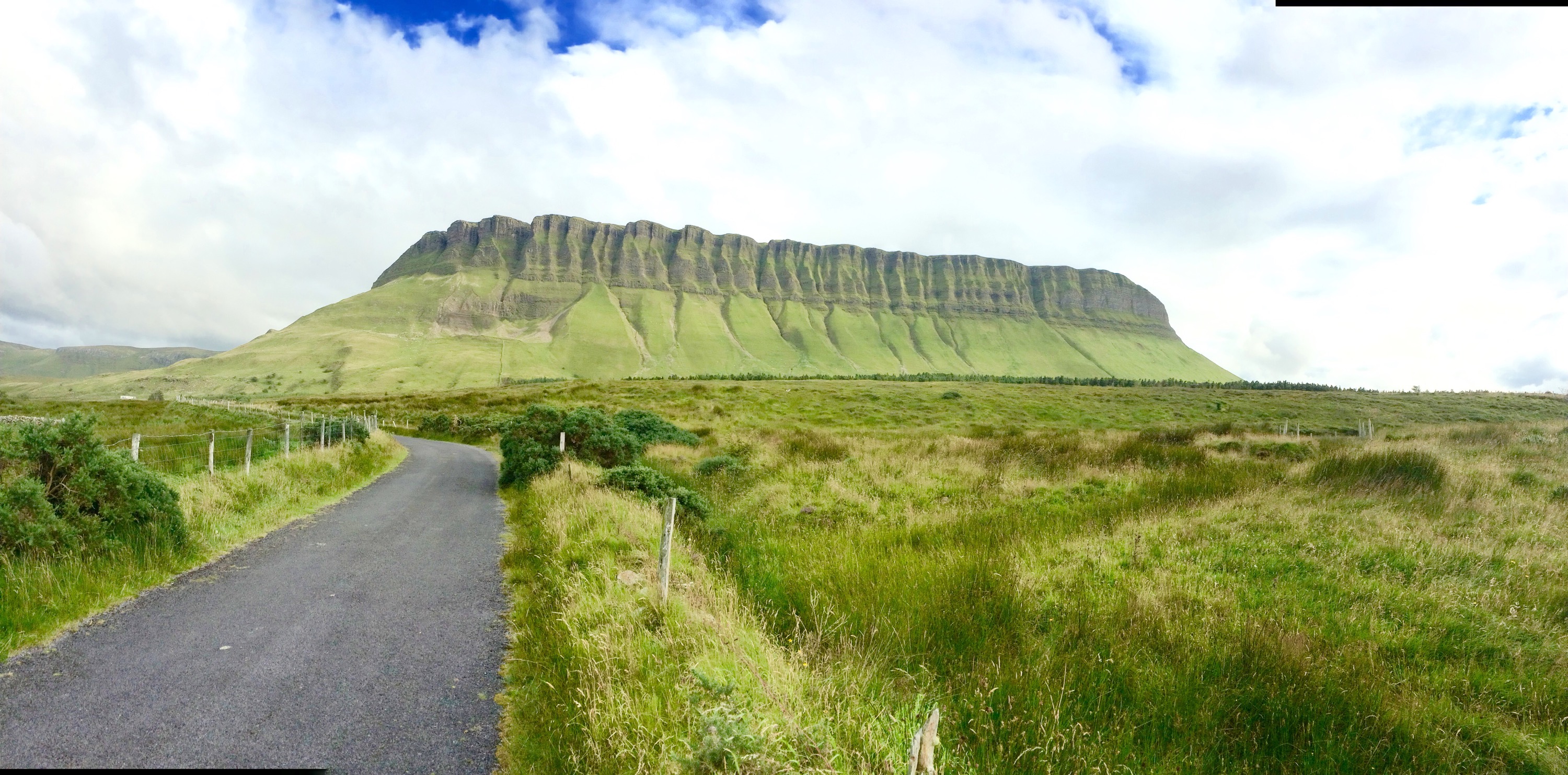
We then headed for the City of Dublin and checked in to the Hotel. That night some of us went to a few of the hostelries, including O’Donoghues, The Dawson Lounge and Nearys. Next morning a mini tour of the near deserted Sunday morning city, before like the sun, we headed to the west. Over the next few days we went to a Tug-o-War contest, a Gaelic Football Game and Fr. Mychal Judges family homestead. We walked up Shop Street in Galway, had pizza in Fat Freddy’s, admired the old Quad in the University in Galway. We drove through the fields around Athenry, watched cattle graze on the edge of the Cliffs of Moher, along with busloads of people from “Jersy”. We ate fresh scones in Kinvara, Mussels and Hake, garlic cheese chips in Supermacs. We viewed Galway Bay from Dunguaire Castle, crossed the Burren, drove up and over Sliabh an Iarrain, close to  where our ancestor ‘Ultachs’ settled, we viewed Lough Allen and the beautiful Shannon, saw the smallest church in Ireland, stood where the rebels of 1798 were hung, looked over six counties from atop the Curlew Hills beside a Gaelic Chieftain on horseback. We got used to the rain, one of us got a cold, we realised just how over-rated the Guinness Storehouse is, ssshhhh!!! We brought brollies, lost brollies and bought some more. We took a train to Dublin from the platform where our grandmother stood on the 16th May, 1903, a place where she probably shed tears but now we shared moments of joy and uproarious laughter, the laughter of people comfortable in each others company. We met cousins we never knew we had, but who knew of us, and of the bonds that bind us, cousins who opened up their hearts and homes and fed and watered us with the humble generosity of the Gael. The one couple amongst us renewed their wedding vows in a quiet country church with a bouquet plucked seconds earlier from the Churches flower beds. We visited Mullaghmore, the beautiful harbour where the dark stain of the dead Lord Mountbatten is slowly receding in conciliatory times. We “cast a cold eye” on the mystical Ben Bulben, sheltering the grave of the national poet below. We drove up mountainy paths where sheep stared at us in their “Will ya look at this crowd, where do they think they are they going” looks, and after realising we were on a less travelled and ever narrowing cul-de-sac, we then endured the same sheep on the return leg giving us the smug“I told you so” look. That night in a small but atmospheric church, we listened to John Spillane singing ‘The dance of the cherry trees’ and playing ‘Carolans Fancy’ and ‘Sheebeg and Sheemore’ on his guitar. Meanwhile outside the chapel and across the street stood the last of the Gaelic Bards, Carolan himself, sat in statued bronze, beneath a cherry tree, strumming his Harp.

 But more than all this we found where we came from, figuratively, literally and spiritually. We visited the birthplace of our grandmother, and the birthplace of her father and mother before. We stood where they stood, in the modest three roomed house, where we wondered where fourteen children somehow lived, breathed, ate and slept together. The property is now beautifully renovated and restored by a kind English couple. We buried a mass card of a brother that didn’t make it to Ireland like we had, but who no doubt would have told many people growing up that he was Irish. Part of him is forever Irish now. We carried throughout the ashes of a loving mother, dead now these two years past. We brought her all over Ireland with us, and the only complaint she can have is that we didn’t bring her into the Galway Crystal or Beleek China factories. On the last day we buried her ashes in the grave of her grandparents. In the summer of 1930 she and her mother and brothers had come to Ireland to visit her grandmother, she was just ten years old. My own grand-mothers letter to her in 2001 recalled that 1930 was a wet summer, raining every day, however the children from New York revelled in the freedom of a small west of Ireland farm. When it was time to leave my great-grandfather, grandmother and Granduncle left them to the train on the 1st September. My Grandmother described the scene with an economy of words that conveys the emotions of the moment; she simply says “it was a sad parting”.

Now the ashes are placed with the elders in the same graveyard where so many family members lie, facing the rising sun in their eternal sleep. It was this moment of all the memorable moments of a memorable week that encapsulated what was happening. Whilst the soda bread recipes may have been a little different (never heard of caraway seeds as an ingredient) the kinship was the same, the familial bond is strong, renewed and come full circle. They say to truly know where you are going you must know where you have come from. I hope my dear cousins may now have this knowledge, for like Finegas and the boy Finn, I cannot tell them any more than they already know within.

This is for them. John Spillane ‘All the way you wander’

Planxty Peyton

In my last post you will have noted that Francis McGann lost  his life in a snow drift returning from a meeting at Keshcarrigan Fair on the the morning of the 21st December, 1815. The meeting was organised by McGann and his ‘Rockite’ acquaintances to denounce a local landlord by the name of Minor Peyton. Peyton had been involved in subduing civil disturbances in the local area. His retaliation apparently consisted of burning several houses in the townland of Drumcollop and cutting the road in the townland of Laheen Peyton.

The cutting of the road was a major inconvenience to the local people, including my own ancestors who lived in the adjoining townland of Corderry Peyton. The people were prevented from travelling in one direction towards Mohill and Drumsna and in the other to the village of Keshcarrigan. Whilst the act of Minor Peyton was purely retributive it also appears to be petty and vindictive. At the public meeting McGann denounced Peyton as a Tyrant, and cleverly instead of dwelling on the daily inconvenience fested on the locals, focussed instead on the obstruction of their worship at the local Catholic chapel.

The estate at Laheen was originally associated with the Reynolds family of Lough Scur. John Peyton married a daughter of Christopher Reynolds of Laheen in the early 18th century and thus the Peytons inherited Laheen. The Peytons first acquired land in Leitrim through an earlier marriage with the Reynolds family of Lough Scur around 1650. Several members of the family served as High Sheriffs of Leitrim in the 18th and early 19th centuries. The family traditionally buried in Fenagh.

In the 1790’s Arthur O’Neill visited Laheen and described it and the incumbent, old Toby Peyton as follows:

“I went to Toby Peyton’s, for whom Carolan composed ‘Planxty Peyton’. This gentleman had a fine, unencumbered estate, and exclusive of the expenses of groceries and spices he spent the remainder of his income in encouraging national diversions, particularly harping and all other wired instruments. He lived to the age of a hundred and four, and at the time he was a hundred he mounted his horse as dexterous as a man of twenty and was the first in at the death of a fox or a hare. This gentleman’s age accounts for my observations of him and my visiting him, Carolan’s time being before mine”.

This Tobias Peyton died aged 104 in 1796 so it is likely his son, also Tobias is the ‘Minor’ Peyton of 1815.

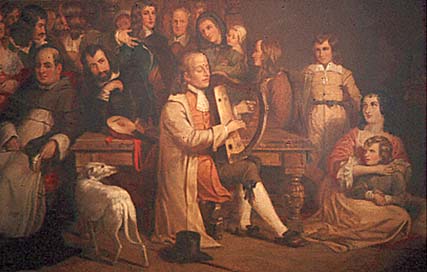
Carolan

Carolan

The elder Peyton’s first meeting with Turlough Carolan was not very auspicious. Meeting the blind harpist on the road Peyton is reputed to have told the bard that he rode his horse crooked. Carolan quickly retorted “I will pay you for that remark with a crooked tune”. Despite the tone of this initial meeting Peyton invited Carolan to his house on many occasions.

Notwithstanding the old saying that ‘he who pays the piper calls the tune’ the nomadic harpist and the local squire seem to have genuinely liked the others company.  A Thomas Furlong later put words to Carolan’s tribute to Peyton:

“For Toby’s the soul of sport, me boys

His home is our gayest resort, me boys

Where the toasts fly round

And all care is drowned

In brimmers of sparkling Port, me boys”

Certainly the music conveys the spirit of a convivial big house where Carolan’s glass was regularly topped up. The musical tribute has lasted much longer than the Peytons. Within a century the Estate was encumbered and soon broken up through various leases, mortgages and sales. Their name is perpetuated in several townlands in the area which continue to bear the suffix ‘Peyton’ and of course in ‘Planxty Peyton’ performed here by Musica Pacifica of San Francisco.

From Mohill to the Majors – The story of Tom Dowse

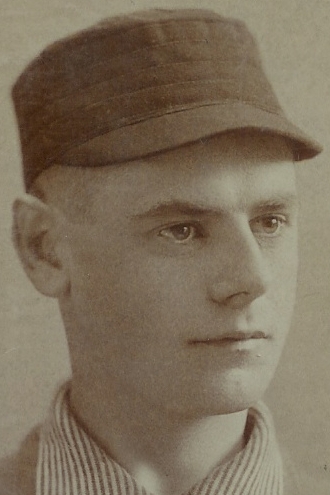
It might seem implausible now, a Leitrim man playing Major League Baseball, but a trawl through the Archives reveals that this is fact not fantasy. Although it may be fact, it is a rare one, and it seems likely that only one Leitrim native has played in the Majors. The achievement belongs to a man called Thomas Joseph Dowse who was born in Mohill on the 12th August, 1866. It is unlikely that Tom  honed his batting and catching skills on Hyde Street or Glebe Street in his home town. When just shy of his second birthday, Tom and family, like many before and plenty since,crossed the Atlantic to start a new life.

Tom Dowse

Tom Dowse

Tom was the fourth child of William and Sydney Dowse (nee Burgess). At the time of his birth Tom’s father was working as a law clerk.The Dowse family had moved to Leitrim from Cavan. Tom’s paternal grandfather was the English born John Dowse (1788-1869) who worked as a servant to the gentry all his life. John died at Bridge Street, Cootehill and is buried in Drumgoon Church of Ireland graveyard.

Tom’s maternal grandparents Robert and Elizabeth Burgess were of Scottish origins. The Burgess family were also of the servant classes and lived in Crookahatten, Bailieborough, Co. Cavan and this is where Tom’s mother Sydney was born on the 1st February, 1829. William Dowse worked as the groom in the rectory at Glebe House, Baileborough and whilst there he met and married Sydney in 1850.

The Dowse family boarded the Brittania in the port of Derry in the summer of 1868. William and Sydney were accompanied by their children, John (9) Robert (5), Anna (3) and baby Tom. They arrived in New York on the 19th June 1868. They arrived to a country where re-unification after the bitter Civil War was moving apace. In the week of their arrival Arkansas, Alabama, Florida , Louisiana, Georgia, North and South Carolina were all readmitted to the Union.

Within a decade the Dowse family were well established in the city of Albany, Capital of the State of New York. William was working as a Superintendent of Gas Lighters in the City. The eldest son John had by now married and set up his own home. Robert was working as blacksmith and would soon open his own business. Sadly Robert would die in 1898 at the age of 36 of pneumonia. His mother Sydney had passed away the previous year of influenza.

Tom Dowses baseball career was as short as it was unremarkable save for the fact that he shared a record of playing for four different league teams in one season (1892). If the term had not already being invented Tom could surely have laid a justifiable claim to the title of ‘journeyman’. American sports have an obsession with statistics but especially with averages. Unless you go at least 3 decimal places it’s not really a worthwhile statistic at all. Dowses record is as follows;

“he was a catcher/outfielder who played in Major League Baseball from 1890 through 1892. Listed at 5′ 11″, 175 lb, Dowse batted and threw right-handed.

In a three-season career, Dowse was a .197 hitter (116-for-590) with 46 RBI without home runs in 160 games played. Despite his modest numbers, he entered the record books by playing for four different teams in a single season, matching a very uncommon feat set by Harry Wheeler in 1884.

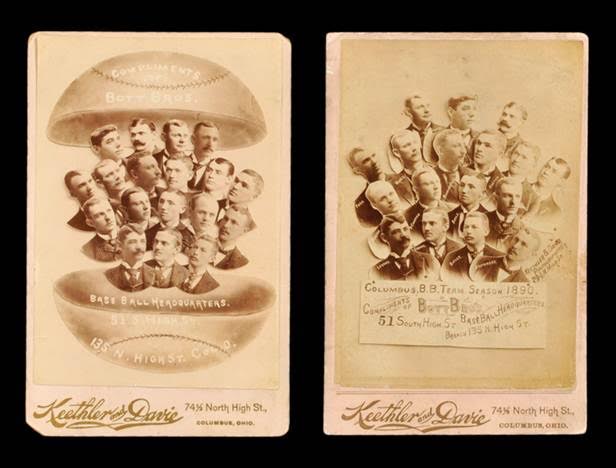
Basically a catcher, Dowse also played every position but third baseman and shortstop during his major-league tenure. He started his career in 1890 with the Cleveland Spiders of the National League, appearing in 40 games for them while hitting a .208 average. That season, he also served as an emergency umpire in three games. In 1891 he played for the Columbus Solons of the American Association and posted career-numbers in average (.224), RBI (22), runs (24), and doubles (7). Dowse returned to the National League in 1892 with the Louisville Colonels, appearing in 41 games for them before moving to the Cincinnati Reds (one),Philadelphia Phillies (16) and Washington Senators (7), hitting .165 in a career-high 65 games. He never appeared in a major league game again.”

Baseball definitely didn’t make Tom Dowse rich but it certainly ensured that he got to see more of the US than just the Hudson Valley where he grew up. In his first season he married Alice Mabel Seaver in Chicago. Alice was also from New York and one can speculate that she and Tom had travelled to the mid-west together. Tom was 24 and Mabel was just 20 at the time of their nupitals. Their only daughter Vivian arrived in July 1893.

Columbus Solons1891

Columbus Solons1891

The family had a nomadic lifestyle initially. In 1900 they were living in Buffalo, New York. In 1910 they were in Denver where Tom was working in Insurance. They seemed to have stayed a considerable time in Colorado before 1925 finds them on the West Coast living in San Diego.

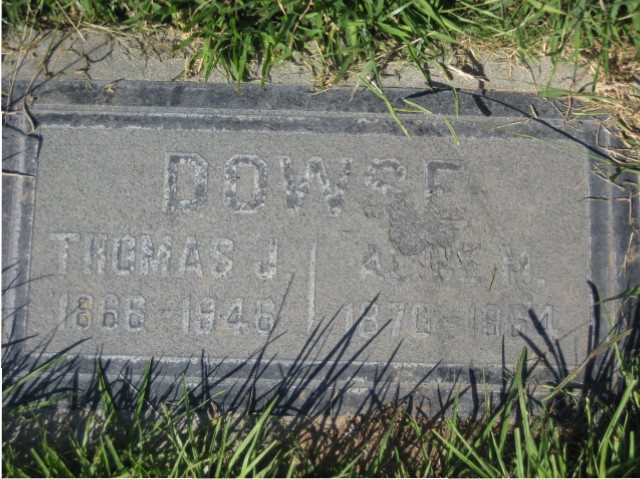
By 1930 Tom and his wife are living in Santa Ana, Orange County where they share their home with their son-in -law Horace Chielero and his young family. Sadly Tom and Mabel’s daughter Vivian had passed away back in Denver. Tom Dowse died on the 14th December 1946 in Riverside, California. He was 80 years old. His wife Alice (Mabel) Sever-Dowse survived him and lived to the ripe old age of 95, passing away in May 1965.

Grave

A Sport in denial craving redemption – FIFA 2015

FIFA 2015

Joseph S. “Sepp” Blatter probably surprised a few people today by resigning from his position as President of the Fédération Internationale de Football Association (FIFA). The surprise comes from how bullish the man has been over the years. His resignation speech outlined the reason for going as being the fact that despite having the mandate of FIFA he feels he doesn’t have the support of everyone in Football. But if FIFA is the representative of World Football then surely this means that FIFA has little or no mandate at all. Yet in the rush to condemn FIFA we must be careful not to allow a vacuum be created that will be quickly filled by the rich and powerful in the game of which UEFA is in the vanguard.

Blatter has spent the last thirty-four years working at FIFA, initially as general secretary but since 1998 as president. He has been re-elected by the delegates from all over the world in 2002, 2007, 2011 and last week. What is unusual about his resignation is that it does not have immediate effect, but rather will only take effect when an extraordinary FIFA Congress is convened. This may take some time to convene. I sincerely hope there is no shredder in the office.

Sepp Blatter

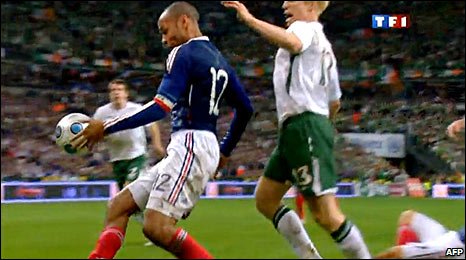
For a man who specialised in Public Relations for companies such as Longines, at times he has been a PR disaster. Blatter hasn’t been popular in Ireland, particularly since he made fun of Thierry Henry’s handball which enabled France score the crucial goal, ensuring that they, and not us, would be travelling to the 2010 World Cup in South Africa. The incident generated quite a bit of debate, mostly in European football, about fair play, introducing goal line technology and video refereeing but it all came to nought. It was well-known that Blatter was not a huge fan of such technology and in any event the World Cup might do without Ireland but it could not do without a potential 60 million TV viewers in France.

Thierry Henry

Henry admitted after the game that he had cheated. The incident was referred to the FIFA Disciplinary Committee for a ruling, but they held they had no power to sanction a player even though he had just admitted cheating in such an important game. FIFA reputation in Ireland fell even further when Blatter’s ‘off the cuff’ remarks about Ireland asking to be included as 33rd team for the tournament. Blatter laughed and joked about Ireland’s request which apparently had been alluded to in private discussions with the FAI and details of which should never have been aired in such a public manner. The FAI were scathing, their fans furious, at what was quite rightfully perceived as adding injury to insult.

But these are minor matters compared to what Blatter has presided over in FIFA with allegations of corruption ranging from whispers to outspoken claims of bribery involved in tournament selection. The award of the World Cup tournament to a country with no footballing tradition and  in the middle of an Arabian Summer was absurd and ludicrous. There will be a lot of eggs fried, for those lucky enough to have an egg, in Quatar in the summer of  2022.

Yet no one expected the end was so nigh for Herr Blatter. As Wodehouse wrote in Jeeves, “Unseen in the background, Fate was quietly slipping lead into the boxing-glove” It took the Americans to grab the bull by the horns and act once again as Global Policeman.  The arrest of seven FIFA officials was part hollywood, part judicial ambush but for all the showmanship there appears to be considerable substance behind the investigation conducted thusfar. 

In so many ways the Yanks have shown up Europe again as having no teeth or at the very least an unwillingness to force change no matter how compelling the allegations of wrongdoing. This is definitely one American led Regime Change which I will be wholeheartedly supporting.

………………………………………………………………………………

*It’s hard to believe it is 29 years ago this month that Diego Maradona broke English hearts with his famous ‘Hand of God’ goal at the Aztec Stadium. For whatever reason, I remember feeling okay about that particular goal. Yes it was cheating but it was Maradona and more importantly it was England. 

The little genius beat almost the entire English team a few minutes later to score one of the greatest World Cup goals ever and Argentina went on to win the Cup. The game had to be seen in the historical context of the Falklands War just four years previous and the Troubles on our own Island. Yet this was sport and this was cheating.

 I often wonder how I would have felt if it was Robbie Keane who had handled the ball at the other end in Paris in 2009, knocking it across to Doyler or Duffer to scramble it over the line. I’m quite sure if it had happened, I would  have come to terms with it, eventually, and by the time I was buying my vuvuzela outside the Soccer City Stadium the pangs of guilt would be well-forgotten. 

No Comment Needed

Sometimes words are not as compelling as a powerful image. So much like ‘Euronews’ I went for no commentary with this post. There really is no need and as the Latin saying goes ‘Res Ipsa Liqitor’, the thing speaks for itself. The images are from ‘People in Need’.