Category Archives: Uncategorized

Cultural Learning Curves

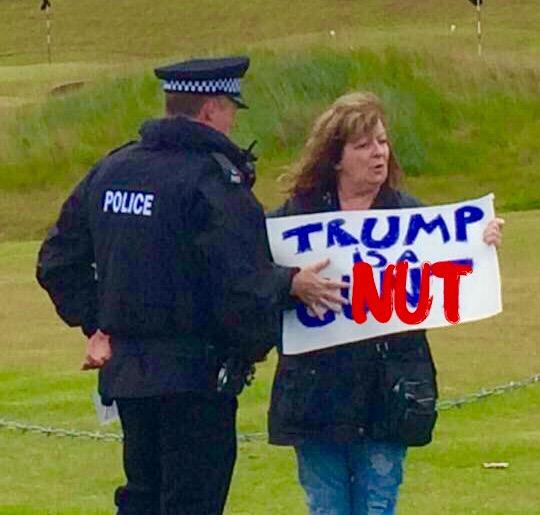
  In The Canterville Ghost (1887), Wilde wrote: ‘We have really everything in common with America nowadays except, of course, language’. This statement rang true for me recently. I had just posted a picture of a female protester in Scotland. She was near a Golf Course owned by Donald Trump who was visiting. The woman held a placard which read ‘Donal Trump is a C*nt’. Not been a huge fan of the racist demagogue I immediately had some empathy with the woman. I posted the picture on social media.

What happened next took me by surprise and is a lesson to everyone. Several people viewed the post but two of my American cousins commented that the post was ‘obscene’. Now growing up In Ireland and especially after living in Australia I have heard the ‘C’ word (hereinafter to be just referred to as ‘It’) used in conversation regularly. I’ve heard It at football games, in bars and It wasn’t been uttered exclusively by men either. In all these uses not once was It used to describe female genitalia. More often it was used to describe a questionable refereeing decision, a person who had done something lousy to a friend, someone who was a tough employer, an over-zealous policeman, a strict teacher and so on. I would never have considered any of these uses ‘obscene’, rude yes, but the reality is that on a scale of insults I would put the ‘It’ on a par with ‘a**hole’. I had the feeling that I had offended my cousins all over a cultural difference. I decided to do a bit of Google Study to try and establish why the attitude to this word had diverged so dramatically.

The first place I looked was an American site www.urbandictionary.com The entry on the ‘It’ word says it is a

“Derogatory term for a woman. Considered by many to be the most offensive word in the English language”.

Did I just disseminate ‘the most offensive word on the English language’? Surely not?

A later entry said a ‘C*nt’ was a stupid/contemptible person of either gender” with the foot note ‘Only in America is this considered a specifically misogynistic insult. In Britain it is most likely to be heard amongst men quarrelling’. 

Kate Warwick guesting on a blog called ‘Strong Language’ describes it as ‘a hand grenade of a word’. 

Grose’s Classical Dictionary of the Vulgar Tongue describes it as ‘a nasty name for a nasty thing’ which would suggest the Scottish Protestor was on the right track.

But still there is no explanation why the ‘C’ word has a vastly more significant impact when used in the US than in the rest of the English Speaking world? That is not to say that it is not a strong word to use anywhere other than the US but it is unlikely to elicit such a visceral disapproval or sentiment.

It would seem that somehow the word in the US evolved a different severity than elsewhere in the English speaking world. There is no real reason for this save that curse words seem to evolve arbitrarily to the point that ‘It’ in America is now practically taboo to use. Contrast this with Australia where the word can be used almost as a substitute for ‘mate’ amongst men. This is not the only word that appears the same but has different connotations on either side of the Atlantic. I remember my first time living in Queens, New York and going in to a shop (that’s a Store thank you) and asking for a ‘box of fags’ instead of a ‘pack of cigarettes’. Then there is the American use of the word ‘fanny’ which refers to a different part of anatomy than over here.

So one can only conclude that there are many words that although they appear to be the same word are radically different both culturally and idiomatically. In Ireland and the UK it is a generic insult, in Australia it is very main stream but in the US it is extremely offensive and slanderous.  We can be all unintentionally guilty of cultural ignorance. I obviously didn’t realise that some people might be offended by the wording of the placard. It seems some of them perhaps did not realise that where the picture was taken the ‘C’ word is just another generic insult. Any wonder George Bernard Shaw described England and America as ‘two nations divided by a common language’, suggesting that whilst Trump may be still a ‘C you Next Tuesday’ in Scotland he remains just a plain asshole at home.
Sundays at Blue Bridge

OLYMPUS DIGITAL CAMERA

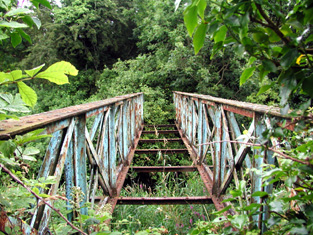
He crossed the old iron gate first and then lifted the boys over, encouraging and cajoling them across the rusting blue iron bridge with the missing planks. The boys were momentarily weak with fear of falling into the river below. The length of the gaps between what planks remained appeared colossal. But once across the bridge the boys were exhilarated by their pseudo-bravery and pluck.

The next obstacle was quick upon them, the old wall which ran along the edge of the former gardens of the crumbling Castle. They jumped down the wall to the low ground and on to the path through the thick man high growth that led to the river bank. The air was heavy with pollen and the last heat of the day.

The father took out his old fishing rod and took a hook from his box. Holding the little piece of barbed steel in his lips as he fed the fine line through the metal eyes, finally, threading the line through the eye of the hook and knotting it securely. He then repeated the process on the boys new shiny rods, his forehead lined in concentration. The corks were set at about three feet from the hook and a few lead weights attached further down the line. Then the jam jar was opened. A nice fat worm was caught between his thumb and forefinger chosen not just for his size but for the dark colour of his back and head, apparently this was the type the fish liked best. The hook was delicately forced through the thin skin and the worms fate was set, thus impaled he would end his days as fishing bait.

When all three rods were set up the father took the first casts out, watching for the low hanging bushes around them, before landing the corks mid-stream. He allowed them to bobble and settle. With the corks caught by the gentle current the rods were handed to the boys.  The corks  began  to drift lazily downriver towards the entrance to the lake. Dragon flies swooped low as the young fishermen eyed their corks for any movement that might signify the bite of a perch or roach.

The Ha’penny Bridge

ha__penny_bridge__dublin_by_pajunen-d59k91o

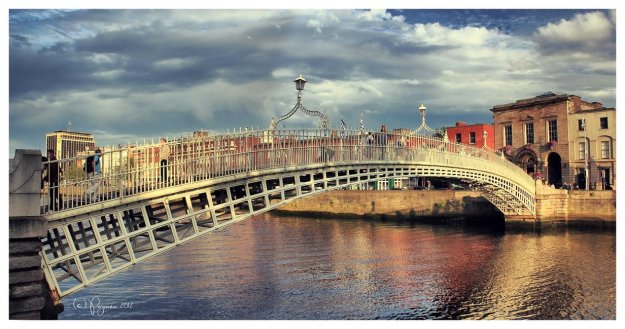
by Tomi Pajunen – Finland (2012)

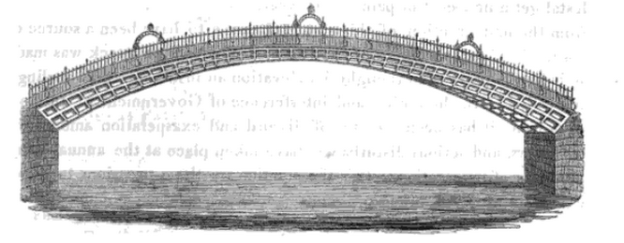
This week saw the 200th birthday of the ionic ‘Ha’penny Bridge’ in Dublin. The Bridge was opened in May 1816 and replaced the Ferry which linked the North and South quays along the River Liffey. The bridge with its graceful cast iron curve is one of the iconic symbols of not just Dublin but of the country.

I have often heard that the ‘iron’ for the bridge came from Leitrim and in particularly Sliabh an Iarainn, the Iron Mountains which dominate the south of the County and stretch from Lough Allen to the Cavan border. Across the grand expanse of Lough Allen is the better known coal mining community of Arigna. I have struggled to find any evidence that the ‘iron’ used in the bridge came from Leitrim. Firstly one has to establish is whether or not the ‘Iron’ is the Iron Ore or the cast iron spans that make up the bridge.

It is known that there used to be an iron industry in the County until the early 1800’s.  The legacy of this is placenames such as Furnace Hill in Drumshanbo. But would a small scale foundry be capable of making the cast iron lengths for the bridge. Perhaps?

I was disheartened when I read the following from the Dublin City Council sponsored ‘Bridges of Dublin’ website:-

“When the sailing ships, transporting the Ha’penny Bridge from the Coalbrookdale Foundry in England, dropped anchor in Dublin, it was then an outpost of the British Empire with a population of less than 200,000 people. The bridge, assembled on site, opened on May 19th 1816 and citizens enjoyed ten toll free days.” 


Another source was pandering the same foundry:-

“Accepted as the symbol of Dublin, the Ha’penny Bridge (originally Wellington Bridge after the ‘Iron Duke’; offically Liffey Bridge) was opened in 1816. Cast at Coalbrookdale in Shropshire in England, the bridge acquired its unofficial moniker from the toll paid to cross the river – one old half penny. The bridge was the only pedestrian bridge on the Liffey until the Millennium bridge further up was opened in 2000. 

Despite these sources there is no primary source quoted so perhaps it’s still possible that the iron ore for the famous bridge came from Leitrim and that the iron may also have been cast in this area. There is a history of iron mining and working in Ireland but all is linked to the difficulty in extraction and gradual decline in charcoal which was required to heat up the furnaces. The beginning of the Industrial Revolution in England brought about the last great flourishing of mining in Ireland but Irish iron industry was always on a fairly small scale. In the 1770’s one Arthur Young declared that there were foundries in Belfast, Newry and Dublin and he believed there were no others in Ireland at that time.

There were however numerous small foundries that made spades, shovels, picks, horsehoes, nails and common utensils like outs, pans and kettles. In later years the local iron ore supply dwindled as it became cheaper to import pig iron from England and even from Sweden.

In the early 1780s Arthur Young declared that the principal Irish smelting-furnace was at Enniscorthy, Co. Wexford, and that:

“Its produce annually, when at work may be about 300 tons … there is another of the same sort at Mountrath, in the Queen’s County, but from the great scarcity of charcoal it does not work above three or four months every third or fourth year; when this furnace is at work that at Enniscorthy is idle.”

It was around this time that the biggest smelting works in the country was developed at Arigna. It was hoped the combination of iron ore from the Leitrim mountains and the local coal could be combined to reduce costs and compete with the imported pig iron. The initiative was undertaken by a Reilly family who petitioned Parliament for a Grant in 1789 but this was refused. Four years later the family went bankrupt.

The Reillys were understandably bitter at the government’s lack of support, for in May 1797 John Foster, the Speaker of the Irish House of Commons, received a letter warning him that:

“The foundry which belonged to Mr La Touche at Rigna (some place in Connaught) … they have settled principles of disloyalty there, and it is almost impossible to find a man in that quarter of the country who is not a United Irishman. Mr Reilly, who held the foundry before Mr La Touche, is most active in this business and gives the lower orders of the people every encouragement, and that he will, when it is necessary give them a cannon. It is understood he has eight pieces concealed. I hope the foundry has supplied him with no balls, of which care should be taken the men being all disaffected”.

The iron works were taken over by Peter La Touche who was the MP for Leitrim and well known Society Banker. Unfortunately his attempts were also doomed to failure and all he was left with from the enterprise were the large iron gates to his estate.

In view of the struggles of the ironworks was it really feasible that this is where the constituent parts of the famous bridge were mined, smelted and cast?

I next read the well-known Dublin History website ‘Come here to me’. Its take on the bridge is as follows:-

“The idea for the construction of the bridge came from John C. Beresford, a member of Dublin Corporation, and William Walsh, the ferry operator. The bridge was to be christened the Wellington Bridge, in honour of the Duke of Wellington, victor of the Battle of Waterloo only a year previously and a native Dub. The Dublin Evening Post, barely able to contain themselves, reported on the opening of the bridge that:

“A testimonial to the Hero of the British Army has at last been erected – a Testimonial at once creditable to the name with which it is to be honoured, greatly ornamented to the City of Dublin, and eminently useful to her inhabitants. We allude to the arch of cast iron thrown over our river, from Crampton Quay to the Bachelor’s Walk, opposite to Liffey Street, and which, we understand, with the express permission of the Illustrious Duke, is to be called Wellington Bridge. This Arch, spanning the Liffey, is one of the most beautiful in Europe: the excellence of its composition, the architectural correctness of its form, the taste with which it has been executed, and the general airiness of its appearance, renders it an object of unmixed admiration.”

ha'penny bridge 1816

Interestingly, for something so associated with Dublin, the bridge itself was cast at Shropshire in England. Some Dubliners refereed to it not as the Wellington Bridge but rather the Triangle Bridge, which Frank Hopkins has noted was bestowed on it owing to the controversial background of John C Beresford, one of the men who had brought the bridge into being. Beresford was a former Tory parliamentarian who had twice sat in Westminster, but controversially was also active in a yeomanry which opposed the United Irish rebellion of 1798. His riding school premises in Dublin became synonymous in the mind of republicans with torture and the practice of flogging rebels upon a triangular scaffold.

The practice of torture was described in one nineteenth century history of Ireland thus:

“The triangle was a wooden instrument made in the form of the letter A, about twice the height of a man, to which the person to be punished was tied, hands and feet, and lashed with wire cords knotted. In the midst of this torture, questions about the conspiracy were asked, and if the answers not satisfactory, the punishment was renewed!”

Trying to find the Foundry where the ‘Ha’penny Bridge’ was cast has proved elusive. I’ve learned a bit about the iron smelting process along the way and the methods of torture employed against Regency period rebels. To conclude I’m leaning towards the smoky valleys of Shropshire instead of the drumlin hills of Leitrim. I’d welcome anyone with evidence to the contrary.

Identity, existence and the Noisy Neighbours

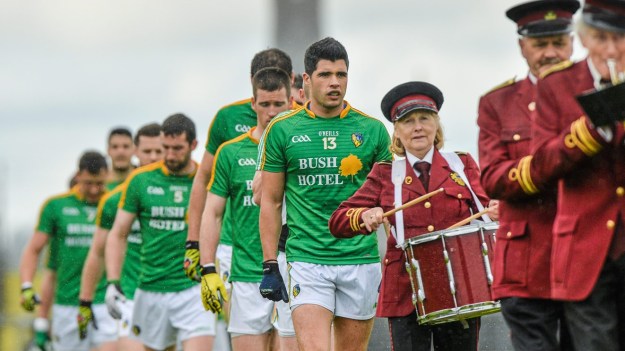
It is Championship day at last, Leitrim face Roscommon in Pairc Sean Mac Diarmada, Carrick-on-Shannon this afternoon. The result is a foregone conclusion of course; Roscommon are flying high and have cemented their place in Division One of the National League. They have enjoyed considerable success at Underage level in the last decade so that every year their squad is replenished with fresh and exciting talent. Their forward line in particular is one of the most potent in the Country. The Smiths, Creggs, Murtaghs, Shines and Senan Kilbride would walk on to any County panel. Off the field they have ‘Club Rossie’ one of the most industrious fundraising vehicles in the Country. If you want to compete at inter-county level you need money and lots of it. Roscommon has also produced good club teams that have competed well with Roscommon Gaels, Clann na Gael and St. Brigids going all the way to Croker on St. Patricks Day. No Leitrim club has ever even won a Provincial Club championship (a few near misses granted).

Roscommon has roughly twice the population of Leitrim who languish at the bottom of Division 4 of the National League, propped up by London and Waterford only. If Roscommon are dining at the top table, Leitrim is living on the proverbial scraps. The recession has hit the County hard and many of its finest footballers are now living in Perth or Yonkers. Many Counties have the same problem but those with a small pool of plyers to begin with are feeling it harder. Every year it seems Leitrim have to rebuild their panel. In recent years the Club County Champions have suffered heavy defeats in the Championship. Very few of the top players live in the County and this internal migration to the East Coast is more pronounced than those that move abroad. Why there is a rivalry at all between these two Counties is bizarre? Or is it?

North Roscommon has similar economic problems to Leitrim. It too has declining towns and villages, ageing populations and lack of employment opportunities. The Population of Roscommon is steadily shifting further south and towards Athlone and Monksland. Many of the Clubs in the North of the County compete at Junior or Intermediate level.

Throughout the 50’ and up to the late 1970’s many of the people of North End of Roscommon met their spouses in the Mayflower, a Ballroom in Drumshanbo, whilst many people from South Leitrim found love in the Cloudland in Rooskey. I am the product of one of these unions and my mother still retains her ‘Rossie’ accent and will be hoping the ‘primrose and blue’ prevail today; weight of numbers prevents her from expressing these views too vocally. In more recent decades many inter-county liasions occurred in places like Cartown House, Club 360 or Murtaghs. Many of the children of North Roscommon are educated in Leitrim in places like Carrick Community College and the Vocational School in Drumshanbo. Leitrim have enjoyed regular success with their Senior Vocational School team which is often backed by players from Roscommon clubs like Kilmore, Shannon Gaels, St. Michaels and St. Ronans. In 1983 and ’84 Leitrim won All-Ireland ‘C’ underage hurling titles with many players from Elphin and Shannon Gaels. Children from Bornacoola go to the school across the bridge in Rooskey village. Gene Bohan the mercurial Leitrim forward of the 90’s went to school in Dangan NS in the parish of Kilmore. Many children in Cortober go to school across the other Bridge in Carrick. They meet their friends in the Cinema at the weekend (its on the Roscommon side) or go to the Gym and Swimming pool (on the Leitrim side). Also in Carrick Lidl chose to build on the Roscommon side and Aldi on the Leitrim side – perfectly understandable when you note the colours in Lidl’s branding. Mass-goers in Carrick who like a Sunday morning lie in will trot across the Bridge at Noon to catch Mass in the Patrician Hall. Carrick Town FC play their home games at the Showgrounds – that’s in Roscommon too. In the disastrous Shannon Floods of 2009 it was Leitrim County Council who was first on the scene to help the traders in Cortober with sandbags and pumps.

Some years ago I was socialising in Carrick but across the Bridge in Roscommon in the landmark ‘Gings’ pub. I was with a friend of mine from Carrigallen which is on the Leitrim Cavan border. My mate was home from the States and his ‘Carry Gallon’ accent had not being diminished by his exposure to Uncle Sam. This accent is prevalent all along the Cavan Border from Aughavas to Corraleahan with softer versions of it in places like Aughnasheelin and Ballinamore. Most people familiar will note the preponderance for concluding all sentences with the word ‘lad’. We were out on a balcony overlooking the Shannon and were joined by a young chatty man. The conversation flowed and I asked him was he heading to the Niteclub (Leitrim side) later. ‘No’ he replied adding that he didn’t want to go over the bridge to ‘that crowd’ (all expletives removed in case you are reading before the watershed). Being of sound mind and thick of skin I decided to draw the young lad out a bit more. He then muttered a few more unkind words about Leitrim folk. As we were departing he told us to ‘watch them now’.

The young lad’s views didn’t bother me, one could meet exactly the same attitude from a young Leitrim lad in a hostelry on the other side of the River. Much of this talk is simply banter. What was remarkable though was that the young Rossie did not associate our accents with us being from Leitrim. If we were from Kinlough he would have presumed we were from Donegal and if we were from Gortlettragh we might have a midlands twang and he’d think us from Longford. It begged the question though;  is there a linguistic divide between the Counties? Most linguists acknowledge that linguistic and dialectical patterns are notorious for not following geographical and political boundaries yet DeGruyter found in comparing Gaelic patterns of speech in Ulster and Connacht, Leitrim speakers consistently followed their northern neighbours.

My interaction with the young lad in Gings led me to conclude that his views were formed by his interaction with people in his immediate hinterland who go to the same Shops. Churches and Schools, who swim in the same swimming pool, go to the same conema, read the same local paper but just happen to live on the other side of a relatively narrow river. His constructed view of ‘Leitrim’ was really just his view of Carrick-on-Shannon. He never associated our accents as being from Leitrim at all. But maybe I too was looking at things too narrowly? Are there any real historical differences between Leitrim people and their Rossie neighbours?

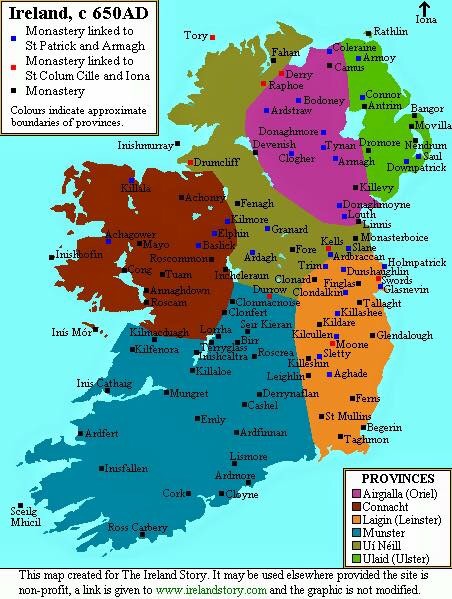
I believe there is evidence of divisions, they are deep and might go back millennia. Leitrim is in the Province of Connacht and it is common when talking about the Province to reference it as being west of the Shannon. But the people of Leitrim live North and North East of the River Shannon. It is the rest of Connacht that must cross the Shannon to come to Leitrim! Immediately Leitrim is geographically distinct from the rest of the Province. Natural boundaries like Rivers can become political boundaries also.  With such boundaries it is important to secure weak places such as shallows which can be easily forded. Such a place exists between the villages of Drumsna and Jamestown where there is a sharp loop in the river. The Doon of Drumsna was constructed here. The Doon is an Iron Age Ditch and is one of the oldest artificial man-made structures in the world. It contains an earth and stone wall which stretches across the peninsula created by the loop. It is estimated that it would have taken 10,000 men two years to build with half a million tonnes of soil and about 60,000 trees. The Doon is built entrirely in Co. Roscommon and was obviously built to defend against attack from the northern neighbours on the other side of the river. The Doon marks the boundary between the ancient Kingdoms of Connacht and Ulster. Such a mammoth Undertaking must have been justified.

 So are Leitrim people really Ulster folk in disguise? This would be the makings of another blog post but for now I would simply argue that yes they are.

In early medieval times Roscommon was dominated by the O’Connors and Leitrim was the seat of the O’Rourkes of Breifne. These clans skirmished a lot. The O’Connors never could fully rely on the O’Rourkes who often backed the Northern Ui Neill in conflict. Cattle raiding was common. If the men of Breffni got back across the river and up into the Mountains they  could enjoy their steak unmolested. Occasionally counter raids by the Rossies (called a ‘Hosting’ in those days) would yield fruitful rewards too. This may be the source of the modern accusations of sheep stealing and other depravities levelled by rival supporters.

In the 1790’s thousands of people were forced to leave their homes in Ulster after sectarian atrocities there. The Battle of the Diamond took place near Loughgall in 1795 between rival gangs of Protestants and Catholics which led to the setting up of the Orange Order. The persecution of Catholics by Protestant gangs calling themselves ‘Peep-o’-Day Boys’ intensified. One contemporary account states;-

“Any of us that are Catholic here are not sure of going to bed that we shall get up with our lives, either by day or night. It is not safe to go outside the doors here. The Orangemen go out uninterrupted and the gentlemen of the country do not interfere with them but I have reason to think encourage them in their wickedness…The Orangemen go out in large bodies by day and night and plunder the poor Catholics of everything they have, even the webs of linen out of their looms…

Any of the Catholics they do not wish to destroy, they give two or three days notice to clear out of the place by pasting papers on their doors, on which is written “Go to hell or to Connaught”. If you do not, we are all haters of the papists, and we will destroy you.”

John Shortt 1796

It is believed that in 1795 alone over 7,000 people were expelled from Armagh. A large amount of these refugees found sanctuary in Leitrim and North Longford and West Cavan. The land wasn’t great but they were safe. These people were the Ultachs and they are the ancestors of many Leitrim people. Ultach surnames include McHugh, Quinn, Gallogly, Gilhooley, O,Neill, McEneaney, McGoohan, McGahern, McCartin, McKiernan, McWeeney, Maguire, Clarke, Shortt, Cafferty, McCaffrey, O’Doherty, McNulty and Mulligan to name a few. Many of these names have appeared on a Leitrim Team Sheet over the years and today is no different.

Even the topography of the Counties are vastly different, the soil in Leitrim is generally poor with a few pockets of good land, in Roscommon the soil is generally good with a few pockets of poor land. Leitrim is mountainous and Roscommon is flat (Arigna excepted). DBC Pierre once described Leitrim as follows –  “It was a landscape from a dream, unmanicured, informal, raffish and intimate in its beauty, changing textures all the time. If Kew Gardens were the grand salon of a mansion, this would be its teenager’s bedroom.”

So maybe despite some romantic dalliances between the opposite sexes and opposite sides of the River this century there really are inherent historical, cultural and dialectical divisions between the Counties; this coupled with proximity has contributed to a long and sustained rivalry. It is generally though a friendly rivalry with well-defined roles, Leitrim always the perennial underdogs but resilient enough to cause a shock every now and again.

Roscommon will be very confident of a win today, their supporters will be cocky, surely, surely Leitrim cannot upstage them! It is unlikely, these teams are operating in different company these days but there is nothing like a local derby to narrow the odds of what would be the upset of the summer. Leitrim will give it their best shot. If we lose we won’t dwell on it, we’ll all be at work in the morning and life will go on for us. We don’t want any pity or sympathy from Sunday game panellists, a few more quid from Croke Park to help our clubs would be helpful. Despite the bare trophy cabinet we are proud to be part of a wider GAA community. For us the GAA is more than just silver ware, it is our identity, it is what we are. We might be small in numbers but we will keep at it and every now and then we will get our small victories and they will sustain us until the next one. We thrive on boxing above our weight. Perhaps this is what some commentators don’t get. Yes we are realists, yes the odds are stacked against us but we are still in it to win. Why else would we persevere at it?

Cul campsDespite the long odds those of us who travel to Carrick today do so in hope. Our grounds are named after our native son, Sean Mac Diarmada, a man crippled by polio but not by defeat. He knew his legacy would be strong and would last. In many ways our teams are like this and though victory may not be our lot we know there is a bigger picture. This is why every Saturday morning at 10.30 am our club grounds are full children learning the basic skills of the game that defines our culture. As long as those kids keep coming through the gates in places like Glenfarne, Aughnasheelin, Drumreilly and Dromahaire our identity is secure. The result today won’t alter that, win, lose or draw. Liathroim Abu!
 

Alas and well may Erin weep 

  All-Ireland victory speeches tend to follow a template for some reason. The “Tá an athas orm an Corn seo a Bhua” followed by three “Hip Hip Hurrahs” for the losing team. It’s an archaic, regimental and pretty boring climax to a summer of action.

This is why the 1980 victory speech in the aftermath of Galway’s win in the All-Ireland Hurling final is so memorable. For a start it was a special day for the Tribesmen as they finally got their hands on the Liam  McCarthy Cup after a lengthy absence (one previous win in 1923). The speech is most memorable because of the beautiful blás of Joe Connolly’s Irish followed by his witty homage to Pope John Paul II “Young People of Ireland” speech from the previous year in Ballybrit Racecourse.

But the abiding memory of those glorious few minutes up those golden steps of the Hogan Stand is when Joe McDonagh sang his customised version of “The Wests Awake” to the ecstatic crowd.  It is a beautiful moment that continues to resonate in the hearts of all people from the West of Ireland, not just Galway. It is a moment that has a rawness, a purity of emotion. 

There will be long obituaries written about Joe McDonagh elsewhere – he achieved a lot in life, in sport as a player and official, as an educator and a family man. For many like me, people who never even met him in person, he shall remain the man who took up a microphone and sang to a stadium and to Irish people ‘away o’er the water, away o’er the foam’. It is estimated that a crowd of 8,000 was in Gaelic Park in the Bronx watching and listening, not to mention the thousands gathered around radios all over the the world.  

In his impromptu performance McDonagh proclaimed that the people of the West, the people who faced the most adversity and the highest emigration, were as good as the rest and even better. 

Rest in Peace Joe McDonagh, the man who awoke the passion in his people, sending them back to their homes and into workplaces, their chests puffed out with pride, shoulders back and a purpose to their gait. 

Bealtaine – Bonfires and Primroses

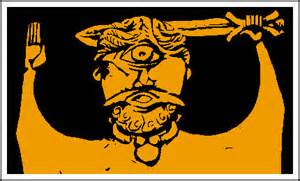
Celtic Sun GodBealtaine heralds the beginning of Summer in the Celtic Calendar. This is traditionally the half way point between the Spring Equinox and the Summer Solstice thus linked to the one of the quarter points in the Earth’s navigation around the Sun. Of course our ancestors may not have known about such matters. They were however keen enough observers of the seasons and the sky above them to appreciate the significance of this time of year. Bealtaine is also used in Modern Gaelic to refer to the entire month of May.

The Celts believed that at this time of year the little people and spirits were particularly active, just like at Samhain. As they moved their cattle out to summer pastures and sowed their crops the people also paid homage to the spirits, and especially the Sun God Bel, praying that he would protect their livestock and bring a good harvest.

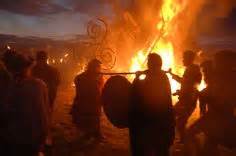
Hill of UisneachBealtaine and Samhain (Haloween) are also associated with the lighting of bonfires. One of the most important ritual sites was the Hill of Uisneach in Co. Westmeath. Uisneach was deemed to be the centre of Ireland physically and spiritually, and therefore symbolic as the navel of the country. Although the Hill of Uisneach is not exactly a big Hill (596ft above sea level) from its summit you can enjoy a panoramic view that stretches to all corners of Ireland. It was said that on Bealtaine all the fires and hearths in the land were extinguished. Once the fire was lit at Uisenach it could be seen far and wide and this signalled that the fires elsewhere could be lit again. The short period of darkness was believed to have purified the land. It is also said that the God Lugh drowned in the small lake near the summit of Uisneach. Lugh gives his name to the Festival of Lughnasa held on 1st August and which heralds in the harvest season (first fruits).

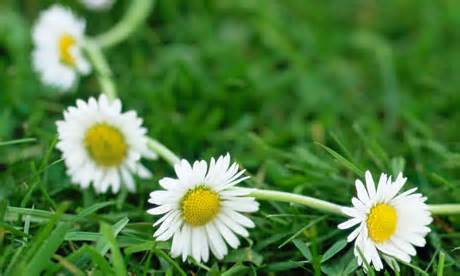
daisy chainWhen I was growing up in Leitrim the tradition of placing flowers at doorways was still very common. We would pick primroses the night before May Day and lay them at our door and that of our grandparents. We also placed the flowers on windowsills. Sometimes the flowers were even placed in the byres and cattle sheds. Often garlands were made of the buttercups and primroses. I don’t know if the yellow colour of the flowers might have mirrored that of the sun? This custom has echoes around Europe and across many cultures..

There were many other customs on May Day too. It was the only day that the ashes weren’t put out of the house. This was for fear of giving away the luck of the house. If a neighbour called for milk or butter they were likely to go away empty handed for the same reason. Although some less superstitious people might give away milk or butter they would still take the precaution of throwing a bit of salt in it before it left the house.

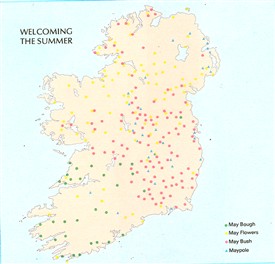
May Customs MapI don’t ever recalling any history of dancing around a maypole but understand it was common in some parts of the Country. It is likely this tradition was imported from England in from the late medieval period on and therefore is more common in Leinster and the North East being the area first occupied. In the Midlands and Leinster however there is also a tradition of decorating the ‘May Bush’ usually a hawthorn. People place ribbons, streamers and pieces of clothing on the bush and it would ward off evil and bring good luck to the household.

Prior to the Land Acts the 1st May was also noted as one of the ‘Gale days’ when tenant farmers paid half of their yearly rent to their landlord. The second payment was due on the 1st November.  

Another recollection of my youth is of my Grandmother scolding me for taking off my jumper, on the grounds that I shouldn’t shed my ‘Geansai’ until after May Day. There was of course genuine wisdom behind this. We often have nice warm days coming up to May but the nights tended to be cool, perfect for picking up colds and coughs.

As I walked the promenade at Dun Laoghaire yesterday afternoon, I realised that although many customs are falling away, there were still plenty of sun worshippers to be had in modern Ireland. Bel would be appeased.

Boxty – staple of rural Irish Life

Boxty

Boxty on the griddle, boxty on the pan, If you can’t bake boxty sure you’ll never get a man

Leitrim and West Cavan is the traditional home of Boxty but the potato based dish is also popular in some districts of Counties Longford, Roscommon, Monaghan and Sligo. When I was growing up the Parish most associated with the traditional homemade dish was Cloone. Cloone is set in the heart of the Drumlins of South Leitrim. On and off the football field the men (and sometimes the women) of Cloone were regularly called ‘The Boxties’, hardly a derogatory moniker to have. They always seemed to take the field looking well fed unlike some of the poor undernourished townies.

It is important to kill a commonly held belief – Boxty is not the same as Potato Bread, they are distinct dishes and not alternatives of each other. The origins of the word Boxty is obviously through the Gaelic. It could be simply that it was a dish of the ordinary folk and so Boxty may derive from Bocht Tí (poor house) od Bácus (baking house). Boxty has undergone somewhat of a renaissance in recent decades. Leitrim native Ronan McGreevy is a man that should know a thing or two about Boxty and uses it a a metaphor for the huge potential of the Upper Shannon region.

http://www.irishtimes.com/life-and-style/boxty-a-metaphor-for-huge-potential-of-shannon-erne-region-1.1911047

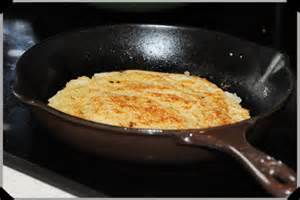
My Grandmother and mother were both great exponents of the art of making Boxty. It sounds quite simple on paper – grate your potatoes, add the flour, whisk egg and milk, add salt and pepper to season. But the debates about how much flour, what type of potato, what type of milk, one egg or two rage on. It might seem a simple recipe but some people became known for making great boxty whilst others suffered the ignominy of having leftovers on their plates. I once heard of a man who was offered payment of Boxty for work done. The quick thinking tradesman who knew the boxty wouldn’t reduce his bank loan, replied ‘sure my ould dog wouldn’t ate that stuff’, his retort having the double effect of combining stern refusal and stinging insult in one short statement. Whilst Boxty remains popular in rural Ireland it has never taken hold as legal tender.

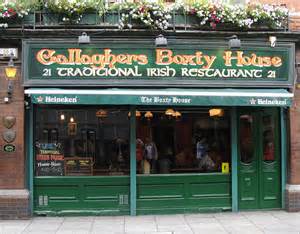
Gallaghers Boxty HouseIf you are in Dublin make sure to taste the traditional dish at Gallagher’s Boxty House in Temple Bar. The founders are natives of Mohill, Co. Leitrim and no doubt found their inspiration from growing up and visiting the small outlying farms where their late father was the local Vet or ‘quack’. The staple of many of these farmhouses was the humble spud, which was utilised in many ways but none tastier than Boxty. It is no surprise then that the Restaurants motto is “the humble spud made beautiful”. Check them out at www.boxtyhouse.ie or call to 20/21 Temple Bar, Dublin 2 and try dishes like the Chicken & Smoked Bacon Boxty – a Free-range Irish Chicken Fillet in a Creamy Smoked Bacon & Leek Sauce, wrapped in a traditional Leitrim Boxty Pancake, or maybe the Roasted Cauliflower, sautéed with Boxty Dumplings, Black Kale and Sweet Potato topped with freshly grated Gubbeen Cheese. My mouth is watering just typing that.
Victoria hall

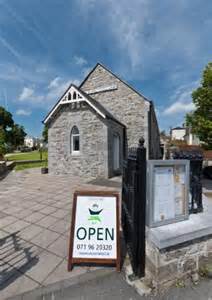
Another restaurant that has embraced Boxty is Victoria Hall in Carrick-on-Shannon, the County town. This restaurant is located in a restored Parish Hall and it serves an eclectic mix of Irish and Thai cuisine. Nowhere is the fusion more evident than in the speciality Boxty wraps which have Thai Beef, Chicken Sate, Tofu, Vegetable and Sweet and Sour Duck fillings. You can check their full menu out at http://www.victoriahall.ie/ or call to Quay Road, Carrick-on-Shannon beside the Rowing Club (incidentally the oldest Rowing Club in Ireland).

There are several local manufacturers of Boxty in Leitrim and perhaps the best known are Dromod Boxty Limited www.dromodboxty.ie and McNiffses Boxty from outside Ballinamore.

I’ll now relate a story about a Leitrim mother whose first born son had started in College in the early nineties. The son was not one for writing or telephoning too often which was the source of great anxiety for his poor mother. Those under forty will note that mobile phones, texting and skype were tools not available to the homesick student or anxious mother in those days. This particular College boy would simply arrive home on a Friday evening or Saturday morning with a bag of dirty washing and deposit it just inside the front door. He would depart again on Sunday after a weekend of Pints, Gaa and pilfering his mother’s kitchen of any luxury foodstuffs.

One weekend this perfect son didn’t arrive home on the Friday evening nor did he show up the following morning. By lunchtime the mother was becoming frantic with worry. What could have become of him? Did somebody put something in his drink? Had he fallen in with some jezebel? Her mind was racing and nothing would do her only conscript the next born son to drive her to the City. Her mission was to rescue her dear boy from whatever calamity had befallen him. Two hours later the search party pulled up outside the house where the missing messiah was lodging. The mother rang the doorbell but the wires sticking out from the wall suggested it hadn’t rung in some time. There was a key in the lock so the second son turned it and entered the house. He knocked on the half-opened sitting room door and was greeted by a sighful “Yeah?” He entered the room and found four burly lads stretched out across two armchairs and a sofa. They looked in good fettle as they were watching Baywatch. “Is himself here?” asked the second son “out in the kitchen” said the spokesperson for the gang of four.

The anxious mother and her chauffeur walked towards the Kitchen, the former in trepidation. She needn’t have worried. When they opened the door what greeted them was the Prodigal Son industriously engrossed in work. A five kilo bag of roosters sat on the dining table. He was busy at the sink grating spuds into a basin, a silk cut cigarette in his mouth with an inch long ash hovering precariously over the food mix. Meanwhile a pan was going strong on the gas cooker. A neatly made pan of Boxty was nearing completion, already turned, its top-side nicely browned in that distinct mottled colouring. It took a few minutes for the chef to realise he had company. ‘Pearl Jam’ was belting out loud. When he did notice the pair it was difficult to say who was the most surprised. The mother pretended that they were just up anyway and “said we’d call over” and no she wasn’t a bit worried. Of course his lame excuse about the payphone down the road being out of order was accepted in good faith by the doting mother. He told her he was doing well on his course and was getting “a hang of the Physics” but what made her more content was the sight of her manly son, out in the big bad World, fending for himself. Contentedly she thought the journey to see him was worth it, when he could make his own Boxty, he’d surely never starve.

The Ship that bombed its birthplace

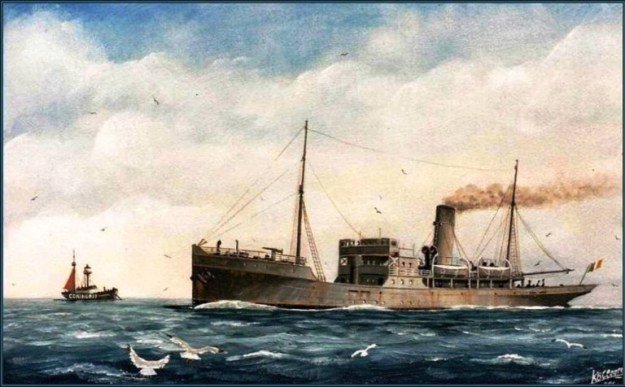
muirchu (1)On Wednesday morning of Easter Rising week the British began in earnest the counter-attack to retake the City of Dublin. Artillery was brought up from Athlone and the gunship the ‘Helga’ was brought up the Liffey from its moorings in nearby Kingstown. Not long after the ‘Helga’ anchored in the Liffey at dawn, it began to target the buildings controlled by the rebels using artillery and incendiary shells to devastating effect. The gunship initially took up a position near the Custom House. De Valera seems to have obtained a brief relief from the barrage by hoisting a tricolour atop an empty distillery adjacent the Boland’s Mills and fooling the gunners as to the location of his garrison.

Over the coming days the ‘Helga’ assisted by additional field artillery firing from the Prussia Street and Phibsboro areas pummelled the city centre. Liberty Hall was quickly destroyed. Ironically the gunners had to take great care in firing as with the low elevation of the building and the location of the Railway bridge (Tara Street bridge) if the shells missed they would have travelled as far as the Phoenix Park. It is said that this actually happened with some shells landing near the Vicregal lodge and forcing the Helga to relocate further up the quays.

Soon the GPO and many buildings in Sackville Street and nearby were in flames. The remaining days of the rebellion would be a cauldron of smoke, flame and cordite for the rebels. Once the Helga began steaming up the Liffey the end was in sight for the Easter Rising in central Dublin. Soon they would have to abandon their posts and eventually surrender. It seems the rebels thought that the British would not destroy the economic heart of the second city of the Empire. In this they were very much mistaken. The majority of the action in the Rising, with some notable exceptions, was defined by sniper fire and artillery shells, rather than hand to hand fighting. The tragic result was more civilian casualties than combatants.

It was ironic then that a gunboat built in the City of Dublin and designed for the protection of Irish coastal waters would inflict so much damage on her home city. 

The Helga ll was built in Liffey Dockyard in 1908 and its principal function lay as a fishery protection yacht under a wing of the Department of Agriculture. With the onset of the Great War she was taken over by the Admiralty converted to an armed steam yacht and became known as  “H.M.Y. Helga”. She patrolled the Irish Sea looking for enemy submarines.

Post 1916

In April 1918 The Helga was credited with the sinking of a submarine off the Isle of Man.

In October 1918 she was one of the first ships to the scene of the sinking RMS Leinster off the Kish Light. The Helga managed to save over 90 passengers but in total 600 people lost their lives that night. She was later used to transport troops in the War of Independence and reputedly the infamous Black and Tans. This was at a time when large troop movements were not possible due to risk of ambush or mines.

After the Truce the “Helga” was handed over to the Irish Free State and was renamed “Muirchu” or Sea Hound. She resumed her life as a fishery patrol vessel before seeing service again during the ‘Emergency’ as the Second World War is known as in Ireland.  In 1947 the “Muirchu” was sold to Hammond Lane Foundry for scrap. It seems the ship didn’t agree with her fate and while on her final passage on the 8th May, 1947 she sank off the Saltee Islands but without loss of life.It is also ironic that as she sank beneath the waves she bore the flag she had tried to destroy.


‘Nipper’ Geelan and the ‘Yankee’ invasion

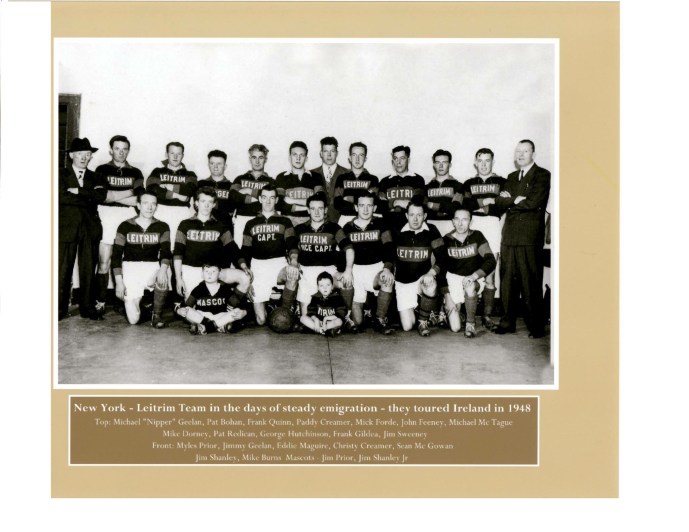
01c42ca9c458cf9c228d6e8222633a676511f84816On Sunday the 8th of August 1948 it was standing room only at St. Manachans Park, Mohill, County Leitrim. The grounds were by now the premier football ground in the County since their opening in 1939. They hosted many inter-county games and County Finals but this day saw an unusual pairing. It was a game that captured the imagination of all Leitrim Gaels, home and abroad.  The crowd was estimated at in excess of 8,000. The reason, the visit of the Leitrim Club from New York, led by their mercurial Manager and Mohill native, Michael ‘Nipper’ Geelan.

Geelan had been a star player with his native Mohill and lined out for the County at Junior and Senior level whilst still in his teens. His nickname apparently arose when a Galway mentor enquired from a local who was the ‘Nipper’ playing havoc in the full forward line. Geelan was born in Laheenamona in 1901 where his father, a native of Cashel in Bornacoola had settled. Whilst the Nipper is probably better known for his on field exploits he was also a member of Fianna Eireann and later of  ‘A’ Company, 3rd Battalion, Leitrim Brigade of the Old IRA. He debuted for Mohill at the age of 15 and played for Leitrim from 1921. He was a regular until in the spring of 1926 he decided to emigrate to New York. He teamed up with many Leitrim emigrants and helped get the club competing for the New York Championship then dominated by the famous Tipperary Club. One of the great GAA organisers at the time was another Mohill native, John McGuinness of Tulrusk/Drumhanny. McGuinness was formerly Leitrim County Board Chairman who was elected to the same position in New York in 1932, a rare achievement. Had Nipper Geelan not emigrated when he did it is certain that he would have been part of the Connacht Championship winning team of 1927.

In 1932 the Leitrim Club won the New York Championship with a talented team that included Eddie Maguire, uncle of Packy McGarty. Commentators thought that this was a team that would go on and dominate the club scene in the Big Apple. Sadly the effects of the Great Depression and tighter immigration laws saw the club began to flounder. Starved of fresh blood off the boat the club folded.  It was not until after the end of the Second World War that a group of Leitrim exiles got together and started to put in action a plan to reform the club. The GAA was beginning a revival and the next few years were a golden period in North America. In 1947 the All-Ireland was played in the Polo Grounds, the only time it was every played outside of these shore.

‘Nipper’ Geelan also coached a successful minor team called Incarnation. At the time the underage structure in New York saw many teams associated with their local church. Incarnation was a team attached to the Church of the Incarnation on 175th St which drew its players from the Irish communities of Inwood and Washington Heights. The star of this minor team and future star with Leitrim and New York was a young Jimmy Geelan, the Nippers own Nipper so to speak. 1947 saw the Leitrim play for the first time in fourteen years. The Nipper even managed to get some game time at 46 years of age when he lined out against Down alongside his son Jimmy, the match report said that “the younger Geelan is certainly following in his after his father’s footsteps and in a few short years will be competent enough to compete with the best in the division.”

The Leitrim Club were also active off the field; the Irish Echo reported that a Dance would be held in Croke Park Pavilion (Gaelic Park) on the 2nd August 1947, where the musical entertainment was provided by “May Rowley of West 161st St, a recent arrival from Mohill, Leitrim, an accomplished pianist and soprano as well as being very easy on the eyes”. 

It is not known when the trip back to Ireland was first planned but the plan was widely known by December 1947 when the Club held its annual dinner dance in the Dauphin Hotel. All through winter and spring the fundraising continued. Geelan was in bullish form ahead of the Tour, telling one reporter ‘We’ll lick any team in the old sod’.

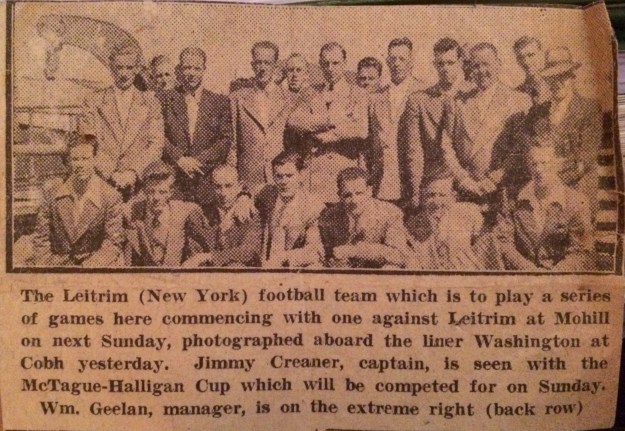
The Leitrim team sailed for Ireland in July 1948 aboard the SS Washington and docked at Cobh on the 1st August where they were met by Secretary of the County Board, Michael Reynolds NT and other officials. After settling into their lodgings in the County Hotel, Carrick-on-Shannon the team headed to Manorhamilton where they drew 2-5 each with a North Leitrim selection. Sean McGowan from Cloonturk scored 2-1 for the visitors in an exciting game. The team also paid a visit to Kiltyclogher where a crowd of 1,000 people saw Geelan lay a wreath at the Sean MacDiarmada memorial.

016b07a8d2d669651d25f838c4b6d5694990d19417_00001

The following night the County Board met to finalise arrangements for the big game in Mohill. The following stewards were requested to report at Mohill Park at 1.00pm ‘L. Moran, Robert Moran, Billy McGowan, J. Flynn, J. Gordon, James Canning , Charles Kilkenny, Charles Keegan, Sean Reynolds and Patrick McCrann’ and from Gortltlettragh ‘P. Reynolds, C. Reynolds, J. Milton, J. Booth and P. Gannon;  Bornacoola – T. Aherne, Michael McGowan, H. O’Brien, P. Greene, Bert Faughnan and J. Notley; Shannon Gaels – McNally, McGuinness, Newton and two from Carrick-on-Shannon; Aughavas – Carroll and Reynolds’.

Meanwhile Geelan took time out to write a telegram to John ‘Lefty’ Devine the GAA correspondent with the ‘Irish Advocate’ in New York. It read-

County Hotel
Carrick-on-Shannon
Co. Leitrim                                                                                          August 4th 1948

 Dear Lefty,

 A short line to let you know we are having a wonderful time here. Also to apologise for not getting a wire to you in time for Croke (Gaelic) Park. Communications are not the best in Leitrim. Of course you have already heard we tied our first game against a good selction from North Leitrim.

 On behalf of the team I again want to thank you and also please convey again my thanks to John (Kerry) O’Donnell for the inspiring support he gave us. Its men like O’Donnell that make it easier for us all to keep the Gaelic games alive. I did not forget the ball for Jacky. I may not be able to get the shoes as they seem to be very scarce in Ireland. I am enclosing a few cuttings and will forward more as time goes on. Incidentally the score was 2 gl. 5 pt to 2 gl. 5 pt, McGowan 2 gl. 1 pt, Brennan 4 pt. Regards to Mrs. Devine.

Sincerely yours,

 “Nipper” Geelan

Manager of the touring Leitrim Club.

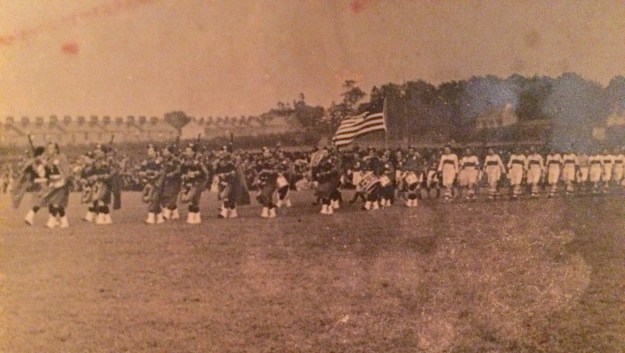
A few days later the scene was set for a grand homecoming for Nipper in his home town where his exiles would face the full Leitrim team. The town was buzzing from early in the day. Two fife and drum bands led the teams out to a wall of applause and excitement. Dan O’Rourke, the President of the GAA was even in attendance. The game was refereed by Peter O’Rourke, Tully (Carrigallen) who was also the Chairman of the Leitrim County Board. Canon Masterson threw the ball in and a rip-roaring game ensued. Jimmy Geelan, still a minor was amongst the scorers. Leo McAlinden was the star of the home team. The final score was a draw, 2-3 each and everyone thought it a fair result. It can be well imagined that the celebrations went on well into the night around the town.

The tour continued the following week and entered its most controversial phase. The team was scheduled to play Armagh in Davitt Park, Lurgan on the 15th August. The team cars proceeded to Lurgan on the Saturday night festooned with Tricolours and Stars and Stripes. Some of the cars and players were attacked and attempts made to grab the ‘Free State’ flags but the game proceeded before a crowd of 4,000. The exiles lost 1-6 to 0-5 but gave a good account of themselves against an Armagh team who were preparing for the All-Ireland Junior final. In press reports mention was made of the American’s ‘forceful’ and ‘unorthodox tackling style’. On the way back to Leitrim the team played an exhibition game in Garrison against a Fermanagh select. Thus the touring party achieved one of Geelan’s aims by playing in the ‘occupied part of the country’.

01fa9488393ee9be1acdbaa3e5aeef0b410de7190a

Armagh v Leitrim New York Team at Lurgan

Geelan wasn’t prepared to let the roughing up of his team of US Citizens in Lurgan go and wrote to the American Consulate in Belfast. He received a polite and courteous reply which reminded him that –

‘the United States government does not wish its nationals to take part in political affairs or events in foreign countries. When American Citizens acquire allegiance to the United States it is intended that they shall give up all allegiance to any other country. Failure to do so certainly impairs the right of this individuals to claim the protection of the United States Government while abroad’.

In other words one cannot claim the benefits or protections of US Citizenship when attacked whilst flying the flag of another nation. Geelans reaction is not recorded but can be surmised.

The final game of the tour was against the Dublin club St. Caillins, recently formed in the Capital and made up primarily of Leitrim players. The game was played in Fenagh but the result is unknown. There then followed a reception and dinner held at the Vocational School in Mohill (then ‘the Castle’ former residence of the Crofton family). Peter O’Rourke, Chairman of the County Board proposed a toast to the exiles saying that ‘they gave a very fine display’ and he hoped that their visit would be ‘an encouragement to the younger generation of Leitrim to go ahead and win an All-Ireland’.

The Exiles were then presented with miniature shields sponsored by the Connacht Council, silver medals from the County Board and cigarette cases from the Armagh County Board. Nipper Geelan presented the County Board with a special gold cup, the McTague-Galligan Cup which was played for in the drawn game earlier. The Cup was subsequently presented to the winner of the Leitrim Senior Championship until the onset of the current Fenagh Cup. Finally a farewell dance for the travelling party was held in the ballroom at Fenaghville.

The tour was undoubtedly a success on the field. The Leitrim Club were subsequently unlucky to lose two New York Finals in 1948 and ’49. The ‘Irish Advocate’ concluded ‘perhaps the greatest feat in the history of the local Leitrim Combination was made when they decided to sponsor a tour to Ireland, where they made a meritable showing against men of experience and full training. They were happy to record the fact that seven native born American boys were included in their line-up of players which gives them the right to say that Leitrim was the first to ever send back to the old sod the lads who learned the fine points of the game on the sidewalks of New York’.

However the tour did leave considerable debt and ultimately nearly sank the club. By the end of 1950 the club had lost over 22 players and had to rebuild again. One of the casualties was ‘Nipper’ Geelan himself who was uncompromising in defending the Tour against detractors. The Nipper left and was soon involved in coaching teams such as Kildare and Tyrone. The Leitrim club did recover though and one of its proudest days came when they won the 1958 New York Championship. One of the stars of the team was the now veteran Jimmy Geelan. The younger Geelan had already represented the New York Senior team that won the National League in 1950, defeating Cavan. “Nipper” Geelan had plenty more good days in football. He trained the New York Senior Teams from 1955 to 1963 in what was a hugely successful period for the exiles. He even trained a New York team that played In Wembley. In 1968 he was honoured by the New York Association for a lifetime of service. He passed away suddenly in December 1974.

Whatever about the financial success of the 1948 Tour it had a hugely positive effect on people throughout Leitrim. Emigration had tended to be one way traffic but this team in their bright suits and New York tans must have seemed a little exotic in a place where war rationing was still the norm. The highlight of the tour was undoubtedly the game in Mohill and its record attendance. It must surely have been one of the proudest moments of Michael ‘Nipper’ Geelan’s career.

0165992e6f3bbb33d75c672ba2a25be435202ce669_00001


When Good Friday fell on Easter Monday

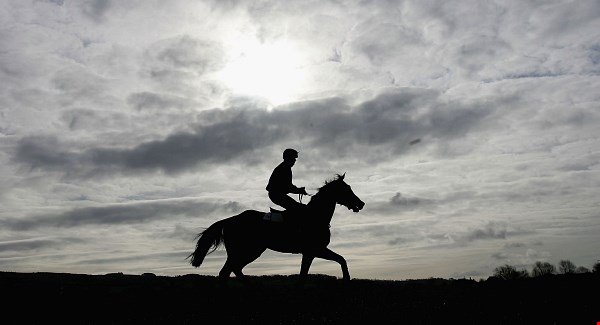
It is a question that is sure to get all trivia lovers animated; ‘When did Good Friday fall on Easter Monday?’ The answer, or one of the many answers, is of course that ‘Good Friday’ was a horse and his fall was at one of the many daunting ditches at the Irish Grand National. The famous race which celebrates its 156th anniversary this year is ran annually on Easter Monday at the Fairyhouse Racecourse in County Meath.

horseRacingSilhouette1_large

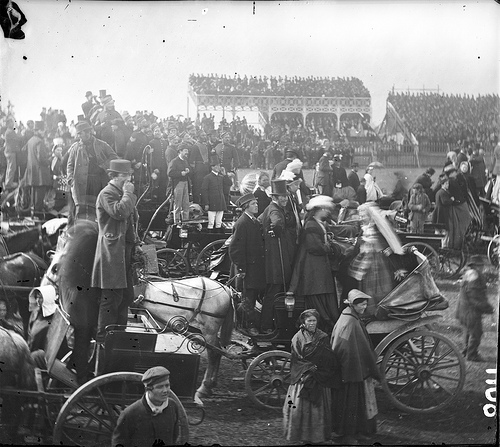
The proximity of the racecourse to the City of Dublin and its fall on the public holiday meant it has always been a popular race with the citizens of the Capital.  This was of course no different a century ago when thousands of people abandoned the City for the lush rolling green fields of Meath and the highlight of the Irish racing calendar.

The meeting was a break for the working classes and the higher echelons of Anglo-Irish society alike. In attendance would have been many British Army Officers and Tommies either form the Dublin or the Curragh garrisons or on furlough from the War. In fact for those on such leave the pageantry and gaiety of Fairyhouse must have been a welcome relief and escape from the horrors of modern trench warfare.

The Racecourse was also a mere twenty miles from the some of the finest Georgian squares and also the worst tenements in Europe. Fairyhouse was the ‘Dubs day out’ and the roads leading to the course would have been clogged with every mode of transport available motor car, omnibus, tram, bicycle, trap, carriage and sidecar not discounting those who would have made it there on foot.

Fairyhouse-Ratoath

No one present that day could have predicted that events unfolding back in the City would change the course of history for their country and define the relationship between these neighbouring Islands for the next century and beyond.

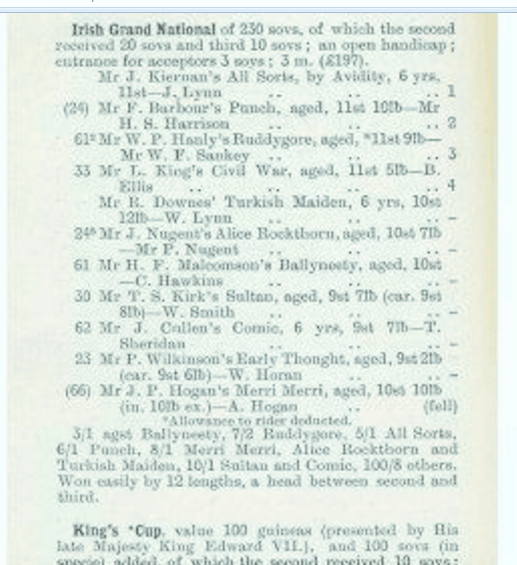
One man with more pressing things on his mind was a young jockey from Edgeworthstown, Co. Longford called Jackie Lynn. That day Jackie would be riding ‘All Sorts’ a horse owned by James Kiernan of Dysart Co. Westmeath and trained by Richard ‘Dick’ Cleary of Bishopstown House, Mullingar, Co. Westmeath. The betting had the midland horse at 5/1.

The Irish Field in its 22nd April edition carried a preview of the Grand National;

“The Irish Grand National should provide a most interesting race, for, even in the absence ‘Templedowney’ the competitors will be up the usual standard. The field may include two previous winners in ‘Civil War’ and ‘Punch’ but in the interval, the latter of these, who generally runs well on this course, has maintained his form the better”

The favourites for the race were ‘Ballyneety’ and  ‘Ruddygore’ but the preview did mention that “the better of the pair trained by Mr. R G Cleary, ‘All Sorts’ and ‘Turkish Maiden’, both of whom appear nicely handicapped, must have a big chance”. Because of the Rebellion the ‘Irish Field’ did not publish for several weeks but in its May 13th edition it does give an account of the race saying that the favourites floundered and the race was “reduced to a duel between ‘Punch’ and ‘All Sorts’ as they entered the straight. Over the last fence the favourite flattered, but when called upon ‘All Sorts’ quickly shook him off and in the end scored easily enough”.

The winner was described as follows:

“’All Sorts’ is not very much the matter in make or shape, but Mr. R G Cleary had him very workmanlike and well, and it is evident the improvement son of ‘Avidity’ was making last back end has been maintained (*he had won in Limerick in November 1915)

Whatever about his appearance ‘All Sorts’ had clearly ran the race of his life an cantered home winning by several lengths. Incidentally the 1914 winner with the apocryphal name ‘Civil War’ came in third.

By the time the meeting was coming to a close, word was spreading from the City that there were something serious afoot, graduating to confirmation that ‘Sinn Feiners’ had commandeered a number of prominent buildings and gunshots were heard. The atmosphere must have been tense and rife with rumour.

The military personnel present commandeered all available modes of transport and hurried back to their posts unsure of what was going on. The rest of the race goers, equally confused, had to make their way home on foot. Soon the railways were closed, a military measure to prevent more ‘rebels’ making their way to the city. The majority of racegoers were stranded in the Meath countryside and began to slowly drift away on foot.

The winner ‘All Sorts’ and his stable mate ‘Turkish Maiden’ who also ran in the main race, had to be walked home over 100km to the Bishopstown Stud.

Cleary was an interesting character. He had been a well-known jockey in his younger days and became a famous trainer and breeder in his own right. Shaun Spada and Serent Murphy who both won the Aintree Grand National came from the Bishopstown Stud. In 1895 he had bought Bishopstown House and developed it into a successful stud. His granddaughter Connie Cleary who will be attending at Fairyhouse tomorrow said her grandfather would later incur the wrath of the IRA, who attempted to assassinate him on two occasions. A story is also told that two armed men also made an attempt to shoot the national winning horse also. When asked where the horse was a quick thinking groom pointed the men to an old stallion and the men shot him instead.

Cleary would run for the National Party in the General Election in 1927 for the National League, a short lived party founded by Willie Redmond in 1926. The party supported the Anglo-Irish Treaty, and advocated a close relationship with the UK and a conservative fiscal policy. There was a bit of the old Irish Party about the short lived group who nevertheless won 8 seats in the June 1927 election.

Richard Cleary was not successful however in Longford-Westmeath but it does illustrate his Anglophile leanings and explain why he might clash with the local IRA members. Richard Cleary died on the 1st February 1937 and is buried in Walshetown Cemetery. He was 67 and left 10 children surviving.

http://www.census.nationalarchives.ie/pages/1911/Westmeath/Killare/Ballinaspick_or_Bishopstown/883544/

We shouldn’t forget the jockey, Jackie Lynn. He was born in Edgeworthstown in 1876 and sadly died of cancer in 1938 at the age of 52.

The family had its share of tragedy over the years and sets out starkly the dangers in horse racing particularly National Hunt. Jackie Lynn’s son Mickey was killed in a fall at Sandown Park on the 5th April 1955. He was a great horseman and predicted to be a champion jockey. Micky Lynn worked at Weyhill for Gerald Balding’s stable.

 “He had the perfect build for a jump jockey, he was intelligent and brave, and a brilliant all-round horseman who especially enjoyed riding all the difficult horses that no one else wanted to ride” (jockepedia)

It appears that in order to make the weight some jockeys forego the standard skull cap as their weight was included in the overall weight. Instead jockeys used headgear that looked like a skull-cap but might only have been made of cardboard or similar and offered no protection.

“In such headgear, Micky, then 23, took a dreadful fall at Sandown on April 5, 1955 in The Spring Handicap Chase. He landed headfirst, fracturing his skull. He never regained consciousness and died from his injuries two days later. A brilliant young talent and the life of a wonderful Christian young man had been snuffed out in an instant. The boy who would undoubtedly have become champion jockey was gone forever”

https://sites.google.com/site/jockeypedia/lynn-micky

Incidentally the Gerald Balding referred to above was the Grandfather of the Sport Presenter Clare Balding. Young Lynn was in good company at the Balding stables as he roomed with one Dick Francis, later to be the famous novelist.

Sadly another member of the family, Willy Lynn was also killed at Gowran Park in Kilkenny. Willys son also John Lynn was killed in a fall at Southwell on the 8th December, 1945.

John Lynn junior emigrated to the UK and promised his mother he would never become a jockey.  He went on to captain the London Gaelic Football team when they won a Junior All-Ireland title in 1956

Tomorrow the Ward Union Hunt will re-enact that famous 1916 Irish Grand National after this year’s race. John Lynn and Connie Cleary will both be present at the famous old racecourse where there Grandparents proudest day occurred 100 years ago, on the same day a certain Padraig Pearse cleared his throat and began to read the Proclamation from the steps of the GPO. Let us hope they won’t have to walk home this time.

2016-03-27