Author Archives: Tighearnan

‘JAZZING EVERY NIGHT OF THE WEEK’

8o years ago #Leitrim was not a hotbed of #Jazz. It still isn’t but for Jazz musicians it is now considered relatively safe to travel through the County.

Tighearnan's avatar'A River runs through it'

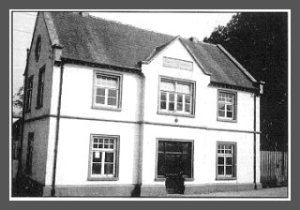
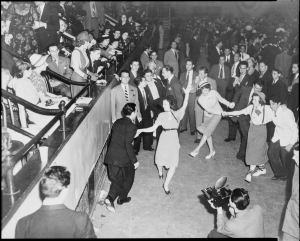
Canon Donohoe Hall, Mohill, Co. LeitrimJitterbug_dancers_NYWTS

The Anti-Jazz Campaign

Mohill and Cloone became the national centre of the infamous Anti – Jazz campaign of the early 1930’s. The leader of the campaign was the parish priest of Cloone, Fr. Peter Conefrey.  Conefrey was an ardent cultural nationalist and was heavily involved in the promotion of Irish music, dancing and the Irish language.  He devoted his life to making parishioners wear home – spun clothes and become self – sufficient in food.

Many people who look at the anti-jazz campaign often do so in isolation of the cultural context and background in which these events played out. The new Irish State faced enormous economic and social problems including high unemployment rates and falling living standards. The hierarchy of the Catholic Church had grown considerably in power and influence after independence and began to pre-occupy itself with perceived threats to the virtue of it flock. In the Lenten…

View original post 1,298 more words

The Art of Shaving

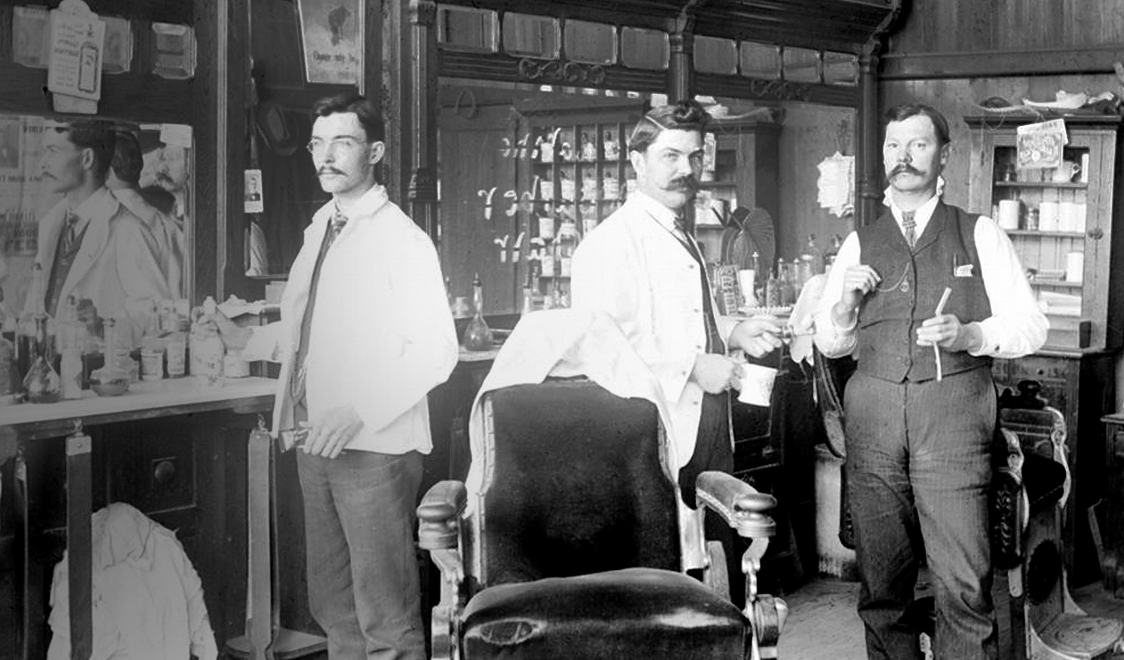
Shaving

Shaving had never seemed routine to me as a boy. I believed that shaving was something ceremonial, almost ritual and more than mere necessity; it was a performance, the theatre of the everyday, the essence of life, a mark of manhood and flash of vigour. My father used a wooden handled foam brush to mix the cool shaving cream that he then daubed over his prickly face to soften the stubble. He then began by slowly dragging the sharp blade across his jaw, like mowing a meadow in straight swathes, before cleaning the blade under the cold tap after every second or third stroke, repeating the motion, cleansing, shearing and renewing. He would finish with the more difficult movements around the mouth and lips, which he pinched, in deep concentration, before finally washing the residual foam away with a wet cloth. A quick dab of cold water marked the end of the ceremony; all the time unaware that I was standing there watching, learning, in awe.

No doubt he too would have looked at his father, my Grandfather, shaving, or perhaps his uncles when they came home from England in the summer. Once I had tried to mimic the act of shaving with my father’s razor, a foolish act borne out of my impatience to become a man, and testified by the cross-like scar on my upper lip. The scar is hidden now by my own stubble only to appear anew when I shave. My Grandfather had berated me for my stupidity, a silly boy trying to be a man.  But still I copied him, like in McKee’s Bar on the nights of the big sales in the local Mart, the pub full of jobbers, tanglers, dealers, Northern buyers, tobacco smoke and thick ash plants for beating cattle up trailer ramps. I would hang at my Grandfather’s side, sitting on the high stool, aping his gestures and movements, my legs dangling, swinging in time to the beat and blare of the mixed accents of men from Cavan, Longford, Roscommon and Fermanagh. There flowed the sounds of  laughter, merriment, rows, insults and the vigorous shaking of hands, the entire drama that went on such nights as I pretended my frothy Cavan Cola was a glass of Guinness.

Later I would link my Grandfather home from town, standing well in on the grassy verge when car lights approached, until we came as far as our own lane.  On the way home he would denounce what ‘they’ had done to men like Blessed Oliver Plunkett, He would tell me how Parnell was let down badly but had let himself down too. He would get most animated when he spoke of about his own Great-Grandfather, ‘don’t ever forget’ he said that ‘they were burnt out of their house, put to the road and they after hanging him from the shafts of a cart.’  It may have been in 1798 but the message was we ‘Don’t ever forget’. Unbeknownst I had now been passed an invisible torch, whether I wanted to hold it or not. Then as we approached the house he would straighten up, puff out his chest, fortified for meeting my Grandmother.

In summer time my Grandfather had often shaved on the back street of the house, a red basin with warm water set on a chair brought out from the kitchen, a fresh towel laid across the high back, a small mirror propped up on the wall with a red brick. A brown faced Collie lay stretched, watching him, panting in the heat of the mid-morning sun. I would sit there watching him too. With his braces now hanging down by his sides, he looked like a character from a Western; standing there he could have been out on the high plains, so engrossed was he in his labour. When finished he bent down scooping up the water in his cupped hands, washing away the last of the foam from his now shiny skin. He then patted his face dry with the towel, which was then thrown over his shoulder, before he picked up the basin, flinging its contents down the yard, scattering cats and hens in all directions. He was gone then into the house, his ablutions over. When he emerged he was wearing his bright sports coat and a gaudy wide tie, the latter clearly from another decade, another continent even. He patted me first and then the dog and muttered something about looking like a ‘broken down gentleman’ then he was gone for the day to a meeting.

In time he became a frail man, his body shaking with uncontrollable tremors that mocked him and broke his spirit. His daughters now took turns in shaving him. His shaking hand would only have done himself harm. Instead of a sharp razor blade they preferred to use a red and black Remington electric Razor. It was a present they had bought for him one recent Christmas. It was very sleek and modern with a tilting head to match the contours of his rugged, well lined country face. I thought that one day I would like to own a smart looking Remington too.

Four weeks after he died and I am sitting in the room where he once sat, in the chair that he would have sat in. I look around the room at the people gathered for his Months Mind mass. Trays of sandwiches are passed around followed by plates laden with slices of fruit flan and apple tart, the latter flavoured  with cloves of course, my grandmothers way. My Aunts fly about with pots of freshly brewed tea topping up delicate china cups, in a room where an epic turf fire blazes. On a shelf above the radio, a small statue of St. Martin de Porres acts as a paperweight for numerous Mass Cards, itself surrounded by various miraculous medals and several bottle of holy water, from Knock, Fatima and Lourdes. There too are his reading glasses, the ones he detested and fumed about constantly. On the inside sits a shiny box containing his electric razor. An hour later as we are all leaving I ask my Grandmother if I can have his razor. ‘Of course’ she says, ‘of course, why wouldn’t you, …… we’ve no use for it now’. 

A few days later I plug the razor into the two pronged socket in the bathroom and begin my first ever dry shave. The shaver buzzes for a few minutes but after only completing one jaw it struggles and chokes. I flip open the lid and tap it firmly against the side of the wash hand basin tipping the contents out. The slow running water from the cold tap gathers up the discarded stubble, the water turning first grey, then dark and mottled, making ever increasing concentric circles. I stand suspended, looking down in the basin where my own fresh stubble is now mixed with the last my grandfather ever grew. I remembered now, I remembered the women below in the corpse room preparing his body for the wake, and our cousin coming up the hall with the Remington box in her hand. It was she who placed the box on the shelf.  I gaze in the mirror at my half shaven face. I look deep into my now glossy eyes, completely overcome with the significance of the stubble, slowly emptying, down the plughole, of eternity.

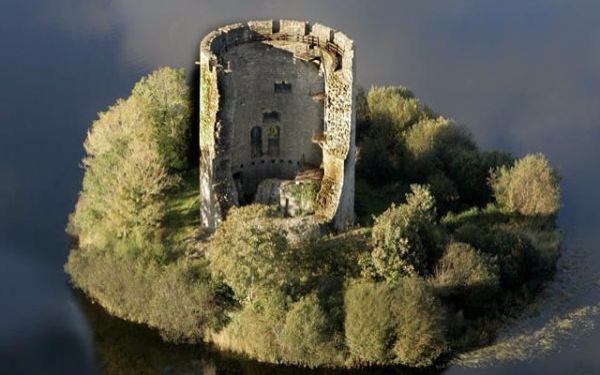
Cloughoughter Castle, County Cavan

Tucked away in a remote corner of the Erne River system, on a tiny island in Lough Oughter, stands the ruined circular tower of Cloughoughter – a modest-sized castle with a surprisingly prominent history. It was probably begun by William Gorm de Lacy between 1200 and 1224, possibly on the site of a crannog, after the Normans seized parts of the O’Rourke kingdom of Breifne. The lower two storeys can be ascribed to this phase; it had loops but no entrance on the ground floor, three doorways and at least two windows at first-floor level and possibly a curtain wall on the west side.

From 1233 until the end of the seventeenth century, the territory of East Breifne, roughly today’s County Cavan, fell under the control of the O’Reilly clan, who built up the castle to its present height. It played an important role in the dynastic power struggles of the O’Reillys and in conflicts with their former overlords, the O’Rourkes of West Breifne, and during this time also served as a grim prison, where some unfortunates were incarcerated for years. When Philip O’Reilly was held here in the 1360s he had “no allowance save a sheaf of oats for day and night and a cup of water, so that he was compelled to drink his own urine”.

After the Flight of the Earls in 1607, the castle was captured by Sir Richard Wingfield and granted to Captain Hugh Culme, who built himself a residence on the south shore of the lake. In the 1641 Rebellion the castle was captured by the O’Reillys and used again as a prison; here the old Bishop of Kilmore, William Bedell, together with his two sons, his son-in-law and Arthur Culme, were kept in irons in a “cold, wet and windy room almost at the top of the tower”. It was the last stronghold to fall in the Cromwellian wars and immediately afterwards, in March 1653, was rendered useless by a massive explosion of gunpowder. During the eighteenth and nineteenth centuries the picturesque ivy-clad ruin was depicted by a number of artists, including William Ashford, whose fine painting of the castle c. 1790 hung at Fota until recently. Excavation was carried out to facilitate conservation works on the walls in 1987, most of the finds were of seventeenth century date, including four human skeletons, three male and one female, all evidently casualties of the final fatal siege of 1653.

Located on an island in Lough Oughter
3 miles SE of Killeshandra and S of Killykeen Forest Park.
NGR: H 863554.
National Monument.
Open access.

The Ballad of JP

  photo - Copy

There was the first chill of the oncoming winter in the house tonight. I pulled the heavy door shut, turning the key in the stiff lock, another little job to add to the ever growing list for the weekend. I’m sure there is a can of WD40 somewhere in the shed. The turf fire in the old range will have the place nice and toasty by the time I get back tonight. An involuntary shiver overcomes me as I walk through the exhaust fumes towards the car, parked facing west, down the long grass centred lane.  “It’s the darkness that gets me” she had said. I could never understand what she meant, I never missed the lights, there was always the moonlight or the starlight, but then for someone born and reared in a city it might be different. I had to allow her that. “You’ll get used to it”, I had said, seeking to comfort and reinforce the idea that one day this could be home for us. I turned left down onto the main road past the solid stone piers my grandfather had built, or maybe it was his grandfather, who knows. I remembered turning on the headlights that night “There is that any better for you?” and laughing “You will, you’ll get used to it” but now I know that the eyes adjust but the rest might not follow, that was just ten months ago.

As we approached town we had met a couple of oncoming tractors, pulling cattle trailers, on the way home from the livestock mart. One driver drove a vintage Massey Ferguson. There was no cab to shelter him, the only adornment being a roll bar on the back. He was well wrapped up and a pipe dangled precariously from his mouth, his bare hands gripping the steering wheel. “God will you look at that bloke” she said, “he must be freezing, he’ll get his death”. “He might be happier than you or me!” I replied. “He’s probably after selling a couple of weanlings and had his fill in Duignans or Reynolds. It might be cold outside but he could be warm enough inside”. I looked at the temperature gauge which displayed Four degrees. He will be cold by the time he gets home alright, but I was unwilling to betray my thoughts, especially after  leaping to exalt the lone driver just seconds before. Must be a Leitrim trait I thought, to defend ones place, defend one’s own, zealously, even when the attack is slight, veiled or maybe only imagined. “Will he have far to go now?” she asked, and my mind immediately remembered the jobbers and dealers that congregated in my Uncles Pub back in the 70’s, “He could be from as far away as Corlough or Glangevlin” I replied, “Is that far?”, I thought of Big Tom McGovern with hands the size of shovels handing me a bottle of Cavan Cola with a straw. I can’t have been more than 8 or 9 years old then. “Oh it’s a good spin alright, but he’ll have half a bottle of Jemmy in him to keep him warm, and he might have one or two more stops on the way”.

I pulled up outside the Bar on the empty street. I could make out the smoky silhouettes of a few heads inside. Opening the creaking door a blast of furnace-like heat meets me, and as I scan the place my eyes are drawn to a coal fire crackling away in the corner. Three men sit at the the counter, two manning a corner each, and one in the middle, my Uncle tending to them. He has failed since I last saw him that evening four months ago. We nod at each other. ‘Good man Dan, pull up a stool there’ says Tommy Gucks, ‘and fit and well you’re looking. It’s always an honour and a privilege to meet an educated man like yourself’. ‘How’ya young Dan’ comes from down the counter, the voice of a little snipe-like creature shirking beneath a well-worn tweed cap, Hugh Dunleavy. ‘Good man Hugh, you’re keeping well’, the reply was instant ‘not too bad Dan, not too bad, considering the state the country is in. Your grandfather and father would turn in their graves if they saw the messing that’s going on’. There is a pause as if the patrons must take up new positions and their conversation must adjust because of my intrusion. The pub hasn’t changed much since I was a boy and yet it still remains a place of wonderment, a place where these characters act out their roles and my Uncle like a good stage-director, steers the conversation in whatever direction he thinks appropriate. The Uncle places a creamy pint in front of me, ‘and sure get the lads one there as well’.

‘Any sign of JP?’ I ask the Uncle as he gives me back my change. No, you mightn’t see him in tonight, he was in last night and had a tightener. ‘He sure had’ said Tommy, ‘he sure had, when you see the little dog coming over to our place of an evening you know he’s looking to see if there’s any grub to spare’. ‘Thank you Dano’ says Hugh acknowledging the drink, ‘Good health to you Dan’ says Gucks lifting his glass and tipping his head in a well-choreographed  manoeuver.

The clock above the till is at 9.30 but it’s surely after 10 by now. I realise the fading discoloured clock has actually stopped. The clock is a souvenir of the Leitrim team from 1994. ‘I think you need a battery for that yoke’ I say to the uncle, pointing towards the idle timepiece. ‘I must do that tomorrow’ he replies, Tommy nudges me, ‘Ah sure it’s  a bit like the Leitrim team today, they are at a standstill, do you know someone remarked last week that it’s harder to get off the team than on it, now isn’t that something’. The uncle looks wounded, ‘That’s a bit rich from a man that never kicked a ball out of his way, aren’t they flying the flag anyway, fair play to them’. Hugh broke into a laugh which became a cough and a series of splutters the culmination of six decades of tipless cigarettes. We all wait a few minutes for Hugh to get his breath back and to put away the dirty cloth handkerchief that has never been washed since it came into his possession. Tommy wasn’t going to take my uncles slight lying down, ‘Sure I had no time for football and me busy teaching young Colm O’Rourke how to play, didn’t I teach him everything he knew before they all headed for Meath. Sean Boylan thanked me personally for helping them win the All-Ireland’. Hugh was composed again and quipped,’ Well where ever he got the football it had little to do with you Gucks. An awful pity though he didn’t come back to us, We could’ve done with him.’ My uncle now has his back to us, fumbling with some paperwork on the shelf, his glasses hanging off the end of his nose, like Harold Lloyd hanging from a Manhattan skyscraper. ‘Didn’t you play with the brothers Phil?’ ‘Whose brothers?’ replies the Uncle placing a Players Please GAA ornament of two men in the Galway and Kerry colours I’m presuming.  ‘The O’Rourkes of course!’ Turning now and placing his huge bare forearms either side of him leaning on the shiny counter, the Uncle gathers himself, before saying slowly, ‘Indeed I did, and great lads they were too, Fergus was a giant, a gentle giant most of the time, ah but we had great teams back then, Mayo had the flying Doctor but we had the flying dentist, Leo Heslin, what a gent’ as he looked wistfully towards the fire. The moment is broken by the creaking door and in comes Jack ‘the Lad’ Shanley whistling to himself, ‘Good night to ye all, could be freezing and if it’s not its damn well near it’.

‘Is JP still kicking ball?’ I ask. ‘Apt’ says Hugh, trying to is all he’s at, sure he hardly trained the year, with hamstrings and groin strains.  ‘It’s the G-strings that is causing him more harm mind’ spurts Jack the Lad, and they chuckle in unison at some joke that will remain untold but will be left hanging, part released, in a ‘to be continued’ mode. ‘On his day he is good, I’ll grant him that’ says Gucks ‘but Jaysus he loves been told it, he does, ah he does. Do you mind the time he was in here on the Monday they bet Drumreilly and he had scored, was it 1-5 or something, any way he starts bladdering on about how he scored 1-5 yesterday and 0-9 the week before, and how he had, wait, was it 5-35 scored in the championship so far, and he was bladdering on and on”. “Now you were doing little in the way of discouraging him Gucks’ said the Uncle. ‘Well I gave him plenty of rein before I hit him the deadly, and if you don’t mind me asking JP, how much did you score on that young McDermott lad in the final last year? well it stuck him to the floor”. “F%4k you is all he said and off to the juke box, sure ya see he never got a sniff of it that day and they took him off at half-time. Well he stayed up that end for a while and then came back and sidled up to me and he says, you know well Tommy what happened me that day!’, ‘I don’t says I. What happened you at all?”. Tommy leaned into me imitating JP ‘You know fucking well I got the sh*ts after that kebab I had above in Longford the night before’. They all laughed again like it was the first time they had heard this tale, “Sure maybe he did” said I and Gucks took a sip out of his pint before giving me a half disproving look. “He’s had more good games than bad now! Or at least that’s what I hear,’ conscious that I hadn’t seen JP play since he was a minor.

Ah JP is some flower alright’ said the Uncle, he was telling us one night about his uncle Tom Pat ‘sure doesn’t he take after him’ muttered Eddy Joe Gray, a big bear of a man just in the door and in the process of hanging his heavy coat over the back of a chair near the now blazing fire. ‘Do you know that one Eddie Joe?’ enquires the Uncle.  ‘Which one, there are so many?’. ‘The one about the bull calf. Go on you know it, start it off there and I’ll boil the kettle’.

Eddie Joe sat in on a stool, then rubbing both his hands repeatedly on the knees of his trousers he began with a disclaimer, ‘Well gentlemen, If its lies I’m going to tell ye, then its lies that I was told, and this is what I was told, whether it be truth or lies. Tom Pat went out one morning and was doing his foddering and bits and pieces. He had this fine yearling bull calf that he was bucket feeding. Now he knew by the calf’s demeanour that he simply wasn’t himself that morning. Sure he was an ‘ould hand reared pet but a fair lump of a pet now boys, mark now a Charolais Limousin cross. Now this lad was been reared with Monaghan Day Mart in mind, do ya see now. Well the beasht wasn’t just himself, and Tom Pat couldn’t get him to ate  a bit of meal and his snout was cold. Well he was going to ring the Vet and then he reckoned the calf just had a chill.

Well he was in and out of the house and up and down the yard looking at this calf. He decided he’d bring him into the house by the fire. We’ve all seen it done now, be honest now boys, there’s no shame in it. So he brings in a bale of straw and scatters it all over the lino and he goes out and puts a halter on the calf. Now that didn’t work as sick and all as he was the calf was he’d never been led and wasn’t about to start at it now. So eventually with a bit of coaxing Tom Pat got him inside the back yard of the house. Now you know the lie of McCormacks place, you drive in on the street and then there’s a four foot wall around the house and you walk through a gate, into the yard and then into the house. Well the calf didn’t know what was happening at all but after another while didn’t Tom Pat get him into the house and he pulled the door behind him. He turned the table on its side to prevent the calf from pushing up against the door’.

‘Well the calf thought the arrangement a bit strange and he lowed a bit, but it was a weak enough low and it had Tom Pat worried. With the heat of the fire the calf began boiling up, and still its snout was cold. The calf lay down eventually in the middle of the floor and hung his head. Tom pat tried to rise him again but the calf wouldn’t move, then all of a sudden it gave one great big low, dropped its lugs and head and didn’t take another breath’. ‘You mean the calf died? In the house?’ I enquired. ‘That’s right Dan, stone dead there in the back kitchen. Tom Pat was in a tizzy and then he called the Vet, imagine calling a Vet then, sure what was he going to do, tell him his dead calf was beyond help and thank you very much, that’ll be Fifty euro. Well Flanagan, the new Vet in Arva came out and surveyed the scene, he’d never seen anything like it. He shook his head and commiserated with Tom Pat on losing such a fine animal. He told Tom Pat it was Blackleg. A bad dose, unless they get the injection early they’re finished. When he was going the Vet said to Tom Pat, ‘How are you going to get the calf out of the house? he’s swelling fast!

Tom Pat could only scratch his head and wonder. The Vet left and Tom Pat called up to Owenie Micks and wasn’t he in luck to find two fine men to counsel him in Owenie Mick and Jimmy Mullins’. ‘He was in luck alright with them pair of ludramans’ said Hugh shaking his head. ‘Well down to Tom Pats the three went. Owenie Mick produced a measuring tape from the boot of the car and proceeded to measure the height and width of the door way, he shook his head, ‘the jaumbs will have to go Tom Pat, there’s no other way’. Back out to the car went Owenie Mick, Tom Pat on his shoulder crying, and as he opened the boot to get a nailbar, he spied the con saw. Some class of a light went on in that cave of a skull of Owenies and he said, ‘begad there might just be another way’.

An hour and a half later the Calf was more or less butchered.  Owenie started with the legs and cut off all four just above the knee joint. They then laid a bit of old tarp on the ground and sawed into the stomach, blood and gore flying in an arc until it hit the back wall and spattered the ceiling. Then off came the head and and they sawed the whole way down through the backbone, leaving two heavy hund quarters, which it took all three of them to lift into the barrow. They wheeled all through the back yard and stacked it along the road. It was like an Abattoir, the straw coloured crimson , the walls and ceilings all spattered with blood, a  trail of offal from the back door to the road. 

Tom Pat had already called Nannerys, the knackers yard and they were on the way. When the lorry arrived arrived it reversed in on the street but Tom Pat told them to park on the road. As he lifted the tarpaulin the driver was shocked to see a hairy, bloody pile of of bone, meat and guts, stacked five foot high, there on the side of the road, a decapitated head sitting askew on top with a long tongue hanging out to one side. Those ISIS boys wouldn’t hold a candle to Ownenie Mick and his consaw’  

bloody-knife1I didn’t know whether to laugh or cry, it was like something from a Quentin Tarantino movie, barbaric and funny. The Uncle brought out a tray with a large pot of tea, a bag of sugar and pint of milk on it and laid it before Eddie Joe. One story followed another and the performers came and went, the conversation going through ebbs and flows, intervals and actions. It was like the unscripted performance came together here under this roof, my uncles roof, the last in a long line of publicans, a man who left a good job in Boston to come home to run this bar. His father told him that he had reared ten children out of it and there was no reason why he couldn’t do the same. Now he was the last one, of that there was no doubt, he wasn’t going to marry now at eighty years of age. As his ageing customers drifted off I helped him clean up, I swept the floor, put the chairs on the tables and on the counter. It was nearly 2.00am and we sat down by the last embers of the fire, each staring into the red coals as if it were an oracle. I nursed a crested ten between my hands and then he spoke, ‘How is that girl, Denise, isn’t it? Lovely looking girl …. soft hands …. you didn’t bring her down with you?’. ‘No, I’m afraid we’ve gone our separate ways. Not compatible unfortunately, but better find out now than ….”’Ah that’s a pity……… don’t worry you’ll meet someone else, you will…… I don’t know if she’d like it around here anyway, ya know like when you come back’. I said nothing, just stared on into the grate, and thought I could see her smiling face, ‘Your right I don’t think she would.’ The Uncle lifted a poker and started fiddling with the dying embers, trying to coax the last of the warmth from them. ‘I better be off’ I said to him throwing the glass on my head and swilling the whiskey, letting it warm my mouth before swallowing it, ‘I’m going to make an early start, I’m going to try and get JP out for a shot’ He stayed looking into the embers as I began to let myself out, ‘ I’ll call in after Mass time’ ‘Grand’ he replied and I heard him murmur, ‘Hard to believe it’s the first of November already …… where has the year gone’.

coal-stoves-1

The Great Big Poppy Debate

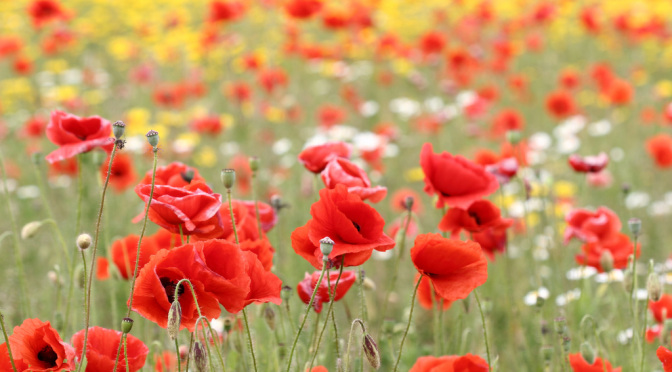
poppiesI attended a remembrance ceremony this week. I did not wear a poppy, nor was I asked to. Near the end of the ceremony the Rector pointed out that if anyone wanted to contribute to the British Legions Poppy Appeal they could do so at the rear of the church. Of the seventy or so people present about two thirds were of the Protestant faith, they practically all wore their poppies. I didn’t see any of the others, who were mostly Catholic, wear any poppies, or any symbol for that matter.

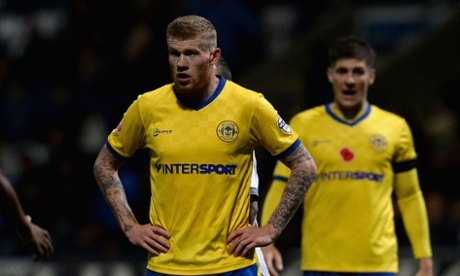
In the days previous I read the statement of James McClean to the Chairman of Wigan FC, Dave Whelan in which he explained articulately and precisely why he couldn’t and wouldn’t wear the poppy.

James McClean       James McClean comes from Derry, a community where one of the worst atrocities of the ‘Troubles’ was carried out by a British Army Parachute Regiment on the 30th January, 1972. In 2010 when the Saville enquiry’s report was published it completely rejected a previous report carried out by Lord Widgery. The Widgery Report was shown to be in effect a ‘whitewash’ of the truth of what happened on ‘Bloody Sunday’. Whether or not this was a deliberate whitewash is not addressed, but just ask anyone from James McClean’s neighbourhood and they’ll give a very definite answer to that question. The problem for the British Government is not so much that a regiment went berserk, shooting civilians in the process, but, that the British establishment, in the form of Lord Widgery, sought to cover up what happened by attacking the character and good names of the deceased. In doing so they not only defamed the Dead, they defamed an entire City. David Cameron deserves credit for standing up in the House of Commons on the 15th June, 2010 and acknowledging, among other things, that the Paras fired the first shots, fired on fleeing, unarmed civilians, and, shot and killed a wounded man lying unarmed and helpless on the ground. The victims of that terrible day, and their loved ones, were finally vindicated, but an apology by the British Government whilst helping, can never fully heal the wound.

Bloody Sunday will remain a permanent scar for the families of the victims and their community. Time will help heal but what is done cannot be undone. James McClean was born and bred in that scarred community. His talent as a footballer was recognised at an early age. He represented Northern Ireland at underage level but held out for a call up to the Republic of Ireland squad. In this he was successful and he now represents the Republic, a move, one of many, which has caused consternation in the Northern Irish Football Association in Belfast. The move also had some Northern Ireland politicians in a twist. The Deputy Leader of the Democratic Unionist Party, Nigel Dodds urged the British and Irish governments to work together to stop the injustice of the ‘haemorrhaging’ of Northern Irish footballers to the Republic. Mr. Dodds must realise that the problem is more rooted in the attitudes of the IFA than the FAI, as the former organisation has not been serious about ridding Northern Irish football of its rabid sectarianism, the type that caused it to lose players such as Neil Lennon and Anton Rogan, Catholics who received death threats from their ‘own’ supporters. The lack of action on behalf of the IFA is hardly the type of reassurance young footballers from the Nationalist Community need in order to commit to themselves to representing the IFA.

Despite McClean’s reasonable and articulate letter last week he still received some boos from the terraces in Bolton. Is it any wonder? The growth of the poppy as a symbol of all British military campaigns to include Iraq and Afghanistan has, unbeknownst to most British people, also given a certain legitimacy to the actions of some British soldiers in the troubles in Northern Ireland. As McClean has said

‘I have complete respect for those who fought and died in both World Wars – many I know were Irish-born. I have been told that your own Grandfather Paddy Whelan, from Tipperary, was one of those. I mourn their deaths like every other decent person and if the Poppy was a symbol only for the lost souls of World War I and II I would wear one’.

Unfortunately the modern poppy is not just representative of the deaths of World Wars One and Two, and therein lies the rub.

‘For people from the North of Ireland such as myself ….the poppy has come to mean something very different’.

Every year over the last decade or so November sees more and more poppies on show, particularly on our TV screens. There is no room for dissent but there will always be dissent. The journalist and broadcaster Jon Snow refuses to wear a poppy on screen and every year he inevitably receives the cat calls of ‘traitor’ and is decried for his unpatriotic stance. What I find most refreshing is that Jon Snow has said on numerous occasions that he does in fact wear the poppy, only he does so in private. Mr. Snow is a making a fine point that  goes completely over the heads of the mob, and that is that not wearing a poppy is not the same thing as not remembering the war dead. Unfortunately in modern Britain there has been created an atmosphere whereby people are forced to publicise their remembrance of the fallen, what the author Guy Walters has described as ‘grief fascism’. What Snow represents is the view that it is not  the act of poppy-wearing that causes offence it is the compulsion to wear one.

Jon snow

That is in essence a ‘very English’ debate and whilst similar, is also very much distinct from the ‘Irish question’ as alluded to in McClean’s statement. It may be that the poppy would be alright if it just remembered the fallen of 1914-18 and 1939-45, but it no longer does. The poppy as a symbol has evolved and whilst wearers of the poppy celebrate the freedoms for which the fallen fought and gave the ultimate sacrifice for, they should also remember that these hard won freedoms also include the freedom to opt out of this very public display of remembrance. No inference should ever be drawn that those of us who remain Poppy-less remember the fallen any lesser than those that do wear the emblem and vice-versa.

Last Sunday I remembered a family member of my own who after surviving the Somme, died in the cauldron of the Ypres salient. His brother was also in my thoughts; he served in South-West Africa and Tanganyika where he was badly wounded. His wounds contributed to his demise in Johannesburg in 1921 from complications. We remember so that we never forget and in exercising my act of remembrance I didn’t wear a poppy, nor was I asked too. For that I am grateful.

“When ye go home tell them of us and say,

For your tomorrow we gave our today”

The day they lynched the Elephant

Hanging with the Elephanthanging elephant

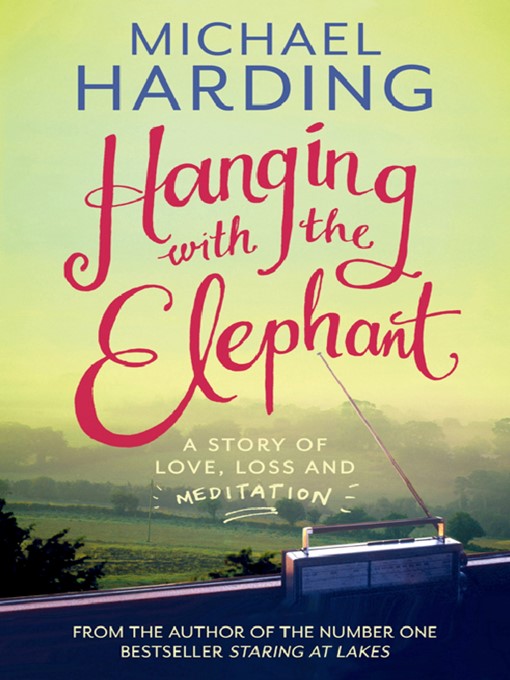
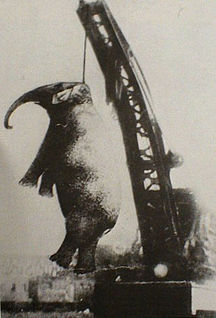
Search Engines have the habit of waylaying me (in the best possible way) and this evening was no different. I was looking up the wonderful Michael Harding’s latest work, ‘Hanging with the Elephant – or how not to meditate’ and simply entered the words ‘Hanging’, ‘Elephant’ and ‘Harding’ and found my target. It was only when I clicked on images in search of the book cover that I came across a strange and macabre sight. It was an adult Elephant seemingly hanging from a crane? Curiosity got the better of me and so I simply had to explore further and this is the harrowing tale that I now share.

The Elephants name was Mary and she was a five ton Asian female. She was part of Charlie Sparks’ revelling circus which was travelling throughout the near west in the summer of 1916. The Circus had just arrived in the town of Kingsport, Tennessee, USA in the month of September.  The circus staff prepared for the usual parade down the Main St., a spectacle that was sure to be the best form of advertisement for their upcoming show. An inexperienced handler called Red Eldridge was put in charge of Mary. Eldridge was a Hotel Worker who had just been hired the evening before the parade.

The parade was going normally when the elephant stopped to nibble on a piece of discarded watermelon. She slowed down and as one can imagine the whole parade had to stop when Mary stopped. Eldridge jabbed the elephant to get her moving and inadvertently hit an abscessed spot just behind her ear. The elephant’s reaction was deadly. The elephant grabbed her new handler with her trunk, lifted him in the air dashed him against a drink stand and as he lay dying on the road, issued the coup de grace by trampled on his head. Mercifully Eldridge was killed instantly. While the terrified spectators screamed and fled, a local blacksmith unloaded five rounds of ammunition into the elephant with little effect.

As Mary recovered her composure the townsfolk encircled her and someone shouted to the Circus people that the killer elephant must be put down.  Before long the crowd had started chanting “Kill the elephant, kill the elephant.” Mary was eventually subdued and brought back to the circus grounds. The only talk amongst the citizens was the murderous Elephant in their midst. Newspaper accounts did nothing but flan the flames of the public’s frenzy. A contemporary newspaper account said that Mary “collided its trunk vice-like about [Eldridge’s] body, lifted him 10 feet in the air, then dashed him with fury to the ground… and with the full force of her beastly fury is said to have sunk her giant tusks entirely through his body. The animal then trampled the dying form of Eldridge as if seeking a murderous triumph, then with a sudden… swing of her massive foot hurled his body into the crowd.” It should be kept in mind that female Asian elephants don’t have any tusks!

Leaders from nearby towns threatened that the Circus would not be allowed visit their communities. Worried that the circus dates would be cancelled if he did not accommodate the crowds call for vengeance the circus owner Charlie Sparks reluctantly decided to acquiesce to the mobs demands. The condemned animal was loaded on a railway car and brought to the nearby town of Erwin. A huge crowd had assembled in the Clinchfield Railroad Yard.

The unfortunate elephant was hanged from a railcar-mounted industrial crane. The first attempt ended in failure when the chain used snapped. Mary broke her hip in the ensuing fall. The second attempt was successful and Mary was buried beside the tracks. A vet who carried out a post mortem on Mary was able to show that she had a severely infected tooth in the precise spot where Red Eldridge had prodded her.

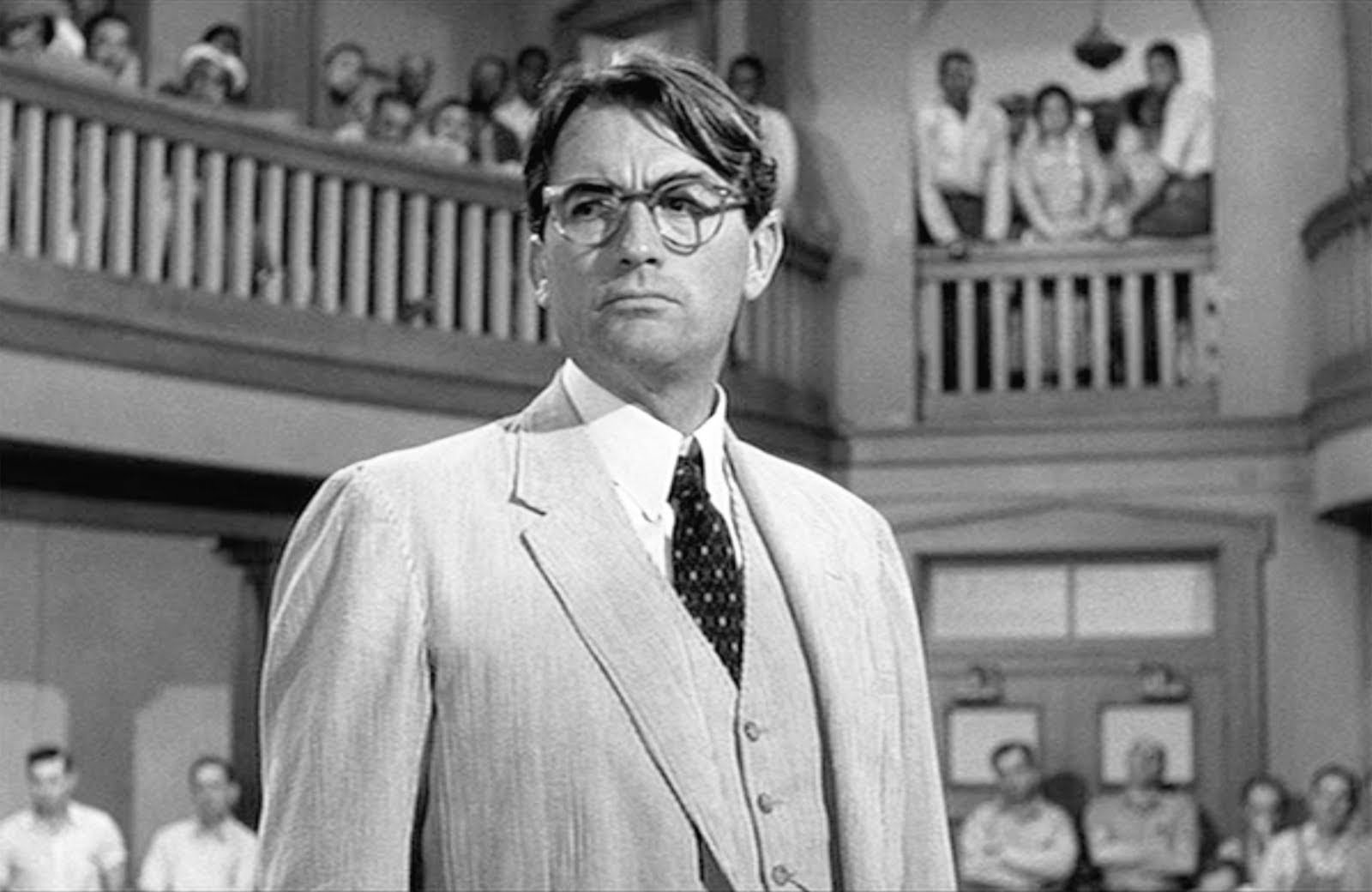
A study by the University of Missouri noted that “Nearly 3,500 African Americans and 1,300 whites were lynched in the United States between 1882 and 1968, mostly from 1882 to 1920.” Mary however was the only Elephant known to have suffered a similar fate at the hands of a vigilante Mob. Sadly there was no Atticus Finch on hand to save her life.

Atticus Finch

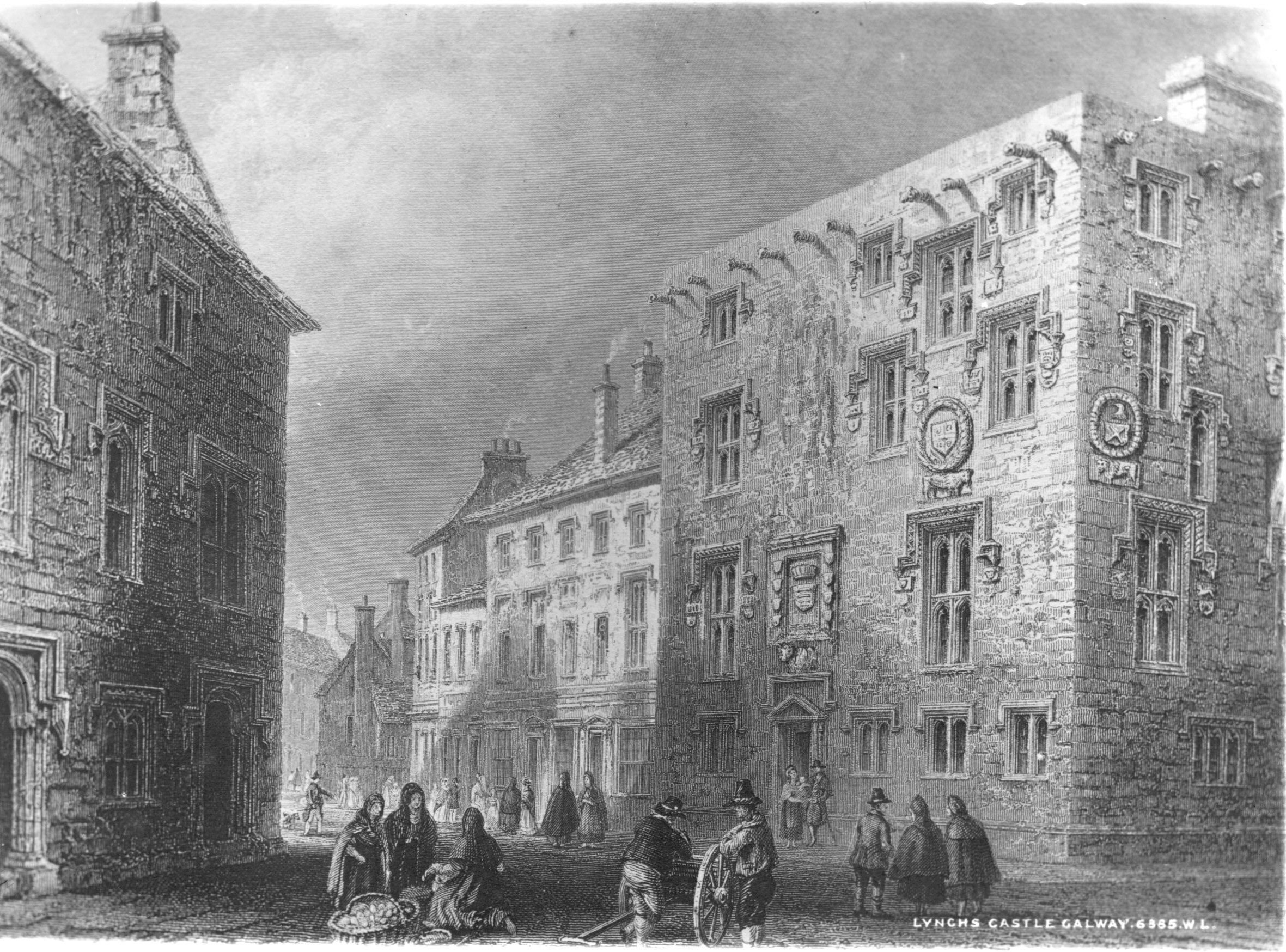
Incidentally the word ‘lynching’ comes from Galway. James Lynch Fitzstephen was the Mayor of Galway when he hanged his own son from the balcony of his house after convicting him of the murder of a Spanish visitor in 1493.

Finally, I purchased Michael Harding’s book and am looking forward to tucking into it; the critics say it is ‘A compelling memoir. Absorbing and graced with a deceptive lightness of touch, [Hanging with the Elephant ] is clever and brilliantly pieced together. Harding writes like an angel’

lynchscastle

‘To boldly go’ – Space Tourism and the melting wax conundrum.

imageMAN has a long held obsession with flight but one man more than any other has an obsession with space flight. Richard Branson has poured millions of pounds into his dream of commercial space flight. As news filtered through that one of his proto-type “Spaceships” had crashed onto the floor of the Mojave Desert, one felt that Branson’s dream had taken a severe battering. In the last few days Branson has faced a lot of personal criticism much of it unjustified, over the loss of the Virgin Prototype that killed a test pilot. It may transpire that the loss of Spaceship Two was due to pilot error and for that you simply cannot lay the blame at the feet of Sir Richard.

History has a habit of following a cyclical yet chronological path. Empires rise, prosper, decline and fall. Truth is but for the Cold War we wouldn’t have had a Space Race. Only for the emergence of Hitler we mightn’t have had a Second World War and only for the harsh Treaty of Versailles we wouldn’t have had the catastrophic social and economic conditions that gave rise to the scourge of National Socialism. Ironic then that the shifting sands of European politics and catastrophic bloodletting of two world wars would lead to arguably man’s greatest achievement; leaving behind the world that bore him and standing on another celestial body. That such an achievement was borne from the development of inter-continental ballistic missiles, technology developed by Nazi scientists, is proof that we can be at our most productive when we are actually seeking to be destructive, an extreme version of the common phrase ‘every cloud has a silver lining’

Space Travel From the time of the Wright brothers first manned flight in Kitty Hawk, to man stepping on the moon took a mere sixty six years. In the intervening forty five years Space Travel hasn’t progressed much. Constellation, a Bush Administration program for a return to the Moon by 2020 was judged inadequately funded and unrealistic by an expert review panel reporting in 2009. The fact that at this very moment we cannot repeat a feat achieved in 1969 speaks volumes. It would be like if Hillary and Tenzing were still the only people to stand atop Everest.

That is not to say there hasn’t been considerable scientific achievement in that time, because there has been: in particular the deep space probes such as Voyager and Cassini, the various Mars probes etc. Yet none of these expeditions have captured the imagination of the mass public like in the golden days of Sputnik and Apollo. It is clear that the majority of people on our planet are more excited by space travel than space exploration. Yet Branson’s project is a different animal. It is the preserve of the uber rich and privileged. Many of the potential clientele will not even be household names. Many may have wealth but not fame. Even if they do end up on a Virgin galactic Craft bound for Space they will never be household names like Neil Armstrong, John Glenn or Yuri Gagarin. Maybe that’s the way they like to live, enjoying the trappings of wealth without the erosion of their privacy.

Richard Branson may yet resurrect his commercial space flight operation. He has invested too much to give up now and this accident, whilst tragic, is merely a setback.

Last year people in the US spent twice as much on plastic surgery than their Government spent on space travel. In an era where the budgets for space programs are been cut, the space shuttle grounded, the international space station running on a shoestring,  there is clearly a vacuum for private promoters like Richard Branson has made a niche for his Virgin Brand. Space Tourism is an innovation and all innovations bring risk. If this accident was under the auspices of NASA there would likely be no personal blame attached to any individual, at least not in the way that Branson is currently being pilloried. The problem for Branson is that he is the quintessential capitalist and his dream of space tourism is as much about profit as it is about vision.

Just a few days before the Virgin crash another private rocket launch ended in disaster when an Antares rocket blew up just seconds after lift-off. Accidents do happen particularly when one is testing new technology. In a media interview since the ‘Space Ship Two’ crash Branson has said that he will not be accepting customers until the spacecraft has been flown safely by himself and family members. The retort sums up Branson, one part showman, one part businessman, on the front foot promoting his project. At the end of the day criticism is misplaced. Whilst Branson deliberately courts publicity, this is still essentially a private business venture, for private customers, with the objective of making money for the Virgin Group. The crash is only a temporary setback even though federal investigators are estimating that it may take up to a year before their report is complete.

Virgin will be hoping the story will not have a parallel with the tale of the Great Eastern steamship. The ship was the largest steamship of its time yet despite the genius and proven record of Brunel it was still a financial disaster, plagued by accidents, mishaps and bad luck. Branson will be keen not to emulate this Victorian calamity, nor suffer the fate of Icarus in the ancient fable when the wax securing his wings melted because he flew to close to the Sun. Despite the ire directed at Branson, humankind needs people like him to push the boundaries, to dream, to innovate, and most of all, to boldly go.

The seductiveness of the simple word

Farage

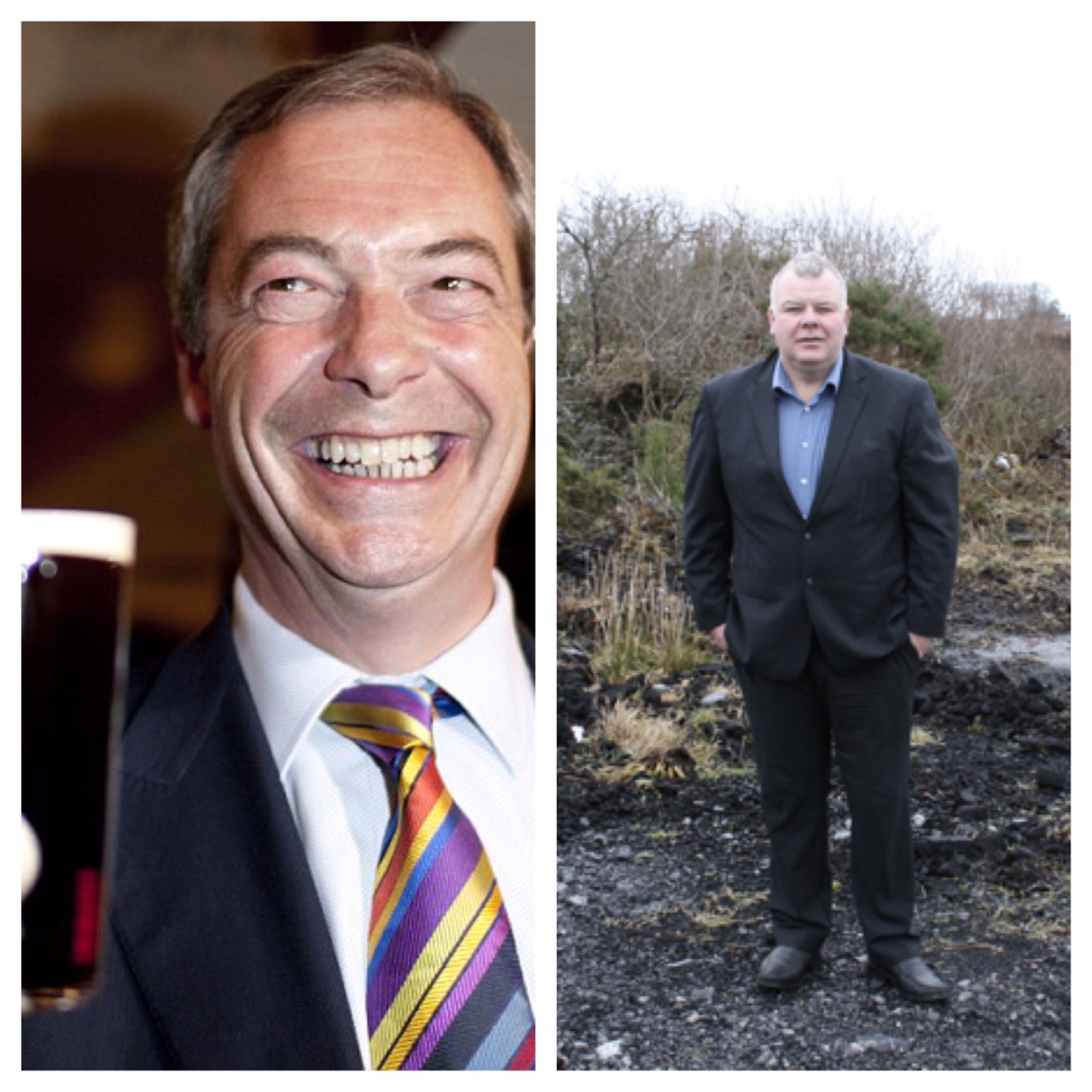
What has surprised me in the last few weeks is the wonder in some quarters at the outcomes of two, ostensibly at least, very different by-elections. In Clacton-on-Sea, the result delivered to the people of Great Britain its first UKIP MP. Nigel Farage hailed the election of Douglas Carswell as “a shift in the tectonic plates of British politics”. In a very different constituency in the west of Ireland the people, using the PRSTV system, elected Michael Fitzmaurice, who although receiving the second highest number ones, quickly overtook the pre-election favourite to eventually enjoy a comfortable finishing margin. Fitzmaurice may be called by some, the ‘Son of Ming’ but in many ways he is much more reflective of the demographic of the rural, under-developed constituency than his predecessor. Luke ‘Ming’ Flanagan with his typical flair for the dramatic, echoed the UFC Cage Fighter Conor McGregor, when he announced to those assembled in the Count Centre that ‘We are not here to take part, we are here to take over’. Fitzmaurice also has that rare ability to compose melodic phrases that resonate with the wider public; in his acceptance speech he declared that he was ‘a man of the soil’, a simple, powerful and almost pagan expression worthy of Kavanagh or Heaney.

Simple language can be powerful and a powerful message can often hang on its simplicity. The seductiveness of the simple language that Nigel Farage et al use is difficult to counter. Nationalist and Populist parties can thrive in the atmosphere that pervades the political landscape of Western Europe presently. Protests against austerity are springing up everywhere. Where once we had flash mobs we now have flash rebellions

It is perplexing how ordinary people throughout the United Kingdom think they can relate to this privately educated former banker. Are people really politically engaged when they vote for character driven Candidates who trade on their carefully manufactured personas? Surely this new politics is not sustainable? Recently a caller telephoned a radio show in the UK and said he’d voted for UKIP. When the presenter asked him why he had voted for them, the caller couldn’t name a single policy of UKIP. Sinn Fein still make promises here following on from the auction politics that reached its heights in 2011. When Sinn Fein Candidate Cathal King realised he was losing the Dublin SW televised debate on TV3, he hastily promised SF would abolish water charges. Unfortunately this abolition wasn’t part of the Sinn Fein Manifesto. Their policy proclaimed that they were opposing charges, but opposing is well short of abolishing. SF are learning that if you want to be serious about getting into power you have to have more than just populist policies, you must have policies that will survive retrospective spotlight.  Unfortunately Cathal King reverted to default mode when put under pressure by the Anti-Austerity-Alliance Candidate, Paul Murphy.

The results in the Irish By-elections were not good for any of the main parties. Fianna Fail, Labour and Fine Gael combined have less than 30% of the votes in Dublin SW. Fianna Fail on the other hand are not making promises but it’s limited improvements show that in the current climate people do not have the patience to engage with them or forgive them for been at the helm when the country went down the tubes. Michael Martin put in a huge personal effort in Roscommon / South Leitrim knocking on doors all over the Constituency. Unfortunately while he was well received his Candidate wasn’t and at the end of the day it was not Michael Martins face on the ballot paper. Young Emmet Corcoran debated well and showed a passion that was largely absent from the race. He had one or two ideas that unfortunately will never see the light of day. Roscommon has done strange things over the years, electing and dumping Sean Doherty and Brian Lenihan, and for years returning the committed Socialist Jack McQuillan. This time around they elected a man that isn’t even from the constituency.

An absentee TD you might think yet of all the candidates, Fitzmaurice, who came into the race later than anyone, had by far the widest appeal. The Glinsk native resonated with the largely rural area, and whilst people outside Roscommon mightn’t have heard of him, he already had a profile. He had a passion & charisma that motivated a merry band of canvassers, not just constituents, but many from counties such as Longford Galway to take to the few highways and many byways of Roscommon and Leitrim. On the debates he stayed well out of trouble.  One point that he made concerned the River Shannon which defines (and often floods) this area. For many years there have been plans to divert water from the Shannon to Dublin. The point made, a tad clumsily but made nonetheless, was why, oh why, can they not get clean water into the taps of Roscommon, when at the same time they can divert millions of gallons of ‘our’ water to the big City? Maybe the answer is that there isn’t the political will to invest in rural Ireland. Fitzmaurice’s argument pits the classic urban needs v rural necessities. Fitz plays the role of the boy in the ‘Emperor’s New Clothes’ pointing out the obvious to a blinded audience. The seductiveness of the simple answer is very difficult to counter?

‘KEENANS CHARGE’ The Battle of Chancellorsville, 1863

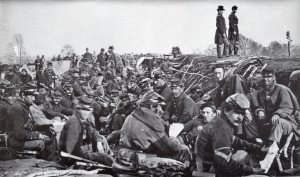
Chancellorsville

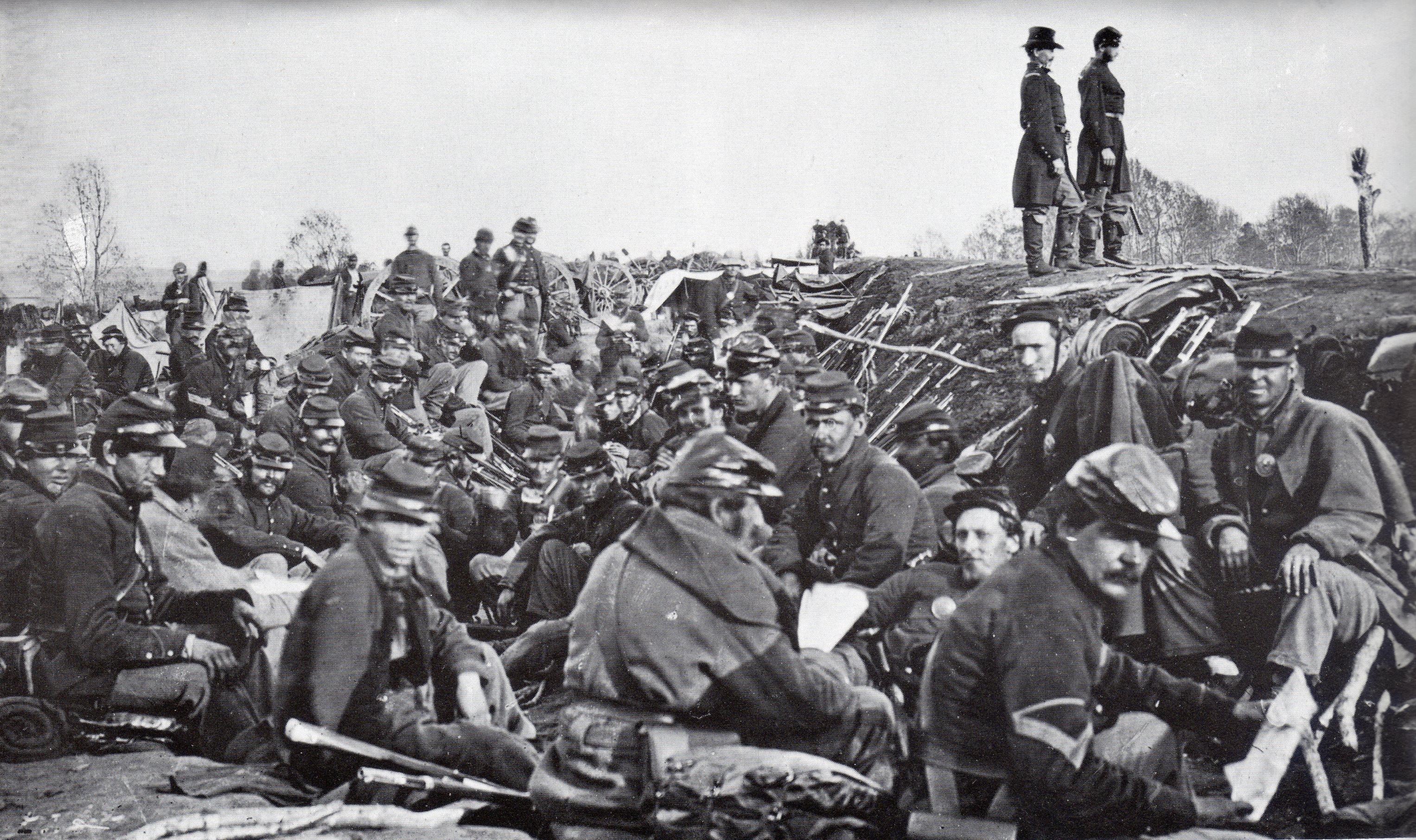
Captain Peter Keenan was born in 1834 to Irish parents at the town of York in the rural North West of the State of New York. By 1861 he was living in Philadelphia. He helped recruit the 8th Pennsylvania Cavalry. He was appointed Captain, Company C, 19 August 1861. He was promoted to Major of the regiment 15 October 1862. According to the Pleasonton version, at the Battle of Chancellorsville,

“he was ordered by General Alfred Pleasonton, after the rout of the 11th corps on the right wing, to charge the advancing enemy in a wood, and hold them in check until the artillery could be got into position. He charged with his regiment, which numbered fewer than 500 men, so impetuously that the Confederates were startled, and hesitated to advance from the wood, until the guns were ready to rake the column as it emerged. Keenan met an inevitable death at the head of his men, many of whom fell with him, but the sacrifice enabled General Pleasonton to hold Stonewall Jackson’s corps in cheek and save the army from rout.”

His life is the subject of ‘To the Knife: The Biography of Major Peter Keenan, 8th Pennsylvania Cavalry’ by Charles C. Kelsey. His famous charge which is on a par with the Charge of the Light Brigade a decade earlier is also immortalised in the following poem by George Parsons Lathrop (1851-1898).

KEENANS CHARGE

The Battle of Chancellorsville, 1863

The sun had set;

The leaves with dew were wet:

Down fell a bloody dusk

On the woods, that second day of May,

Where Stonewall’s corps, like a beast of prey,

Tore through with angry tusk.

“They’ve trapped us, boys!”

Rose from our flank a voice.

With a rush of steel and smoke

On came the rebels straight,

Eager as love and wild as hate;

And our line reeled and broke;

Broke and fled.

Not one stayed—but the dead!

With curses, shrieks, and cries,

Horses and wagons and men

Tumbled back through the shuddering glen,

And above us the fading skies.

There’s one hope, still—

Those batteries parked on the hill!

“Battery, wheel!” (‘mid the roar)

“Pass pieces; fix prolonge to fire

Retiring. Trot!” In the panic dire

A bugle rings “Trot!”—and no more.

The horses plunged,

The cannon lurched and lunged,

To join the hopeless rout.

But suddenly rode a form

Calmly in front of the human storm,

With a stern, commanding shout:

“Align those guns!”

(We knew it was Pleasanton’s.)

The cannoneers bent to obey,

And worked with a will at his word;

And the black guns moved as if they had heard.

But, ah, the dread delay!

“To wait is crime;

O God, for ten minutes’ time!”

The General looked around.

There Keenan sat, like a stone,

With his three hundred horse alone,

Less shaken than the ground.

“Major, your men?”

“Are soldiers, General.” “Then

Charge, Major! Do your best;

Hold the enemy back at all cost,

Till my guns are placed;—else the army is lost.

You die to save the rest!”

By the shrouded gleam of the western skies,

Brave Keenan looked into Pleasanton’s eyes

For an instant—clear, and cool, and still;

Then, with a smile, he said: “I will.”

“Cavalry, charge!” Not a man of them shrank.

Their sharp, full cheer, from rank to rank,

Rose joyously, with a willing breath—

Rose like a greeting hail to death.

Then forward they sprang, and spurred, and clashed;

Shouted the officers, crimson-sashed;

Rode well the men, each brave as his fellow,

In their faded coats of blue and yellow;

And above in the air, with an instinct true,

Like a bird of war their pennon flew.

With clank of scabbards and thunder of steeds

And blades that shine like sunlit reeds,

And strong brown faces bravely pale

For fear their proud attempt should fail,

Three hundred Pennsylvanians close

On twice ten thousand gallant foes.

Line after line the troopers came

To the edge of the wood that was ring’d with flame;

Rode in, and sabred, and shot— and fell;

Nor came back one his wounds to tell.

And full in the midst rose Keenan tall

In the gloom, like a martyr awaiting his fall,

While the circle-stroke of his sabre, swung

Round his head, like a halo there, luminous hung.

Line after line—aye, whole platoons,

Struck dead in their saddles, of brave dragoons

By the maddened horses were onward borne

And into the wavering vortex flung, trampled and torn;

As Keenan fought with his men, side by side.

So they rode, till there were no more to ride.

But over them, lying there shattered and mute,

What deep echo rolls?—’Tis a death-salute

From the cannon in place; for, heroes, you braved

Your fate not in vain; the army was saved!

Over them now—year following year—

Over the graves the pine-cones fall,

And the whippoorwill chants his spectre-call;

But they stir not again: they raise no cheer.

They have ceased. But their glory shall never cease,

Nor their light be quenched in the light of peace.

The rush of their charge is resounding still

That saved the army at Chancellorsville.

by: George Parsons Lathrop (1851-1898)

‘LEITRIMS REPUBLICAN STORY’

Leitrims Republican Story

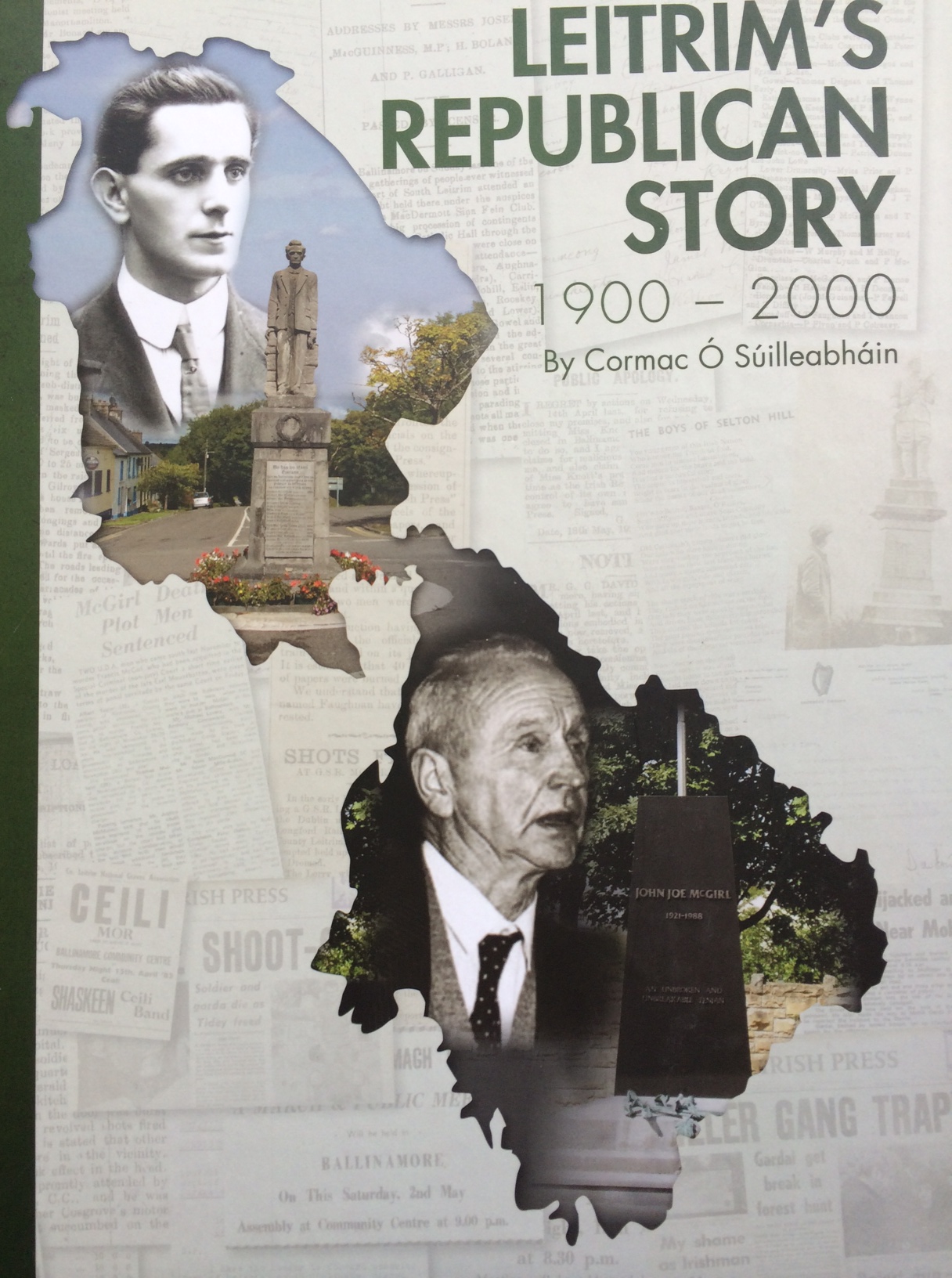
This week saw the launch of the long awaited ‘Leitrim’s Republican Story 1900-2000’ by Ballinamore native Cormac O’Suilleabhain. At its launch the Author confirmed that the work was thirteen years in the making. It certainly is an impressive hardback with lots of fascinating photographs and the book stretches to almost 500 pages.

The book deals in depth with the War of Independence period in Leitrim. It doesn’t shy away from dealing with controversial topics such as the killing of alleged informers and the curious tale of the killing of Dr. Muldoon. The latters killing is full of all sorts of intrigue as it involves a priests housekeeper becoming pregnant and ultimately the Doctor been killed by local IRA figures to protect the ‘Republican’ Priest. If only Miss Marple was on hand.

Some events are recorded that really have nothing to do with Leitrim’s Republican Story. One such incident is the killing of Paddy Reynolds, the Cumann Na Gaedheal TD by a former supporter. Other events are recorded, such as the burning of a Northern Timber lorry near Mohill, whilst similar events, such as the burning of a bus carrying English fishermen in Ballinamore, are not mentioned. There is a comprehensive account of the Don Tidey Affair in 1983 and the deaths of a trainee Garda and Longford born soldier. Nothing is unearthed concerning the whereabouts of the legendary racehorse ‘Shergar’ who was also rumoured to have been buried somewhere in Leitrim. One definitely gets the sense that Leitrim played a crucial support role in the Troubles for the provisional IRA. The County’s topography and isolation made it suitable as a place to hideout, train, test weapons and so forth. There is also an inference that the IRA enjoyed widespread ‘indirect’ support and sympathy during the troubles from Leitrim residents, including families with non-Sinn Fein inclinations and even some protestant families. None of these assumptions are explored or substantiated at any great length. It would also seem apparent that a lot of information is gleaned from unofficial sources by the Author which on the one hand can add credence to his assertions but on the other hand is very partisan and partial.

After the Civil War period the book deals primarily with IRA and Sinn Fein activities in the County. In this regard the Author’s definition of ‘Republican’ is in the narrow sense, and encompasses those who first of all were anti-treaty, and secondly those that did not follow De Valera into the Dail. The book could also be entitled Leitrim’s Sinn Fein Story in that it fails to take a panoramic view of Republicanism. This will no doubt confine its interest to a narrower group of people than was necessary.

The book is very well researched and great credit is due to the Author as this is the first attempt by anybody to explore this subject comprehensively. The overall feeling one has though, is that there is a lack of balance, and it may be that the Author is unapologetic in this regard and this is intentional. Despite the length of the book there is very little critical analysis of events and pertinent figures, nor any great attempt to deal with a wider mosaic of Republicanism. The publication is successful in recording events, but, at times it seems a shame that this is done with a particular bias and lack of objectivity. Despite this, most people with an interest in Leitrim history will enjoy the read. Great credit is due to Mr. O’Suilleabhain on his first publication, and hopefully some of the events he deals with can be the subject of more objective and critical analysis in the future by either himself or others.