Category Archives: comment

‘ALL THAT’S GREEN IS NOT GOLD’

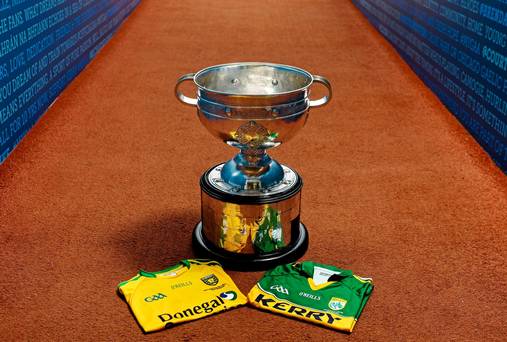
Kerry Donegal

In the GAA there are four Counties who wear Green and Gold for their County jerseys. One is the most successful team in the history of the GAA. Kerry won their 37th All-Ireland Title yesterday. The victory was something that seemed unlikely at the start of the summer. The retirement of several experienced players and a terrible injury to their talismanic forward Colm ‘Gooch’ Cooper had dampened expectations even in the Kingdom. The Kerry team led by Eamonn Fitzmaurice persevered and as the evening light lengthened so did their confidence and belief. Yesterday they were also in the happy position that they were not favourites going into an All-Ireland final. Ever since Donegal strangled the life out of the ‘invincible’ Dubs, the sons of Conall seemed to have had their name already etched on the Sam Maguire Cup. In the semi-final Donegal dictated the terms on which the game was to be played and Dublin couldn’t deal with this dictatorship. Kerry is a different proposition and Donegal simply couldn’t impose their will on the Kingdom yesterday. People say Donegal looked laboured, lacked the usual intensity or aggression but maybe when they analyse the game they will see that for long periods Kerry simply dominated them, holding on to the ball, tackling hard, forcing errors and turnovers, taking their chances when they came. It was not a great spectacle of a game for a neutral but it was intriguing all the same.

This week also saw change in another County that wears the Green and Gold. Shane Ward, a Donegal native, was appointed Manager of the Leitrim Senior team. I’m not sure that many people other than the die-hard anoraks would even have noticed this managerial announcement. If Kerry is the most successful County in GAA then Leitrim occupy the complete opposite end of that spectrum. Leitrim’s paltry two Provincial Titles pales into insignificance compared to Kerry’s seventy six Munster Titles. Leitrim have never won an All- Ireland Senior Championship and never managed to even grace a final day. Leitrim have had three little ‘Golden Periods’ since they first entered the Championship in 1907. In the mid-1920s they were a match for any in Connacht. In 1924 they drew with Mayo and then refused to play in the replay. One Connacht Championship in 1927 was scant reward for this group of players. They had the beating of Kerry in the semi-final, going down by two points in the All-Ireland semi-final. Within a year or two the team had been broken up by mass emigration. It would be sixty seven years before Leitrim would win another Connacht Title.

Perhaps the best Leitrim team of all was that of the late 1950’s led by the mercurial Packy McGarty. They lost four Connacht finals to Galway 1957-60 and without the crucial breakthrough this team too began to break up. In the early 1980’s I also saw some promising teams fail to get the rub of the green. In 1982, ’83 and ’87 they were unlucky against Galway and Mayo. By 1989 though things were pretty bleak again with the County’s finest young men more interested in winning Donnelly Visas than Connacht medals.

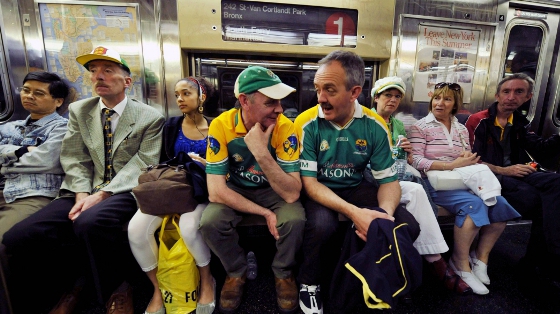
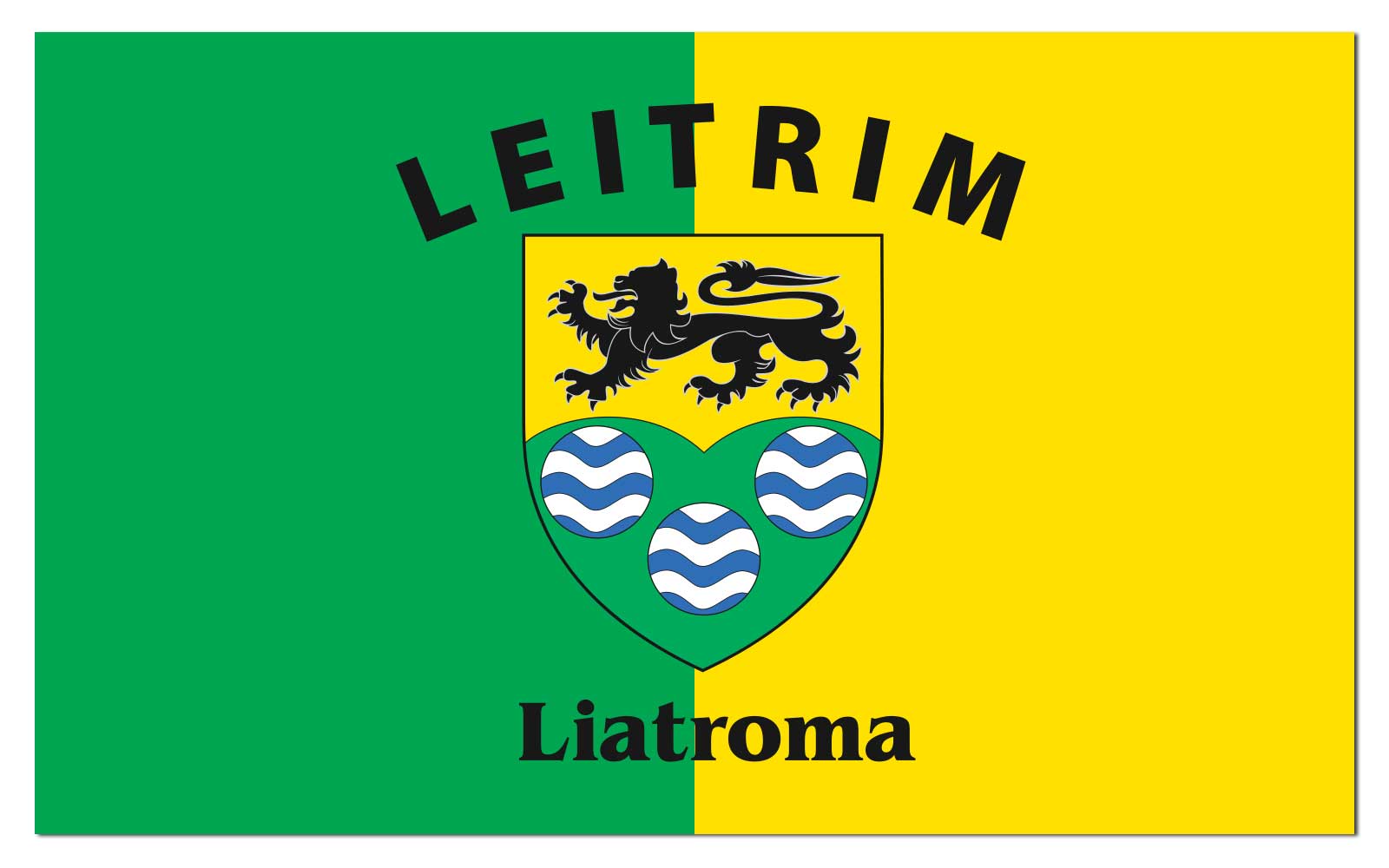
Leitrim_fans_subwayLeitrim Flag

Then along came a Cavan man called P. J Carroll and he took no prisoners. He demanded honesty of endeavour and didn’t countenance inferiority. Soon performances in the pitch began to improve but alas a championship breakthrough proved elusive. By 1993 Carroll was gone, replaced by John Maughan. Beating Galway in Tuam was a huge turning point. The following year Leitrim won a Provincial Title beating Roscommon, Galway and Mayo on the way. They under-performed against the Dubs in the Semi and should have won another Title. In the twenty years since that famous victory in Hyde Park there have been few highlights. The back door system which was designed ostensibly to give weaker counties more games has not worked out for Leitrim. They have an abysmal record in fact and have shipped some very heavy defeats. Their most recent manager Sean Hagan was perplexed by how dis-interested the Leitrim players were in the Qualifiers. Maybe it is because the player’s ambition is to win a Connacht Title and you can’t do that via the Qualifiers.

Leitrim and Kerry operate in two completely different spheres. If anything the gulf is widening. There are only a handful of the thirty three teams that start the year capable of winning the All-Ireland. Making the breakthrough is nearly impossible and behind the scenes it requires incredible resources. Up until recent years, and despite Leitrim’s paltry return of silverware, one always felt that they could compete with any of the Connacht counties and occasionally cause a shock. Over the years these shock wins sustained the County’s supporters and inspired the young. Nowadays the wins are even rarer, resources scarcer and initiatives like the County Centre of Excellence still awaiting completion.

The Garth Brooks debacle and the disquiet over moving the Mayo-Kerry replay to Limerick has further widened the gap between the modern corporate aware GAA and its grassroots followers. The GAA is at a crossroads and it must decide if its future lies in promoting the elite and aspiring to some sort of a global brand or in trying to build a more equitable organisation. It does not seem possible to achieve both. Perhaps the strict adherence of both the administration and the fans to the County and provincial systems means the GAA was hobbled from the start. The primacy of a knockout completion over the league format is also an anomaly in modern TV driven sport. The GAA was founded in ‘Hayes Hotel’ one hundred and thirty years ago. The famous Hotel was sold at an Allsop Auction this week. It is time for us all to realise that even in the history of our beloved national games, everything ultimately has a price commercially irrespective of sentiment.

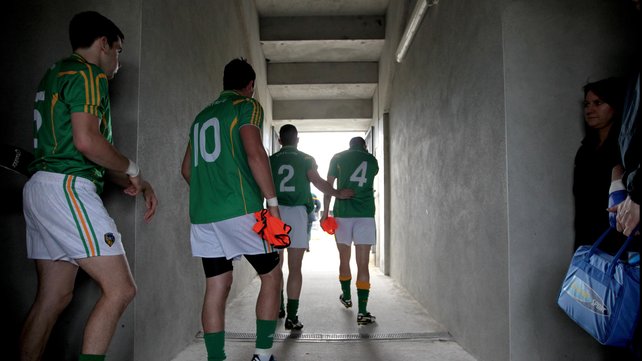
Leitrim Qualifiers

It’s Smart to take a break from your Dumb Phone

smartphone-make-stupidI ‘upgraded’ to the iPhone 5S last week. I highlight the word upgrade because it was not really an upgrade technologically speaking. The truth is I am just about keeping touch with what is in the Gadget market. I feel like a middle distance runner after been lapped by an Ethiopian or Kenyan Athlete knowing that if I don’t keep up I’ll be lapped again before too long. Another thing that made me think about how I’m losing in the tech gizmo race was the launch of Apples new watch and iPhone 6 recently. It made me ask what is becoming a common question; As our phones are getting smarter, are we getting dumber?

Apple Phone It is only a few short years ago that we were all giddy with the fact that our phones now had a camera. We now look on those old phones nostaligically and sentimentally even though it was just a decade ago. It didn’t take long before our phone became our office organiser, camcorder, email and music centre. Now the talk at coffee breaks is whatever great App we just purchased. Now our two pieces of Weetabix for breakfast are recorded on our Food Log App, our twenty minutes on the treadmill logged on the fitness App etc etc.  How can we survive without our smartphones and tablets? What did we do before they came into our lives? I sincerely believe that Smartphones are depriving many us of sleep by making us over-stimulated at night time. Smartphones are depriving more of us of real human interaction, smartphones are destroying the art of conversation, smartphones are eating away at good manners and etiquette in the company of others, smartphones are changing the way we see the world and our place in it.

DumbandDumberA friend of mine regaled me with a story at the weekend. He had just left his office in London and was walking down the street towards a Tube Stop. The street was busy with commuters heading home. A  twenty-something man walking ahead of him caught his attention. At first this man he looked drunk as he swayed awkwardly on a couple of occasions. A few feet further on he walked straight into a lamppost. He gathered himself for a few moments and my friend stopped to see was he okay. He had a cut just on his eyebrow which had started bleeding. My friend asked him was he okay and he said yes without making eye contact. My friend couldn’t believe what he was looking at, here this man was bleeding from a deep cut and still texting on his phone. What a dumb self-absorbed person I thought. Is this what all these smart gadgets have turned us into? Blind, heedless clowns wandering around more concerned with the virtual worlds of gaming and the fake realities of Facebook and Twitter than caring about our own self-preservation! Many of us literally could, without been conscious of it, walk out in front of a bus or train. How many road accidents are caused by texting? Is technology killing us?

7-smartphone-cameras-smart-phones-make-us-dumbWe are now almost entirely reliant on our smartphones in everyday life and less reliant on our brains. Smartphones are making us dumber even though I’m not aware of any scientific evidence of such an impairment. It doesn’t have to be that way if only we could strike a balance between how beneficial smartphones (and the thousands of Apps that exist) can be in our lives and full on addiction and over-reliance. Maybe I can download a Life-Phone Balance App? Or maybe I’ll just have a phone free weekend by dropping my iPhone over to my mothers house. It just mightn’t be as daft an idea as it sounds at first.

Blog Entry written in a Country Churchyard

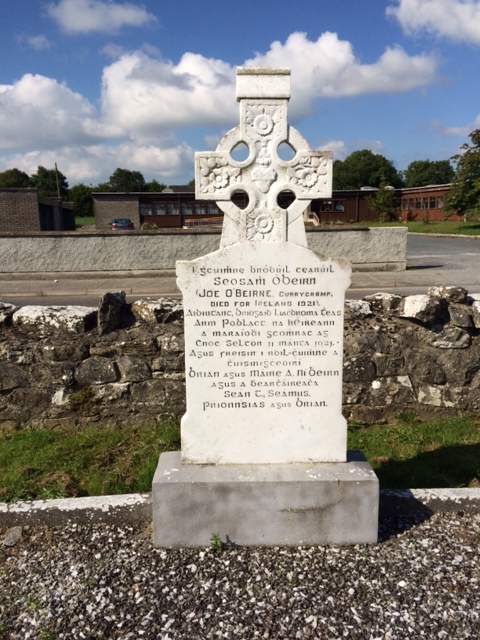
Grave of IRA Volunteer Joseph O'Beirne, Mohill Graveyard

Grave of IRA Volunteer Joseph O’Beirne, Mohill Graveyard

Sunday was a beautiful late summer day and I was back visiting the home turf. Noon found me showing my eldest boy my old Secondary School. The old Alma Mater is now looking very dingy and dilapidated.  The fact that it is overshadowed by the ultra-Modern, uber-cool Community School that replaced it a few years ago probably doesn’t help. Across the road from the dirty Old and the pristine New school is the parish graveyard. I recall one time long ago, when a group of us as teenagers, planned to use an Ouija Board on top of a ‘haunted’ grave here. We never did play the infamous board game there. I think secretly everyone was glad the idea just slowly died away and despite our external bravado, inside we were petrified of what might happen. It illustrated that deep down there is a primal fear of the unknown in us all. Graveyards no longer hold such fear for me. Some final resting places are very peaceful places to spend time in. Glasnevin cemetery is one of Dublin’s premier sightseeing locations and gives one a fantastic tour through Irish History. I have also enjoyed Woodlawn Cemetery in the Bronx where one can easily spend hours walking amid the beautiful manicured parkland-like graveyard. Mohill graveyard is not on the same scale obviously but it has its own little narratives waiting to be discovered. I decided to bring my son for a walk around the graveyard to show him the resting places of his relatives. Soon I was standing amid the old graves beside the seat of learning where I first read Thomas Gray’s famous lines,

‘beneath those rugged elms, that yew-tree’s shade,

Where heaves the turf in many a mouldering heap,

Each in his narrow cell for ever laid’

Soon we were reading the names of my sons Great-Great-Great Grandparents. I’m not sure the Eight year old mind can appreciate the generations that have gone before or the fact that without their existence, we wouldn’t exist. I know that he now knows where his people lie and that is good. I’m sure he will come back some day on his own initiative, and hopefully with the next generation too. We said a little prayer together for these people whom we never met but who gave us their DNA.

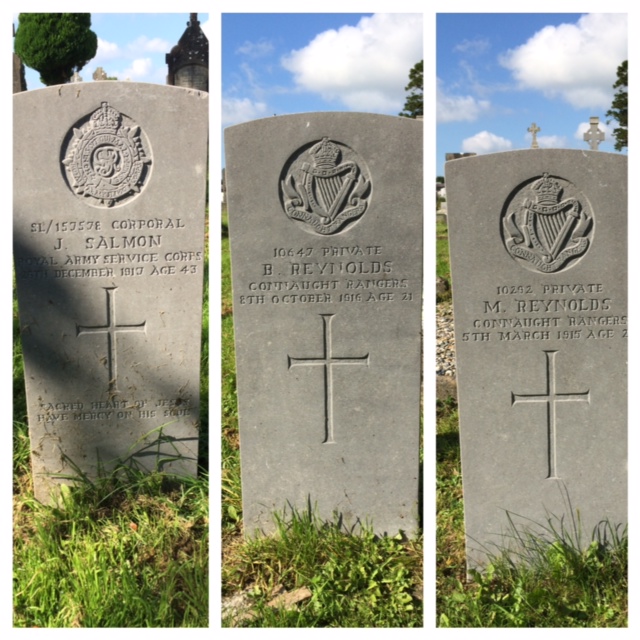
I also came across the grave of Joseph O’Beirne, an IRA Volunteer killed at Selton Hill in the spring of 1921. Selton Hill is about 5 miles north of Mohill on the road to Fenagh and Ballinamore. I had often heard about the ambush as a young boy from my grandmother who was born just a few townlands away. The general consensus was that the flying column of which O’Beirne was a member were betrayed by loose talk which passed to the local GP, Dr. Charles Pentland. The doctor was a popular man locally but he was also loyal to the Crown. He passed the information on to Inspector Gore-Hickman of the RIC and very quickly a British Army Unit was mobilised. The eleven volunteers in Flynn’s house at Selton had no idea that their fate was sealed. Some sat around drinking tea whilst cleaning their guns and others rested up, tired after an early morning march cross country. When they realised that they were found out it was too late. The main body of nine men who were in Flynn’s house spread out across the marshy bottoms. Quickly they were mowed down by two well-placed Lewis machine guns set up on the high ground on the main road above the house. The column was also undone by a small group of British Soldiers who had outflanked them and set up an enfilading position. Been fired at from two sides in mostly open country the veteran troops of the Bedfordshire Regiment had created a killing zone. In a few minutes six of the nine men who were in Flynn’s house were fatally wounded. Two more were badly wounded but survived. Only one, Andy McPartland escaped the bloody scene. Another man, Bernie Sweeney lay undetected in a drain where the cold water must have helped to stop the haemorrhage of blood from his wounds. The two men who were the luckiest of all were Pee McDermott and Paddy Guckian who were posted to a neighbouring house. They escaped around by Selton Lough. Joe O’Beirne hailed from Currycramp in Bornacoola but his family had a plot on Mohill graveyard. One of his sisters later married Ben McGuire who for many years was a Fianna Fail TD for Leitrim until he fell out with De Valera. McGuire and his wife Josephine (nee O’Beirne) are buried beside Joe whose beautiful gravestone proclaims  that he ‘died for Ireland’. Only a few yards away lay three graves close beside each other of men who may also have thought that they were dying for Ireland. These men though died in the First World War wearing the khaki green of the British Army. The first is Joe Salmon who was in the Army Services Corp and died in Belfast; the other two are brothers, the Reynolds from Treanmore. These are the only war graves identified in Mohill cemetery and in many ways they are unique in that they are only three of perhaps up to fifty Great War casualties  who are interred in their native parish. In the Great War the slaughter was so rapid that you were buried where you fell. Some who didn’t make it home are interred quite a distance away. Private John Cunion was from the Green Road where he was the eldest of the seven children of Bernard and Bridget. Bernard worked as a baker in town. John before signing on was an apprentice coach-maker. Today John lies thousands of miles away from his native Mohill. His grave is in a dusty town called Amarah on the bank of the Tigris in Iraq. In 2003 Amarah became a centre of resistance against the US led invasion. Just like in 1915 it was the British who fought their way into the city and took control block by block, street by street. The current instability in Iraq means that the Commonwealth War Graves Commission is finding it difficult to maintain the graveyard in Amarah.

Commonwealth War Graves in Mohill

Commonwealth War Graves in Mohill

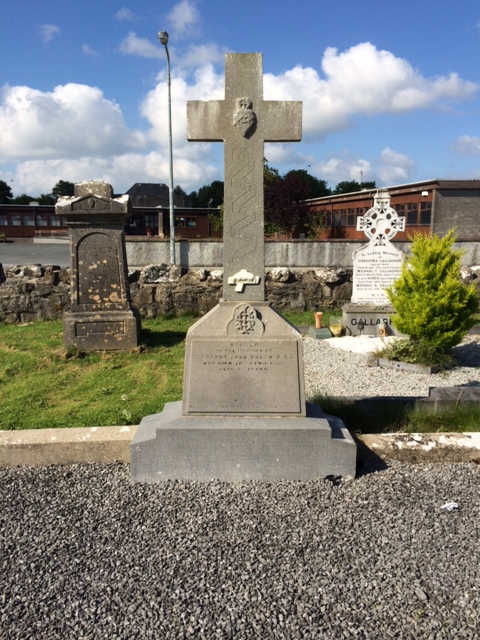
There are men from Mohill lying in Commonwealth Graves all over the World. Thomas Bell is buried in Allahabad in northern India. Francis Canning fell at Gallipoli. John Fitzgerald survived Gallipoli before his unit was later overrun by the Bulgarians at the Battle of Kosturino in modern day Macedonia. John’s remains were never found. and his death is simply recorded on a communal plaque.  John’s brother Patrick had already died in the opening months of the War. Another brother Thomas would die just three weeks before the Armstice that ended the war. In 1923 yet another brother Edward, a private in the Free State Army, died in a shooting incident in Longford. Mrs Fitzgerald was indeed unfortunate to lose four sons in uniform. Another Mohill born combatant, Patrick Nooney died at sea. The majority of war dead from Mohill  lie buried in Flanders or France where most of the Irish Units served. It is certainly unusual for soldiers to be buried in the graveyard of their home town. In Michael Reynolds case it is particularly poignant. Michael was gassed on the front and although he lingered on for months afterwards his demise was inevitable. He did however live long enough to make it back to hospital in Ireland and that is why his remains lie here. The landed gentry were also not immune from the bullets and shell fire. Hugh Crofton, a member of the landlord family who owned the town of Mohill died in Gallipoli. He is buried in Twelve Tree Copse overlooking Cape Helles, where the Dardanelles meets the Aegean Sea. Just another short journey from the war graves is an impressive headstone to a Sergeant Joseph Bruen of the RIC. Bruen was from Drumraghool and was stationed at Henry Street Barracks in Belfast around the time of partition. He was a Catholic in what was an increasingly sectarian force. He was shot in an apparent robbery in April 1922.  This would have been one of the bloodiest months in Belfast at the height of the Pogroms. The atrocities committed around these times are still remembered to this day in that city. Some of the worst acts of violence were committed by the ‘Cromwell gangs’ who killed many innocent people, including children, in an effort to religiously cleanse parts of the City. It was said that many of the gang were members of the RIC and that Michael Collins had managed to get all their details. It is also said that Collins had planned a similar attack to the one that took out the Cairo gang in Dublin. Fate intervened however to these plans in the guise of Beal na Blath. The atrocities weren’t all confined to one side of the religious divide of course but one can’t help but think that this was not a nice place to be for a Catholic policeman in an RIC Uniform.

Sgt Joseph Bruen, RIC Belfast d. April 1922

Sgt Joseph Bruen, RIC Belfast d. April 1922

So as the sun shone down over the rolling drumlins of South Leitrim, and I find myself, janice –like, looking back through the medium of the names engraved on these grey stone slabs, I can’t but conclude that one doesn’t have to go to Glasnevin to experience Irelands troubled past. There is a lot of history to be found in the graveyard of every small town and village up and down this Island.  Alas for the unfortunate actors in this particular play I can only recall one more line from Thomas Gray’s famous poem – “For them no more the blazing hearth shall burn”.

ALBERTUS MAGNUS

Albert peaceLife, like Literature has a habit of juxtaposing seemingly odd ends together. Milton gives us God and Satan in ‘Paradise Lost’ and for some reason the fallen Angel came out of it with an enhanced reputation. This morning I read that a small train station called Dromod, the only train station in all of County Leitrim, was in danger of closing. I have used the Station on many occasions often not knowing when I’d be back.


Many of my forbears also used Dromod Station. Sadly some never saw their native County again. The train meandered behind our home place. It was said that in the late 19th Century my Great-Great -Grandfather climbed a rick of hay so that he could wave goodbye to his New York bound granddaughter on the passing locomotive. Climbing a rick of hay is not exactly alpine in scale until you factor in that the old man was reputedly a hundred years of age at the time. When I was younger I thought this story was nonsensical.  Years later I discovered the date of the grand daughter’s entry into Ellis Island. I slowly wiped the egg from my face.


Another relative of ours who never again saw home boarded the train in Dromod in late 1939. He went to England to work in a munitions factory. He died in Toronto in the 70’s. Word got back to the family who of course were shocked. The shock was not so much that the man had died but on where he had died. His sisters always believed that he was still living somewhere in Manchester. Thankfully, and unlike these family members, every time I took the train I did get to see home again. I know however that one day I’ll leave and that it will be the last time.


I remember also going out to Dromod to see the men from the Hills of Donegal bring back the spoils of war from Croke Park in ’92. That was a great sight and a wonderful occasion for the whole Northwest.


I have many memories of Dromod Station. Sadly a man passed away today that has no memory of Dromod. One time he knew everyone in the Village and everyone who bought a train ticket. Sadly Alzheimers ravaged this sharp mind and confused those precious recollections. I’m sure if he was in good health Albert Reynolds would not overly-nostalgic and perhaps say that it was the best of times, but also the worst of times.


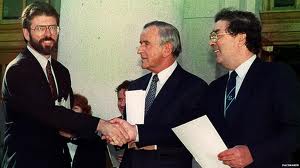
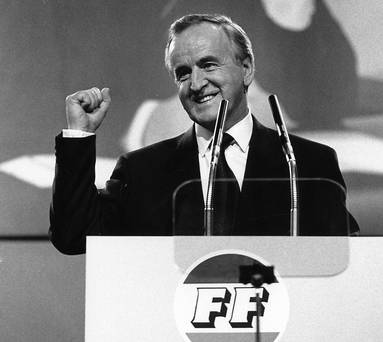
 Albert Reynolds main legacy will undoubtedly be the crucial role he played in bringing peace to this island. That is a noble legacy to what was an intractable problem. Albert may not have ticked all the boxes for the South County Dublin set but he was shrewd man, a person who took risks, who speculated to accumulate, a type of character no longer prowling the halls of Leinster House. Yes, Albert made mistakes, plenty of them and his political demise was full of controversy, yet somehow it is easy to forgive him. It is not simply because us Irish are wont to speak ill of the dead, it’s because Reynolds retained a common touch. He was a man who knew the value in the handshake to the country folk. My mother and father met in the ‘Cloudland’ in Rooskey, just like thousands of couples throughout the Midlands and West who found a partner in one of the many Reynolds Dance Halls in the hucklebuck era.

The Reynolds were said to be ruthless in business, especially with competitors and yet there are plenty of stories citing kind works Albert did for people without any fuss or fanfare.  His passing will be keenly felt in Longford which is suffering badly in the current recession. His home village of Rooskey is also in decline. Where once there was a booming meat processing plant employing hundreds of people from South Leitrim, North Roscommon and Longford there is now a quiet sleepy village where Bus Eireann only stops once a day.


As a young man Albert Reynolds worked as a clerk for CIE in Dromod Railway Station and I’m sure he carried many memories of the place with him throughout his life. I once met a man at a function in the North of England. He told me that when he was emigrating to England he had his boat fare but was short some money for the train fare. Albert let him on the train with a valid ticket and told him he’d see him when he was home again. The man found work but was not home for over two years. When he passed through Dromod Albert was no longer working there. The young emigre could have got away without repaying the fare but he felt he could not renege on the good deed. He made himself known to the Station Master who told him, ‘Ah yes, I remember young Reynolds saying you were from good stock and you’d be back’. The honest traveller told me he had the pleasure of telling Albert the story years later when he met him in Longford.  Reynolds knew immediately who he was and how much he had owed CIE, before saying to him ‘I never doubted ya’.


Albert ReynoldsPolitics has changed and so has Ireland since the Reynolds/Haughey/ MacSharry heydays. It is doubtful that we will ever see another Albertus Magnus. Eugene McGee reckoned the night he was made Taoiseach and returned to the Market Square in Longford was like the County winning the All-Ireland.


It is sad that the news regarding the future of Dromod Station is juxtaposed with the departure of its most famous employee. Sadly this time it’s a one way ticket for Albert. His loss will be keenly felt throughout the villages, towns and parish halls of Longford, Leitrim & Roscommon.

The Show

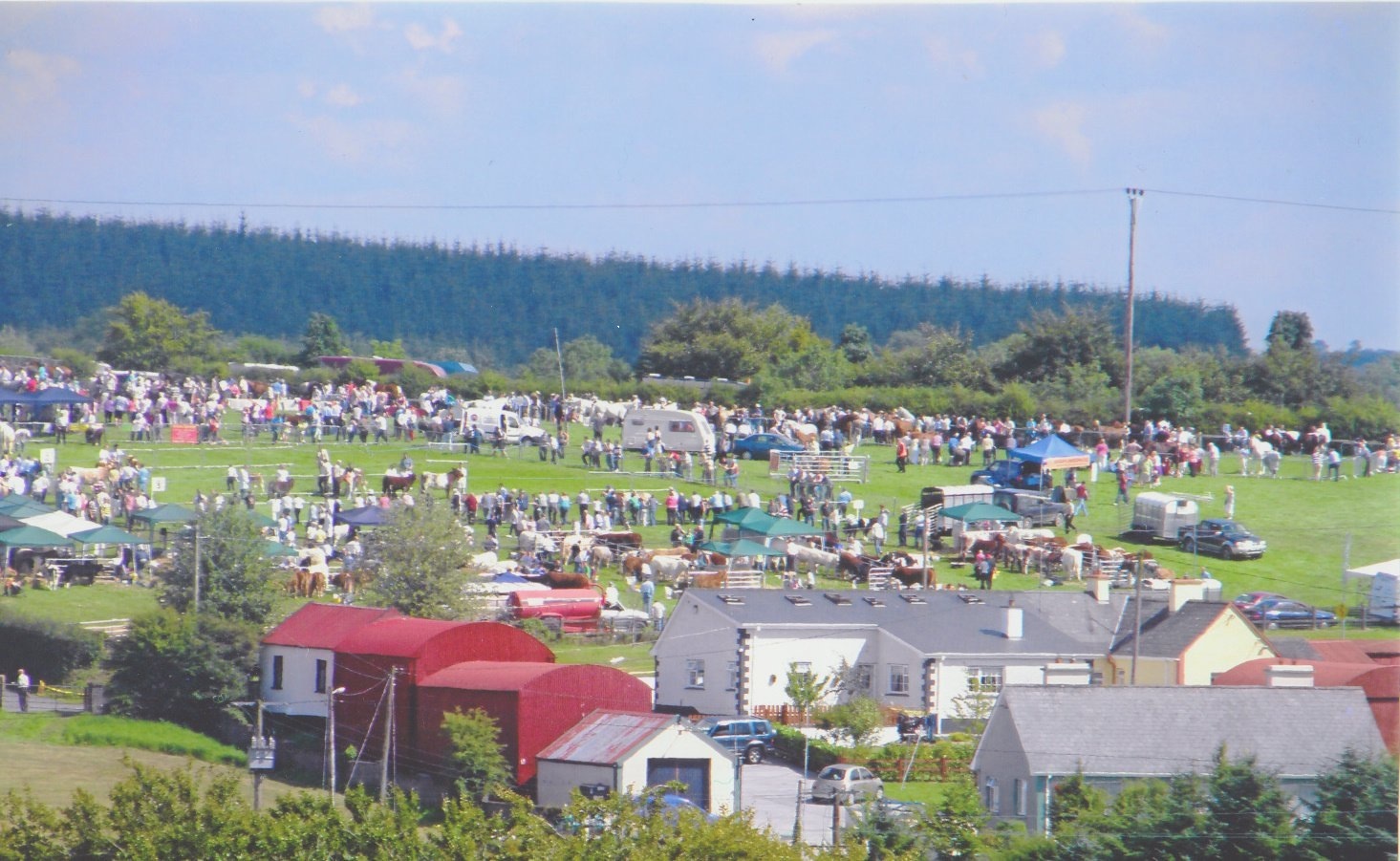
imageIn Ancient times the Celts held their great festivals and gatherings in the month of August or Lunasa as it was then known. It was the month of the harvest when the first berries ripened. It is therefore not altogether inappropriate that the local farming community of Mohill and its hinterland chose this month to host their annual show.

For the farmer August is never quite the same from year to year. Each summer he goes head to head against the elements in an eternal battle between man and nature. It is a struggle that has been repeated again and again over the millennia. While the weather is always variable there is one constant every year, and as August draws to a close and one starts to notice the first drawing in of the evenings, thoughts invariably started turning to the Show. In our house it was never known as Mohill Show, it was simply “The Show”, and at that it was the grand dam of all shows. Its roots dating back to the pre famine times of Lord Leitrim and ultimately revived in the 1920’s by a dynamic Padre known as Canon Masterson. Our Show, for us there really is no event quite like it. There was just something about this particular day when the country folk took control of the town, when they brought out their finest stock and produce and when the world was turned topsy-turvy for a few short hours. The long summer days in the fields or backbreaking hours on the bog were now forgotten.

The Show was more than just a one day event, it was as much about the anticipation, the preparations, the memory of the previous year perhaps, the preceding weeks leading cattle around the back roads, turning mad beasts fit for a rodeo into docile stars of the Show Ring. I can remember one occasion when aged not more than ten or eleven. I was leading a feisty heifer in our front field. As she took flight I stumbled, I held on to the rope as long as I could but she had me beaten all ends. As I let go I noticed I was minus one half of my footwear. Try as we might we could not locate the missing shoe. Ten months later the fate of the lost shoe was known. A trailer load of grass was tipped on to the silage slab, and there it was, my old shoe, tattered torn and ragged from its exposure.

The evening before the Big Day the cattle for showing were brought in from the fields. We haltered, washed, scrubbed and combed them. Plastic buckets overflowing with fairy liquid and warm water. There were several different types of combs for the different animals. The Herefords with their wiry hair, the big Shorthorn cow, her gleaming red hide and friendly polled head. Extra bedding was placed in the byres and with it the hope that the next morning the main actors would still be spic and span. When all was done some one might call into McGowan’s house to get a preview of the show book, hot off the press, from Aideen or Lourda, the overworked Secretaries. The Show Book listed all the classes and prizes and also the entrants, the friendly opposition.

An early breakfast was essential on Show morning as there was a busy few hours ahead. When finally ready we walked the cattle to the show. It was only a mile but what an adventure. Some passing motorists would always stop to say hello and drive alongside, windows down, half tanned arms lazily hanging out the side, commenting on how well our cattle looked and wishing us luck.

Crossing the town was always a bit nerve wracking, hoping the cattle wouldn’t stampede or damage a car, nearing the park, finding a good spot along the wall which would become HQ for the day. When we got into position there began another intense session of grooming and combing. A quick gander around the field to size up the opposition and see what our chances of success were.

The PA would then crack into life and get the show on the road. The classes were called. “When are we on?” “We’re next after that class in Ring two” “Who is judging?” “Get ready”. If not leading then a good ringside seat to watch proceedings. “How is she walking, how does she look, is the judge looking at her, is he calling her in, No?” “He’s calling her in now, where will he place her?” anxious moments, he is talking to my father for the longest time, then the rosettes in his hand, “what colour is it? Its red, yes we’ve won!”

And so the drama went on in pursuit of the Red rosette. The morning would simply fly by. There might get a short break and a chance to visit the horses and ponies. These were always over at the Boeshil end of the Park. Sometimes there was Showjumping and we watched the McGuinnesses with awe clearing the jumps effortlessly. The driving cars were always a highlight with Joe Beirne and family driving in fine style. Then was the Donkey Derby and great excitement and it always seemed to be won by the one of the Mees

Then back for the young stockman class. Some young naturals, unfortunately I wasn’t one of them, others under a little bit of parental pressure, some really looking the part with white coats. The standing of the animals feet was most important and animals were constantly been wheeled around again and their feet poked with sticks to get them standing perfectly, like a bovine Miss World pageant. Some poor devil would be struggling with a little heifer that was prancing around like a ballerina that morning, yet has somehow being transformed into a stubborn mule. A younger sibling is quickly press ganged in to walk behind and “push her on”.

My favourite event was the dog show. I entered a few times but the pedigree of our dogs was, well, questionable. It was still a great day out for the dog and what would he be at home anyway when we were all here. You could tell he wasn’t used to these big days unlike the professional poser dogs, posing nonchalantly, barely casting a sideward glance at our collie cross pulling hard against this strange leash. Don’t worry about it Sammy, we still think you’re the greatest and tomorrow I’ll get a big bag of bones from Paddy Kilrane or Logans to make up for the disappointment of coming last in your class.

The Shows in the 1980’s always seemed to be cursed with wet weather and I can remember people scrambling for shelter in trailers. If it was a long shower it wasn’t long before the air was sweet with the pungent scent of Woodbines or  Sweet Aftons.

The buzz around the field was magical. There were Chip Vans manned by the late Aubrey and Barney, Mr Whippy ice cream, the Photograph Section, the sheep and goats, the prize vegetables. My brother Enda entered three beets one show, which he had tended to all spring under the watchful eye of my granny. “And what would you know about Beets” as we taunted him. But he had the last laugh when he picked up his two pounds first prize. In the sheds the eagle eyed stewards had their hands full trying to keep quick handed urchins from running off with prized buns and mouth-watering cakes.

A quick trip over the town with my grandfather to Sheila McGarry’s Public House was obligatory. The little pub which was usually very quiet the rest of the year was packed on Show Day. Men with sticks and caps greeted each other enthusiastically. Their nicotine stained fingers clutching a half one and a glass of Guinness on the Counter as well.

The day gradually drew to a close and we gathered up our gear and headed across the town with our cattle. This was a trickier proposition; the traffic would be a lot heavier than this morning. As we neared home the cattle started getting excited as they sensed familiar pastures, a few quick lows from the lead cow and then the lows from away off from our other cattle, the ordinary cattle, those not deemed to have royal enough blood to go the Show. The Show cattle now quickened their pace, and when we got to the bottom of our lane we usually took the halters off and let them run up the rest of the way to the farm yard themselves. They knew where to go. They say a good huntsman would not let a morsel pass his lips until his animal was fed, watered and comfortable. We were no different.

A quick cup of tea and then into John James McKeon’s or Caseys where every animal on display at the Show that day was examined, discussed and judged anew. Commiserations for some who didn’t win, but felt should have, while those who did win tried hard to be humble about their success. The Show Dance brought matters to an end but the planning for the next one had already begun.

‘Yelling like madmen in the Sun’ – Flanders 1915

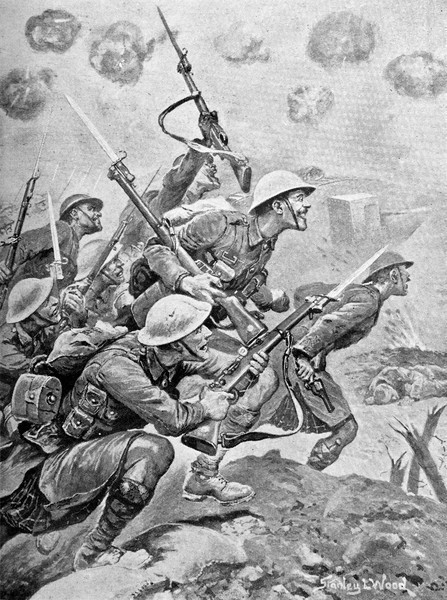
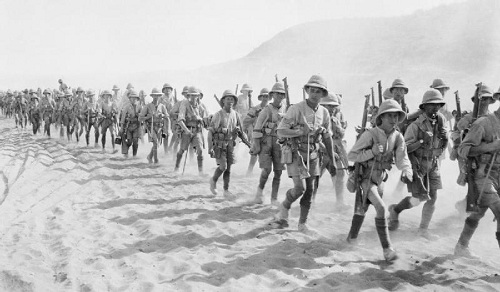
WW1 OVERI note that looking back on the First World War is a retrospective act everywhere save for Ireland. Here it is the most introspective of activities. However over the next few years it will become the norm as we finally place the significance of the war in its proper context.

Many people are still coming to terms with the fact that in 1916 their forefathers were not manning a sandbagged window in the GPO. As we revise and edit the standard version of history fed to us over the last 90 years, we will realise that for every person that took up arms in Dublin on that Easter Monday morning, there were 200 fighting in Khaki. Yes Irishmen and women were in the thick of it from Ypres to Mesopotamia, Gallipoli to Walvis Bay. It is a fact that many residents of this Island are uncomfortable with and this discomfort will no doubt invite any number of theories and explanations. Yet as we come to understand it we must also confront the fact that there was no conscription in Ireland during the Great War. So if thousands of ‘Nationalists’ went to the front and it wasn’t for ‘King and Country’, what was their motivation?

For me the first clue is in those beautiful lines written by Thomas Kettle in the field before Guillemont on the 6th of September, 1916

“And oh! they’ll give you rhyme
And reason: some will call the thing sublime,
And some decry it in a knowing tone.
So here, while the mad guns curse overhead,
And tired men sigh with mud for couch and floor,
Know that we fools, now with the foolish dead,
Died not for flag, nor King, nor Emperor,—
But for a dream, born in a herdsman’s shed,
And for the secret Scripture of the poor.”

We are finally maturing as a nation, or so we like been told, Ad nauseum. This morning the media is dominated by stories of Israels relentless destruction of Gaza and sectarian atrocities in Iraq. How ironic that almost a century ago the Connaught Rangers with many Leitrim men in the ranks fought and defeated the Turks at Gaza, Jerusalem, Ramallah, Basra & Fallujah, and how sad and depressing it is that a century later these same familiar place names still dominate the news.

The only positivesof the Great War was the extensive body of war poetry it left us, much of it espousing the futility of war, recording the terrible carnage and its effects on the human soul. There are many oft quoted verses by Sassoon and Wilfred Owen et all but I think these few lines by Conrad Aiken capture the madness of going ‘o’er the top’

“It will be like that other charge–
We will climb out and run
Yelling like madmen in the sun
Running stiffly on the scorched dust
Hardly hearing our voices
Running after the man who points with his hand
At a certain shattered tree,
Running through sheets of fire like idiots,
Sometimes falling, sometimes rising”

Palestine 1917

Palestine 1917

We await the Poets of Gaza, Donetsk, Aleppo and Bangui.

Guardians of the Land – The Syrian War

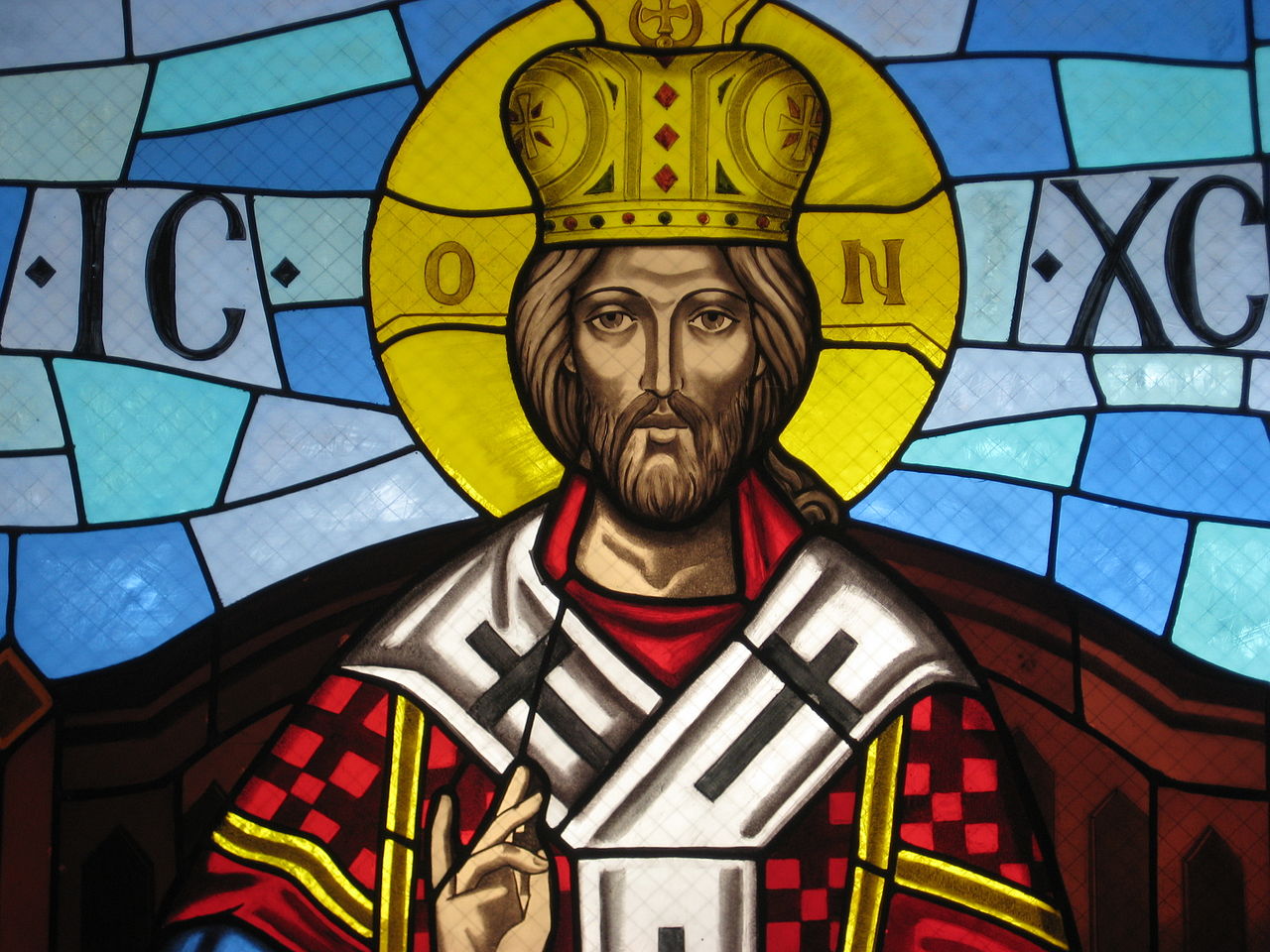
Guardians of the Land
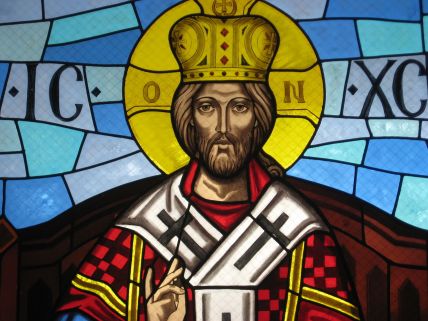
Christian Orthodox icon


The grainy image shows the monk kneeling in front of his Jihadist captors, his hands tied and tethered like a sacrificial animal. The executioner is cheered on by a crowd of men with shouts of “Allahu Akbar’. Many of the bystanders have their faces covered; many also have mobile phones held aloft filming the grisly scene. The end comes not quickly but in a gruesome struggle of a body kicking and writhing as the man is pushed face down into the dusty ground, decapitated with what looks like a simple kitchen knife. The noise of the baying crowd grows ever louder and more manic as the scene reaches its bloody conclusion.

Some weeks later the death of the Franciscan Father Francois Murad was confirmed by the Vatican news agency. Father Francois was killed in Gassanieh, in northern Syria. He had been staying in the convent of the Custody of the Holy Land. His killers alleged that the priest had been collaborating with the Assad regime. According to local sources, the monastery where Fr. Murad was staying was attacked by militants linked to the jihadi group Jabhat al-Nusra who have declared as their sole objective the establishment of an Islamic Caliphate, under which the law will not allow even the mere presence of “kaffir” (“infidels,” or, in other words, non-Muslims) even those who have lived here for two millennia.

Just a few weeks before news of Fr. Murad’s execution, I read a report from Afghanistan stating that two young boys had been beheaded by the Taliban. Their crime was scrounging food from an army checkpoint to bring to their starving families. In July 2012 in the same district in Kandahar, a 16-year-old boy accused by the Taliban of spying for the government was beheaded and skinned. The next month, a girl aged six and a boy of 12 were kidnapped and beheaded in separate incidents in Kandahar and the east of the country. In 2010 a seven year old boy was hung for “spying”. The child was abducted from his home and taken to a neighbouring village where he was put on trial. The child was then hanged in public in the village of Heratiyan, in the southern Sangin district of Helmand province.

For a liberal westerner one can’t but be appalled at the barbarity and cruelty of these killings done in the name of Allah and Sharia. There are many problems with Western Society. The United States is often called a bastion for protecting core western values and freedoms. However the US is itself a country blighted by issues such as its out of control gun culture that has led to the slaughter of innocents. Despite having a large conservative Christian caucus, the prevailing liberal moral code in America is viewed by more traditional societies as base and immoral. Our own continent has in the lifetime of many still amongst us witnessed the single greatest attempt to wipe out an entire people.  There is no perfect society and one person’s freedom can be just one step across another’s threshold of tolerance. We are reminded that all rights, save fundamental ones, have over time been essentially a moveable feast. Let us not also forget that witches were still been burnt in Europe up until the 19th century, is that any more abhorrent than an adulteress being stoned to death in Kandahar? 

Many of the practices in Islamic Countries that most abhor us in the West, would be very familiar to an early Christian. The cult of martyrdom is shared in many ways with Islam. Was Fr. Murad not described as a Martyr in much of the Catholic Press, dying for his faith?

Many Christians quote the practice of honour killing as something uniquely Islamic but the Bible contains numerous references supporting the practice. At Leviticus 21:9 it states “And the daughter of any priest, if she profane herself by playing the whore, she profaneth her father: she shall be burnt with fire”. Clearly the justification for killing the girl is that she has brought discredit to the father’s reputation and his honour can only restored by killing his own. It is true that the countries where most honour killings take place today are Arab or Muslim countries, which of course leads many people in the West to conclude or presume that all Muslims support such behaviour. The truth is the vast majority of Muslims condemn such acts as barbaric. In contrast to the Bible there is no single text in the Quran that justifies these crimes. The custom of honour killing predates the Islamic faith and is seen in Hindu and Sikh cultures and in the trans-Caucus Christian communities. 

Honour killing was only abolished as a specific category in Italy in 1981. In Brazil men could be acquitted of murdering their spouse if they could successfully raise the defence of Honour, a position that only changed in 1991.  Like all other religions, Islam strictly prohibits murder and killing without legal justification. 

You can see why Fr. Murad’s killers justify his murder by accusing him of being a spy when the more plausible reason is that they want to cleanse the area of all Christians. Once again we must not rush to demonise all Muslims, the overwhelming majority of whom condemn such crimes as vile and a backward distortion of their faith.

In recent weeks we are faced with the sight of ISIS killing and displacing the remnants of the ancient Christian Community in Mosul.  Why do so many of us in the West feel such a powerful affinity of kinship with this dwindling and oppressed Christian flock, caught up in the current violent maelstrom of the Middle East? Could it be that the uprising which in the beginning, appeared to embrace freedom and democracy has steadily became a violent Islamist expression against a liberal secular society. In Gaza the Christian community is less than 1% of the population. Just half a century ago this percentage would have been closer to 20%. Why do images of Christians being persecuted often weigh heavier on us than Israeli shells hitting apartment buildings in Gaza? 

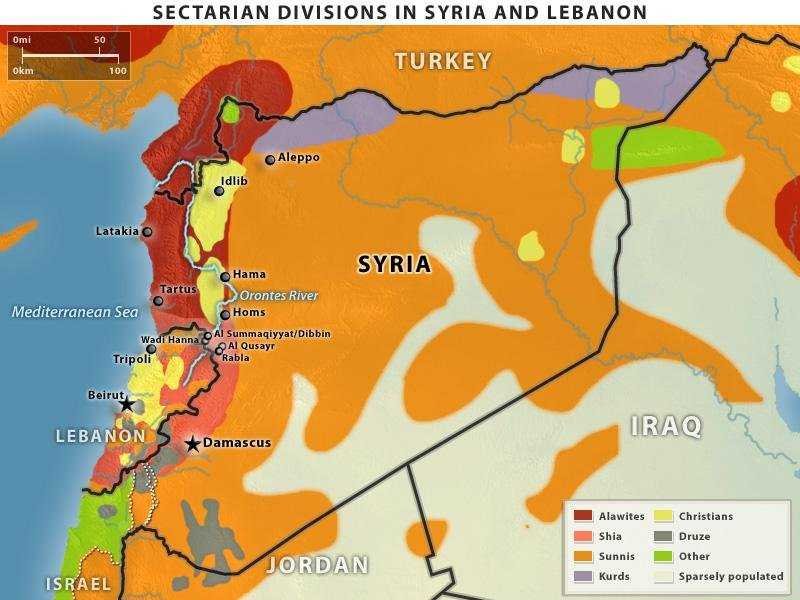
Assyrian culture used to be distinctive among other countries in the Middle East for the coexistence between Christians and Muslims which went beyond just a tolerant forbearance. This was a reality of which most Syrians were proud. Under the iron fist of the ruling Alawite dictators, who kept fundamentalists at bay, a good degree of religious freedom was preserved.  Christians fleeing persecution in other Middle East countries found refuge in Assad’s Syria, including Iraqi Catholics fleeing post-Saddam persecution.

Yet today the “Arab Spring” has become to sound as hollow as the “Celtic Tiger”.  The 2,000-year-old community of Assyrian Christians—some of whom still pray in Jesus’ Aramaic tongue—are facing extinction, Armageddon. As Nina Shea, director of the Hudson Institute’s Centre for Religious Freedom told a subcommittee hearing of the US House of Representatives in June this year, “Christians are the targets of an ethno-religious cleansing by Islamist militants and courts. In addition, they have lost the protection of the Assad government, making them easy prey for criminals and fighters, whose affiliations are not always clear. Wherever they appear, Islamist militias have made life impossible for the Christians.” Unlike the Christians in Lebanon there will be no foreign power coming to their rescue.
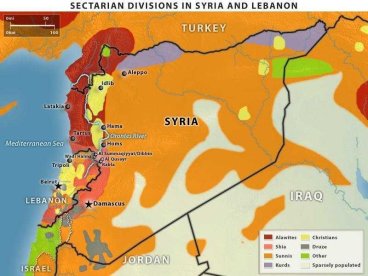
Ethno Map SyriaI have been fortunate enough to visit much of the Middle East before the Arab Spring; a sequence of events that have changed the geographic and demographic landscape of the Islamic world. One of the most unexpected legacies of that trip is a strong empathy I now have with the various Christian communities throughout Egypt, Israel, Lebanon and Syria. There were the struggling souvenir shop owners in Bethlehem cursing the Israelis for hindering tourist traffic by diverting them on a long winding route away from and around the new settlements. There was the restaurant owner in Nazareth complaining that the pilgrims are now staying in Haifa or Nazareth Illit, the new Jewish city overlooking the old town centre. Then there was George the handsome Omar-Sharif like Copt who drove me all around Cairo for a couple of days sharing the rich tapestry and Coptic influence on his homeland. There was the elderly Emile who tried to communicate with us in French and explain that he was not an Arab at all. We were travelling from Tripoli in Northern Lebanon up high into the mountains to Bcharre. We stopped the car by the side of the road to have a look back down towards Tripoli, a predominantly conservative Sunni City backed now on this sunny October morning by the glistening Mediterranean. As I was taking a photograph the elderly man hailed us from his house across the road. Within seconds he was crossing over to us with two outstretched arms, the hands cupped upwards as if in supplication, his English and our French was about the same level of mediocrity so we struggled to communicate at first: yet I couldn’t help but think the few phrases he had uttered to us had been used by him on many occasions previous, “We are not Arab, we are not like these people, we are like you, we are Phoenician, just like Italia, Spain, Sicily. We are Western, we have culture, we are surrounded but we will fight until the last one is left”. It was as the narrative of the Kateeb, the right wing ideology of the Christian Maronites espoused by Camille Chamoun (he of Brownshirt fame) and one of the primary causes of the Lebanese civil war.
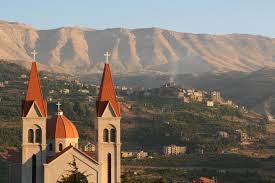
Bcharre, Christian town in the Mountains of Lebanon

Bcharre, Christian town in the Mountains of Lebanon

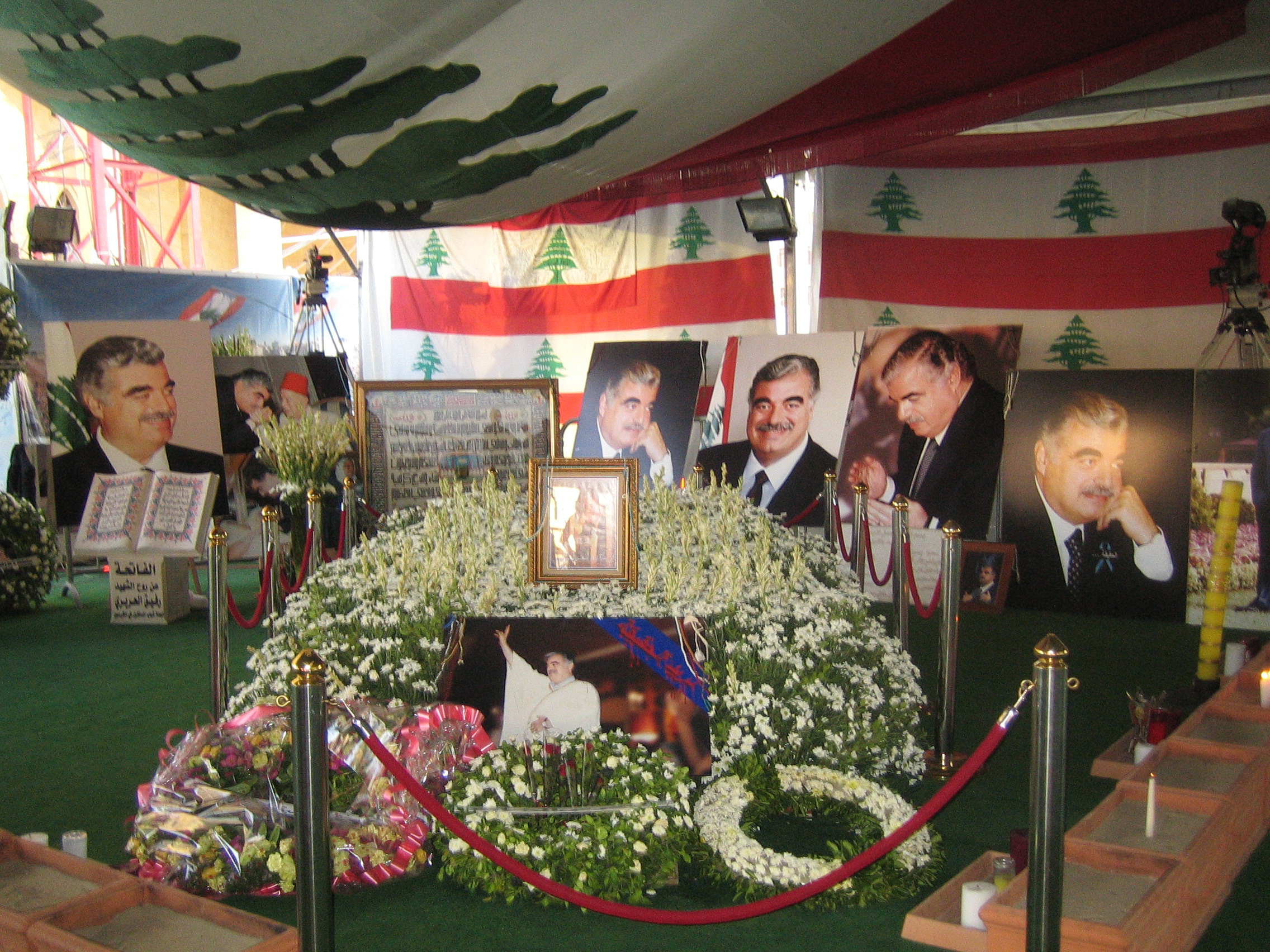
Away in the hazy distance one could almost make out the shape of the Citadel of Raymond de Saint-Gilles, an anomaly amongst a city that was now only 5% Christian. Yet up on the foothills and mountains were these villages that were almost 100% Maronite communities. It was as if by holding the high ground they could maintain a constant guard against the Muslim threat visible below on the narrow coastal plain. South and west of here is the heart of the Maronite nation, the Mountains of Lebanon. Almost every hill and summit is adorned by a cross. It is this group whose conflicts with its Muslim and Druze neighbours have drawn the West in, initially France and lately the US, for the first western intervention since the Crusaders and left both States reeling from the experience. Israel in ’82 made the same mistake thinking it could control this country of factions directly and later by proxy. It was a doomed strategy despite all the resources at Israel’s disposal. Then the counterweight in Lebanon’s complicated political mosaic was Syria, a country like Lebanon of so many sects and denominations, somehow held together by an autocratic ruler and his cruel state security apparatus. After Israel pulled out the murky world of the Syrian security personnel continued to pull strings in Lebanon culminating the assassination of the Sunni Prime Minister, Rafic Hariri. Whilst this single event was probably the beginning of the end of Syria’s hegemony in Lebanon, time will tell if it will also be seen as significant in the challenge to the Alawite dominated Assad regime.
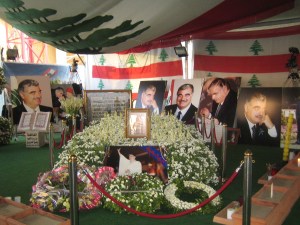
 

Rafic Hariri Shrine, Beirut

Rafic Hariri Shrine, Beirut

I was in Damascus in the wake of the Hariri killing. The main streets were choked with traffic as usual but amidst the lines of vehicles were plenty of marque cars, Mercedes mostly but some BMW’s, all bearing the Liban registration plate. No doubt these cars belonged to people from Beirut at odds with the thousands of anti-Syrian protestors filling Martyrs Square. For this heretofore elite life was suddenly so un-comfortable that they decided to head across the border to the safety of Damascus. It really brought it home to me then that Damascus is barely a two hour drive these days from downtown Beirut. Is it any surprise then that every move, every newly formed alliance or partnership amongst Lebanon’s multitudes was so closely scrutinised by Syria.

In contrast to Emile, the Maronite who approached us in Zgharta as we gazed down on Tripoli , were the Christians of Zahle. We had crossed over the Lebanon Mountains passing through Aley and Bhamdoun , scenes of the bitter fighting between the Lebanese Army and the Druze militias of Walid Jumblatt in 1983-84. The Druze took the Lebanese Army and the Maronite dominated Lebanese Forces (LF) by surprise.  In a few weeks they had overran sixty-two Christian villages, driving the Christians from the northern Chouf mountains. It is hard to imagine today the bitter fighting that took place up here in the mountains; the Syrians supplying the artillery to the Druze to rain shells down on Christian East Beirut and the US New Jersey moored off the coast shelling the Druze positions to assist the Lebanese Army.

Once through Bhamdoun (now a summer retreat for Gulf Staters) you pass over the crest of the mountains with Mount Sannine, the highest peak in Lebanon, on your left. As the road winds its way down to the Bekaa Valley you again appreciate why the Christians and Druze clung to the protection of these snow-capped heights. The Valley is predominantly Shia with several significant Christian enclaves. We spent a few days touring the Bekaa and the ruins at Baalbek, gradually getting used to seeing the faces of various Shia clergy on posters beside mosques. and at road junctions. The Bekaa has been a prize itself since ancient times as can be attested to by the sheer magnificence of the temples at Baalbek. This is a breadbasket worth fighting for, the rich loamy soil providing food for the more arid and desert provinces nearby. The Valley produces crops of wheat, corn, cotton and vegetables. There are also bountiful vineyards and orchards around Zahlé. The valley also produces large amounts of hashish and cultivates opium poppies, which are exported to the West.

Zahlé is the largest city and the administrative capital of the Beqaa Governorate. It lies just north of the main Beirut–Damascus highway, which bisects the valley . The majority of Zahle’s residents are Lebanese Christian of various denominations but the majority are members of the Greek Orthodox Church. The town of Anjar is visible in the distance. It is situated in the eastern part of the valley, close to the Syrian border. Anjar has a predominately Armenian Lebanese population and is where the Syrians kept an important military, security and intelligence post during their lengthy stay in Lebanon.

It was late afternoon when we pulled into Zahle. We visited ‘Our lady of the Bekaa’ a garish concrete tower with a statue of the virgin Mary atop offering amazing views of the valley and the Mountains behind. Zahle is tucked into the mountainside slowly creeping its way up the and down the valley. It is very different vibe than Christian East Beirut as most of its residents seem happy with their Arab identity. It might help that they also make fine wines. Zahle escaped the worst of the Lebanese Civil War despite being only 25 miles from the Green Line in Beirut. It did suffer two sieges by the Syrian Army which were resisted by tenacious residents who repulsed several attempts by the Syrians to enter the city proper. Zahle for me was where I first saw Christians content in their Arab skin.

Some years earlier as I walked around the narrow streets of the Christian quarter in Damascus. The area lies in the shadow of the Umayyad Mosque. As you walk around the narrow streets one felt you were in a place protected, not just by its Unesco World Heritage site  status, but also by the secular Baath Party that ruled the country, The Baath Party kept the fundamentalists at bay by whatever means. The Christians really bought into the Assad Regime because the Assad’s like them came from a minority group, the Alawites. If the little groups kept together then they could keep the lid on things and prevent the Islamists from taking control. Often times the methods were brutal; such as in 1982 when the elder Assad encircled the city of Hama and bombed the old centre until every building was levelled and the Muslim Brotherhood were slaughtered. There was not much care for the innocent population trapped in the siege who had nowhere to go as the Russian made bombs rained down. Robert Fisk was one of the few western journalists to cover the bloody siege as the Assads sought to kill not just the opposition but also the news of the slaughter.

Damascus is one of the oldest populated cities in the world. There is evidence of settlement in the area going back to 9,000BC but the modern city has its roots in a 4,000 year old settlement. For half of that time there has been a very visible and influential Christian community present. It is a city that has changed hands so often with every new dynasty leaving some mark or influence from the Pharaohs who strengthened the Walls, to the Assyrians who knocked them down and rebuilt them, to Alexander the Great who took the city and left it to the Grecian Seleucids. There was also the glory years of the Roman Decapolis marked by the Jupiter Temple which stands before the Great Mosque . The latter building marks the beginning of the Islamic period which has now prevailed for 1,400 years, albeit through a variety of empires.

Despite all this upheaval and as they say in the US, ‘Regime Change’, the Christian Quarter (known as Bab Touma ‘Thomas Gate’) has thrived. The little enclave has given us many notables such as Saint Paul and Saint Thomas . Roman Catholic historians also consider Bab Touma to be the birthplace of several Popes such as John V and Gregory III. In modern times perhaps the most influential resident was philosopher Michel Aflaq, founder of the Ba’ath Party and Ba’athist thought. The area has a mixed Greek Orthodox and Greek Catholic community with a smaller Armenian congregation but is quintessentially Arab in character and ambience. What saddens me that not just the loss of life in this enclave but that I also feel the loss of my own Christian heritage. Therefore the car bomb which killed twelve people in Bar Touma in October, 2012 and the suicide bomber and mortar attack earlier this year are not just an attack on those frightened residents, it is an attack on me.
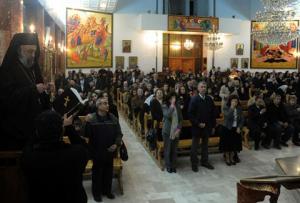
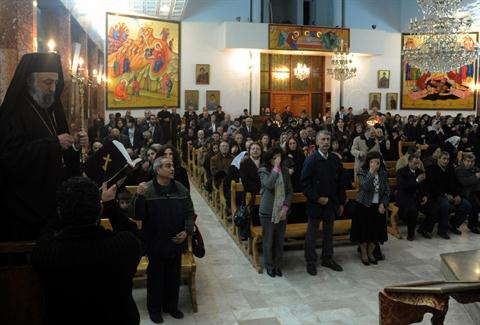
Greek mass in Damascus

Greek mass in Damascus

I am also struck with guilt, guilt over why it is that out of the 125,000 people estimated to have died so far in the Syrian Conflict thusfar, it is the grisly decapitation of a Franciscan Priest and the indiscriminate bombing of an old Christian neighbourhood that is causing me the most agony. What about the atrocities committed by Christians in the pro-Assad militias and the Army? What are they not causing a similar response in me? Despite lots of introspection I still don’t know why? I also realise and acceptthat despite my affinities with the Arab Christians and the Maronites (who are in communion with Rome) this is essentially an Arab conflict. The US cannot understand that Russia will do all it can to arm either the Orthodox Christians, or those who will defend them, and also those who will maintain their Mediterranean naval base near Lattakia. But Russia and the US, the Gulf States that are arming many of the rebels, Iran and Hezbollah and everyone else that has been sucked in to this Syrian Tragedy have essentially now created a murderous stalemate where the only thing that changes is the rising body count.

It is ironic and trivial but I also had one of the most memorable experiences of my life when in the city of Aleppo, the commercial hub and largest city of Syria. I had been travelling for almost a year through various parts of the world. I had flown from Nairobi to Cairo and began an overland journey that took from the Egyptian capital through the Sinai, Jordan, Syria, Turkey and concluded in Sofia, Bulgaria. Looking back with the benefit of hindsight I believe the Syrian part of the journey was by far the most memorable. Syria was challenging for a person travelling on their own independently but when you walk amidst the desert ruins of Palmyra, gaze across the Orontes Valley from the ramparts of Krak-de-Chevaliers or listen to the haunting groans of the famous ‘Norias’ (water wheels) of Hama you are very easily hooked by the charm and depth of this country.
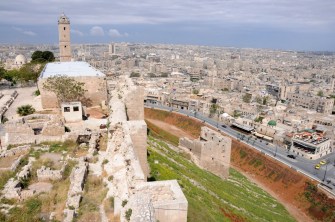
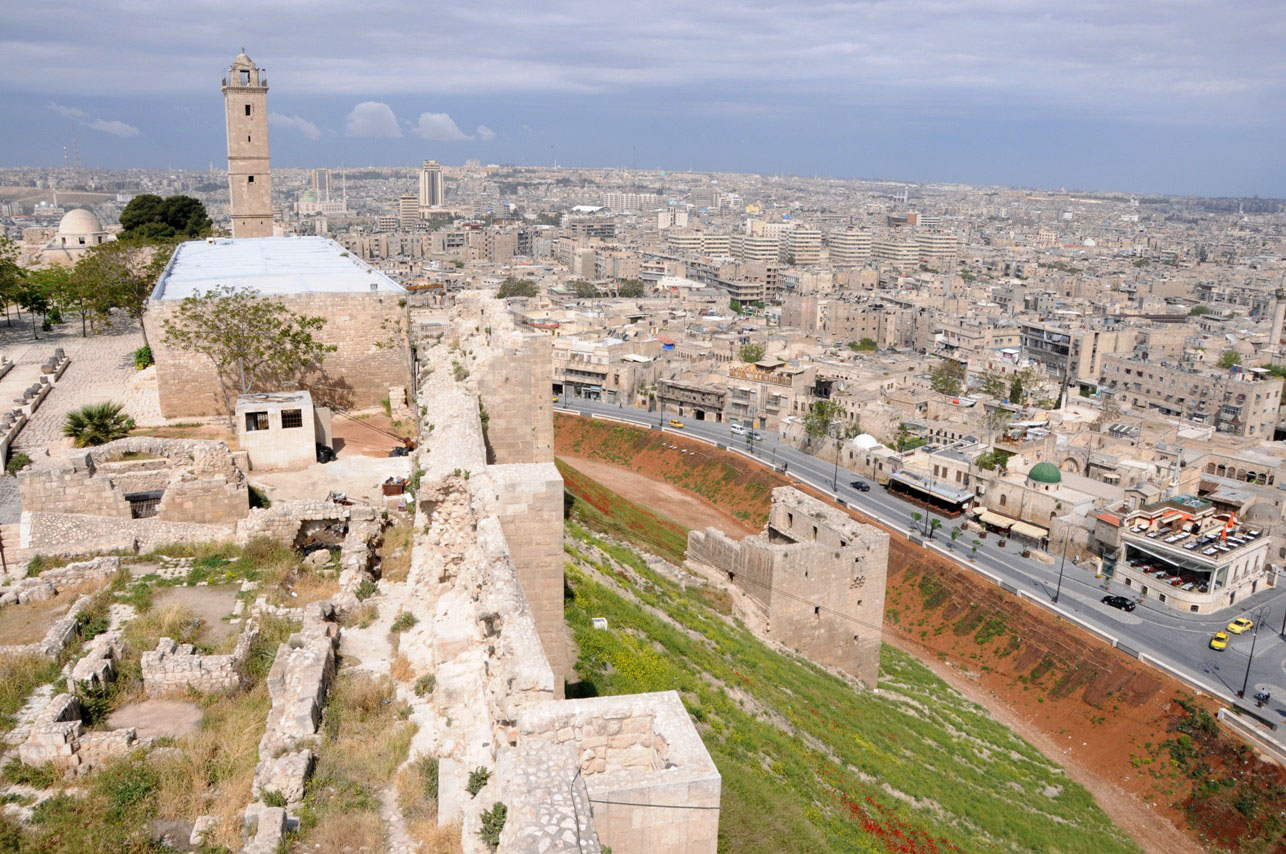
 The Citadel, AleppoOn the 25th of May, 2005 I found myself in the old quarter of Aleppo. I had hoped on that date to be in Istanbul to watch my football team, Liverpool play the mighty AC Milan in the European Champions Cup Final. The Hotel was very, very, modest; I use the word modest because I don’t want to insult the generous and kind hearted owner. Let me just say I have been in better establishments but none worse. The only thing going for the Hotel was that it was in the heart of historic Aleppo a mesmeric maze of narrow streets, busy souks and tremendous noise. It was just a short walk to explore the Citadel but what I enjoyed most was simply walking about the narrow streets which were a hive of activity.

The area was known as Bostan Kelab and its main thoroughfare was Yarmouk Street. Just around the corner from the Hotel was the Ogarit Cinema on Baron Street. It was there that I stood admiring the gigantic billboards for the latest Bollywood Blockbuster showing. Later over coffee I met a local called Hassan who explained the Syrian love affair (I’d call it obsession) with Bollywood. On Wednesday last the 18th of September, 4 civilians were killed and 6 badly wounded when rocket propelled-grenades fell near the Ogarit Cinema. When I read the report I wondered were the casualties looking up at the Cinemas posters to see what was showing. Maybe the Cinema had stopped showing movies in the middle of this warzone.
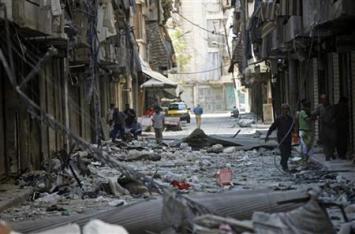
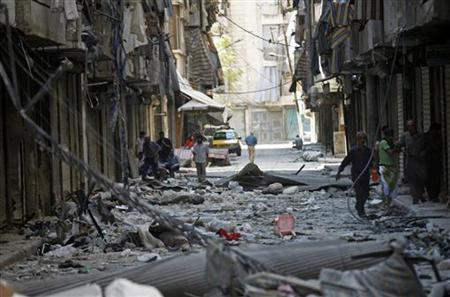
Residents walk on rubble in a damaged street in Aleppo's district of Bustan al-Basha


It is hard to equate my own happy memories of this beguiling city, steeped in history, and the pictures of the rubble strewn streets, bombed out buildings, bullet marked houses and barricades manned by men with Kalashnikovs, their pockets stuffed with magazines. It is simply impossible to reconcile that these people I met in Aleppo or Halab as they called it, Sunnis, Kurds, Armenians, Shias, Melkites, Catholics and Alawites are now locked in this deadly struggle and killing each other by the thousands in a bitter and nasty war.

On that balmy May night in 2005 I returned to the Hotel to watch the match. Earlier that Day the owner Samir had promised me that he would be showing the match. I had a short nap before coming down into the common area where the old TV was located. Samir was not there but a young man was sitting behind the desk that passed for the reception. I asked him could I watch the football, he nodded and turned on the telly. He switched the various knobs and I guessed he was looking for the right channel. A few minutes passed but still all that was on the telly was snow. The young man was now getting agitated. I asked was there another telly but he shook his head. He telephoned Samir and they talked in that Arabic way that sounds like they are having a serious disagreement. Within minutes Samir was back in the hotel and he began trying to get the TV tuned into a channel. He managed to get some channel but it was an old black and white film not the scenes from the Ataturk Stadium I was hoping for. Samir sensed my anxiety; it was just 15 minutes to kick-off. I asked if there was somewhere nearby where I could watch the game, my question went unanswered.

Eventually Samir just said “Come, this way” and he left by the stairs. I followed him and moments later we were driving headlong and crazy through the busy Aleppan streets in a battered Mercedes to some destination unknown. It looked like Samir was intent on driving me all the way to Istanbul. Soon we pulled up outside a nondescript three storey apartment building, what direction or where we were I don’t know, so disorientating were the maze of streets and alleys we had just been through. Up the stairs we went and into a room furnished with ornate carpets, cushions and a number of sofas. On a table like a tabernacle sat an old faux-oak backed Television.

Samir went over and turned on the Telly and switched quickly through the channels, still there was no football. He started tuning the set and eventually the screen lit up with the familiar red shirts of Liverpool. I hadn’t noticed that a number of men had come into the room by then. One was missing a hand and I just presumed he had lost it whilst fighting Jihad. It seemed entirely plausible; I suppose now all these years later I am inclined to think it may have been something more mundane like an industrial accident. My joy at finally getting to see the game was short-lived, already Liverpool were a goal down. It would get worse, by halftime they were losing 3-0. I was dejected and disconsolate.

Samir sensed this and said ‘Have faith my friend, in challah’. I put on a rueful smile; it would be extremely rude to this sociable man to ask to go back to the old quarter. I didn’t want to witness my team annihilated on this big stage but when a tray of warm sugary tea in small glasses came out I had to endure the well intentioned hospitality. More men had come in to the room as the first half went on and everyone was chain-smoking. There were at least twelve of us present for the start of the second half. None of the men could speak English but if I made eye contact they gave me a sympathetic nod and cupped their hands in a gesture of hope and solidarity. Samir was a source of endless optimism, ‘There is time, God willing’. I had long given up hope of any comeback. How wrong I was! In just six glorious minutes Liverpool had levelled the game through Smicer, Gerrard and Alonso. But Liverpool having drawn level seemed reluctant to go and try and win the game. Milan came back into it and the finale was simply a dual between Jerzy Dudek and the entire Milan team. They did not score though and Liverpool beat them on penalties, a famous night, a glorious night, more sweet tea, more cigarettes passed around and we twelve men in Aleppo all celebrated as much as if we were natives of Bootle or Toxteth.

A few days later I shared a taxi from the Al Ma’ari Street Bus Station to Gaziantep in Turkey. As I crossed the border I promised myself I would visit this fascinating country soon again. I reaffirmed this promise when I was sitting for several hours in an interview room in Ben Gurion Airport in Tel Aviv having being pulled from the crowd by an eager policewoman. It is a promise I intend to keep but nobody knows when this war in Syria will end or what the final casualty count will be. I also don’t know what will be left when the guns do fall silent. Who is to know what will be rebuilt and what will be lost forever. Memory will preserve some of it for some people but it is hard to share memories and we cannot live someone else’s life or experiences, but as Samir who kept my flagging hopes alive on that pleasant May evening said; ‘You see my friend you must have faith, God will provide’. Now as the siege on Gaza enters its second month; and as social media delivers us another gruesome image of what an artillery shell can do in a school yard or when it comes hurtling through the roof of a crammed hospital, it is harder than ever to have faith and to hope that God will provide.

???????????????????


“Caesar had perished from the world of men, had not his sword been rescued by his pen”

A few years back I met with Sean O’Rourke of RTE at an Alumni event. I found him good company. We exchanged several little anecdotes about our Alma Mater. I pressed Sean on his surname and its connection with Leitrim. We also discussed that other great political broadcaster Sean Duignan who had recently retired. Duignan incidentally has also attended UCG / NUIG. Mr. O’Rourke and I mused on how much changed Irish political Life was since Duignan had released his memoirs ‘One Spin on the Merry-Go-Round’ in 1995. If only we could have that conversation again now and see how much the wheel has turned again.

Sean Duignan

I began thinking of these two men recently when I was doing a spot of spring cleaning which involved putting some order on my collection of books. I came across Duignan’s memoirs again. The thought struck me about how important a role was played by both the O’Rourke and Duignan families in Leitrim history. Much is known of the O’Rourkes and considerably less about the Duignans, despite the latter been amongst the foremost historians of the day. If you wanted an epic family tree then the key in medieval Ireland was to hire a Duignan to fast track your way to dynastic significance.

They Duignan family originated in the kingdom of Annaly and Breifne in the area known as Conmaicne Maigh Rein (modern day County Longford and South Leitrim). The family themselves descended from Maine of Tethba (Teffia), a son of Niall of the Nine Hostages.

The Irish historian, Fr. Paul Walsh stated that “The celebrated Dubhaltach MacFhirbhisigh … informs us that the O Duigenans followed the profession of historiographers under the families of Clann Mhaiolruanaidh and Conmhaicne in Magh Rein, that is, with the Mac Dermotts and the MacDonoughs in the west, and with the O Farrells in the territory of Annaly.”

One of writers of the Annals of the Four Masters was a Franciscan Friar named Peregrine O’Duigenan from Castlefore, Fenagh, Co. Leitrim.

The Annals tell us that the earliest known reference of the surname was in 1296, when, “Maelpeter O’Duigennan, Archdeacon of Breifny, from Drumcliff to Kells, died.” The Annals further record that in 1323– “Gillapatrick O’Duigennan, Chief Historian of Conmaicne, and Lucas, his son, were slain by Conor, the son of Garvey Maguire.”

Branches of the family migrated into Connacht and particularly to Moylurg (Boyle / Keadue) in Co. Roscommon where they became Bardic Historians to the MacDermott family. Ferghall Muimhneach O’Duigenan, built the church of Kilronan in 1339 to which they became erenachs, or its lay proprietors. By this time a brother of Ferghals, named Philip na hInishe had already settled a branch of the family in Conmaice Rein (Fenagh, Co. Leitrim). Reference is made to Maghnus mac Melaghlin Ruadh O Duibggeannain, who died in 1452. This Maghnus of Castlefore was the chief compiler of the Book of Ballymote, which was commissioned by Tomaltach MacDonagh, Lord of Coran, around 1391.

The Four Masters include the following references to the family:-

  • 1339 – The church of Kilronan was erected by Farrell Muimhneach O’Duigenan.
  • 1340 – Philip O’Duigenan, Ollav i.e. Chief Poet of Conmaicne, died. The church of Kilronan was burned.
  • 1347 – The church of Kilronan was re-erected by Farrell O’Duigenan. Finola, daughter of Mac Fineen, and wife of Farrell O’Duigenan, died.
  • 1357 – Clement O’Duigenan, Vicar of Kilronan, died. He was called Sagart-na-Sinnach (i.e., Priest of the Foxes). Muimhneach O’Duigennan, Ollav of Conmaicne and Clann-Mulrony, Lower and Upper, died.
  • 1360 – Naevag O’Duigennan died.
  • 1362 – Cu-Connacht O Duigeannain, Vicar of Cill Ronain rested in Christ.
  • 1381 – Lasairiona, daughter of Ferghal O Duigeannain, wife of O Mithin (Meehan), of Bealach ui Mithin, died.
  • 1398 – David O Duigeannain, Coarb of the Virgin St. Lasair, chief chronicler of MacDiarmuda (MacDermott) and his great favourite, a hospitaller for all comers of Eirinn in general, a reverend attendant of a nobleman, and one that never refused anyone for anything he had until his death, died in his house and was interred in the Church of Cill Ronan.
  • 1578 -O’Duigennan of Kilronan (Dolbh, son of Duffy), Ollav of Tirerrill, a learned historian, who kept a thronged house of general hospitality; a cheerful, eloquent, and affable man, died; and his son, Mulmurry, took his place.”

Peregrine O’Duigenan, one of the four masters was actually born Cu Coigriche mac Tuathal O Duibhgeannain circa 1590.He was ordained a Franciscan monk and changed his name to Peregrine O’Duignan. Nothing much is known about Peregrine until he became involved in the creating the Annals of the Four Masters) with Brother Michael O’Clery (Michael O Cleirigh), Peregrine O Cleirigh and Fearfeasa O Maoilchonaire, The four men based themselves in North Leitrim and South Donegal for approximately 8-9 years recording the history of Ireland for 3,800 years up to 1616 AD.

Sadly very little is known of Peregrine after 1636 although he is believed to have headed to the Continent. I’m quite sure that Peregrine would be proud to see Irish Political commentary has been so well attended to in the late 20th and early 21st Centuries by an O’Rourke and Duignan.

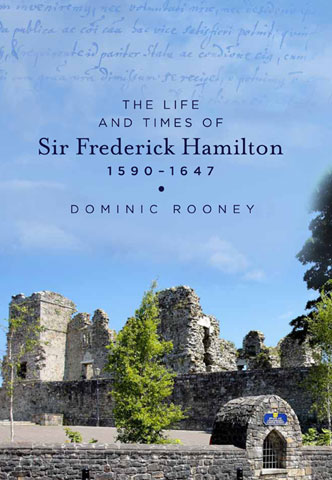
Sir Frederick Hamilton 1590-1647

I am really looking forward to reading Dominic Rooney’s well reviewed publication, ‘The Life and Times of Sir Frederick Hamilton 1590-1647’ as my holiday read. The subject was the founder of the town which bears his name, Manorhamilton, the cultural and commercial hub of North Leitrim.

Frederick Hamilton

The Introduction courtesy of Four Courts Press whets the appetite

“This is the story of Sir Frederick Hamilton, an ambitious and boastful 17th-century Scottish nobleman who secured a grant of land during the Leitrim Plantation in 1620. Unlike many other grantees, he and his English wife, Sidney, took up residence on their estate and enlarged it through purchase or mortgage from their British and Irish neighbours. The adventurous and enterprising Hamilton raised a regiment to fight for Gustavus Adolphus during the Thirty Years War in Germany, but later sought redress from the Swedish council of state for the ‘unlawful’ disbandment of this regiment. From then on, he concentrated on consolidating his situation in Leitrim, where his impregnable castle at Manorhamilton served him well during the turbulent years of the 1641 rebellion. Hamilton moved to Derry in 1643 in the hope of succeeding his father-in-law as governor of that city. He joined the covenanter movement and then sought military promotion from the covenanters’ allies – the English parliament. Having failed in his quest – despite all his bragging – he retired to Scotland to take command of a regiment in the Army of the Solemn League and Covenant. He was discharged in 1647 with little or no compensation and died a ruined man.”

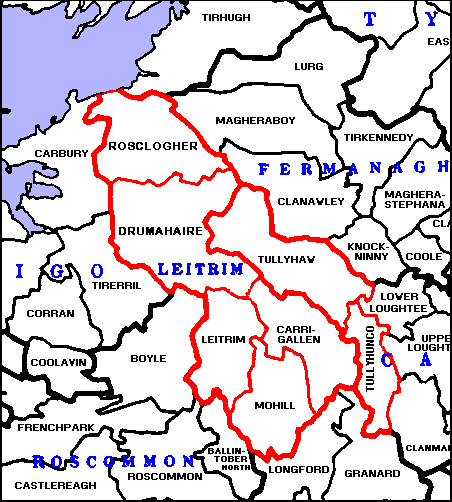
Breifne Ua Ruairc

breifne_baronies


Extract from the Rev. M. Connellan,a wonderful historian which explains the origins of the O’Rourkes of Breifne:-

THE chiefs and clans of Brefney and the territories they possessed in the twelfth century, are, according to O’Dugan, as follows:–1. O’Ruairc or O’Rourke; 2. O’Raghailaigh or O’Reilly: these were the princes of the territory of Brefney. 3. Mac-Tighearnain (tigherna, Irish, “a lord or master”), anglicised MacTernan, McKiernan, and Masterson, were chiefs of Teallach Dunchada (signifying the tribe or territory of Donogh), now the barony of “Tullyhunco,” in the county Cavan. 4. The Mac-Samhradhain (anglicised MacGauran, Magauran, and Magovern) were chiefs of Teallach Eachach (which signifies the tribe or territory of Ecchy), now in the barony of “Tullaghagh,” county Cavan. This sirname is by some rendered “Somers,” and “Summers,” from the Irish word “Samhradh” [sovru], which signifies “summer”. 5. MacConsnamha (snamh: Irish, “to swim”; anglicised “Ford” or “Forde”), chief of Clan Cionnaith or Clan Kenny, now known as the Muintir Kenny mountains and adjoining districts near Lough Allen, in the parish of Innismagrath, county Leitrim. 6. MacCagadhain or MacCogan, chief of Clan Fearmaighe, a district south of Dartry, and in the present barony of Dromahaire, county Leitrim. O’Brien states that the MacEgans were chiefs of Clan Fearamuighe in Brefney: hence MacCagadhain and MacEgan may, probably, have been the same clan.

7. MacDarchaidh or MacDarcy, chief of Cineal Luachain, a district in the barony of Mohill, county Leitrim, from which the townland of Laheen may he derived. 8. MacFlannchadha (rendered MacClancy), chief of Dartraidhe or Dartry, an ancient territory co-extensive with the present barony of Ross-Clogher in Leitrim. 9. O’Finn and O’Carroll,# chiefs of Calraighe or Calry, a district adjoining Dartry in the present barony of Dromahaire and comprehending, as the name implies, an adjoining portion of Sligo, the parish of “Calry” in that county. 10. MacMaoilliosa or Malllison, chief of MaghBreacraighe, a district on the border of Leitrim and Longford. 11. MacFionnbhair or Finvar, chief of Muintir Gearadhain (O’Gearon or O’Gredan), a district in the southern part of Leitrim. 12. MacRaghanaill or MacRannall (angilcised Reynolds), who were chiefs of Muintir Eoluis, a territory which comprised almost the whole of the present baronies of Leitrim, Mohill, and Carrygallen, in the county Leitrim, with a portion of the north of Longford. This family, like the O’Farrells, princes of Annaly or Longford, were of the race of Ir or Clan-na-Rory; and one of their descendants, the celebrated wit and poet, George Nugent Reynolds, Esq., of Letterfian, in Leitrim, is stated to have been the author of the beautiful song called “The Exile of Erin,” though its composition was claimed by Thomas Campbell, author of “The Pleasures of Hope.” 13. O’Maoilmiadhaig or Mulvey, chief of Magh Neise or Nisi, a district which lay along the Shannon in the west of Leitrim, near Carrick-on-Shannon. The clans in the counties of Cavan and Leitrim, not given by O’Dugan, are collected from other sources:

14. MacBradaigh or MacBrady, was a very ancient and important family in Cavan; they were, according to MacGeoghagan, a branch of the O’Carrolls, chiefs of Calry. 15. MacGobhain, MacGowan, or O’Gowan (gobha: Irish, “a smith”), a name which has been anglicised “Smith,” etc., were of the race of Ir; and were remarkable for their great strength and bravery. Thus Smith, Smyth, Smeeth, and Smythe, may clam their descent from the Milesian MacGowan, originally a powerful clan in Ulidia. 16. MacGiolladuibh, MacGilduff, or Gilduff, chiefs of Teallach Gairbheith, now the barony of “Tullygarvey,” in the county Cavan. 17. MacTaichligh or MacTilly, chief of a district in the parish of Drung, in the barony of Tullygarvey. 18. MacCaba or MacCabe, a powerful clan originally from Monaghan, but for many centuries settled in Cavan. 19. O’Sheridan, an ancient clan in the county Cavan. Richard Brinsley Sheridan, one of the most eminent men of his age, as an orator, dramatist, and poet, was of this clan. 20. O’Corry was a clan located about Cootehill.

21. O’Clery or Clarke was a branch of the O’Clerys of Connaught and Donegal, and of the same stock as the authors of the Annals of the Four Masters. 22. O’Daly and Mulligan, were hereditary bards to the O’Riellys. 23. Fitzpatrick, a clan originally of the Fitzpatrlcks of Ossory. 24. Fitzsimon, a clan long located in the county Cavan of Anglo-Norman descent, who came originally from the English Pale ##. 25. O’Farrelly, a numerous clan in the county Cavan. 26. Several other clans in various parts of Cavan, as O’Murray, MacDonnell, O’Conaghy or Conaty, O’Connell or Connell, MacManus, O’Lynch, MacGilligan, O’Fay, MacGafney, MacHugh, O’Dolan, O’Drum, etc.27. And several clans in the county Leitrim, not mentioned by O’Dugan, as MacGloin of Rossinver; MacFergus, who were hereditary erenachs of the churches of Rossinver, and whose name has been auglicised “Ferguson”; O’Cuirnin or Curran, celebrated bards and historians; MacKenny or Keaney, MacCartan, O’Meehan, etc.

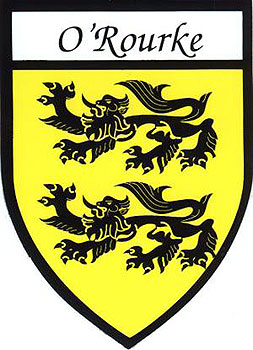
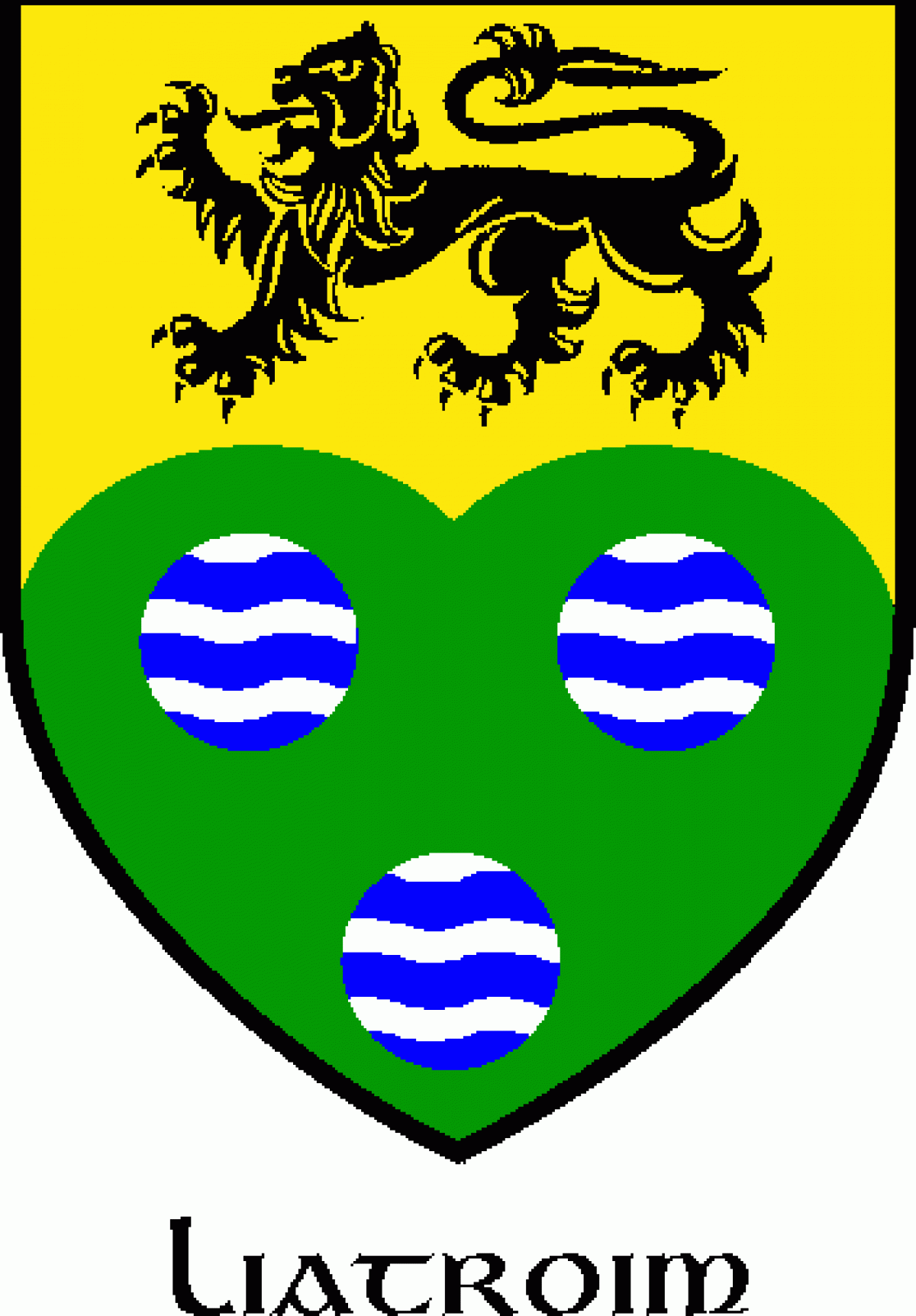
O'Rourkecropped-leitrim-coco.gif

* Brefney: In Irish this word is “Breifne” or “Brefne,” wbich signifies the Hilly Country; it was cailed by the English “The Brenny,” and has been Latinized “Brefnia” and “Brefinnia.” This ancient territory comprised the present counties of Cavan and Leitrim, with a portion of Meath, and a part of the barony of Carbury in Sligo; O’Rourke being prince of West Brefney or Leitrim; and O’Rielly, or O’Reilly, of East Brefney or Cavan. Brefney extended from Kells in Meath, to Drumcliff in the county Sligo and was part of the Kingdom of Connaught, down to the reign of Queen Elizabeth, when it was formed into the Counties of Cavan and Leitrim, and Cavan was added to the province of Ulster. In this territory Tiernmas, the 13th Monarch of Ireland, was the first who introduced Idol worship into Ireland; and set up at Moy Slaght (now Fenagh, in the barony of Mohill, county Leitrim) the famous idol Crom Cruach, the chief deity of the Irish Druids which St. Patrick destroyed.

Brefney was inhabited in the early ages by the Firvolgians who are by some writers called Belgae and Firbolg), who went by the name of “Ernaidhe”, “Erneans”, and “Ernaech”; which names are stated to have been given them from their inhabiting the territories about Lough Erne. These Erneans possessed the entire of Brefney. The name “Brefney” is, according to “Seward’s Topography,” derived from “Bre,” a hill, and therefore signifies the country of hills or the hilly country: a derivation which may not appear inappropriate as descriptive of the topographical features of the country, as innumerable hills are scattered over the counties of Cavan and Leitrim. On a vast number of these hills over Cavan and Leitrim are found those circular earthen ramparts called forts or raths, and some of them very large; which circumstance shows that those hills were inhabited from the earliest ages. As several thousands of these raths exist even to this day, and many more have been levelled, it is evident that there was a very large population in ancient Brefney. The erection of these raths has been absurdly attributed to the Danes, for it is evident that they must have formed the chief habitations and fortresses of the ancient Irish, ages before the Danes set foot in Ireland, since they abound chiefly in the interior and remote parts of the country, where the Danes never had any permanent settlement.

Ancient Brefney bore the name of Hy Briuin Breifne, from its being possessed by the race of Brian, King of Connaught, in the fourth century, brother of Niall of the Nine Hostages, and son of Eochy Moyvane, Monarch of Ireland from A.D. 357 to 365, and of the race of Heremon. That Brian had twenty-four sons, whose posterity possessed the greater part of Connaught and were called the “Hy-Briuin race.” Of this race were the O’Connors, kings of Connaught; O’Rourke, O’Rielly, MacDermott, MacDonogh, O’Flaherty, O’Malley, MacOiraghty (MacGeraghty, or Geraghty), O’Fallon, O’Flynn (of Connaught), MacGauran, MacTiernan, MacBrady or Brady, etc. In the tenth century Brefney was divided into two principalities, viz, Brefney O’Rourke or West Brefney, and Brefney O’Rielly or East Brefney. Brefney O’Rourke comprised the present county Leitrim, with the barony of Tullaghagh and part of Tullaghoncho in the county Cavan; and Brefney O’Rielly, the rest of the present county Cavan: the river at Ballyconnell being the boundary between Brefney O’Rourke and Brefney O’Rielly, the O’Rourkes being the principal chiefs. “O’Rourke’s Country” was called Brefney O’Rourke; and “O’Rielly’s Country” Brefney O’Rielly. The O’Rourkes, and O’Riellys maintained their independence down to the reign of James the First, and had considerable possessions even.”